Sample No. 0091
2026 Shelter Data: Rising Cat Intake, Adult Dog Pressures and Adoption Trends
Midyear figures show record cat adoptions alongside rising intake, crowded care and persistent kitten-season demands across shelters and rescues.
The midyear picture for animal shelters is mixed: cat adoptions are reaching new highs, yet more dogs and cats entered care than left it, and kitten intake remains heavy. For shelter teams, the figures point to a practical challenge: keeping capacity moving while matching different species and age groups with the right routes to care and homes.
Shelter Animals Count’s 2026 Mid-Year Data Summary is presented through a new interactive Mid-Year Data Explorer. Users can examine more than a decade of national shelter data and adjust views by organization type, region, species and age group. That ability to move beyond national averages may help teams put local patterns in context and identify which pressures deserve attention.
Open the 2026 Mid-Year Data Summary
Intake is rising, led by cats
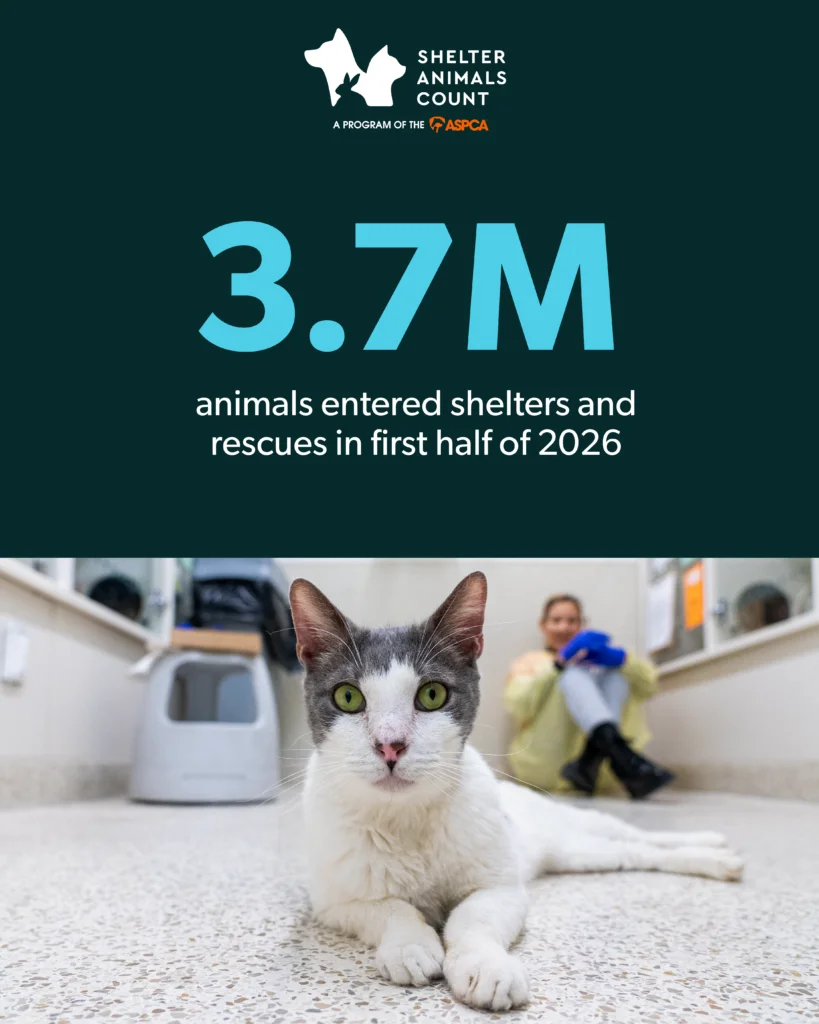
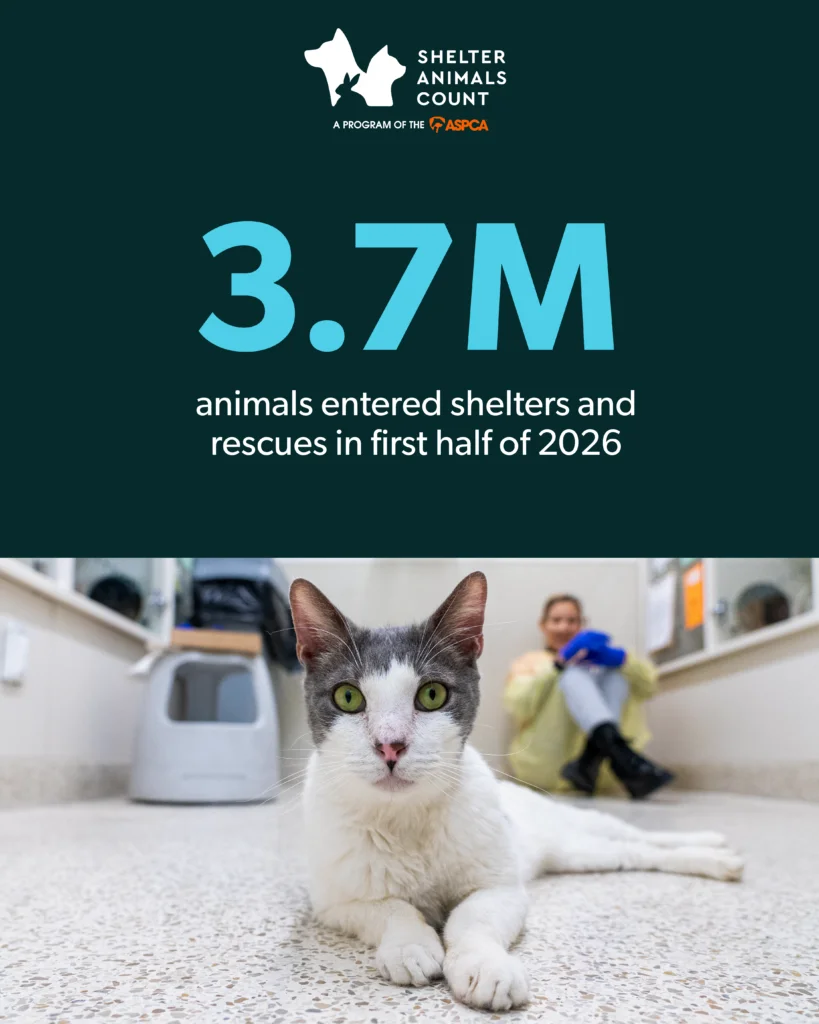
During the first six months of 2026, shelters and rescues took in 3.7 million dogs and cats. That was 72,000 animals, or 2.0%, above the same period in 2025. Intake has generally declined since 2016, but the latest increase suggests many organizations continue to face substantial demand.
Cats accounted for nearly all of the year-over-year rise: cat intake climbed by 59,000, or 3.5%, while dog intake remained relatively stable. This split matters for planning. A rise concentrated in one species can place particular strain on staffing, housing and foster capacity, even when another species’ intake is steady.
More animals entered care than left
Nationally, 213,000 more cats and dogs entered shelters and rescues than left through adoption, transfer, return to owner, return to field and other outcomes during the first half of the year. Seasonal growth in shelter populations is common as intake increases in spring and summer. The 2026 increase, however, was larger than the pattern typically seen, with dogs remaining in care driving much of the growth.
That makes it useful to look beyond intake alone. A shelter’s population reflects both arrivals and the pace at which animals move into homes, transfers or other pathways. If arrivals exceed departures, pressure can build even when adoption activity is improving. Local data views may help organizations see whether the imbalance is tied to a particular species, age group or period.
Cat adoptions set a high mark; dog placements remain behind
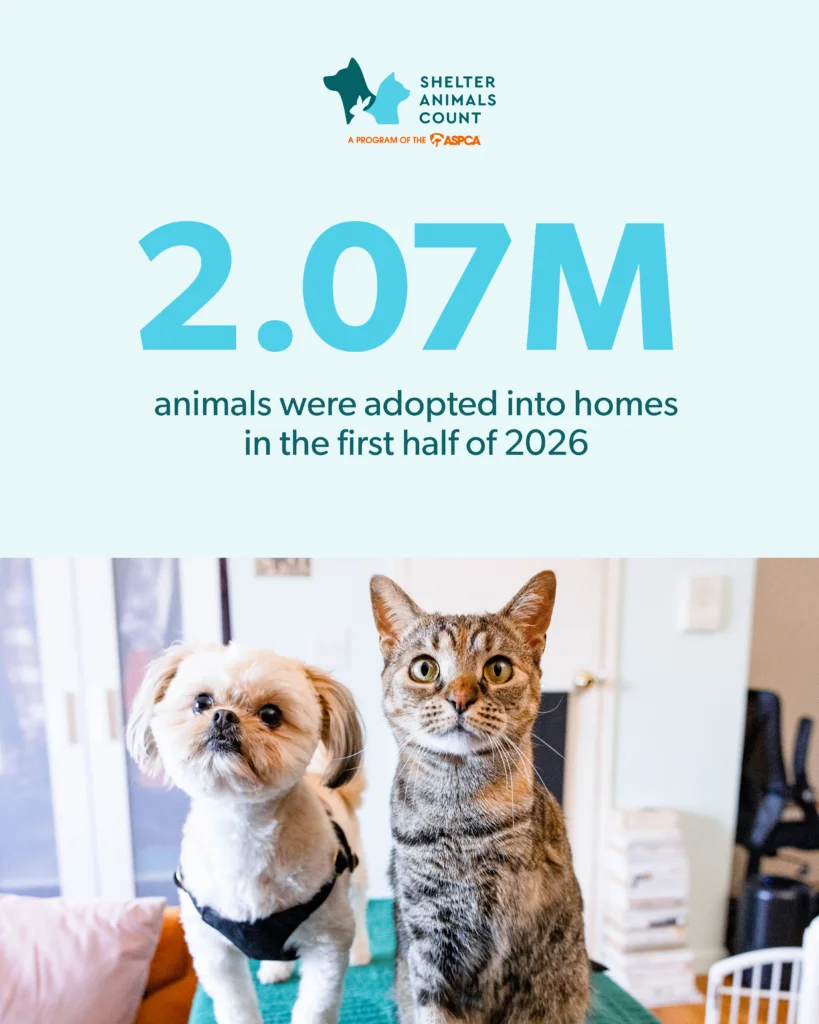
Cat adoptions reached 1 million through midyear, up 20,000, or 2.1%, from the first half of 2025. Compared with the same period in 2016, that is an increase of 117,000, or 13.2%. The sustained growth is an encouraging sign of progress in finding homes for cats.
Dog adoptions also edged upward, reaching 1.1 million—about 7,000 more than in the first half of 2025. Yet the figure remains 72,000 below the midyear total for 2016. Adult dogs make up most dogs still in care: 236,000 animals, equal to 66% of dogs in shelters and rescues.
Those figures suggest that gains in adoption do not affect every group equally. Organizations can review the Shelter Animals Count Adoption Checklist and the report’s strategies involving foster programs, transfers, return to owner and return to field. These pathways serve different situations; teams can assess which options fit their animals and community rather than relying on a single approach.
Kittens need sustained support
Kittens remained a major demand on shelter resources. In the first half of 2026, 674,000 entered shelters and rescues nationwide, a level that has stayed consistently high since 2021 despite broader declines in animal intake. Another 311,000 juvenile cats entered care—the highest midyear count on record.
The report also describes difficult outcomes for young cats: approximately 12.3% of kittens died or were lost while in care, contributing to a mortality rate of roughly 24% across all kitten outcomes. These figures underline why foster recruitment, neonatal kitten programs, community support and early intervention matter during peak intake. For organizations, preparing these resources before demand rises can help make care plans available when young animals arrive.
Transfers can ease pressure
Transfers can connect animals in areas with greater need to organizations that have room to help. Still, transfer activity in the first half of 2026 was 117,000 animals below the same period in 2016, an 18.8% decline. Dog transfers fell further, standing 25.7% below 2016 levels.
The data also links transfers with positive outcomes: since 2019, approximately 94% of transferred animals were ultimately adopted by the organization where their journey ended. Expanding suitable transfer opportunities may therefore help reduce pressure in crowded settings while opening a path to adoption. Coordination and available capacity remain central to making that route work for the animals involved.
Planning for the rest of the year
Shelter Animals Count projects that 7.4 million cats and dogs will enter shelters and rescues during 2026: an estimated 3.8 million dogs and 3.6 million cats. With nearly half of projected annual intake still ahead at midyear, capacity demands may continue. Kitten season can extend into fall, so additional cat intake is expected.
The interactive explorer gives shelter and rescue teams a way to compare these national patterns with the details most relevant to their work. The central takeaway is not one number, but the combination: cat intake is rising as cat adoptions grow, adult dogs remain a large share of dogs in care, and kittens continue to require substantial support. Reviewing local trends alongside these figures can help organizations focus foster, transfer and adoption efforts where they are most needed.


