Sample No. 0047
Air-Dried Cat Food: Benefits, Storage Tips and Six Picks
Air-dried food offers a shelf-stable, meat-focused option between kibble and wet food. Compare six picks and check what to know before switching.

Air-dried food sits between crunchy kibble and moist food in texture and convenience, while its meat-based recipes can suit owners looking for a less processed-feeling option. The category covers different products, though: some are sold as complete meals, while others are intended as treats or toppers. Checking the label for life-stage suitability and feeding directions matters more than relying on the processing method alone.

Air-drying removes moisture gradually at relatively low temperatures, typically under 200°F, rather than cooking ingredients through the high-heat extrusion used for many kibble products. The resulting food is shelf-stable when stored as directed. It tends to be drier than canned food and softer than conventional kibble, though texture varies by recipe.
Lower-temperature processing may help retain some heat-sensitive nutrients, but it doesn't by itself establish that a food is nutritionally complete or suitable for every cat. The product label should say whether the recipe is intended as a complete diet or a supplemental food. For a significant change, especially for a kitten or a cat with health concerns, ask your veterinarian to help assess the choice.
What to compare before choosing
The six products below were evidence-reviewed rather than hands-on tested. The source's comparison was verified May 22, 2026; prices per ounce were not verified. Its product descriptions identify three ZIWI Peak recipes as grain-free, limited-ingredient options for all life stages. Catit Gold Fern's life-stage guidance and grain status aren't specified in the source, and the two Meow travel and treat products are described as suitable for all life stages but not as complete meals.
| Product | Main protein | Meat or organ content stated | Source's suggested use |
|---|---|---|---|
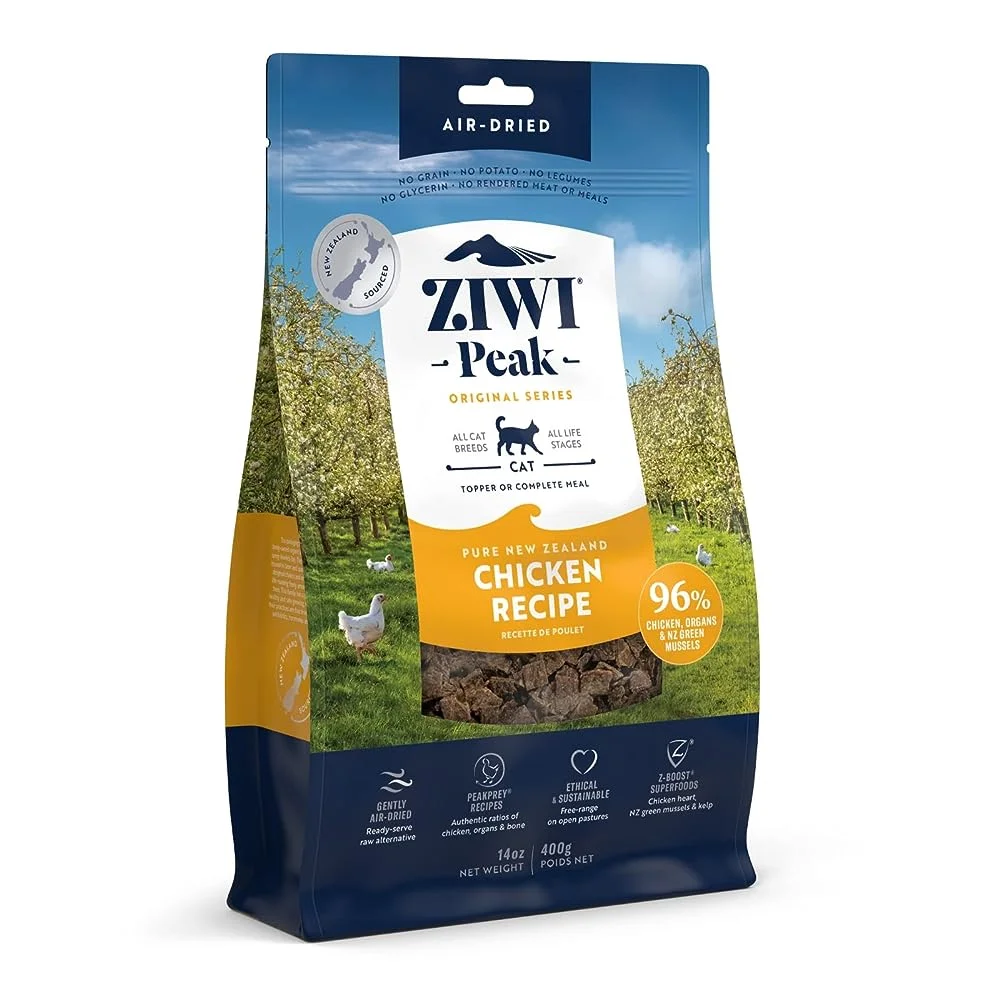
| ZIWI Peak Chicken | Chicken | 96% free-range chicken, organs and bone | Complete meal or topper; all life stages |
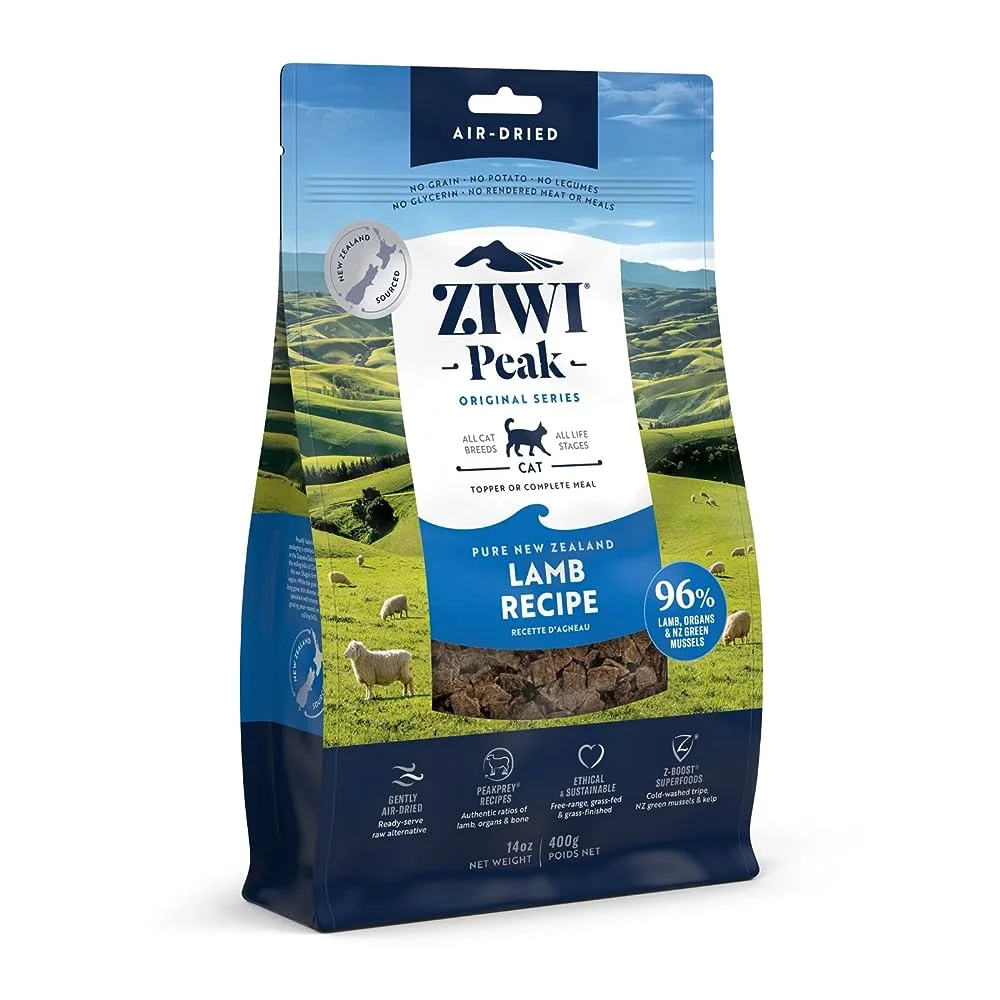
| ZIWI Peak Lamb | Lamb | 96% free-range lamb | Complete meal or topper; all life stages |
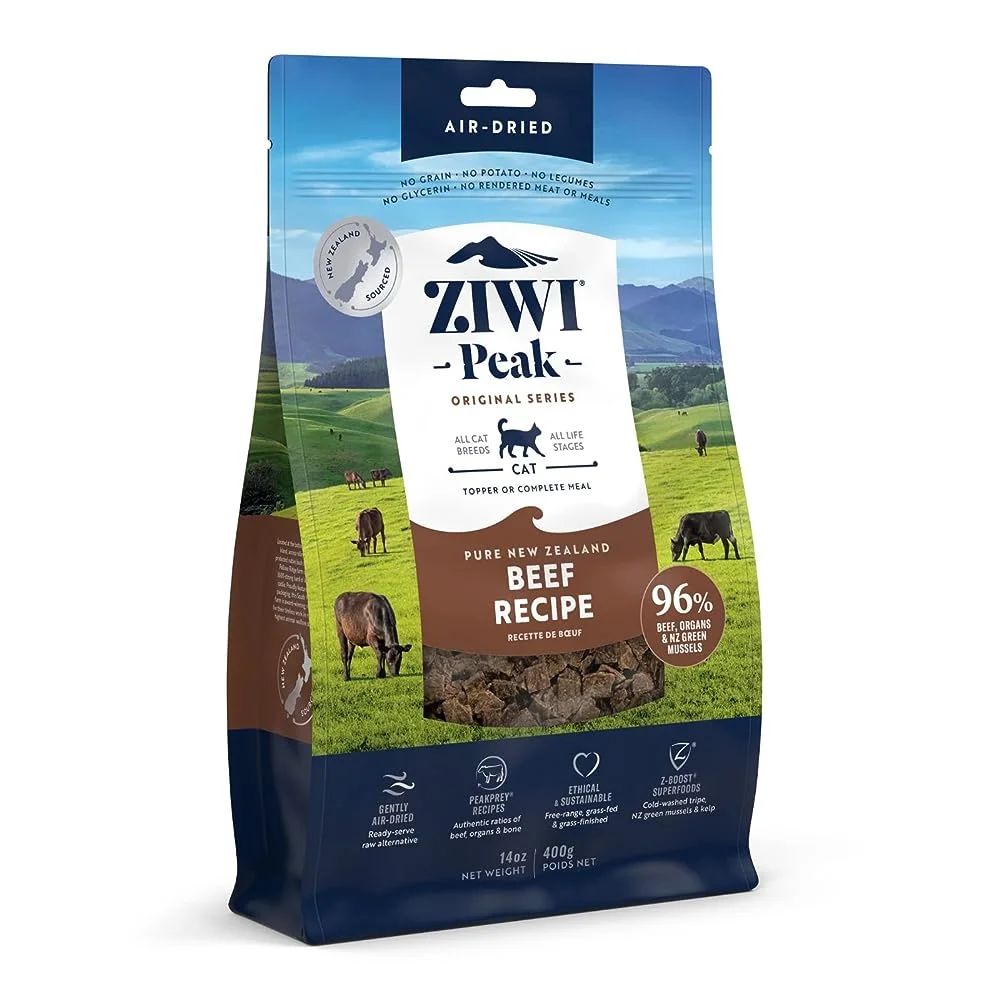
| ZIWI Peak Beef | Beef | 96% free-range beef, organs and bone | Complete meal or topper; all life stages |
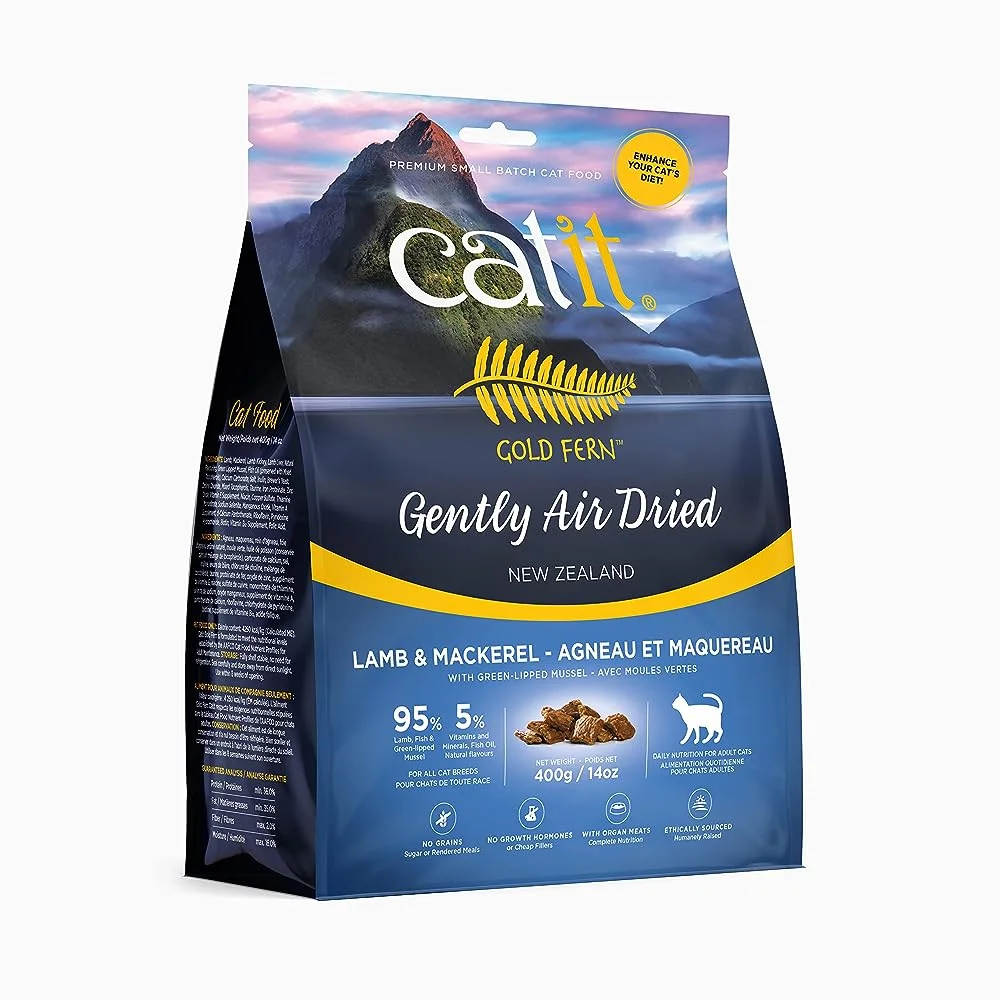
| Catit Gold Fern Lamb and Mackerel | Lamb and mackerel | 95% meat inclusion | Life-stage status not specified |
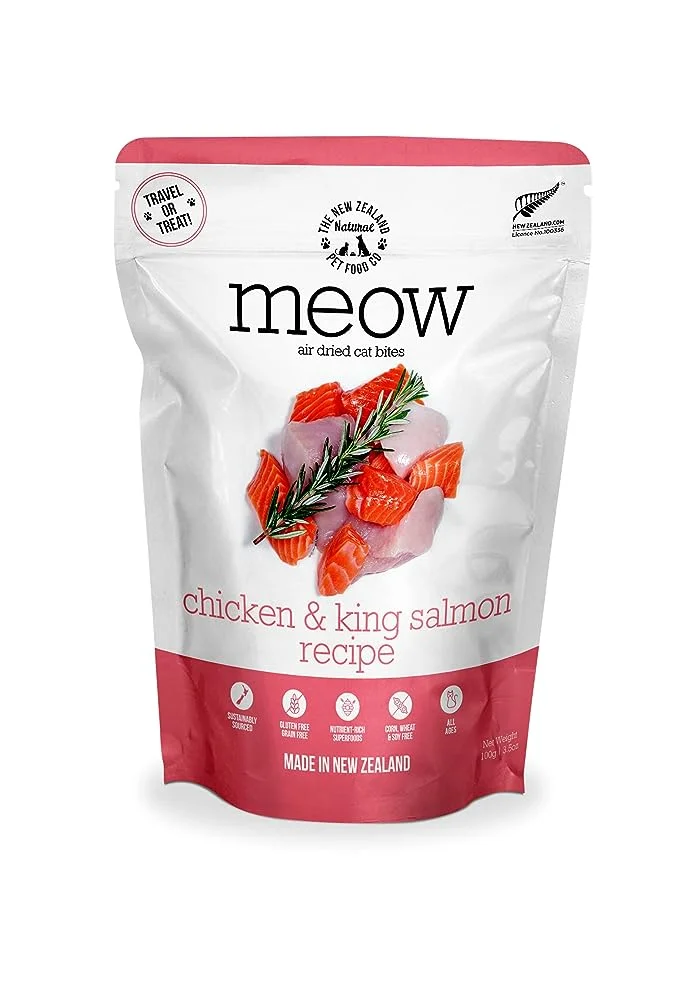
| Meow Chicken and Salmon Travel/Treat | Chicken and salmon | Not published | Treat, mixer or topper; all life stages |
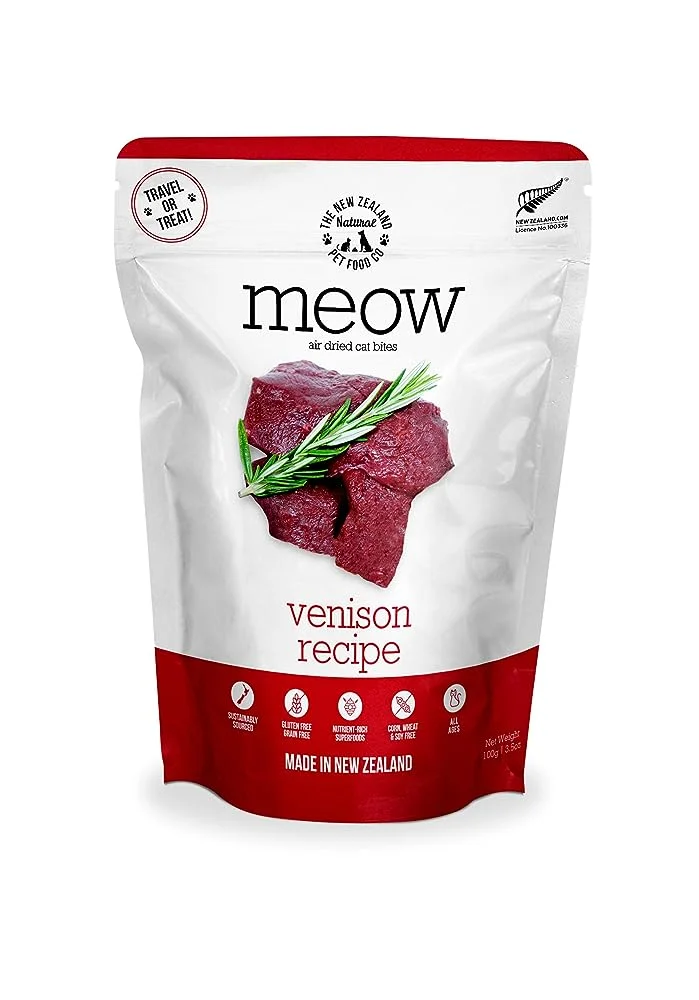
| New Zealand Natural Pet Food Meow Venison Travel/Treat | Venison | Not published | Travel treat, mixer or topper; all life stages |
The comparison's “best for” labels name ZIWI Peak's chicken and lamb recipes as general picks, the beef recipe and Catit as ingredient-sourcing picks, Meow Chicken and Salmon as a treat, and Meow Venison as a budget option. Those are editorial labels rather than a substitute for checking nutrition statements, feeding instructions and your cat's needs.
Six products, with different roles
ZIWI Peak Chicken
This recipe is described as containing 96% free-range chicken, organs and bone, along with New Zealand green mussels, poultry heart and organic kelp. The source presents it as a grain-free, limited-ingredient food for all life stages, usable as a complete meal or topper. If you use it as a topper, account for it as part of the day's food rather than adding it on top of a full portion.
ZIWI Peak Lamb
The lamb recipe is listed as 96% free-range lamb and includes New Zealand green mussels. The source describes it as grain-free and limited-ingredient, and says it can be served as a meal or topper for cats at all life stages. It highlights this recipe for cats with food sensitivities, but ingredient lists alone can't determine whether a particular cat will tolerate it. Discuss suspected food reactions with a veterinarian.
ZIWI Peak Beef
This formula is described as 96% free-range beef, organs and bone, with New Zealand green mussels. Like the other two ZIWI Peak recipes in the comparison, it is listed as grain-free, limited-ingredient and suitable for all life stages. The product description suggests it may suit cats with food sensitivities; check the full ingredient and nutrition information with your veterinarian if you're managing a dietary concern.
Catit Gold Fern Lamb and Mackerel
Catit Gold Fern is described as having 95% meat inclusion, with lamb and mackerel, plus New Zealand green-lipped mussel. The source says the ingredients come from ethically managed farms, but doesn't provide a life-stage designation or a grain-free or limited-ingredient classification. Confirm that the product is appropriate as a complete diet before making it your cat's main food.
Meow Chicken and Salmon Travel/Treat
This 3.5-ounce product is presented as a treat, meal mixer or topper, rather than as a confirmed complete meal. The source describes it as free of grain, gluten, artificial preservatives, flavors and colors, and suitable for all life stages. Its meat inclusion isn't published in the comparison, so use the package directions to guide portions.
New Zealand Natural Pet Food Meow Venison Travel/Treat
This 3.5-ounce venison product is described as a travel-friendly treat or meal mixer, with no grain, gluten, artificial preservatives, flavors or colors. The source calls it a budget-friendly pick, but does not publish its meat inclusion. As with any supplemental food, keep treats and toppers within a sensible share of the daily ration.
How air-dried compares with other formats
Air-dried foods are generally compact and can be kept at room temperature when the package is stored as directed. Their texture falls between hard kibble and moist food. The lower moisture content means they don't offer the same fluid intake as wet food. Cats that eat mostly dry food may benefit from having fresh water available in several easy-to-reach spots.
- Kibble: Usually made by extrusion, which cooks ingredients at high temperatures. It is crunchy and convenient to store, but can become stale if left exposed to air. Some owners add water to soften it; this guide to adding water to kibble discusses that choice.
- Wet food: Can have up to 80% moisture and comes in textures such as pâté or chunks in gravy. Once opened, it needs refrigeration and should be used promptly. Its moisture can help increase water intake.
- Freeze-dried food: Moisture is removed from frozen food, leaving a light, crumbly product that can often be rehydrated. Like air-dried food, it needs careful storage after opening so moisture doesn't return.
Air-dried food can be easier to store and serve than raw food, while offering a meat-forward format. Still, “air-dried” doesn't mean the food is risk-free or automatically nutritionally balanced. The source cites guidance from the FDA on raw and minimally processed pet food safety and the AVMA on raw or undercooked animal-source protein. Follow the package's handling and storage instructions, wash hands after feeding, and keep food away from surfaces used to prepare human meals.
Air-dried recipes are often high in animal protein and lower in carbohydrates than some other formats, but the nutrition profile depends on the product. Cats are obligate carnivores, yet that doesn't mean a meat-heavy ingredient list alone proves a food meets all dietary needs. Check whether a recipe is labeled complete and balanced for your cat's life stage. AAFCO's pet food overview explains how to read food labels, and its cat nutrient profiles distinguish growth from adult maintenance.
Storage, portions and transitions
Most air-dried food doesn't need refrigeration after opening, according to the source, but it should be kept in a cool, dry place and sealed between meals. Use the package's freshness guidance. As one example, ZIWI Peak's cited packaging guidance recommends using its food within about a month of opening; timing can vary by brand. If the food's smell, texture or appearance changes, check the packaging and contact the maker if needed.
Some owners combine air-dried food with wet food or kibble. Add up the calories from each part of the meal and adjust portions so the mix fits your cat's needs. When introducing a new food, a gradual transition can help you observe whether your cat accepts it and how its appetite and digestion respond. If your cat stops eating, develops ongoing digestive changes, or has a known health condition, contact your veterinarian for guidance.
Air-dried food can be a practical option for owners seeking a shelf-stable, meat-based format. The useful distinction is whether a product is a complete meal or a supplemental treat, and whether its nutrition and life-stage guidance fit the individual cat. Check those details, store the food as directed, and make diet changes with your cat's health and daily calorie needs in mind.
Frequently asked questions
What is air-dried cat food?
It's food made by gradually removing moisture, generally at lower temperatures than those used to extrude kibble. The final texture is usually dry but less hard than conventional kibble.
Is air-dried food the same as freeze-dried food?
No. Air-drying evaporates moisture gradually. Freeze-drying removes ice from frozen food. Both methods produce shelf-stable products, but texture and handling directions vary.
Can air-dried food be mixed with other food?
Many owners serve it alongside wet food or kibble. Keep the total daily calories appropriate and follow each product's directions, especially when a product is labeled as a treat or topper.
Can kittens and senior cats eat it?
That depends on the recipe's life-stage designation and the cat's individual needs. Check the label for an appropriate complete diet and ask your veterinarian if your cat is young, older or managing a health condition.
Does air-dried food contain grains?
Some recipes are grain-free, but that can't be assumed across the category. Read the ingredient list and nutrition statement for the particular product.
Is air-dried food more expensive?
The source describes air-dried food as usually costing more per bag than kibble, but it doesn't provide verified prices per ounce for the products listed. Compare feeding directions and daily portions when estimating the cost for your cat.
For further product comparisons, visit the cat product reviews page. For feeding guidance, see the Cornell Feline Health Center's cat feeding resource and FEDIAF's nutritional guidelines.


