Sample No. 0046
15 Cat Foods for Different Budgets, Life Stages and Feeding Needs
Compare 15 cat foods by type and need, with practical label-reading advice on life-stage nutrition, moisture, food transitions and veterinary guidance.
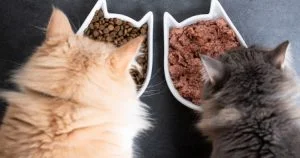
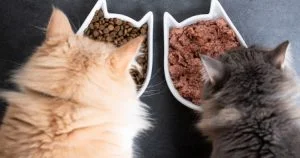
Choosing cat food is less about finding a universally “best” bag and more about matching a complete, balanced diet to an individual cat. The 15 options below span fresh, canned, dry and dehydrated foods, with picks aimed at kittens, older cats, indoor cats and cats whose owners are looking for specific textures or ingredients. The source review assessed published ingredient and nutrition information rather than conducting feeding trials, and its listed prices were checked on May 22, 2026.
Its top fresh-food choice is JustFoodForCats Fish & Chicken, made with cod, chicken thighs, hearts and liver, plus sardines. For a less expensive dry option, it highlights Purina ONE Sensitive Stomach, Sensitive Skin, which lists turkey first. Those are starting points, not guarantees that a particular food will suit every cat: health history, life stage, appetite and tolerance matter.
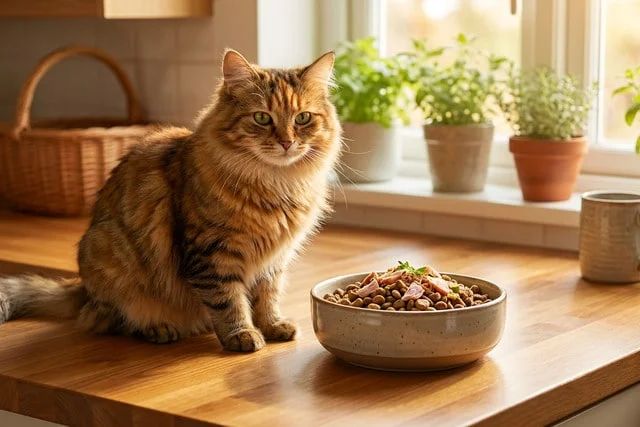
Start with nutritional adequacy and your cat’s needs
Cats need nutrients supplied by animal tissue, and taurine is among the essential nutrients they can’t make in sufficient amounts themselves. Cornell’s Feline Health Center describes cats as obligate carnivores. When comparing foods, look for a named animal protein in the ingredient list and a statement that the food is complete and balanced for the appropriate life stage. The article points readers to the Cornell Feline Health Center, AAFCO’s label guidance and the Merck Veterinary Manual for background on feline nutrition and taurine.
Life stage is a practical filter. A growing kitten, an adult cat and an older cat have different nutritional requirements, so check that the food is intended for the animal’s age. The list includes a kitten formula for cats from four months to one year and a senior dry food, but not every listing provides a clearly stated life-stage claim. Where the comparison says “not stated by brand,” verify the current package rather than assuming suitability.
Ingredient panels can help owners identify the main protein and potential ingredients their cat doesn’t tolerate. They shouldn’t replace the nutritional adequacy statement or veterinary advice. A grain-free label isn’t automatically a better choice for every cat, and a limited-ingredient food isn’t, by itself, a diagnosis or treatment for an allergy. If a cat has persistent digestive trouble, itching or another health concern, ask a veterinarian before relying on a diet change alone.
Also consider the food’s texture, moisture, storage requirements, price and the cat’s willingness to eat it. A carefully chosen food is only useful if it fits the household’s routine and the cat accepts it. Brands differ in sourcing and manufacturing transparency; owners can check the product’s current label and the company’s published information. A veterinarian who knows the cat’s history can help narrow choices when a health condition, suspected sensitivity or special diet is involved.
Food formats, moisture and routine
The guide’s comparison puts dry kibble at roughly 10% moisture, canned food at about 78%, fresh food around 70%, dehydrated food near 5% before water is added, and raw food at about 65%. These are approximate figures, not a guarantee for every recipe. Dry food is convenient to store and can suit measured feeding routines. Wet food contributes more water through meals; fresh food needs refrigeration, while dehydrated food is rehydrated before serving. Raw products require frozen storage according to the source’s table.
Format alone doesn’t tell you whether a food is complete and balanced. Nor should a food be selected for a medical problem based only on a product description. The article presents some products as being made for urinary health, hairball control, sensitive digestion or weight management, but those claims don’t establish that a particular cat needs the food. A veterinarian can help determine whether a targeted diet is suitable.
Wet (canned), dehydrated and raw foods appear in the source’s format comparison. The source lists longer shelf life for dry and dehydrated foods, medium shelf life after opening for canned food, and short storage periods for fresh and raw foods. Follow the package instructions for storage and handling, especially once a product is opened or prepared.
 Label checks the source recommends: a named animal protein, an appropriate complete-and-balanced statement, taurine, and fats such as omega-3 and omega-6. It advises scrutinizing unnamed animal ingredients, artificial colors and preservatives, and foods that place corn, wheat or soy prominently in the ingredient list. The source also points to FDA guidance on preservatives in pet food when discussing BHA, BHT and ethoxyquin. Read the current label: formulations and ingredient lists can change.

At-a-glance comparison of the 15 picks
The source’s comparison table reports product type, first listed ingredient or protein description, stated life stage and price tier. It does not provide independently verified protein percentages; those figures were not independently retested. Check the current package for the guaranteed analysis and life-stage statement before purchasing.
- Fresh: JustFoodForCats Fish & Chicken — the source’s fresh-food pick; its comparison doesn’t state a life stage.
- Dry, grain-free: Open Farm Catch-of-the-Season Whitefish — whitefish first; life stage not stated in the comparison.
- Dehydrated: The Honest Kitchen Dehydrated Grain-Free Chicken — chicken first; listed for kittens and adults.
- Wet: Wellness Complete Health Gravies — named meat in gravy; life stage not stated in the comparison.
- Grain-free wet: Nulo Cat Freestyle Pate — turkey and chicken; kittens and adults.
- Urinary and hairball support: Hill’s Science Diet Urinary & Hairball Control — adult dry food.
- Senior: Purina Pro Plan Senior with Probiotics — dry food listed for senior cats.
- Indoor adult: Blue Buffalo Tastefuls Indoor — chicken first.
- Kitten: Royal Canin Feline Health Nutrition Kitten — for kittens aged four months to one year.
- Sensitive stomach and skin: Purina ONE Sensitive Stomach, Sensitive Skin — turkey first; adult.
- Weight management: Instinct Raw Boost Healthy Weight — chicken first; adult, with kibble and freeze-dried raw pieces.
- Pate: Fancy Feast Purina Grain-Free — meat or seafood varies by flavor; adult.
- Dry: NUTRO Wholesome Essentials — salmon first; adult.
- Shredded wet: Tiki Cat Luau Shredded Meat — chicken first; all life stages.
- Limited ingredient: Reveal Natural Wet Cat Food — chicken or fish depending on flavor; life stage not stated in the comparison.
Fresh, dry and dehydrated choices
JustFoodForCats Fish & Chicken: fresh-food pick
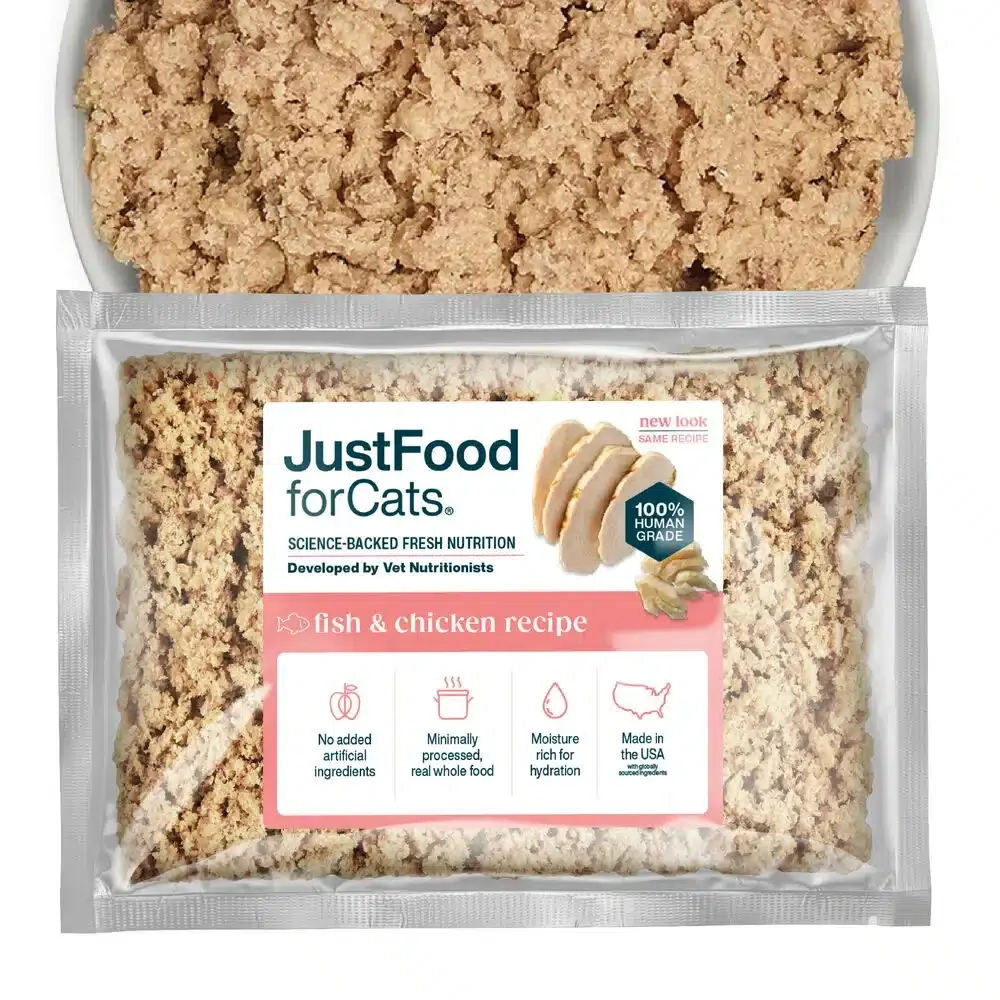
The recipe is described as containing wild-caught Alaska Pacific cod, chicken thighs, hearts and liver, and sardines. Tapioca starch is its only listed carbohydrate source. The source says the ingredients are human-grade and prepared in USDA-standard kitchens, and describes the food as moisture-rich, without preservatives, additives or growth hormones.
Its main trade-offs are cost and choice: it’s pricier than conventional food and the source lists one flavor formula. Its moisture content may appeal to owners looking for food that contributes water to meals, but make sure the product’s full nutritional statement suits your cat. 
Open Farm Catch-of-the-Season Whitefish: grain-free dry food
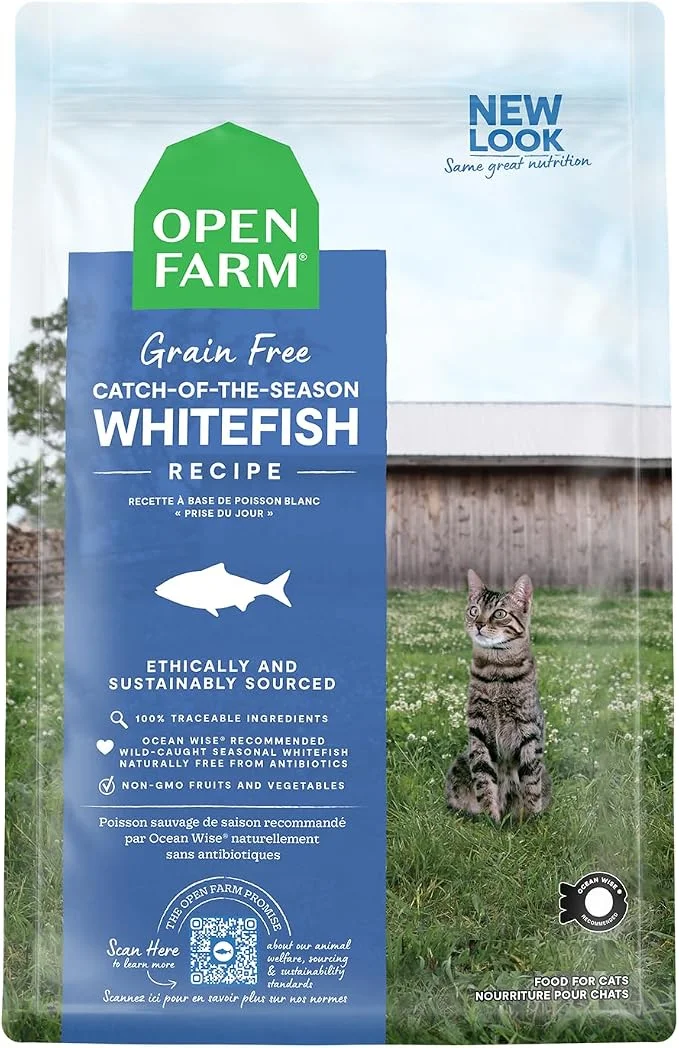
The source describes whitefish as the leading ingredient and says the fish is Ocean Wise certified. The recipe pairs it with prebiotic fiber and produce, and the company is presented as offering ingredient-sourcing information. This is a higher-priced kibble, and fish makes it unsuitable for a cat with a fish allergy. Grain-free doesn’t mean allergy-safe by itself; review all ingredients with your veterinarian if a food sensitivity is a concern. 
The Honest Kitchen Dehydrated Grain-Free Chicken
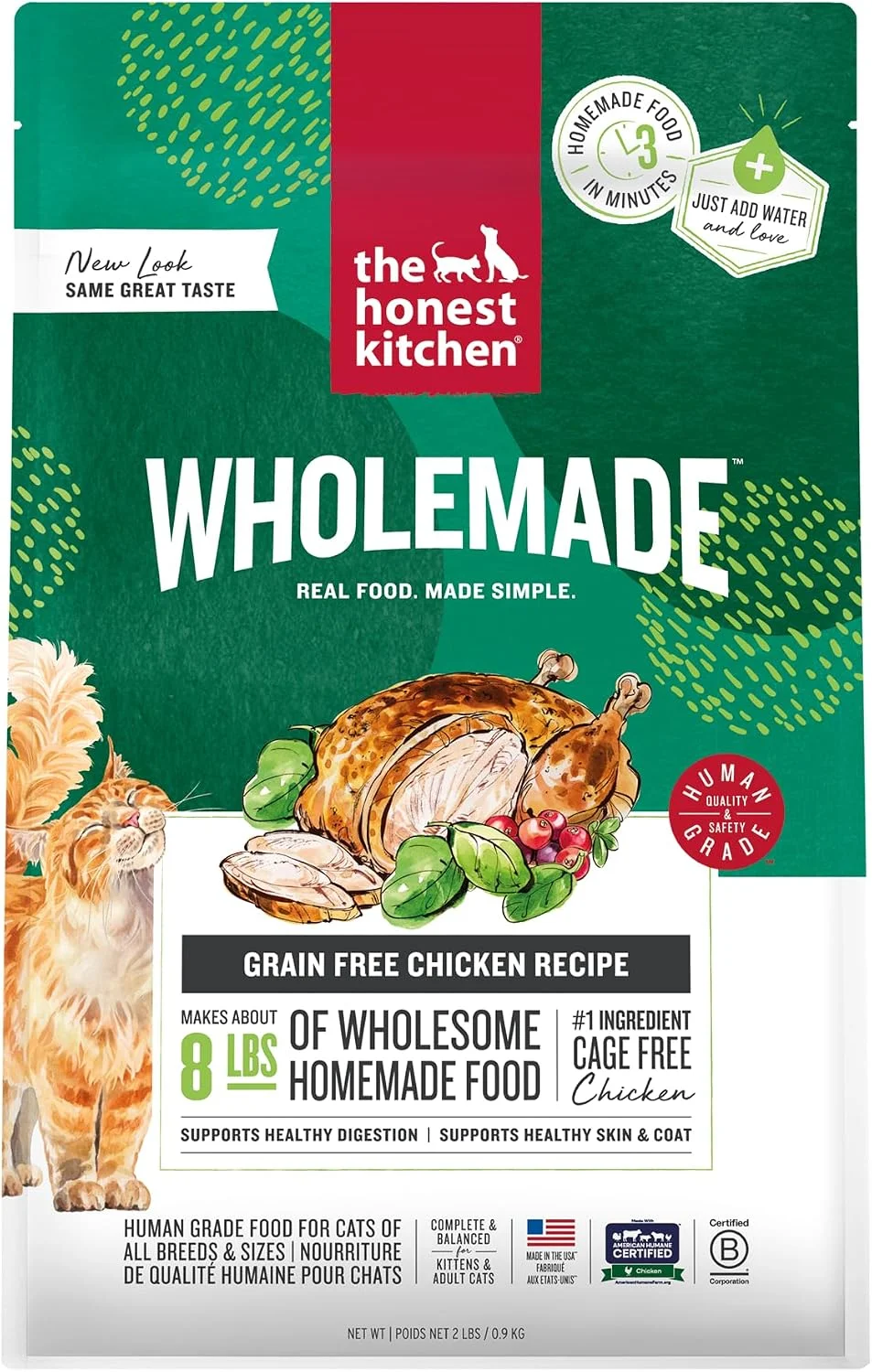
This dehydrated food is prepared with water before serving. The source says free-range chicken is the first ingredient, the product is made with human-grade ingredients, and a two-pound box makes eight pounds of prepared food. It’s listed as suitable for kittens and adults. The recipe is described as free of grains, GMOs, corn, wheat and soy, with no artificial preservatives, colors or flavors.
Rehydration adds a preparation step, and some cats may take time to accept the resulting texture. The source also notes that the bag isn’t resealable. A discount offer is mentioned in the original listing, but check the seller’s current terms rather than relying on an older promotion. 
Blue Buffalo Tastefuls Indoor: adult dry food
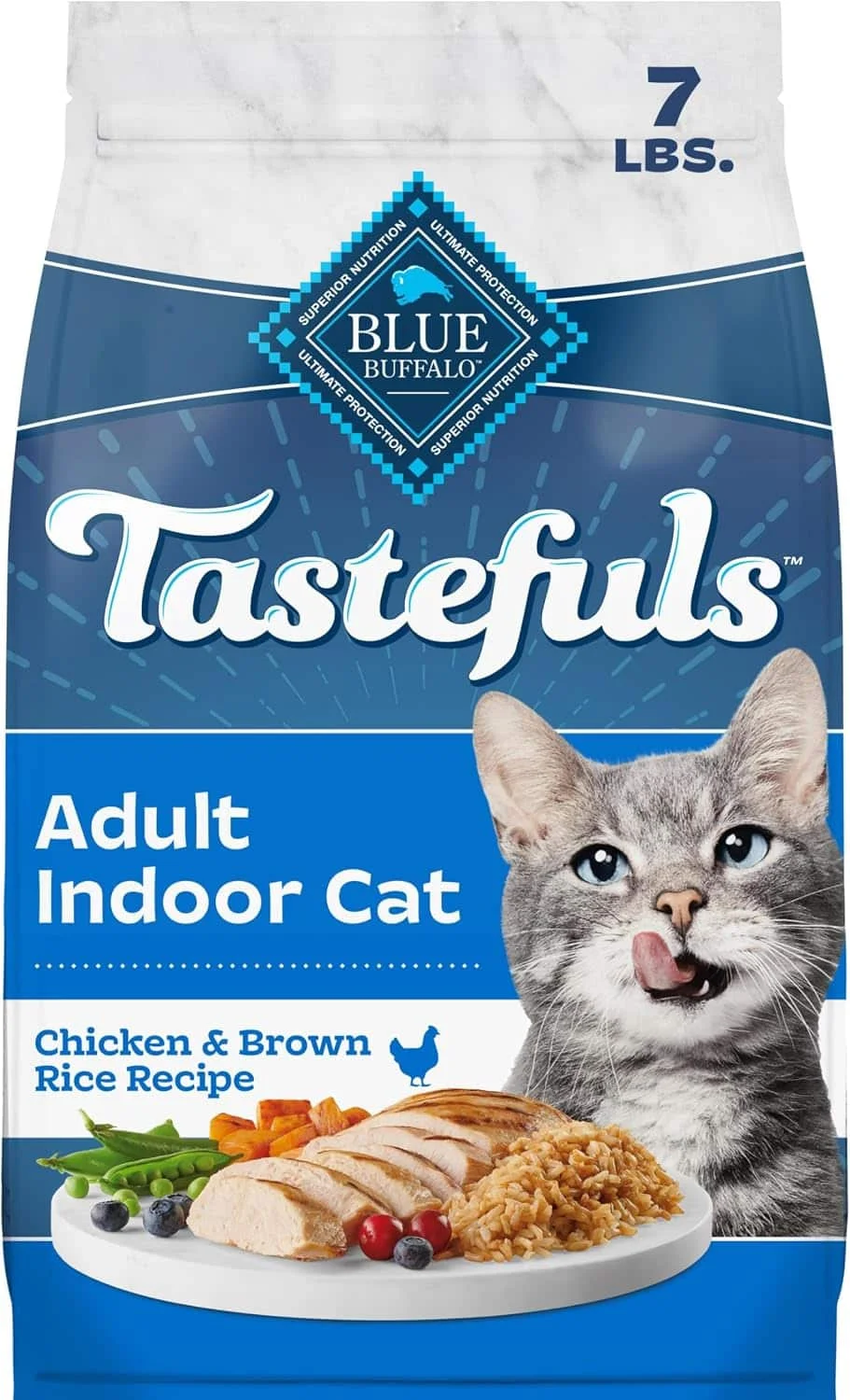
Chicken leads this indoor formula. The source describes added fiber for hairball control, omega-3 and omega-6 fatty acids, and LifeSource Bits containing antioxidants, vitamins and minerals. It says the food has no chicken by-product meals, artificial preservatives, colors or flavors. One reported drawback is a strong smell. Indoor formulas don’t remove the need to measure portions and monitor body condition; ask your veterinarian about an appropriate feeding plan if weight is a concern. 
Royal Canin Kitten: dry food for a defined growth stage
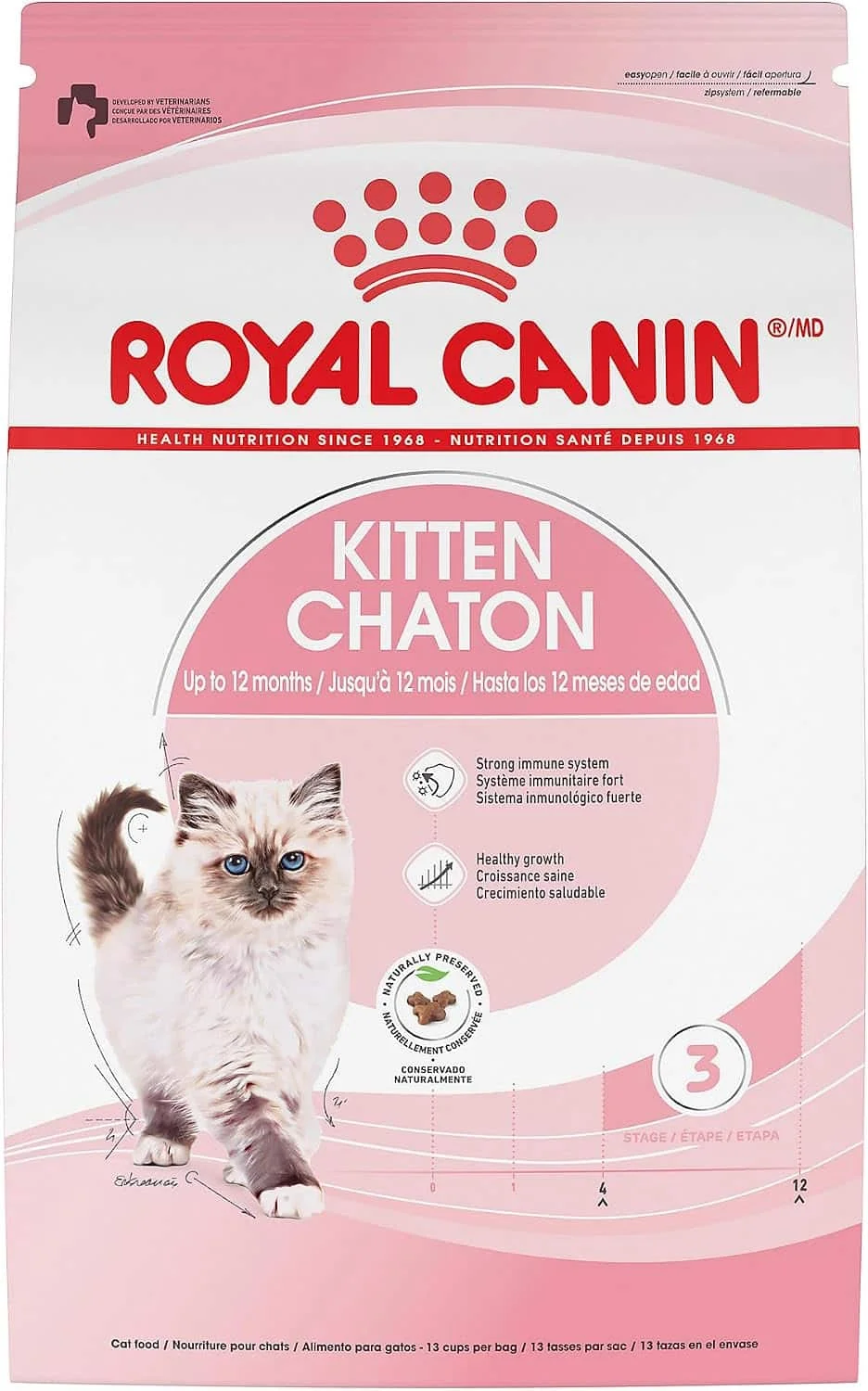
This kibble is intended for kittens aged four months to one year. The source highlights small pieces sized for kitten jaws and a blend that includes antioxidants, vitamins and prebiotics. It’s positioned at a premium price. Kittens with dietary restrictions or suspected allergies may need a different choice; consult a veterinarian when selecting food for a young animal or when digestive signs appear after a diet change.
NUTRO Wholesome Essentials: salmon-first adult kibble
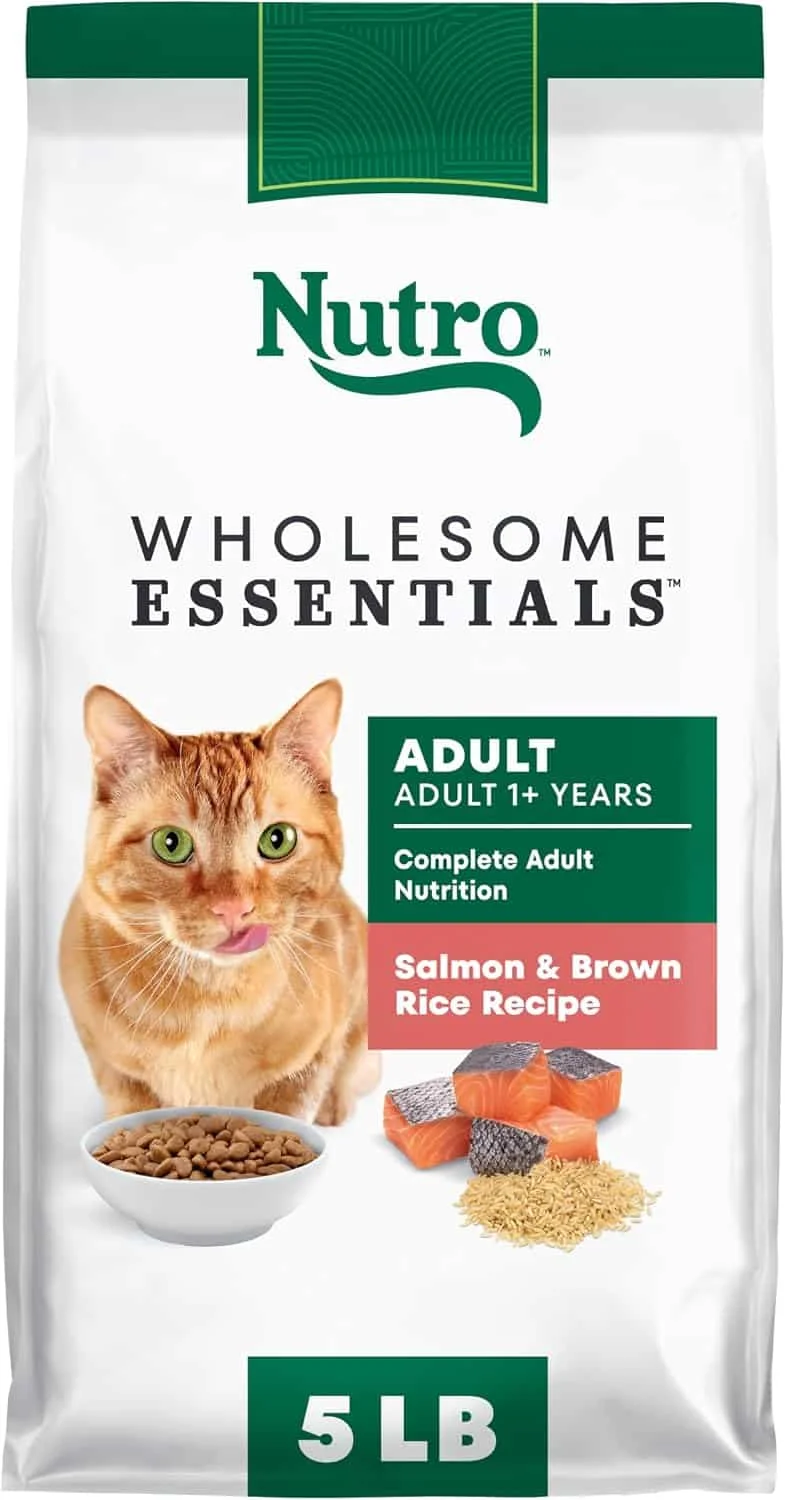
The source lists salmon first and describes natural fiber, antioxidants and omega-6 fatty acids. It says the recipe excludes corn, wheat, soy, chicken by-product meal and artificial colors, flavors and preservatives. However, the article cautions that chicken meal may appear as a secondary protein in some recipes. Cats with suspected chicken or grain sensitivities need the complete, current ingredient panel checked before feeding.
Wet foods for moisture, texture and ingredient preferences
Wellness Complete Health Gravies

This canned food is described as meat chunks in thick gravy, with added vitamins and minerals. The source says it’s grain-free and excludes carrageenan, wheat gluten, corn, soy, artificial colors and preservatives. The gravy contributes moisture, while the strong aroma may be off-putting to some people. Cats unfamiliar with gravy textures may need time to accept it.
Nulo Cat Freestyle Pate
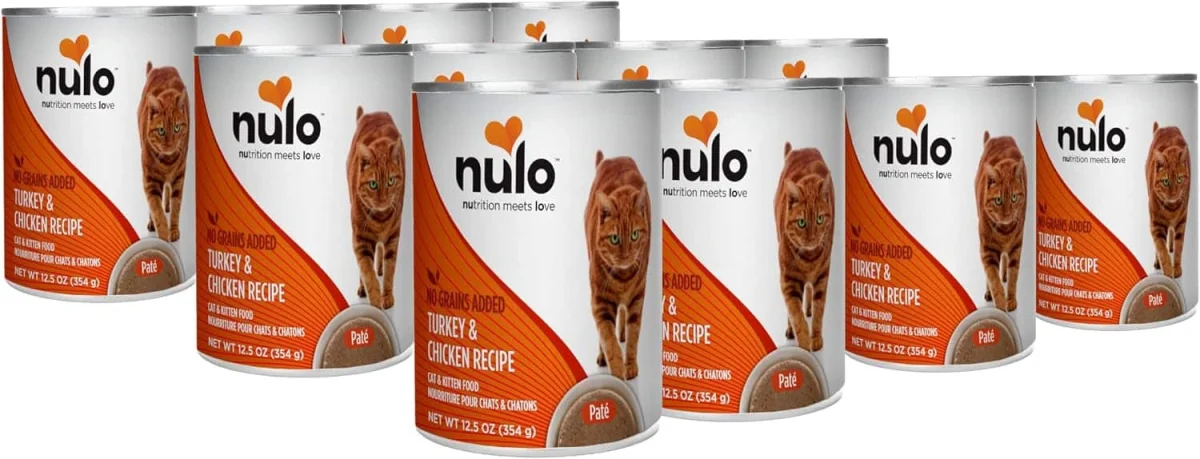
The source describes this pate as a high-protein, lower-carbohydrate recipe with turkey and chicken among the first ingredients. Pumpkin and carrots are cited as ingredients in place of starchier options. Taurine, vitamins and minerals are added, and the food is listed for kittens and adults. Multiple flavors may help households with selective eaters, although the price is higher than many alternatives.
Fancy Feast Purina Grain-Free pate
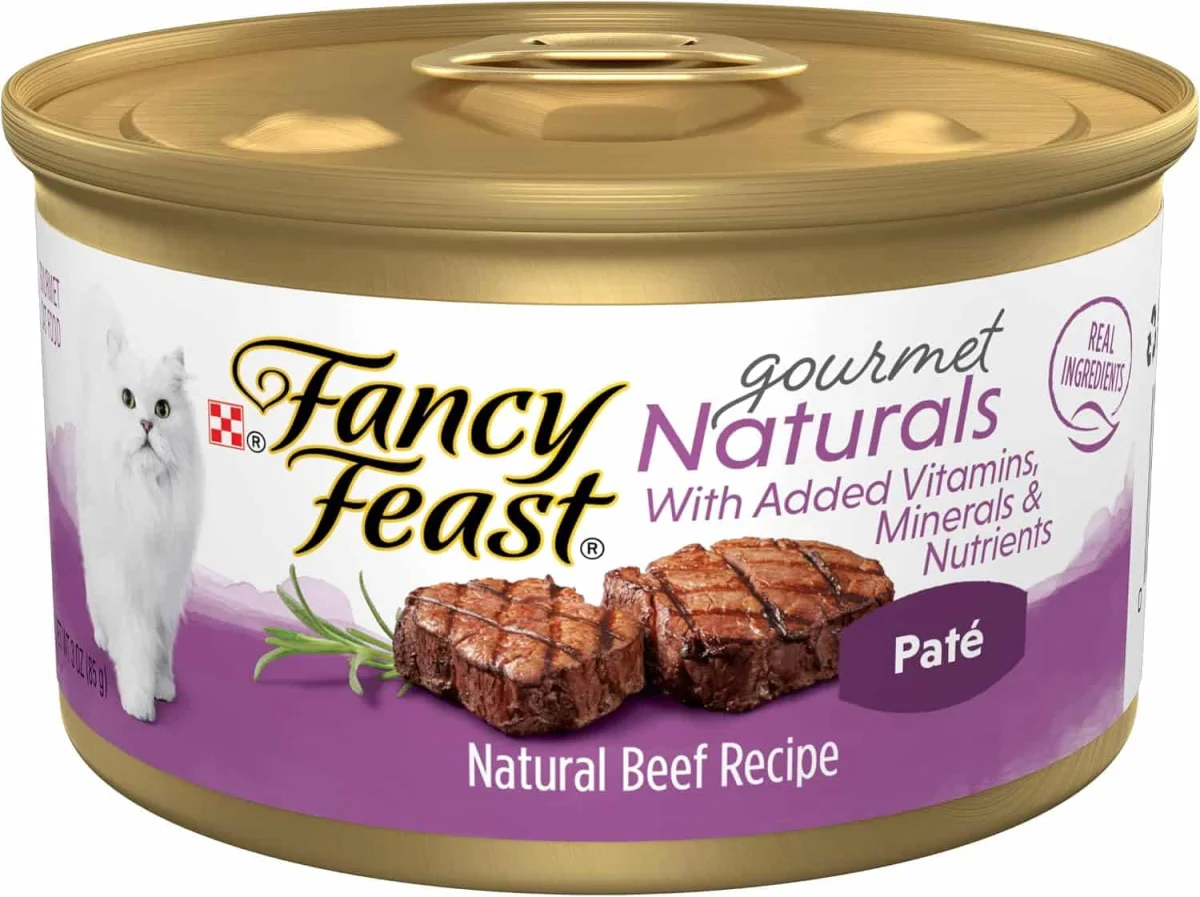
This is the lower-priced pate option in the source’s list. The primary meat or seafood depends on the flavor, and the product line offers a range of varieties. Its moisture-rich texture can contribute water through food. Some recipes may contain by-products, so check each flavor’s ingredients rather than treating the line as having one fixed recipe. Some varieties also have a strong aroma.
Tiki Cat Luau Shredded Meat
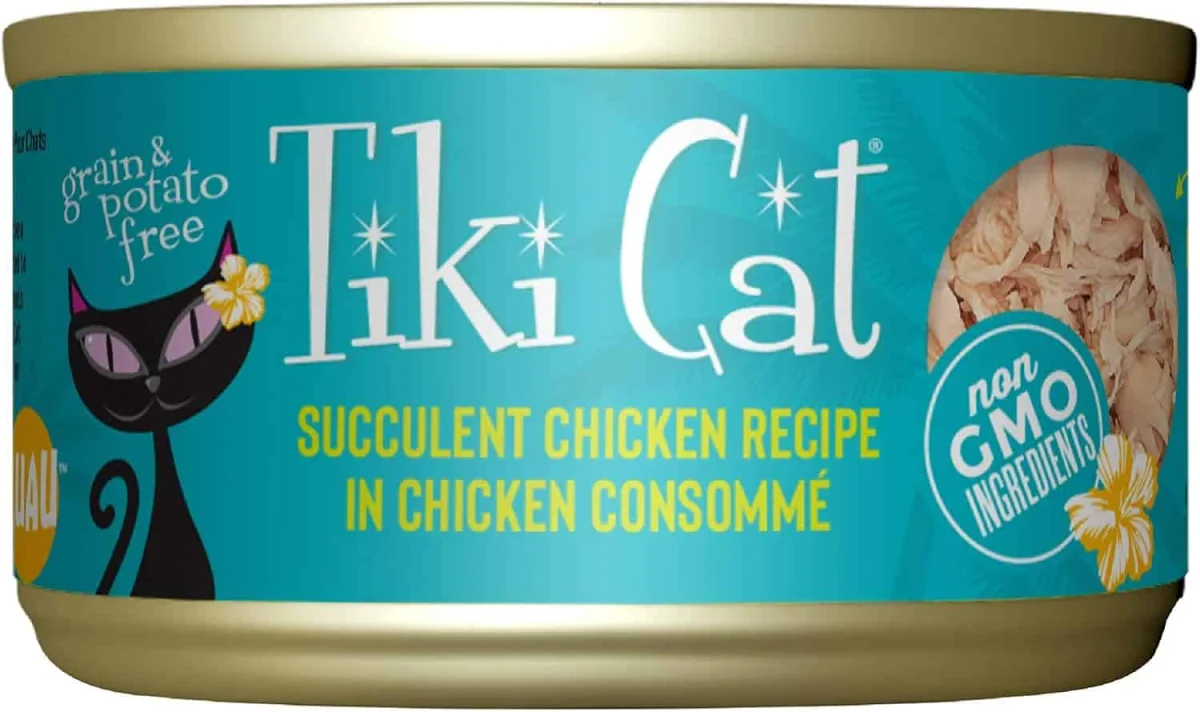
For cats that turn away from pate, the shredded texture may be worth considering. The source describes chicken, fish and seafood proteins, high moisture, and a grain-, potato- and filler-free recipe. It says the food is suitable for all life stages and contains no artificial colors, flavors or preservatives. It’s a premium-priced choice, so confirm the specific flavor’s nutritional statement and feeding directions.
Reveal Natural Wet Cat Food
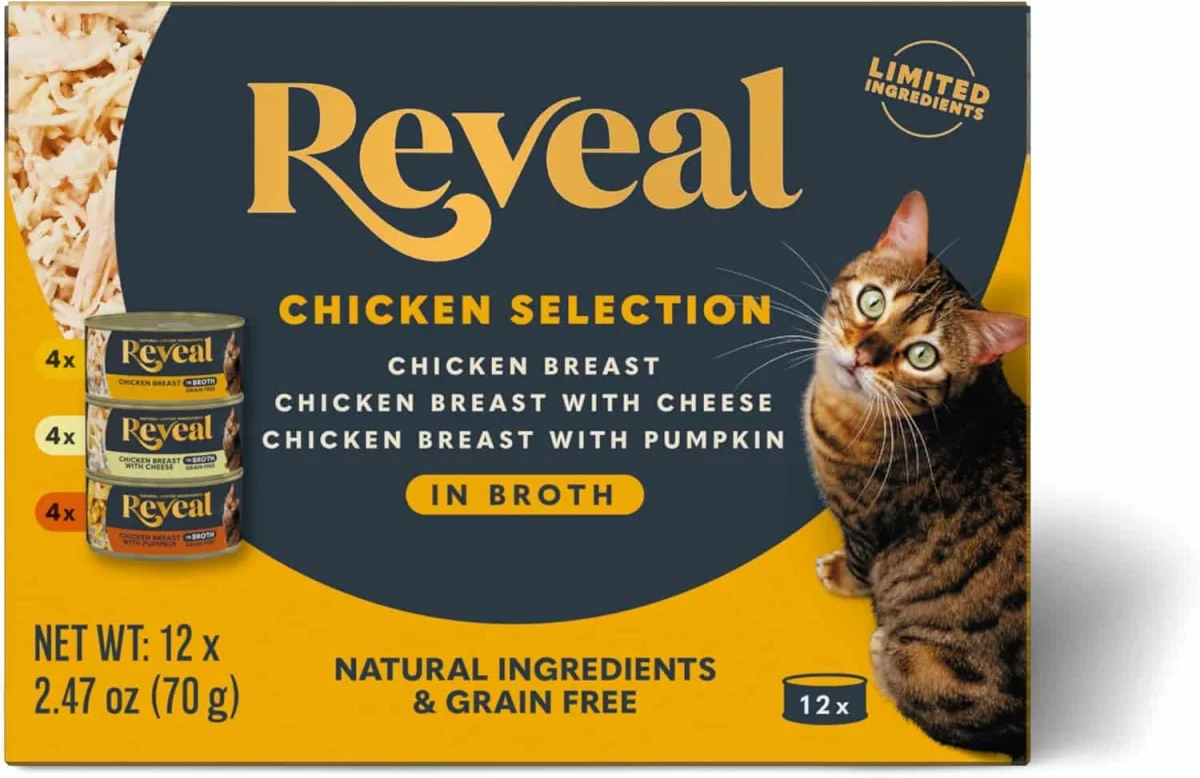
Reveal takes a short-list approach, with chicken or fish depending on the flavor. The source describes clear packaging that shows the food and says the recipes avoid by-products, fillers, artificial colors and preservatives. Smaller portions can suit some cats but may not satisfy others, and the aroma is described as less strong than that of many wet foods. “Limited ingredient” doesn’t mean a food is complete for every purpose: check the package’s nutritional statement, especially if it will make up the whole diet.
Targeted formulas and practical trade-offs
Hill’s Science Diet Urinary & Hairball Control
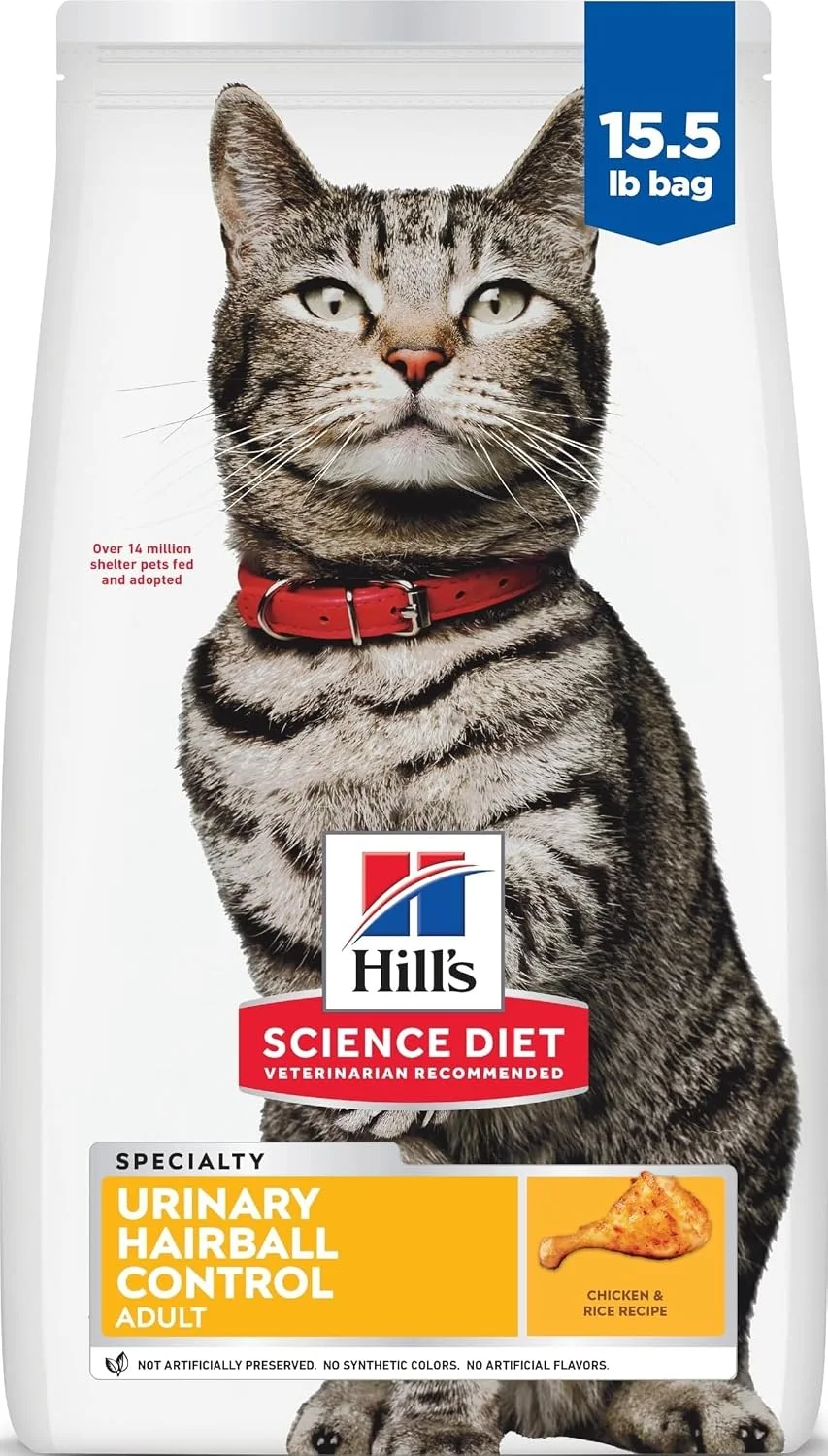
This adult kibble is presented as addressing hairballs with a natural fiber blend and supporting urinary health through balanced minerals. The source also notes omega-6 fatty acids and vitamin E, and says the food has no artificial colors, flavors or preservatives. It costs more than some dry foods. Urinary signs can require prompt veterinary attention; a food marketed for urinary support shouldn’t be used as a substitute for assessment or treatment.
Purina Pro Plan Senior with Probiotics
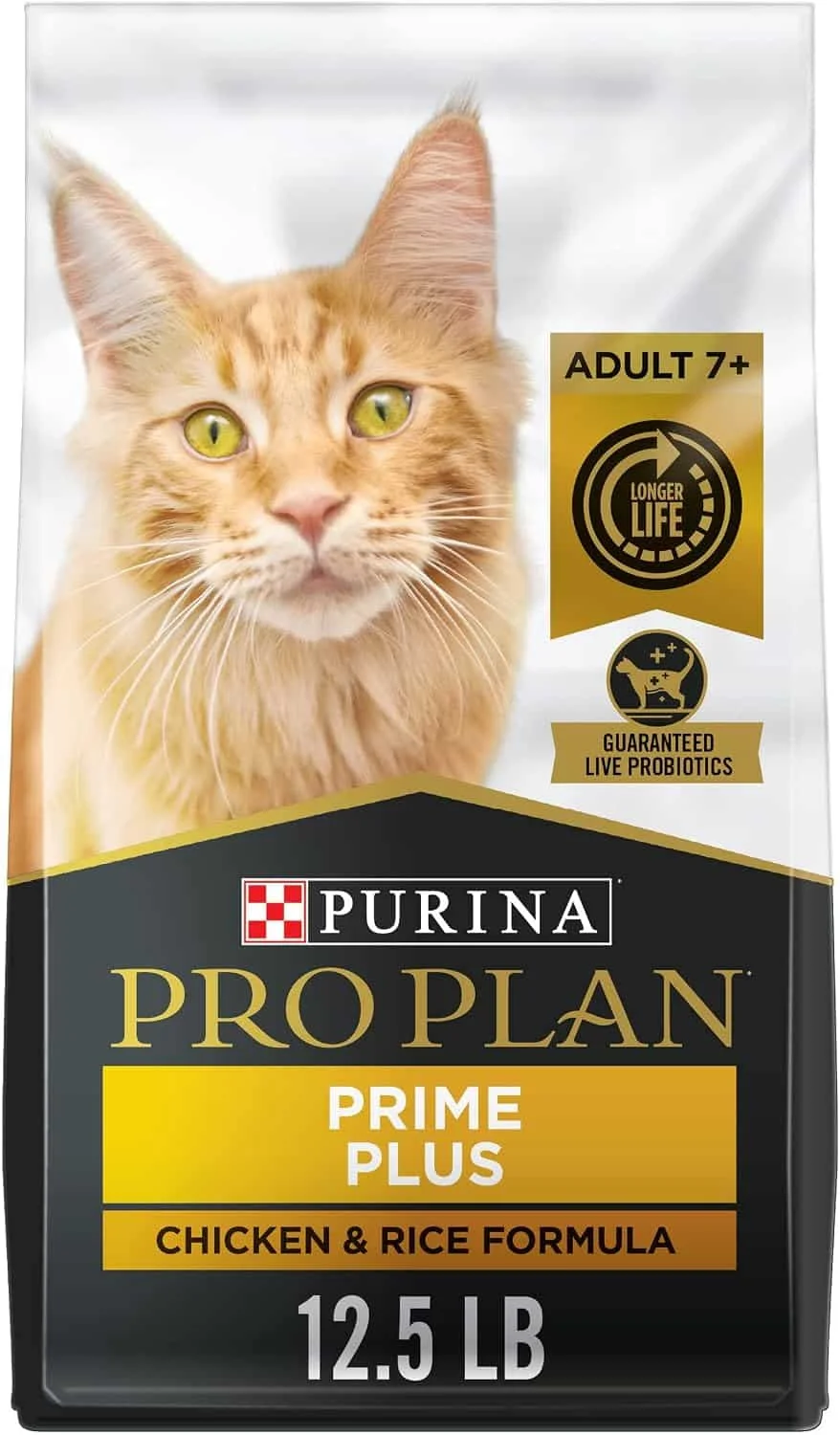
The source describes a high-protein dry formula with probiotics and easily digestible ingredients, plus kibble shaped for older cats. It comes in two flavors, but some cats may need time to accept the taste. The article notes that some owners may prefer wet food for seniors; the best format depends on the individual cat’s health, appetite and routine.
Purina ONE Sensitive Stomach, Sensitive Skin
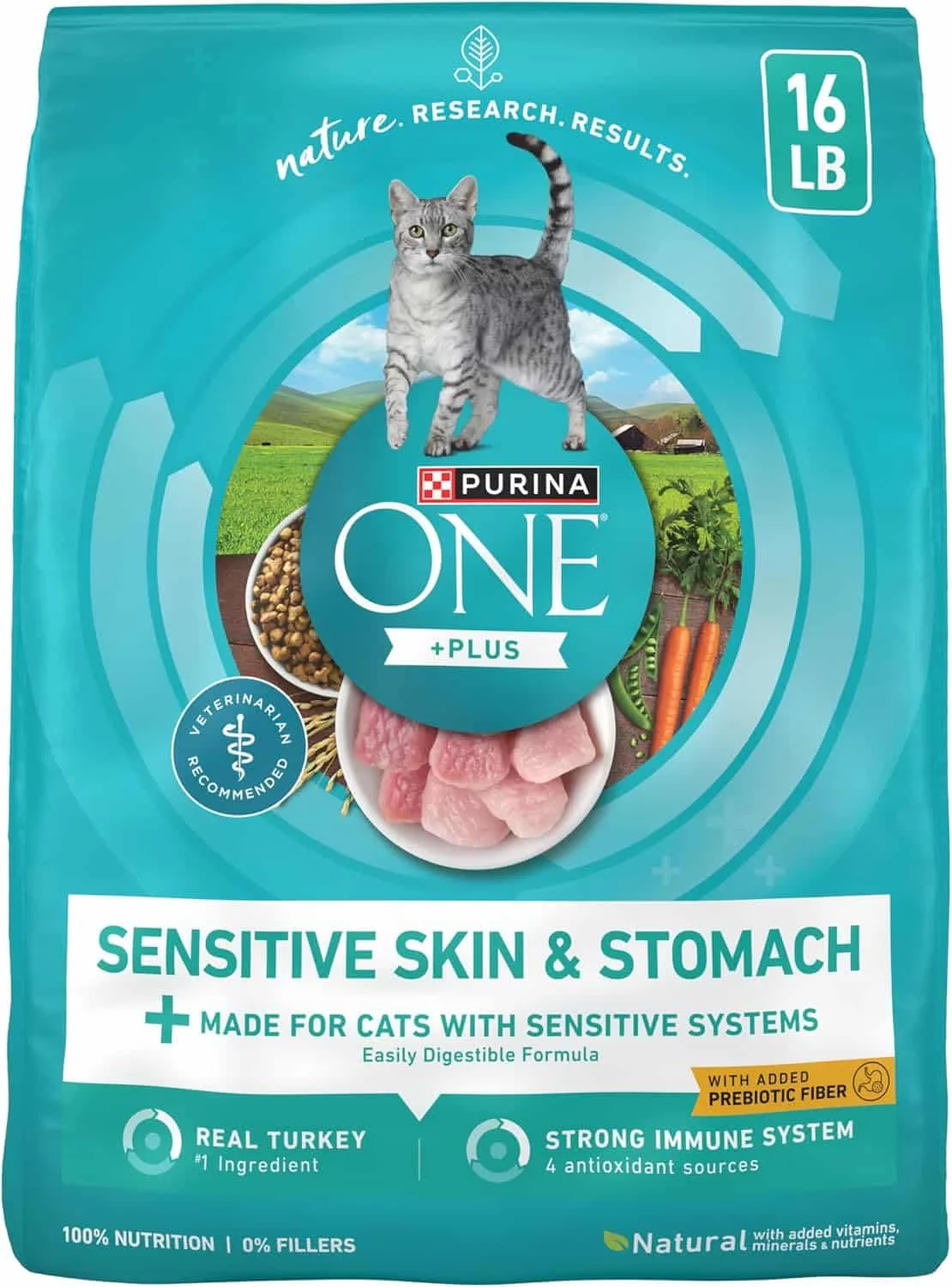
Turkey leads this adult dry food, which the source describes as easily digestible and supplemented with prebiotic fiber, omega fatty acids and four antioxidant sources. The article lists it as a more budget-conscious choice and notes that it may not suit cats with poultry allergies. Repeated vomiting, itching or other ongoing signs deserve veterinary advice rather than a series of unsupervised food changes.
Instinct Raw Boost Healthy Weight
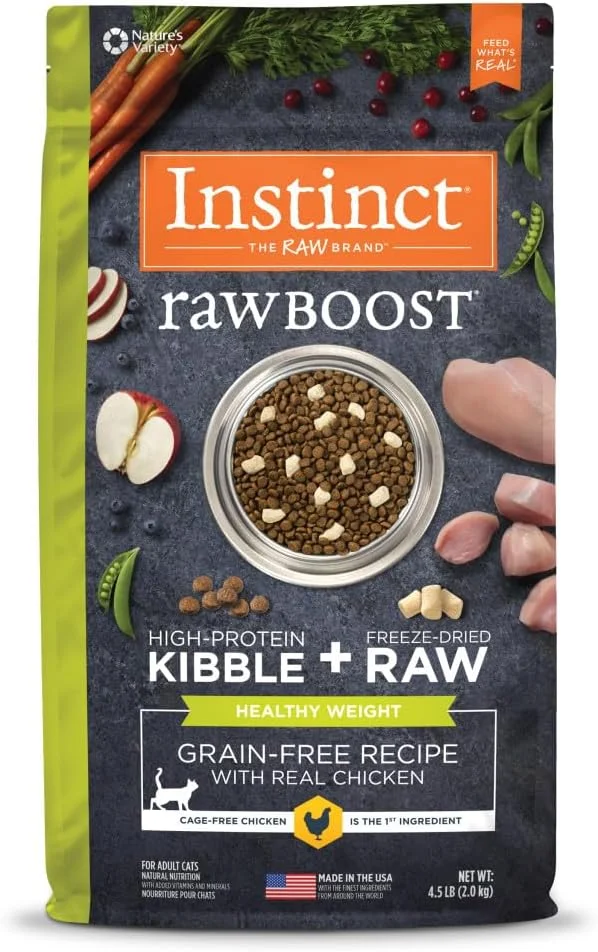
This adult food combines kibble and freeze-dried raw pieces, with cage-free chicken first. The source describes it as a grain-free weight-management formula and mentions L-carnitine. Some cats may reject the freeze-dried texture, and the product costs more than some alternatives. Weight goals should be set with a veterinarian, who can help establish portions and monitor progress instead of relying on a product label alone.
Feeding routines and common questions
Wet, dry or a mix?
Wet food supplies more moisture; dry food is easier to store and serve. The source notes that many households use a combination and recommends asking a veterinarian about an individual cat’s needs, particularly where urinary concerns are involved. No format is automatically right for every cat. Keep the food complete and balanced for the cat’s life stage, and follow package feeding guidance as a starting point.
How often should cats eat?
The source suggests three to four small meals daily for kittens under six months, two meals roughly 12 hours apart for adult cats, and smaller, more frequent meals as a possible option for cats aged seven and older. Needs vary with age, health and routine. Rather than leaving food out without limits, measure portions and monitor the cat’s body condition; ask a veterinarian to help adjust the plan if weight changes.
Is homemade food a safe option?
It can be difficult to balance a homemade feline diet. Cats need nutrients including taurine and arachidonic acid, and a recipe that looks wholesome may still be nutritionally incomplete. The source cites the Tufts Cummings School of Veterinary Medicine and advises working with a veterinary nutritionist to create a balanced recipe. Don’t improvise a long-term diet from a list of ingredients.
How should a new food be introduced?
The source recommends changing foods gradually over seven to ten days, beginning with roughly 25% new food and 75% current food, then increasing the new food over time. If a cat refuses the mixture or develops digestive upset, slow the change and seek veterinary advice if signs persist. A gradual transition can make it easier to notice whether the new food agrees with the cat.
Are vegetarian or vegan diets suitable for cats?
The source says no, citing cats’ need for nutrients such as taurine, vitamin A and arachidonic acid that are associated with animal sources. It points to the American Veterinary Medical Association. Don’t attempt a plant-based diet for a cat without veterinary guidance.
What about price?
The list ranges from lower-cost canned and dry foods to more expensive fresh and specialty options. A higher price doesn’t guarantee a better match, and a low price alone doesn’t reveal nutritional adequacy. Compare the complete-and-balanced statement, life-stage fit, ingredient list and feeding instructions, then choose an option that’s sustainable for the household. For suspected allergies or a diagnosed condition, prioritize veterinary advice over price or marketing claims.
Make the choice fit the cat
The strongest practical approach is to begin with a nutritionally appropriate food, then consider texture, moisture, budget and the cat’s preferences. A kitten food, indoor-adult formula and senior diet aren’t interchangeable simply because a cat likes the taste. Read the current package, transition gradually and ask a veterinarian to help when a health concern or special diet is part of the decision.
There isn’t one winning format in this list. Fresh food offers a moisture-rich option; canned foods provide variety in gravy, pate and shredded textures; dry and dehydrated products can suit different storage and feeding routines. The right choice is the one that meets the cat’s nutritional needs and can be served consistently. If appetite, digestion, weight or urinary habits change, treat that as a reason to check in with a veterinarian rather than assuming a different label will solve it.