Sample No. 0253
Upside-Down Spiders and the REM-Like Sleep Puzzle
Australian jumping spiders sleep hanging from silk and show REM-like eye and muscle movements, offering a new window into sleep outside vertebrates.
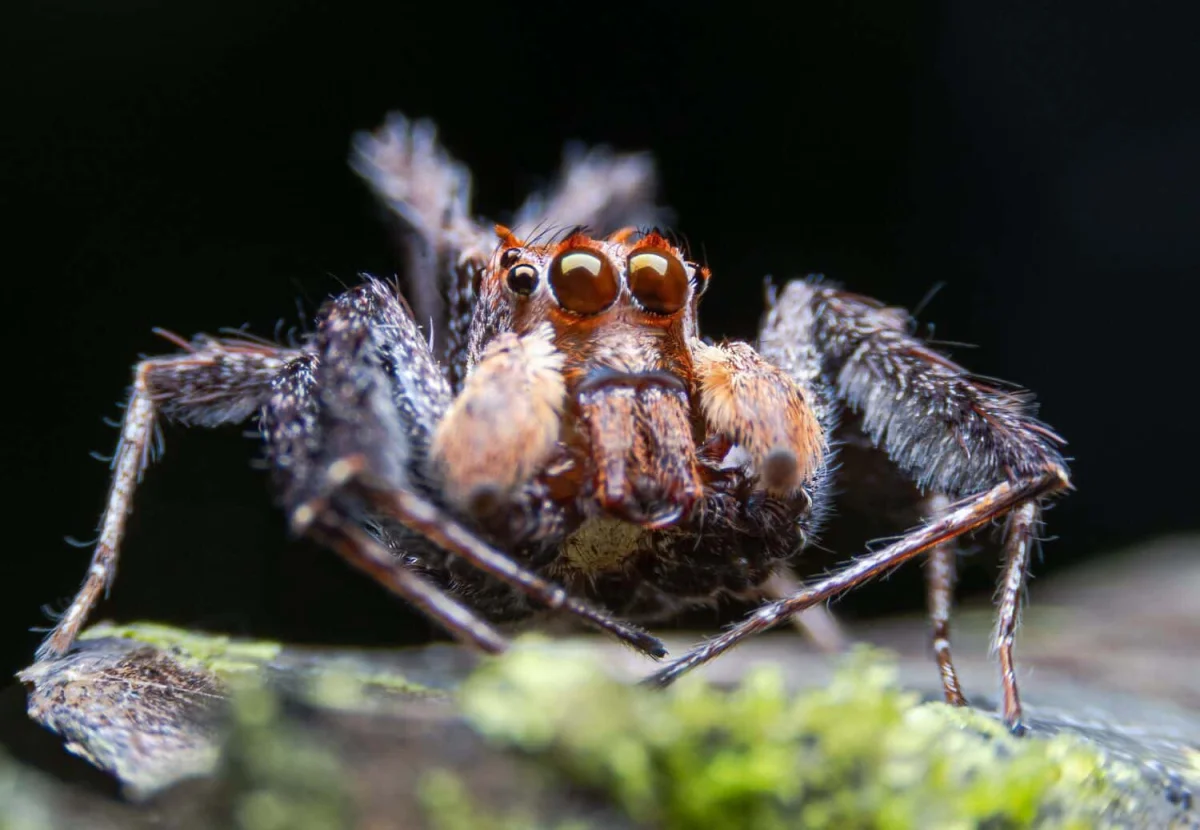
Most sleep research has been built on mammals and birds, so a tiny spider that naps upside down on a silk hammock is an unusual place to find new evidence. Researchers at the University of Bonn report that the Australian jumping spider (Portia fimbriata) shows two distinct sleep stages, and one of them looks a lot like REM sleep. That's the part that caught my attention. The findings were published in PNAS.
A Predator That Needs Its Rest
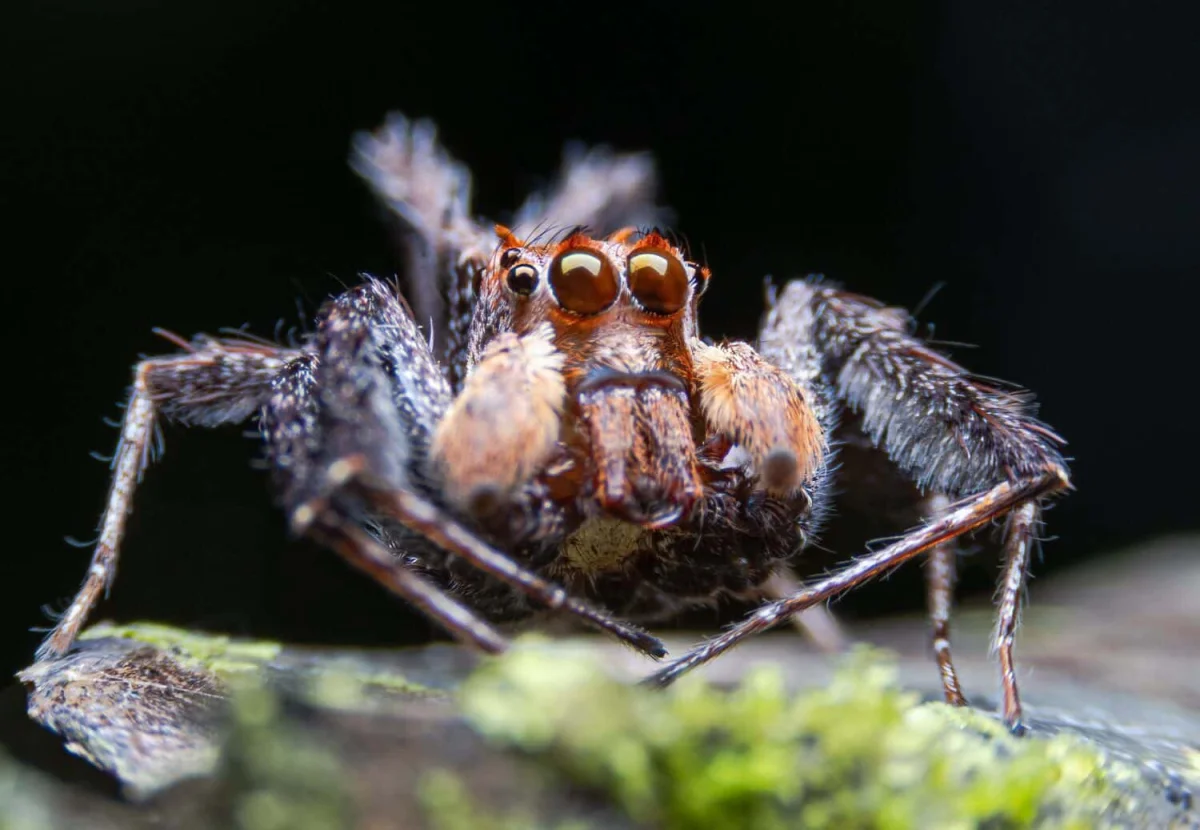
This spider is small, just millimeters across, but it hunts with real skill. It preys on other spiders. One of its favorite tricks is copying the vibrations an insect makes when it's tangled in a web. Web-building spiders feel the tug, come looking for an easy meal, and find a jumping spider waiting instead.
A hunter that spends its days stalking other arachnids still needs downtime, and this species handles it in a way that's easy to study. Every night, before settling in, it cleans all eight of its legs. Researchers call this its "bedtime routine." Then it hangs upside down from a small silk platform the researchers describe as a hammock. That pose is a big part of why the species was chosen. A spider resting belly-up is far easier to watch than one tucked into a crevice.
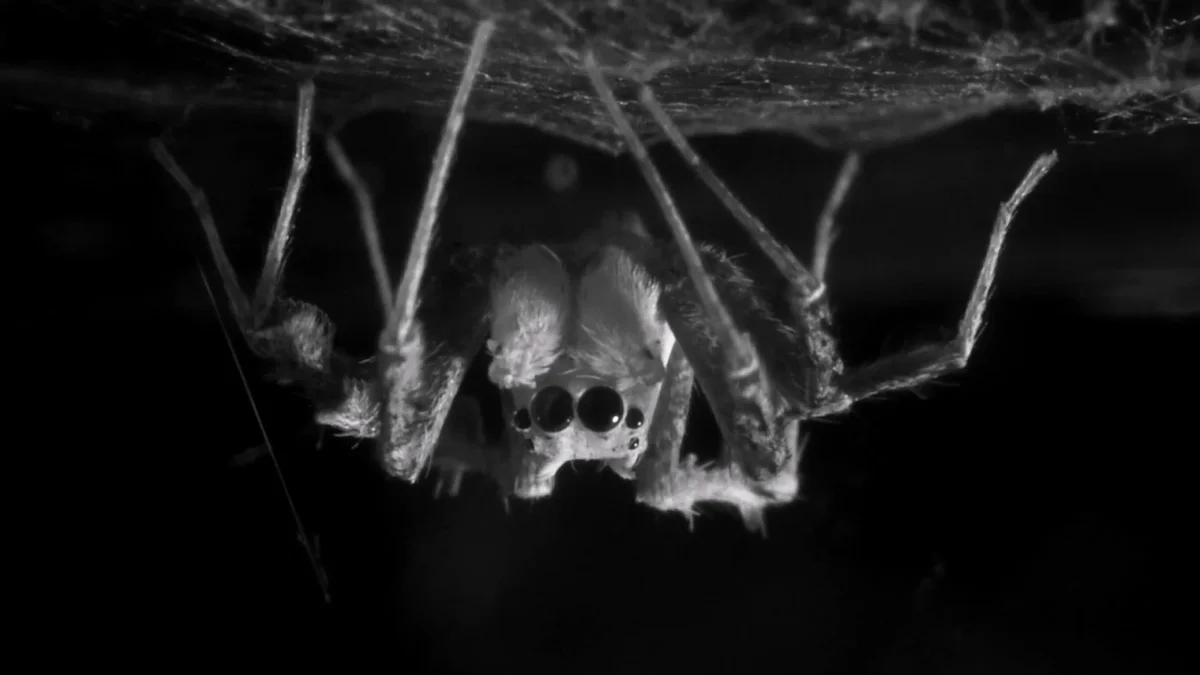
Australian jumping spiders sleep upside down, which makes their resting behavior easier to observe.
Why a Smarter Spider Makes a Useful Subject
The team was drawn to this species for another reason. Its hunting behavior is complex enough to suggest real learning ability. Researchers wanted to know how sleep, cognition and the nervous system interact, and a spider that plans and adapts gave them a better test case than a simpler species would. If sleep supports learning in a creature with a very different brain layout, that tells us something about what sleep is for, not just what it looks like in one lineage.
How the Observations Were Made
The team recorded individual spiders in high resolution over several days and nights. Each animal lived in a plastic dish 12 centimeters across. Lighting was adjusted to mimic day and night, and infrared cameras kept watch through the dark hours without disturbing the animals. The recordings tracked sleeping position, periods of stillness and REM-like movements.
Watching a spider lie still doesn't prove it's asleep, though. Stillness can also mean a spider is simply resting while awake. To separate the two, the researchers used sound to disturb the spiders and measured how quickly each one responded. Those response times helped the team tell genuine sleep apart from ordinary inactivity.
The researchers also examined sleep rebound, the pattern in which an animal that has lost sleep makes it up afterward by sleeping longer. Seeing that pattern is one of the more reliable ways to show that a state is true sleep with a biological need behind it.
Two Stages, and One That Looks Familiar
The main finding is that these spiders move through two distinct sleep stages. The stage that drew the most attention resembles REM sleep in people. During it, the spiders showed eye movements and muscle twitches similar to those seen in vertebrates. In mammals and birds, those signs are tied to the phase where most vivid dreaming happens.
Here's the thing: similar movements don't tell us what the spider experiences. The researchers are careful on this point. The twitches and eye movements don't prove that spiders dream. What they do show is that arachnid sleep is more structured than most people, and possibly most scientists, had assumed.
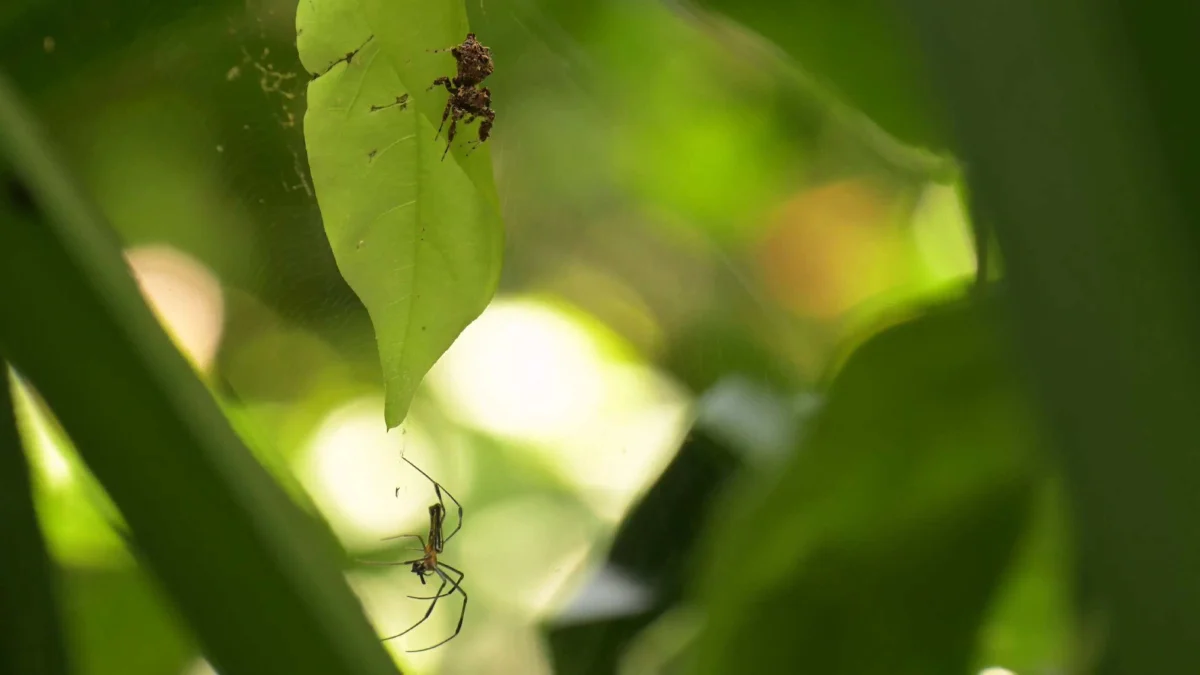
Australian jumping spiders hunt other spiders, and their sleep is now being examined in detail.
Why This Matters Beyond One Spider
Much of what we know about animal sleep comes from vertebrates, and the researchers point out that this is a narrow base. Vertebrate nervous systems differ a lot from arachnid ones. This study offers the first experimental evidence about sleep behavior in spiders, which makes it a useful reference point for anyone trying to work out how sleep evolved across the animal kingdom.
The team hopes other scientists will look beyond the familiar lab animals and toward species with simpler nervous systems. If sleep-like states show up in many lineages, researchers could start to identify traits that are shared across species and the biological jobs sleep may have served early in evolution. That's the bigger payoff here: a spider's nap might reveal something about our own.
What Comes Next
The next steps are already mapped out. The team plans to study sleep patterns in other spider species. They also want to compare spiders sleeping in artificial dishes with those resting in their natural habitats, since lab conditions can shape behavior. And they want to pin down the link between sleep and cognitive ability, which is the question that got them started.
For now, the answer to whether spiders dream is still open. What's clear is that a hammock-sleeping jumping spider has more going on at night than anyone expected, and that's a good reason to look more closely at the small animals we rarely think about after dark.


