Sample No. 0242
Why Billfish Sometimes Leap From the Water—and What Boaters Should Know
A billfish’s sudden leap can put people at risk. The clip’s species and trigger are unknown, but a little distance and caution matter.
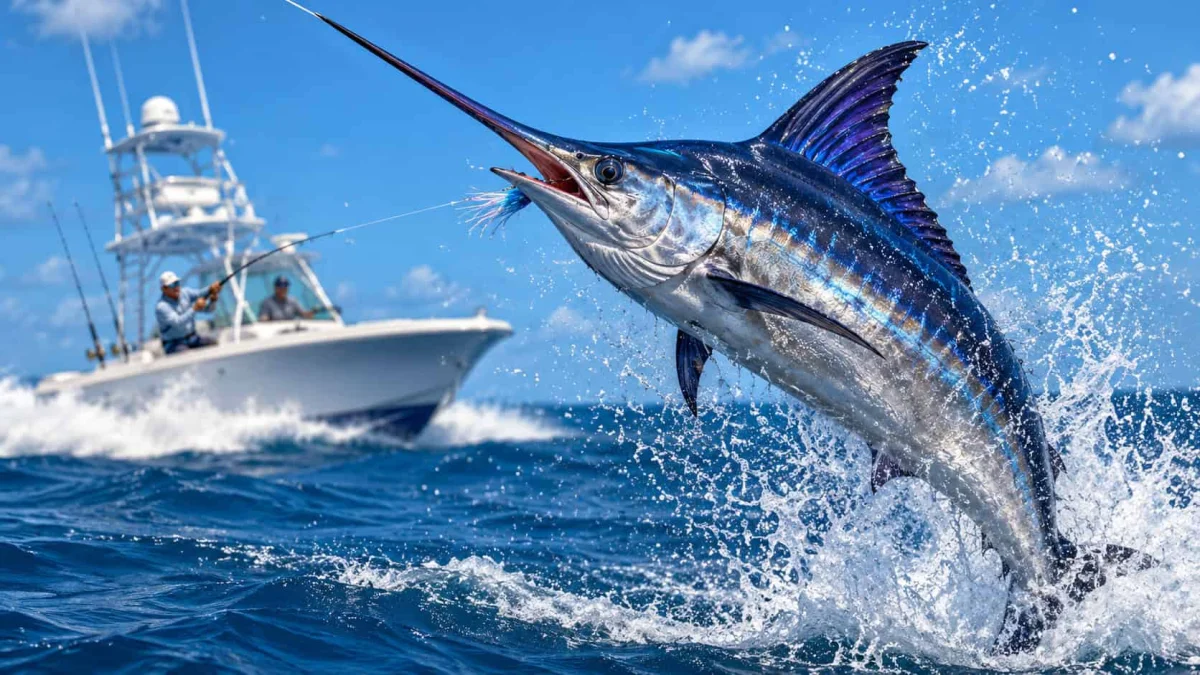
A large fish leaping onto a moving boat is a startling reminder that ocean wildlife can come close without warning. In the circulating clip, a long-billed fish races near a vessel, launches from the water and lands aboard. The people on the boat scramble to avoid it. The footage shows a dangerous encounter, but it doesn’t establish what made the fish jump or whether anyone was hurt.
The fish appears to be a billfish, though its exact species hasn’t been confirmed. That uncertainty matters: swordfish, marlin, sailfish and spearfish share an elongated upper jaw, but they aren’t all close relatives, and a long bill alone isn’t enough to identify the animal. The clip doesn’t provide a clear enough view to settle the question.
A leap with real risks
The clip was shared with a joking caption about the slim chance of getting into a “sword fight” with a fish. The humor captures how improbable the scene looks, but the animal’s pointed bill and powerful body make close contact a serious hazard. Anyone aboard a boat faced with a large fish on deck should give it space and avoid trying to handle it. An animal thrashing in a confined area can injure people as well as itself.
There’s no confirmed explanation for the leap. The footage doesn’t show enough of what happened beforehand to tell whether the fish was startled, evading something, or responding to another disturbance. A sudden jump may look deliberate when viewed on video, but without that context, assigning a motive would be guesswork.
For people on the water, the practical lesson is simple: keep a safe distance from wildlife and stay alert when animals are nearby. If a large fish comes aboard, don’t crowd it or reach toward its bill. The clip doesn’t establish what happened after the leap, so it can’t show what response worked or whether anyone needed care.
What the bill does
© bekirevren/Shutterstock.com
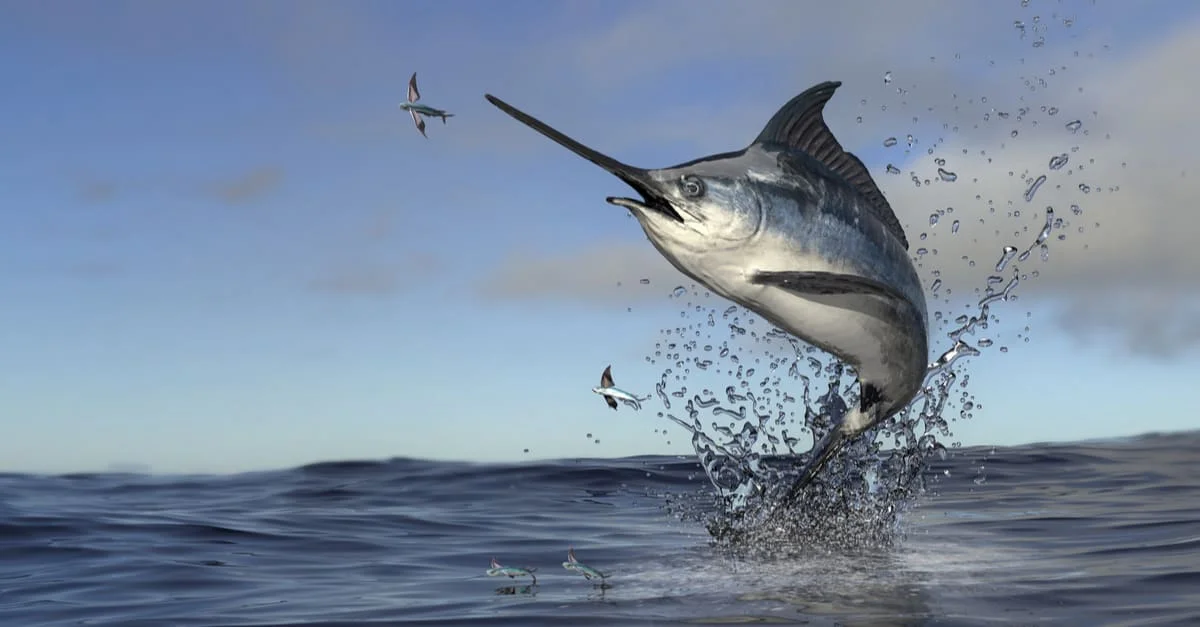
The elongated bill is a hunting tool, though it isn’t simply a harpoon used to spear prey. Studies have documented sailfish and marlin striking or slashing at smaller fish, which can injure or stun them before they’re eaten. Techniques differ among species, so this behavior shouldn’t be assumed to explain every billfish encounter—or the leap in the clip.
Billfish commonly eat fish and squid. Their streamlined bodies and strong tails help them pursue fast-moving prey in open water, while their bills can help them strike a school or individual fish. The combination of speed, size and a pointed bill makes them impressive predators, and it also makes an unexpected encounter at close range worth taking seriously.
The group includes animals with meaningful physical differences. Swordfish belong to the family Xiphiidae and have broad, flattened bills. Marlin and sailfish are in the family Istiophoridae. Those distinctions help with identification, but the available view of this fish doesn’t show enough detail to name its species confidently.
Speed and uncertainty
Some estimates put certain billfish at around 50 miles per hour in short bursts. Yet the highest speed claims have been questioned because measuring an animal’s maximum speed in the open ocean is difficult. The more dependable takeaway is that billfish are adapted for fast pursuits: their body shape reduces resistance in the water, and their powerful tails provide thrust.
That swimming ability doesn’t tell us why this fish left the water. A brief burst of speed and an airborne leap are different behaviors, and the video doesn’t reveal what led up to the jump. It’s better to keep the explanation open than to treat a possible cause as established fact.
A clear identification would also require a better view of the fish’s features. The bill suggests a billfish, but it doesn’t distinguish among the possible species. For now, the useful conclusion is narrower: a large wild fish unexpectedly landed aboard a moving boat, creating a risk for everyone nearby. Keeping distance from marine animals—and giving a stranded animal room to move—remains the sensible response when a rare encounter turns suddenly close.


