Sample No. 0241
Fresh Food for Large Breed Puppies: Calcium, Calories and Portion Control
Fresh food can suit large breed puppies when it meets growth standards, keeps calcium in range and is portioned to support a lean body condition.
For large breed puppies, growth rate matters more than food format
Fresh food can be a suitable choice for a large breed puppy, provided its label covers large breed growth and each portion supports steady, lean development. Kibble, canned food and gently cooked meals differ in moisture, texture and convenience; those differences matter less than the recipe’s nutrient profile and the amount your puppy eats.
A puppy expected to weigh 70 pounds or more as an adult falls within the large size growth category used by AAFCO. That includes many Labradors, Golden Retrievers, German Shepherds, Bernese Mountain Dogs, Great Danes, Mastiffs and large mixed breed dogs. Adult size is the guide, so ask your veterinarian for an estimate if your puppy’s likely weight is unclear.
Big puppies grow quickly, but faster growth is not the goal. Their developing bones and joints need the right balance of nutrients and calories, while excess weight adds load to still-growing hips and elbows. Genetics play a major role in conditions such as hip dysplasia, but feeding and exercise are among the factors owners can manage.
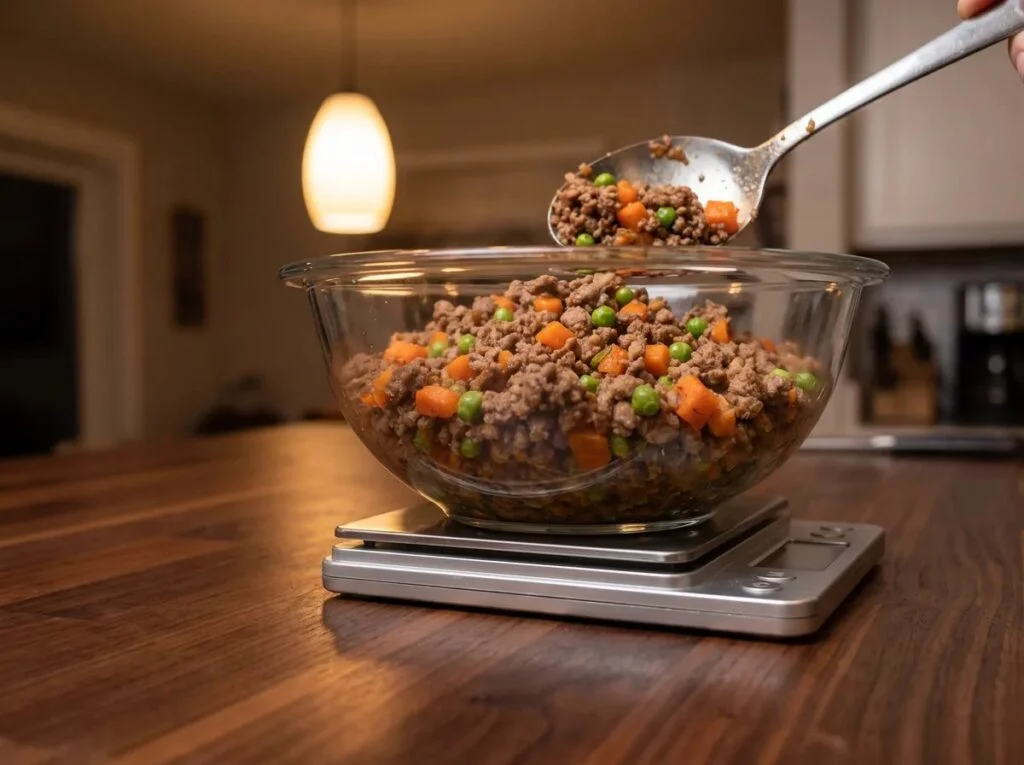
Fresh food can make measured feeding convenient. Its high moisture content means a serving weighs more than an equal-calorie portion of dry food, and pre-portioned packs may help keep meals consistent. That convenience only helps if you check the calories and adjust the amount as your puppy grows.
Check the growth statement before choosing a recipe
The nutritional adequacy statement is the first thing to find on a food label. For a large breed puppy, look for wording that says the food meets AAFCO nutrient profiles for growth, or for all life stages including “growth of large size dogs (70 lb. or more as an adult).” A statement covering growth without the large size wording may not suit a puppy expected to cross that adult weight threshold. Adult maintenance food alone is not appropriate for a growing puppy.
That statement is especially useful when a brand doesn’t publish calcium figures on its packaging. A recipe formulated for large breed growth is designed to meet the narrower calcium limits for those puppies. If you want to review the actual nutrient figures, ask the food company for a typical analysis on a dry matter basis.
Chewy says its Get Real gently cooked recipes meet AAFCO profiles for all life stages, including growth of dogs expected to weigh at least 70 pounds as adults. That makes them an option to consider as a complete diet, subject to your puppy’s needs and your veterinarian’s guidance. The recipes come in 12 ounce and 24 ounce packs for meals, and a 5 ounce pack intended as a topper or kibble mixer rather than a full meal.
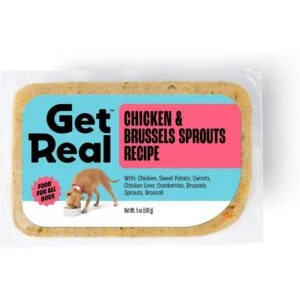
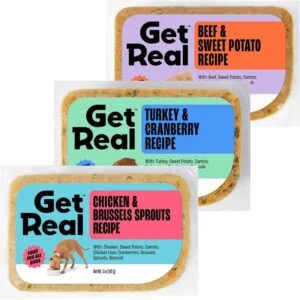
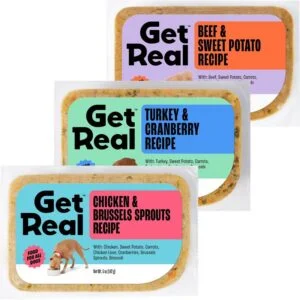
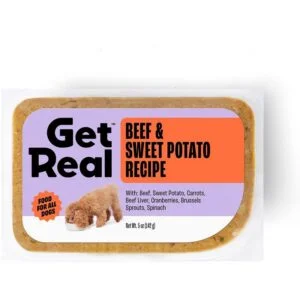
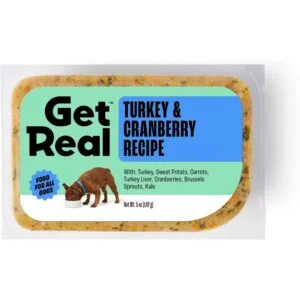
Get Real offers chicken with Brussels sprouts, beef with sweet potato, and turkey with cranberry. Its beef recipe lists beef, sweet potato, carrots, beef liver, cranberries, Brussels sprouts and spinach, followed by vitamins and minerals. The company describes the recipes as gently cooked and frozen, using 10 ingredients or fewer plus vitamins and minerals.
A practical label check can guide your choice:
- Confirm that the adequacy statement includes growth of large size dogs or all life stages including that growth.
- Feed the complete recipe without adding calcium supplements, bone meal or other high-calcium extras.
- Check calories per pack or serving so you can measure meals and adjust them to body condition.
- Plan with your veterinarian when to reduce puppy portions or move to an adult food.
Calcium, phosphorus and calories shape healthy growth
Calcium deserves particular attention in large breed puppy diets. AAFCO’s nutrient profiles set a calcium minimum of 1.2 percent on a dry matter basis for growth and a maximum of 1.8 percent for foods intended for large size growth. The maximum for other growth foods is 2.5 percent. The phosphorus minimum is 1.0 percent, and the calcium to phosphorus ratio should fall between 1:1 and 2:1.
Large breed puppies absorb much of the calcium they eat, which makes excess difficult for their bodies to regulate. Too much calcium is a recognized risk factor for developmental orthopedic disease, a group of problems that includes osteochondrosis and can contribute to hip or elbow dysplasia in predisposed dogs. Don’t add calcium supplements, bone meal or high-calcium treats to a complete food unless your veterinarian specifically advises it. The diet should already supply the calcium the puppy needs.
Calories are the other major part of growth management. Excess energy can speed weight gain and put additional pressure on developing joints. A lean body condition is a useful target throughout puppyhood, not simply a matter of appearance.
A long-term study of Labrador Retriever littermates, published in the Journal of the American Veterinary Medical Association, compared dogs fed freely with dogs fed 25 percent less from puppyhood. The leaner dogs had a median lifespan about two years longer and developed signs of hip osteoarthritis later. The findings support treating portion control as part of long-term care.
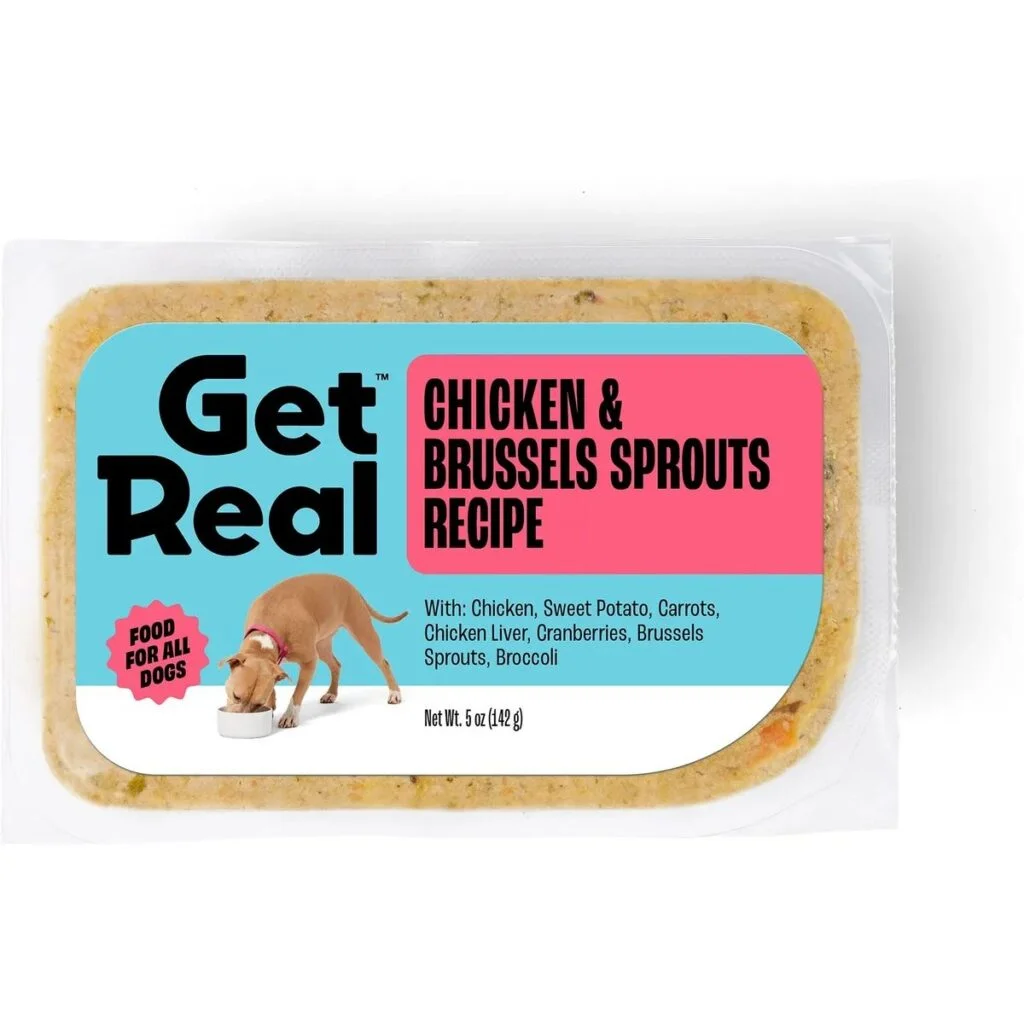
Fresh foods contain substantial water, so comparing their serving weights directly with kibble can be misleading. Compare calories instead. Get Real lists 428 kilocalories per 12 ounce pack for chicken, 451 for beef and 474 for turkey. The turkey pack provides 46 more kilocalories than the chicken pack. If you change recipes but keep feeding the same number of packs, your puppy’s daily energy intake can shift by roughly 10 percent.
| Recipe | Crude protein, minimum | Crude fat, minimum | Calories per 12 ounce pack |
|---|---|---|---|
| Chicken and Brussels sprouts | 10% | 8.5% | 428 |
| Beef and sweet potato | 9% | 7% | 451 |
| Turkey and cranberry | 8% | 10% | 474 |
Protein and fat figures in a guaranteed analysis are minimums, while fiber and moisture are listed as maximums. They don’t tell you the full nutrient profile. For portion comparisons, calories per pack are more useful. Among these three recipes, chicken has the fewest calories per pack and turkey the most. The recipe choice should still fit your puppy’s tolerance and the overall feeding plan.
Set portions by body condition and regular weigh-ins
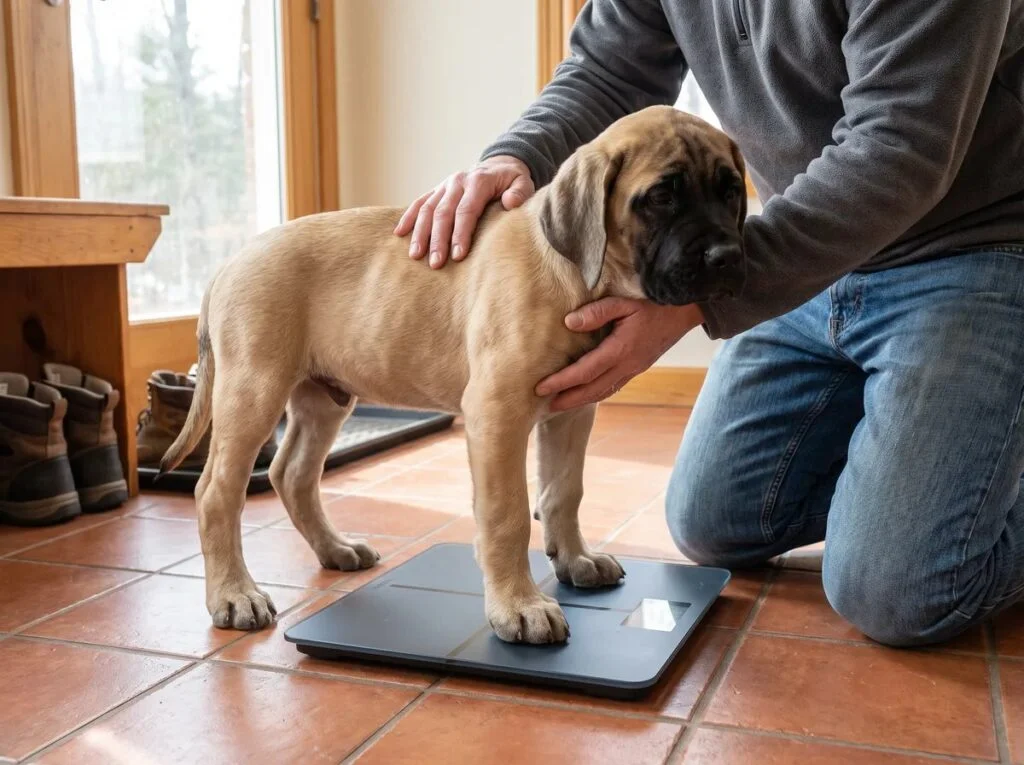
Feeding charts offer a starting point, not a precise prescription. Two puppies of the same age and breed can need different amounts because of their genetics, activity and growth stage. Begin with a reasonable estimate, then adjust using regular weights and body condition.
One common estimate starts with resting energy requirement: 70 multiplied by body weight in kilograms raised to the 0.75 power. Growing puppies younger than about four months may need around three times that amount; older puppies may need about twice the amount until they approach adult size. The Merck Veterinary Manual gives these figures as general guidance. For example, a puppy weighing 20 kilograms, or 44 pounds, and older than four months would have a starting estimate of roughly 1,300 kilocalories a day. That figure is not a prescription, and individual needs vary.
Online feeding plans can also provide a starting amount. Get Real’s plan uses a puppy’s weight, breed, age and activity level. Whichever starting point you use, assess the puppy rather than following a fixed quantity indefinitely.
- Weigh your puppy every two weeks and record the result.
- Feel for ribs under a thin layer of fat and look for a visible waist from above.
- Offer three or four meals a day until about six months, then generally move to two meals a day.
- Include treats in the daily calorie total; keep them to about 10 percent of calories.
- Adjust portions slightly if your puppy becomes round or if ribs and hips grow prominent.
The World Small Animal Veterinary Association’s body condition charts use a nine-point scale. A lean score of 4 to 5 is a reasonable aim during growth. Appetite may rise for a few weeks during a growth spurt, but a puppy should still maintain a lean outline. Recheck portions after each weigh-in because needs change as growth and activity change.
Exercise also affects the load on developing joints. Free play on soft ground is appropriate for many puppies, while long runs and repeated jumping are better left until the dog is more mature. Ask your veterinarian about activity that fits your puppy’s age, build and health.
Choose a protein your puppy tolerates
Soft stools, gas or an uneven appetite can occur in puppies with sensitive stomachs. A particular protein may not agree with an individual dog, but abrupt food changes, rich treats and eating too quickly are also common contributors. Start by keeping treats simple, measuring meals and making changes gradually.
If you suspect a protein is causing trouble, choose a recipe your puppy tolerates and keep the diet consistent. In the Get Real range, beef is the chicken-free option; turkey offers another poultry choice. Chicken has the fewest calories per pack, while turkey has the most. These differences affect portion size even when the puppy does well with all three proteins.
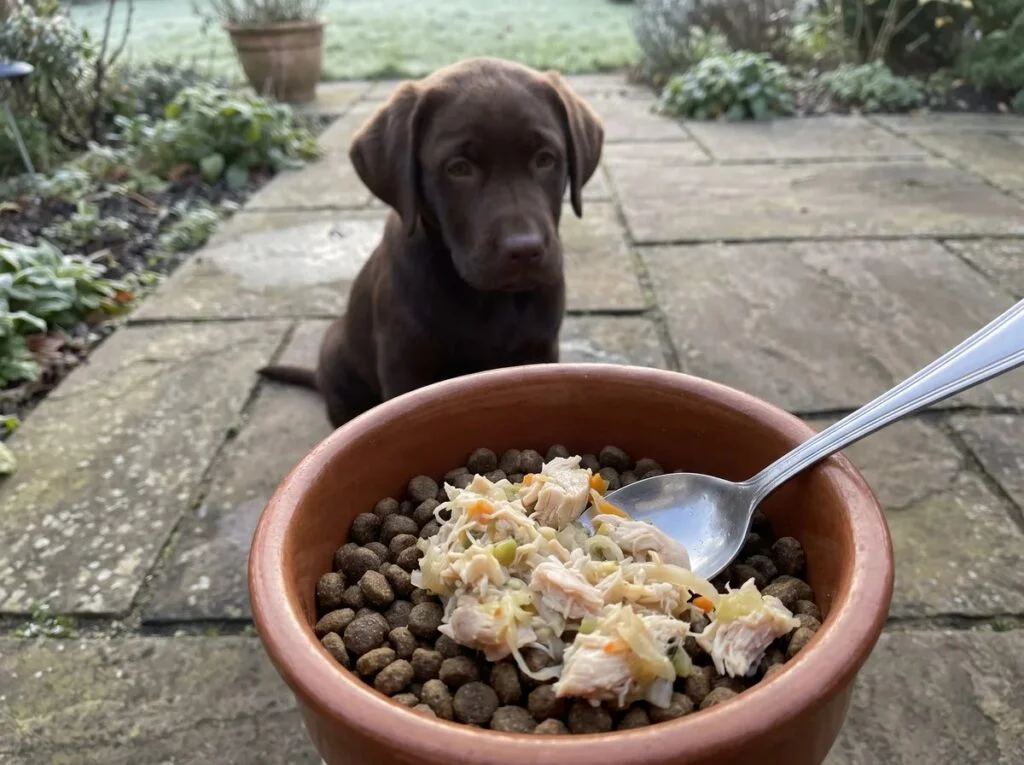
Persistent loose stools lasting more than a day or two, vomiting, lethargy or weight loss warrant a call to your veterinarian. Parasites and infections are common in young dogs, and a diet change may not address the cause. Don’t rely on trial and error if your puppy seems unwell.
Move to adult feeding as growth slows
Many large breed dogs switch to adult food between 12 and 18 months; giant breeds may need until 18 to 24 months. The timing depends on expected adult size and how quickly growth is slowing, so confirm the plan with your veterinarian.
A puppy that has reached about 80 to 90 percent of expected adult weight and is growing more slowly may be approaching the transition. An all-life-stages recipe that includes large breed growth may remain suitable as the food itself, but the portion usually needs to decrease. Adult dogs require fewer calories per kilogram than growing puppies, and continuing puppy-sized portions after growth slows can lead to weight gain.
As a broad guide, dogs expected to weigh about 70 to 100 pounds as adults often transition around 12 to 18 months. Dogs expected to exceed about 100 pounds may need puppy feeding until closer to 18 to 24 months. Your veterinarian can help judge readiness from growth, body condition and the individual dog.
Transition food slowly and handle fresh meals carefully
A gradual transition gives a puppy’s digestive system time to adapt and makes it easier to spot a problem. A typical change takes seven to 10 days. For a puppy with a sensitive stomach, stretch the process to 10 to 14 days.
- Days 1 to 3: mix about one-quarter new food with three-quarters of the current food.
- Days 4 to 6: use roughly equal amounts of each food.
- Days 7 to 9: increase the new food to about three-quarters of the meal.
- From day 10: feed the new food alone if stools remain firm and your puppy is doing well.
During the transition, watch appetite, energy and stool quality. If diarrhea lasts more than a day or two, slow the change and return to the previous ratio for a few days. Contact your veterinarian if the problem doesn’t settle or other signs of illness appear.
Fresh food requires planning for thawing and storage. Get Real advises freezing packs when they arrive, then thawing 5 ounce and 12 ounce packs in the refrigerator for 12 to 24 hours. A 24 ounce pack takes about 35 to 48 hours. Use thawed food within three to five days, and discard it if it smells off or has been left at room temperature for more than two hours. For a puppy eating several meals each day, thawing the next day’s portions in the refrigerator each evening can simplify the routine.
The 5 ounce mixer pack can be stirred into a puppy’s current food, but count its calories as part of the daily total. A topper adds energy too, and those extra calories can make it harder to keep a large breed puppy lean.
Common questions about feeding large breed puppies
Does dry, wet or fresh food work best?
No single format works best for every dog. Dry, wet and fresh foods can all be complete and balanced. They differ in moisture, texture, calorie density and convenience. For a large breed puppy, the label’s growth statement and accurate portioning matter more than whether the food is dry, canned or fresh.
Does a 70 pound adult dog count as large breed?
Yes. AAFCO uses an expected adult weight of 70 pounds or more for its growth of large size dogs category. Puppies likely to finish just below that weight can still benefit from careful calorie management and a lean body condition.
Is there one healthiest food for large breed puppies?
There isn’t a single best brand for every puppy. Look for a complete food with a growth statement that includes large size dogs, appropriate calcium and calories that can be portioned to keep your puppy lean. Fresh, canned and dry foods can all meet those needs.
Can a large breed puppy eat grain-free food?
Grain-free doesn’t automatically make a food better or worse. The FDA has investigated reports of dilated cardiomyopathy in dogs eating a range of grain-free diets, and the cause has not been established. If you’re considering such a food, discuss it with your veterinarian and confirm that its label covers large breed growth.
Can large breed puppies eat wet food?
Yes, as long as the food’s adequacy statement includes growth of large size dogs and portions are based on calories. Wet and fresh foods contain more water, so their servings weigh more than dry food servings that provide the same energy. For any puppy food, keep the central routine simple: verify the growth statement, measure meals, monitor body condition and revisit the plan as your puppy grows.


