Sample No. 0231
Freezing Fresh Dog Food: Portioning, Thawing, and Safe Storage
Freeze fresh dog food while it’s still fresh, portion it for easy thawing, and keep thawed meals cold and within their use window.
Freezing fresh dog food can extend its storage life, but it won’t restore food that’s already been open in the refrigerator for days. The most useful routine is to portion it soon after opening, freeze what you won’t use within the label’s refrigerated window, and thaw only the amount your dog can finish in the next few days.
Refrigerated fresh food and food sold frozen call for different routines. Rolls and bags sold chilled have a short use window once opened. Frozen meals stay in the freezer until needed, often in portions that are ready to thaw. Wet food and kibble have their own storage needs, too. Across all these formats, the main safety habits are straightforward: keep food cold, avoid leaving it at room temperature, and follow the package instructions.
Freezing preserves food; it doesn’t reset its clock
Most fresh dog food can be frozen. Freezing stops bacteria from multiplying while food remains frozen, but it doesn’t kill bacteria or reverse time spent in the refrigerator. Food frozen near the end of its opened-life window still has only the remaining refrigerated time after thawing.
For that reason, freeze portions early, ideally the day you open or receive the food. Use the freezer window on the label when one is provided. If the package doesn’t specify a window, aim to use portions within weeks to a few months for the best texture and appeal. Food kept continuously frozen at 0°F remains safe under general food-safety guidance, though quality can decline over time.
Thawed food may be softer or release some moisture. That change is usually a quality issue rather than a sign that the food is unsafe. Airtight packaging helps limit freezer burn, which can dry and discolor exposed surfaces. It’s sensible to label portions with the recipe and freezing date, then use the oldest ones first.
- Freeze food while it is still within its fresh storage window.
- Divide it into meal-sized portions before freezing.
- Use airtight containers or freezer bags, and label each portion.
- Keep food at 40°F or below once thawed.
Refrigerated rolls and frozen packs
Refrigerated rolls and bags are meant to be stored in the refrigerator until opened. Once opened, they need to be used within the timeframe on the label. For example, Freshpet says opened rolls should be used within seven days and opened bags within five to seven days, depending on the product. Its storage guidance allows freezing leftovers in single-meal or daily portions, using airtight packaging and thawing them overnight in the refrigerator.
If you know an unopened refrigerated roll won’t be used before its printed date, freezing may be an option, but a large roll can take a long time to thaw evenly. Opening it and dividing it into portions is often more practical. Freeze portions you won’t use in the first few days soon after opening, rather than waiting until the package is nearly at its limit.
Food sold frozen works differently: it stays frozen until you plan to serve it. This makes freezing part of the normal storage routine instead of a way to manage leftovers. Chewy’s Get Real, for example, arrives frozen in sealed packs. The packs come in 5-ounce, 12-ounce, and 24-ounce sizes, so owners can thaw an amount that better matches a meal or topper. Follow the product’s label for storage and use instructions.
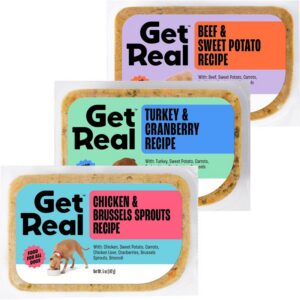
Get Real Sampler Pack, Beef, Chicken & Turkey Gently Cooked Fresh Dog Food, 6 pack bundle (2 of each recipe). The sampler includes two packs each of Beef & Sweet Potato, Chicken & Brussels Sprouts, and Turkey & Cranberry. The packs arrive frozen and ready to thaw.
Portion before freezing
Smaller portions thaw faster and more evenly than a large block. They also make it easier to avoid thawing food your dog can’t finish within its refrigerated use window. Start with the daily amount on the package or the feeding plan set with your veterinarian. Divide that amount into meals, then package each day’s food separately. For small amounts used as a topper, an ice cube tray or small silicone mold can make convenient portions.
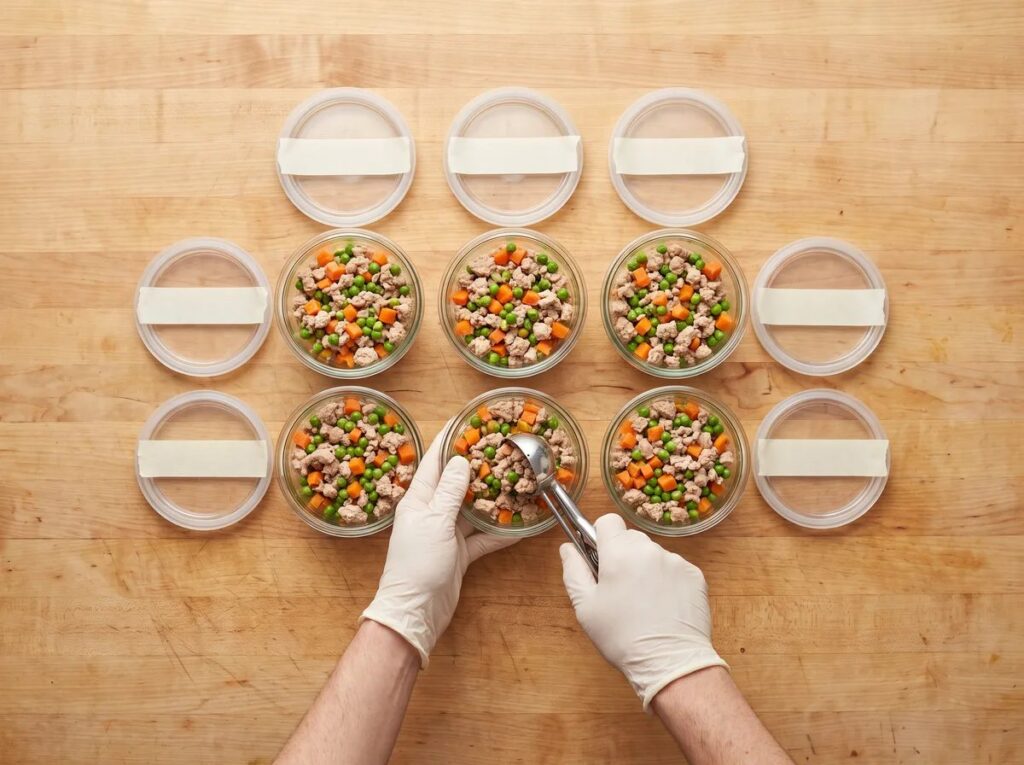
A clean, repeatable setup helps keep portions organized:
- Wash your hands and prepare a clean work surface.
- Divide the food into daily or single-meal amounts soon after opening.
- Pack each portion in an airtight container or freezer bag, pressing out excess air.
- Write the recipe and freezing date on each package.
- Freeze portions flat or in a single layer; stack them once firm.
- Keep only a few days’ supply in the refrigerator and freeze the rest.
Portions also make it easier to rotate recipes. Mark each pack by recipe or protein, then take out the one you plan to serve. If you prepare dog food at home, freezing in meal-sized amounts can help with storage, but the recipe still needs to be complete and balanced for your dog’s nutritional needs.
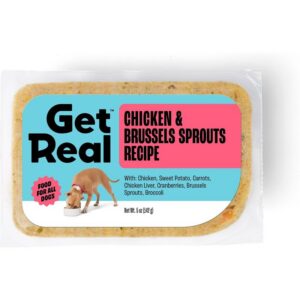
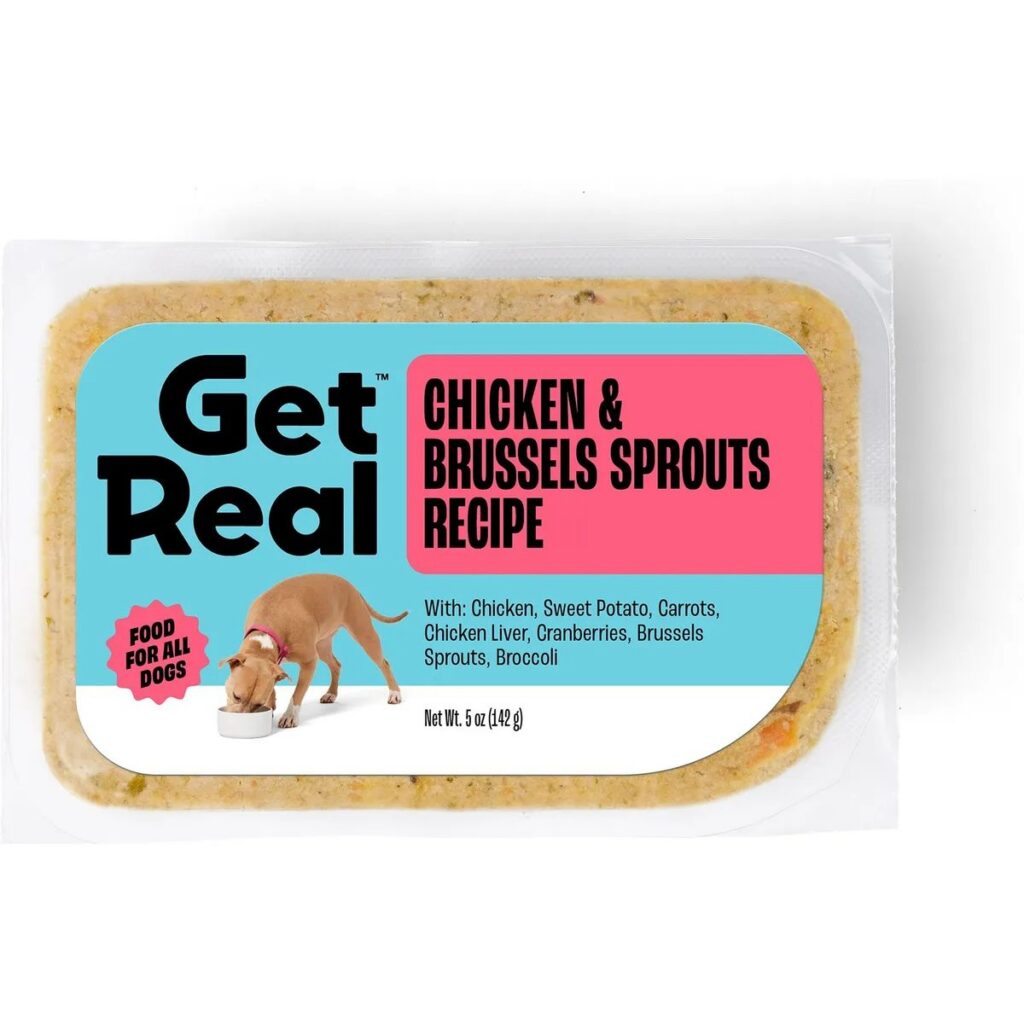
Get Real Chicken & Brussels Sprouts Recipe. These gently cooked packs arrive frozen and portioned, so there’s no need to divide a larger roll before storing them.
Storage windows by food type
Storage depends on whether food is unopened, opened, or thawed. Printed dates and package instructions should guide decisions, especially for fresh foods with shorter refrigerator windows.
| Food type | Before opening | After opening or thawing | Freezer guidance |
|---|---|---|---|
| Refrigerated fresh roll or bag | Refrigerate until the printed date | About five to seven days, depending on the label | Freeze in portions and follow the brand’s instructions |
| Frozen fresh pack | Keep frozen | Use thawed Get Real food within three to five days | Keep frozen until ready to thaw |
| Canned or pouched wet food | Shelf-stable until its best-by date | Cover, refrigerate promptly, and follow the label’s use window | Freeze leftovers in a suitable container, not in the can |
| Dry kibble | Follow the best-by date | Keep sealed in its original bag in a cool, dry place | Optional for longer storage; use airtight portions |
Get Real’s guidance says thawed food should be used within three to five days. Other fresh foods may have different limits, so check their packaging. Freezing can preserve food safely when it stays frozen, but older portions may become drier or less appealing.
Unopened food should be stored as directed and used by its printed date. Once a can or pouch is opened, cover it tightly and refrigerate unused food promptly. The FDA advises keeping pet food refrigerated at 40°F or below. Dry food can go stale after opening as its fats and aroma change. The FDA recommends keeping it in the original bag, folded closed, in a cool, dry place below 80°F. If you use a storage bin, keeping the whole bag inside helps retain its lot number and date.
To estimate how long a package will last, divide the amount in the package by your dog’s daily portion. If it contains more food than your dog can eat within the opened-life window, freeze the extra in portions soon after opening.
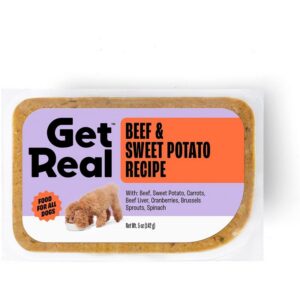
Get Real Beef & Sweet Potato Recipe. The recipe comes in 12-ounce and 24-ounce packs. Chewy’s guidance gives thawed food a three-to-five-day refrigerator window.
Thaw slowly in the refrigerator
Move a frozen portion to the refrigerator and let it thaw there. Place it on a plate or in a shallow dish to catch moisture, and store it on a lower shelf away from ready-to-eat food. Slow refrigerator thawing keeps the food cold throughout the process.
Don’t thaw dog food on the counter, in hot water, or in a microwave. Food left at room temperature for more than two hours should be discarded. Serve food thawed rather than as a solid frozen block: a hard portion may be difficult for some dogs to eat and can be gulped in chunks. Frozen food can still be used as an enrichment treat when prepared in a suitable toy, but supervise your dog and clean the toy thoroughly after each use.
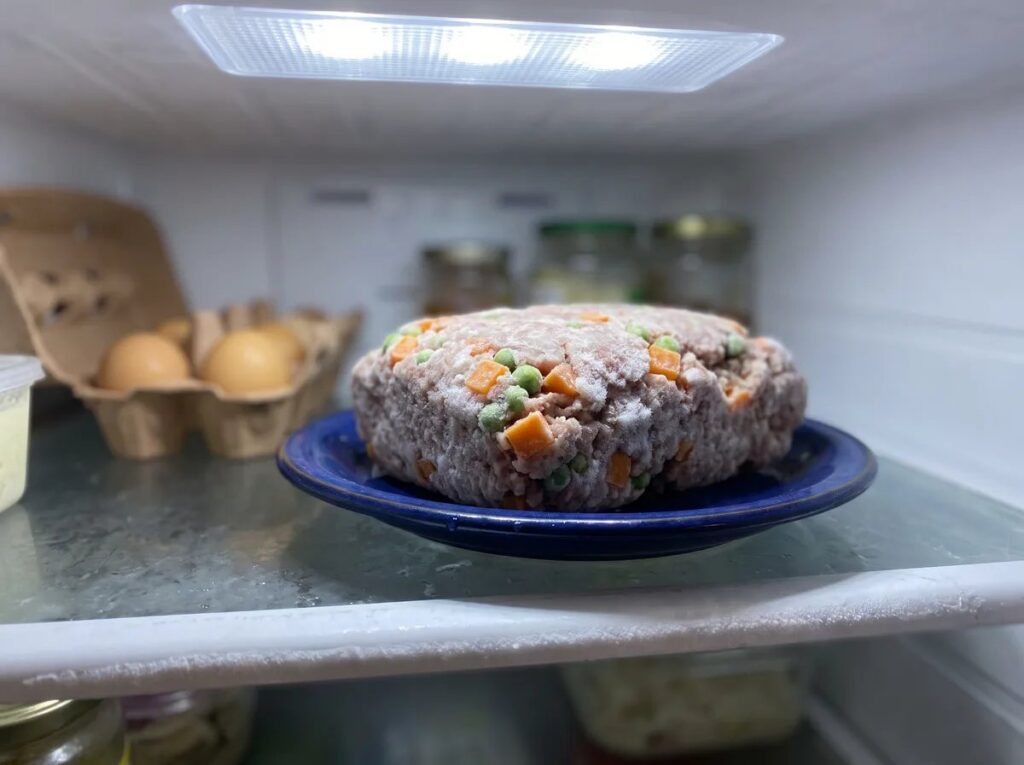
Chewy lists these refrigerator thaw times for Get Real packs:
| Pack size | Thaw time | When to move it to the refrigerator | Use after thawing |
|---|---|---|---|
| 5-ounce mixer pack | 12 to 24 hours | The morning or evening before serving | Three to five days |
| 12-ounce pack | 12 to 24 hours | The morning or evening before serving | Three to five days |
| 24-ounce pack | 35 to 48 hours | About two days before serving | Three to five days |
Use those times to plan ahead: move a 5-ounce or 12-ounce pack to the refrigerator the day before you need it, and allow about two days for a 24-ounce pack. Keep one pack in use and the next one thawing if that fits your dog’s appetite. Don’t leave a thawed pack in the refrigerator beyond its stated window.
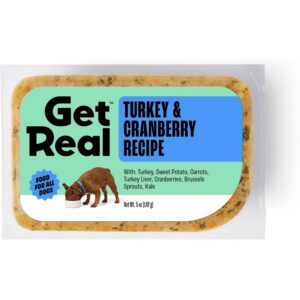
Get Real Turkey & Cranberry Recipe. The frozen packs can be thawed one at a time, with the remaining portions kept in the freezer.
When refreezing is appropriate
Thawed food may be refrozen if it thawed in the refrigerator, stayed at 40°F or below, and remains within its use window. Chewy gives the same temperature guidance for Get Real. Refreezing may make the texture softer and cause more moisture loss, so it’s better to thaw only what your dog can eat over the next few days.
Discard food that thawed on the counter, sat at room temperature for two hours or longer, or smells or looks wrong. Freezing doesn’t undo bacterial growth that may have occurred while food was warm. When you’re unsure how it was stored, discard it.
Freezing wet food and kibble
Opened wet food can be frozen in small portions. Don’t freeze it in the original can; transfer leftovers to an airtight container or an ice cube tray. Unopened cans are shelf-stable until their best-by date and don’t need freezer storage.
Refrigerate opened canned or pouched food promptly, covered, and follow its label for how soon to use it. If you won’t finish it in time, freeze the remainder in portions. Wet food can also be frozen in a suitable toy or mold for enrichment. Treats count toward daily food intake, so adjust meals to account for them.
Kibble can be frozen in airtight portions, which may help when a bag is too large to finish before it goes stale. For best aroma, use frozen kibble within a few months and let it reach room temperature while still sealed, to limit condensation on the food. Freezing isn’t a dependable way to address storage mites. A well-sealed bag, clean storage, and a package size your dog can finish within several weeks are better everyday habits. Most dogs don’t need kibble frozen if it’s stored in a cool, dry place.
Frozen portions can simplify the routine
With refrigerated food, freezing is mainly a way to manage a short opened-life window. With food sold frozen, the routine is to keep the packs frozen until needed, then move only the next portion to the refrigerator. Pre-portioned packs reduce handling and make it easier to match thawed amounts to a dog’s meals.
Chewy describes Get Real as gently cooked, then frozen, with recipes made from 10 ingredients or fewer plus vitamins and minerals. It says the recipes meet AAFCO nutrient profiles for all life stages, including growth of large-size dogs. The 5-ounce pack is intended as a mixer, while the larger pack sizes can suit full meals. Chewy advises putting the packs in the freezer as soon as they arrive. Orders ship in insulated packaging with dry ice and, depending on the weather, can stay cold for up to eight hours after delivery.
Pack size should fit your dog’s eating pace and household routine. A 12-ounce pack needs 12 to 24 hours to thaw; a 24-ounce pack needs more advance planning. If you’re changing foods, the source recommends transitioning gradually over seven to 10 days, or 10 to 14 days for dogs with sensitive digestion. Follow the food’s feeding directions and contact your veterinarian if your dog develops persistent digestive signs or you have questions about an appropriate diet.
Common questions
How long can dog food stay frozen?
Food kept continuously frozen remains safe under general food-safety guidance, but quality declines over time. Follow the label’s freezer window when available and use older portions first. For the best texture and appeal, plan on weeks to a few months.
Can dogs eat food while it’s still frozen?
Serve regular meals thawed in the refrigerator. A frozen enrichment toy is a separate option; choose a size and texture your dog can use safely, supervise, and wash it after use.
Can wet food be frozen in a toy?
Yes. Wet or fresh food can be placed in a suitable food toy and frozen to create an enrichment activity. Include it in your dog’s daily intake.
How long does a bag of kibble last?
Divide the amount in the bag by your dog’s daily portion. If the bag will remain open longer than the label’s guidance, consider buying a smaller package or freezing airtight portions.
What about raw food?
Follow the product’s specific refrigerator and freezer instructions. The source notes that raw food can carry bacteria such as Salmonella and Listeria, so careful cold storage and hand and bowl hygiene matter. Keep it at 40°F or below and avoid contact with ready-to-eat food. Ask your veterinarian about diet choices that fit your household and dog.
The most dependable routine is simple: portion fresh food early, label it, keep it frozen until needed, and thaw it in the refrigerator. Match each pack to your dog’s appetite, and use thawed food within the window on its label.


