Sample No. 0230
Refrigerated vs. Frozen Fresh Dog Food: Storage, Safety and Portioning
Both formats are cooked fresh food. Compare storage time, thawing, portion sizes and food safety to find the routine that suits your dog.
Storage is the real difference
Choosing between refrigerated and frozen fresh dog food comes down mainly to how you store and portion it. Both formats are cooked. Refrigerated food is ready to serve from the fridge, while frozen food stays in the freezer until you thaw a pack. The first asks you to use an opened package promptly; the second asks you to plan ahead.
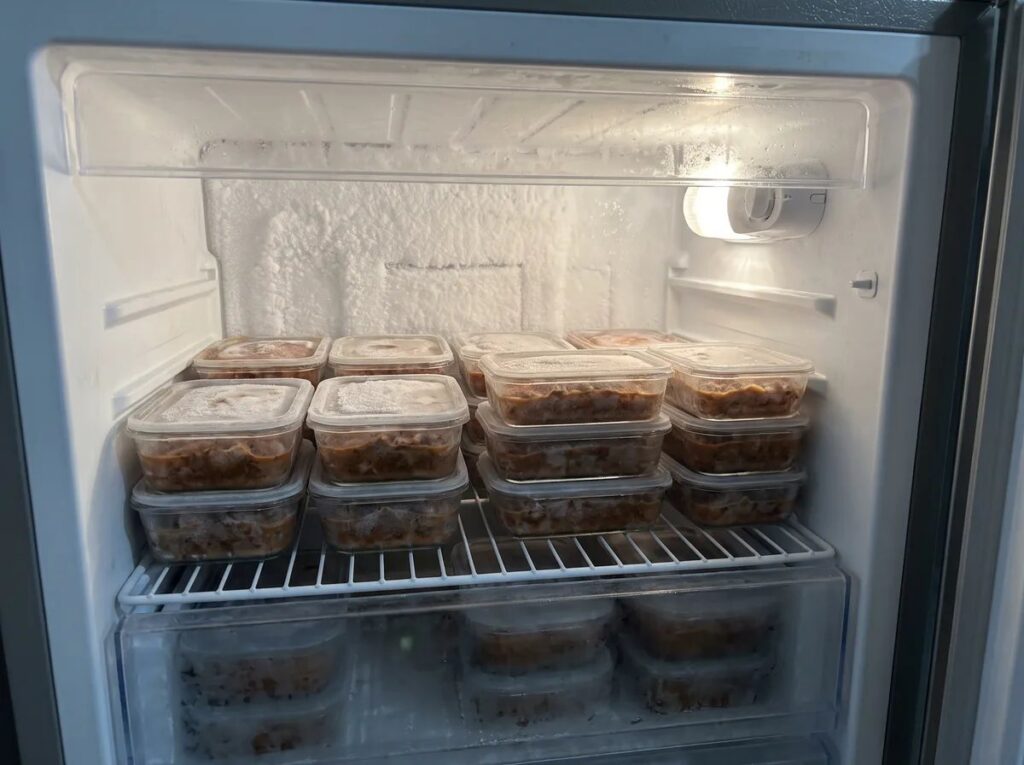
That distinction can shape daily feeding more than the word “fresh.” Frozen fresh food is cooked food that has been frozen for storage. It isn’t the same as raw frozen food or freeze-dried food, and freezing itself doesn’t change the recipe’s nutrition profile. The practical question is whether your household can keep food cold, use it within the label’s time limits, and portion it without waste.
Refrigerated food suits owners who want to serve a meal straight from the fridge and whose dogs finish packages quickly. Frozen food can make sense when freezer space is available, meals can be planned around thawing, or a household wants to thaw smaller amounts at a time. Neither format is automatically the better fit for every dog or home.
What cooked frozen food involves
Cooked frozen food is gently cooked, then frozen. At home, you move a pack to the refrigerator to thaw and serve it once it is ready. Freezer storage gives you more time before opening a pack, while the thawed food still has a limited window for use.
The term “frozen dog food” covers different products. Cooked frozen food needs thawing before serving. Raw frozen food has not been cooked, and freeze-dried food has been dried rather than kept frozen. Some frozen patties are raw, so check the label to understand what you’re buying and how it should be handled.
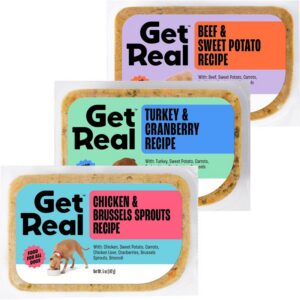
Get Real by Chewy is one example of cooked frozen fresh food. Its Chicken & Brussels Sprouts, Beef & Sweet Potato, and Turkey & Cranberry recipes are described as gently cooked and made with human-grade ingredients. Each recipe has 10 ingredients or fewer, plus vitamins and minerals, and is formulated to meet AAFCO nutrient profiles for all life stages, including growth of large-size dogs. The Beef & Sweet Potato recipe lists beef first, followed by sweet potato, carrots, and beef liver.
Get Real packs come in several sizes. The 5-ounce and 12-ounce packs take about 12 to 24 hours to thaw in the refrigerator; the 24-ounce pack takes about 35 to 48 hours. That schedule makes it useful to move the next day’s portion from freezer to fridge ahead of time. The brand is sold through Chewy in select markets and ships frozen in insulated packaging with dry ice.
A sampler with two packs of each of the three recipes can let a dog try them at home. Introduce a new food gradually, especially if your dog has a sensitive stomach or has been eating the same diet for a long time.
View the Get Real sampler pack at Chewy.
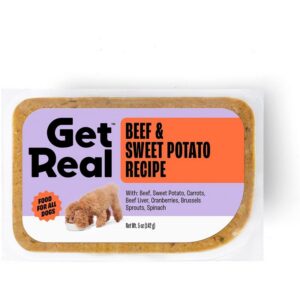
The Beef & Sweet Potato recipe is one example of the cooked, frozen format described here.
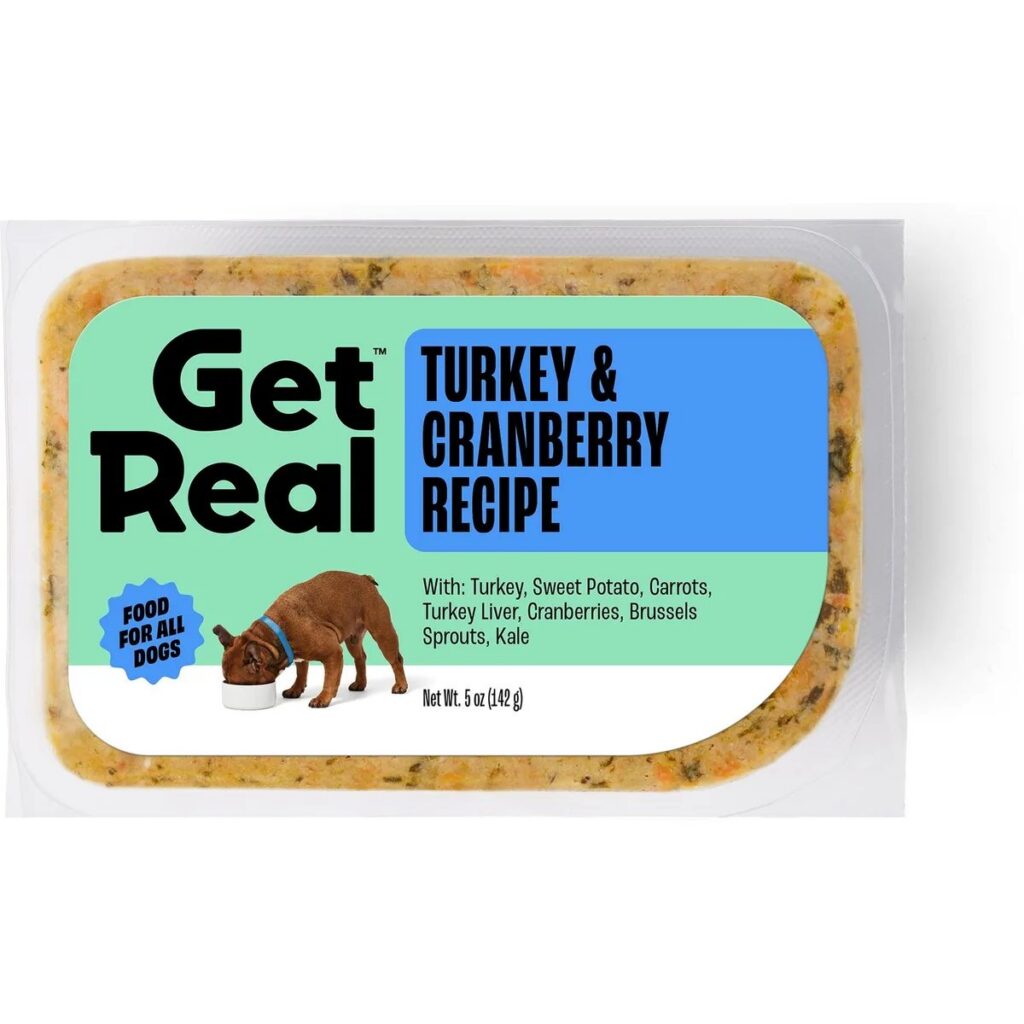
When comparing frozen products, check whether the food is cooked, raw, or freeze-dried; whether it is complete and balanced for your dog’s life stage; what pack sizes are available; and how long each size takes to thaw. Also check the opened or thawed storage window and whether delivery or local shop availability works for you.
How refrigerated fresh food differs
Refrigerated fresh food is cooked, packaged, and kept chilled through storage and sale. It is commonly sold in rolls to slice or bags to scoop from, so there is no thawing step. That can make mealtime simpler, but once a package is open, its usable life is short.
Freshpet is a familiar refrigerated brand. Its feeding and storage guide says opened rolls should be used within seven days and opened bags within five to seven days, depending on the product. If you can’t finish an opened package in time, the guide describes freezing it in airtight, single-meal portions and thawing those portions overnight in the refrigerator.
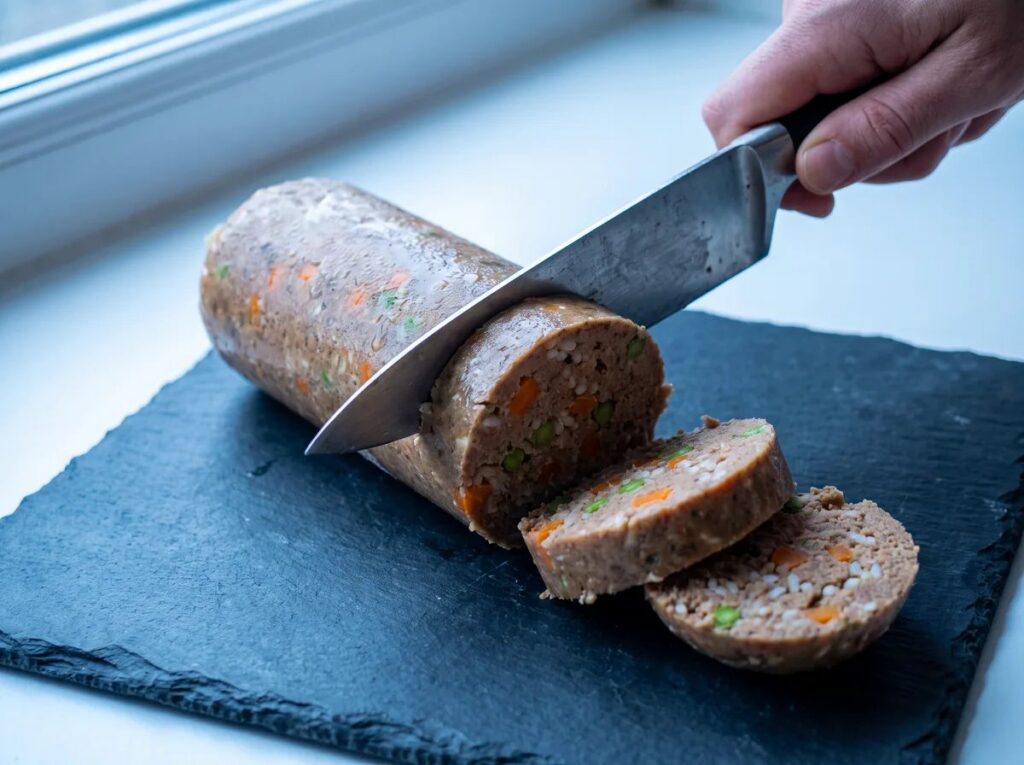
The package size matters. If your dog eats only a small amount each day, a large roll may be difficult to finish before its label deadline. Freezing individual portions can help, though it means some planning and freezer space. For a brand comparison, see the Get Real and Freshpet comparison.
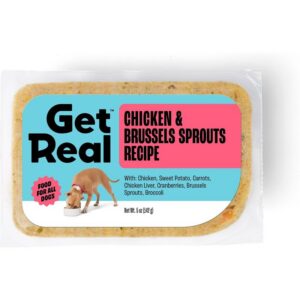
Frozen packs offer another way to manage portions. Get Real Chicken & Brussels Sprouts is available in 5-ounce, 12-ounce, and 24-ounce packs; the smaller size can also be used as a mixer or topper. See the Chicken & Brussels Sprouts recipe details.
- Refrigerated food is ready to serve and usually needs fridge shelf space.
- Frozen food needs freezer space and time to thaw.
- Either format may need portioning after opening if the package is larger than your dog’s meal.
- Follow the storage window on the specific product label.
Handle both formats with care
Temperature and time guide safe storage for both types. The FDA advises keeping the refrigerator at 40°F or below, refrigerating or discarding leftover pet food promptly, and washing hands, bowls, and scoops after handling food. Follow the product label as well, since instructions can vary.
Put delivered frozen food into the freezer promptly. Get Real ships in insulated packaging with dry ice and is described as staying cold for up to eight hours after delivery, depending on weather. Once the box arrives, move the packs inside and store them as directed rather than leaving them on a porch or counter. For chilled food bought in a store, make it a late stop on errands and refrigerate it when you get home.
After a frozen pack has thawed in the refrigerator, Get Real recommends using it within three to five days. Thawed food kept at 40°F or below may be refrigerated or refrozen, according to the source guidance. Discard food that smells or looks spoiled, or that has been at room temperature for more than two hours. The same two-hour limit applies to fresh food left out at mealtime.
Plan around the opened-life window. If you shop weekly or less often, freeze portions you won’t use in time, where the product’s directions allow it. A step-by-step guide to freezing fresh dog food discusses portioning, thaw schedules, and refreezing.
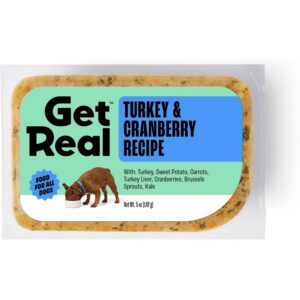
Get Real Turkey & Cranberry is another frozen recipe in pre-portioned packs. Read the Turkey & Cranberry product details.
Read the nutrition label, not just the storage format
Both formats rely on cold storage rather than the longer shelf life of canned or dry food. Freezing preserves food while it remains frozen; refrigeration keeps it chilled for a shorter period. Ingredients and preservatives differ by recipe, so check the product label instead of assuming that one storage format means a particular ingredient list.
For a full meal, look for a complete and balanced statement based on AAFCO nutrient profiles for your dog’s life stage. A product without that statement may be intended as a topper or supplemental food. A named animal protein near the start of the ingredient list can also help you compare recipes.
Check the guaranteed analysis and calorie information when comparing foods. Fresh food contains about 75 percent moisture, so the numbers can be hard to compare directly with dry food; a dry-matter comparison is more useful. Calorie content per package or per kilogram helps you portion meals appropriately. The Get Real recipes list 428 kcal per 12-ounce pack for Chicken & Brussels Sprouts, 451 for Beef & Sweet Potato, and 474 for Turkey & Cranberry.
The Beef & Sweet Potato label lists mixed tocopherols, a form of vitamin E, among its added nutrients. Mixed tocopherols are commonly used in pet food to help protect fats from oxidation. For more on reading food labels, see this guide to choosing food for your dog.
Fit the routine to your household
Refrigerated food saves the thawing step, while frozen food shifts the task to planning. Frozen packs can be convenient once moving tomorrow’s meal to the fridge becomes part of the evening routine. Refrigerated food can be easier for a household with little freezer space, especially when a dog finishes an opened package within the label’s window.
Think about the amount your dog eats, the space you have, and how often you shop. A large dog and a small freezer may make refrigerated food more practical. A small dog or a topper-only plan may benefit from pre-portioned frozen packs, since you can thaw a smaller amount and leave the rest stored. Measure your freezer space before ordering multiple packs.
- With little freezer space and a dog who finishes packages promptly, refrigerated food may fit well.
- With freezer room and a routine that allows advance thawing, frozen packs can keep longer before opening.
- For travel, keep portions in a cooler at 40°F or below.
- For a gradual food change, mix the new food in over seven to 10 days, or 10 to 14 days for a sensitive dog.
Pre-portioned packs also make it easier to keep servings consistent. Rolls give you flexibility to slice, but portions may be less predictable and the rest of the package keeps counting down once opened. Value depends on the cost per meal and how much food gets discarded, not just the price per pound. Thawing only what you can use in the next few days can reduce waste.
A fresh food topper or mixer can stretch a pack across more meals. If you use frozen food this way, choose a pack size that suits the amount you serve and keep the rest frozen according to its instructions. Get Real offers chicken, beef, and turkey recipes in the same general format, which lets owners try different proteins without changing the basic thawing routine.
Common questions
Can dogs eat frozen food without thawing it? Cooked frozen fresh food should be thawed before serving, following its label. Raw frozen food also should be thawed in the refrigerator and handled carefully. Serving food frozen solid can be difficult for a dog to eat safely. Frozen enrichment treats are a separate use case.
Should dog food be refrigerated? Refrigerated fresh food belongs in the fridge. Refrigerate opened canned food as directed, too. Dry kibble generally doesn’t need refrigeration; keep it sealed in its bag in a cool, dry place.
Is refrigerated fresh food better than frozen? Not by default. Refrigerated food is ready to serve but has a short opened-life window. Frozen fresh food gives you longer freezer storage and requires thawing. Choose the format you can store and use safely with minimal waste.
Are frozen patties a complete meal? Check the label. A complete and balanced statement for your dog’s life stage indicates that the food is intended to provide a full diet. Products without that statement may be meant for supplemental feeding.
What should you check when comparing frozen foods? Confirm whether the recipe is cooked or raw, whether it is complete and balanced, how many calories it contains, and whether pack sizes suit your dog. Clear thawing and storage directions make it easier to handle food consistently.
The useful choice is the one that fits your dog’s appetite and your kitchen. Check the label, keep food cold, and make a simple plan for thawing or finishing each package.
Related reading: fresh dog food compared with wet dog food and guidance on thawing frozen dog food.
The original post, Refrigerated vs Frozen Fresh Dog Food, appeared on Vetstreet.


