Sample No. 0214
JustFresh vs. Instant Fresh: Preparation, Storage and Cost for Adult Dogs
Compare ready-to-serve JustFresh pouches with water-mixed Instant Fresh, including adult suitability, storage limits, portions, travel and what’s needed to judge cost.
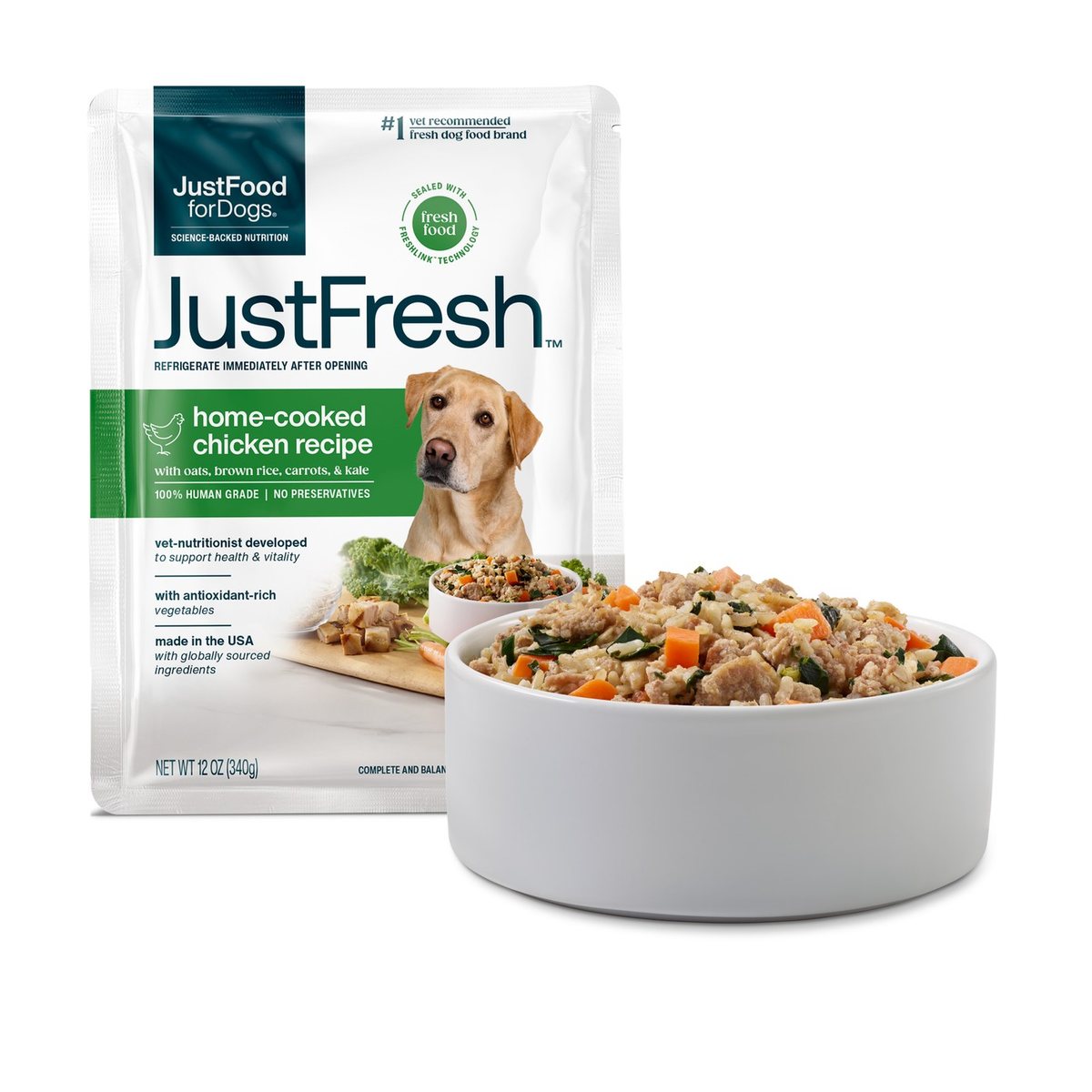
The choice between JustFresh and The Farmer’s Dog Instant Fresh comes down to the routine around the bowl. JustFresh is ready to serve from its pouch; Instant Fresh is a dry food that you mix with an equal volume of water. That difference affects measuring, leftovers, travel and how easily different people in a household can prepare a meal consistently.
Both formats discussed here are intended for adult maintenance. Neither should be assumed to meet a puppy’s growth needs. The available information also supports a closer cost estimate for JustFresh than for Instant Fresh: a matched current price, package weight and calorie density for Instant Fresh weren’t established for this comparison.
This is an analysis of product information, not a feeding trial. The foods weren’t tested for preparation time, texture, palatability, stool changes or health outcomes, and the comparison can’t predict which one an individual dog will prefer.
Two pantry formats, two serving routines
JustFresh is a range of complete meals sold in ready-to-serve pouches. The manufacturer says unopened pouches can be kept in pantry storage for up to two years, subject to package directions and the date shown. Once opened, the pouch must be resealed and refrigerated; use the remaining food within three days.
The Farmer’s Dog Instant Fresh is described as gently cooked and then dried using the company’s Low-Heat Drying Technology. To serve it, measure the dry food, add the same volume of water, stir and serve. The company’s instructions give opened dry food a cool, dry storage limit of up to three months. Prepared food can be refrigerated for up to two days.
Those limits apply to different states of the food. The three-month guidance concerns opened dry food; it doesn’t apply after water has been added. Similarly, the pantry storage period for an unopened JustFresh pouch ends as a useful guide once the pouch is opened.
| Consideration | JustFresh complete meals | Instant Fresh |
|---|---|---|
| Preparing a meal | Measure from the pouch and serve; no mixing water is needed | Measure dry food, add an equal volume of water, stir and serve |
| Life stage | Adult maintenance | Adult maintenance |
| Unopened storage | Pantry storage for up to two years under package directions | Dry, shelf-stable food; follow the package’s dates and storage instructions |
| After opening or mixing | Reseal, refrigerate and use within three days | Opened dry food: cool, dry storage up to three months; prepared food: refrigerate up to two days |
| Cost comparison inputs | Current regular pack prices and calorie densities were available for the recipes calculated here | A matched current price, package weight and calorie density weren’t established |
A simple household routine can prevent the two storage clocks from being mixed up: write down when a pouch is opened or a serving is prepared, then label leftovers before refrigerating them. Keep dry food separate from prepared portions, and make the amount to feed distinct from the amount of water to add.
Measure food and water as separate steps
For JustFresh, the basic task is to check the recipe and daily allowance, measure the amount for the meal, and serve it in a clean bowl. Reseal and refrigerate what remains, then record the opening date so everyone feeding the dog can follow the same deadline.
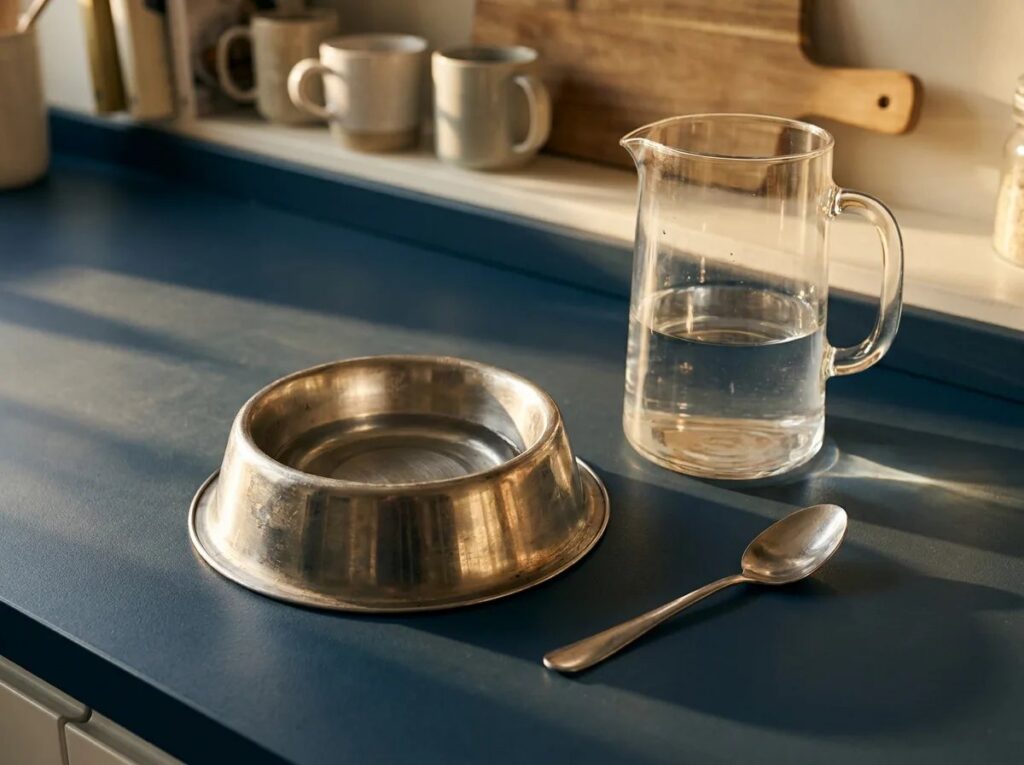
Instant Fresh takes an additional step. First measure the dry food portion specified for the dog. Then add an equal volume of water, stir and serve. Store the remaining dry food under its own directions. If you save prepared food, refrigerate it and observe the shorter limit for mixed food.
“Equal volumes” means the volume of dry food and water used for mixing should match. It doesn’t mean equal weights, and it doesn’t determine how much food the dog should receive. Establish the dry-food portion from the product’s feeding guidance and calorie information, then measure the corresponding water.
This distinction is especially useful when more than one person feeds the dog. Write the food amount and water amount separately. “Give one bowl” can be ambiguous because bowl size and water change how full a serving looks. The added water makes the meal heavier and larger in volume, but it doesn’t add food calories.
JustFresh’s moisture is already part of the ready-to-serve meal. It can suit an owner who wants fewer steps at mealtime, though opened leftovers still need prompt refrigeration and use within the stated window. Instant Fresh lets the owner prepare a portion from dry food, but that approach requires measuring and mixing.
Both options are described as pantry-friendly before preparation or opening. That doesn’t mean opened moist food or a prepared meal can stay out indefinitely. Follow the directions for the food’s current state, and retain access to drinking water for the dog with either format.
Check life stage and the exact recipe
The adult-maintenance statement is the first eligibility check for both products. It doesn’t establish that either is a complete diet for puppy growth. If you’re feeding a puppy, select a food whose nutritional statement covers growth, including growth of large-size dogs when that applies.
Current JustFoodForDogs Fresh Frozen Chicken & Rice and Fish & Sweet Potato labels include growth, including large-size growth. These are different recipes with different storage routines; their statements don’t make JustFresh a puppy food. Likewise, information about a frozen meal shouldn’t be carried over to a pantry product just because the brand or protein name is similar.
For an adult dog, check the exact recipe’s nutritional adequacy statement, full ingredient list, calorie density and feeding directions. Then consider how the portion fits the package size and the time allowed for using leftovers. Reassess the amount if the dog’s weight, body condition or needs change.
A pouch isn’t automatically one meal. A small dog might need less than a pouch in a day, while a larger dog might need more. The calorie content of the recipe and the dog’s feeding plan determine the portion. Packaging format alone doesn’t establish that a food suits a particular dog.
For example, a 12-ounce JustFresh Chicken pouch contains approximately 427 calories, calculated from the current label’s 1,254 kcal/kg. If an adult dog’s plan includes 100 calories of that food per day, the pouch holds more than four days’ worth. But the opened food still needs to be used within three refrigerated days. That plan could leave some food unused; increasing the dog’s intake just to finish a pouch isn’t a sound fix.
For older dogs, age by itself doesn’t identify the right recipe or calorie allowance. Health changes can affect an individual dog’s needs, so “soft,” “fresh” or “senior-friendly” descriptions don’t replace reviewing nutritional information or discussing a diet change with a veterinarian. The AAHA nutrition guidelines emphasize assessing the individual animal’s needs and monitoring the animal over time.
For a dog with a known ingredient restriction, check the complete current label before ordering. If a medical condition or a change in health affects what the dog can eat, ask a veterinarian for guidance rather than relying on a broad product category or marketing description.
Recipes and ingredient checks
The JustFresh complete-meal range includes Chicken, Turkey, Beef, Pork, Healthy Weight and Sensitive Stomach. Each is a separate recipe. Information from one recipe shouldn’t be applied to another without checking its label.
- Chicken: Includes chicken thighs and chicken liver, as well as oats, brown rice, vegetables, oils and a nutrient blend.
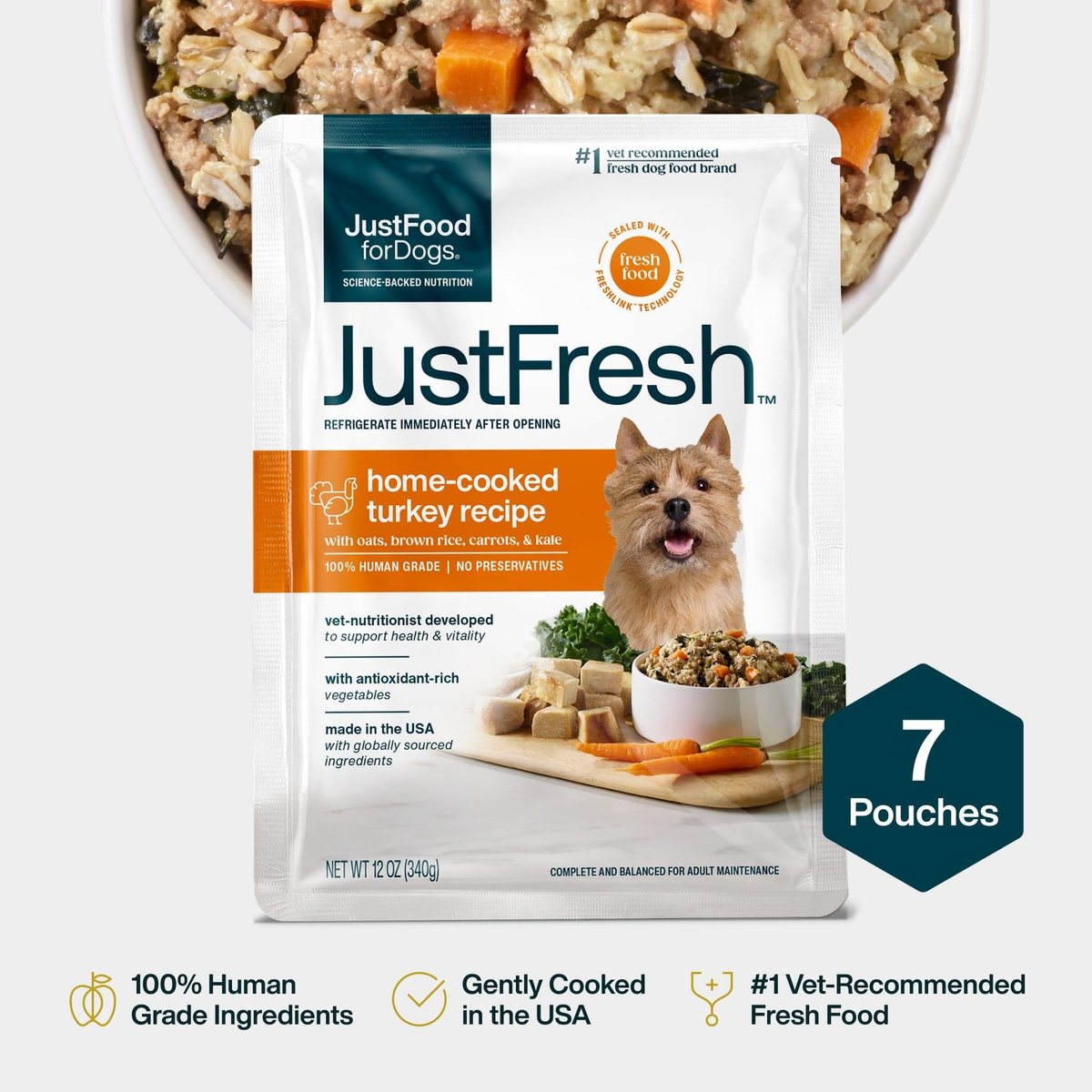
- Turkey: Includes turkey and turkey liver, along with oats, brown rice, vegetables, oils and a nutrient blend.
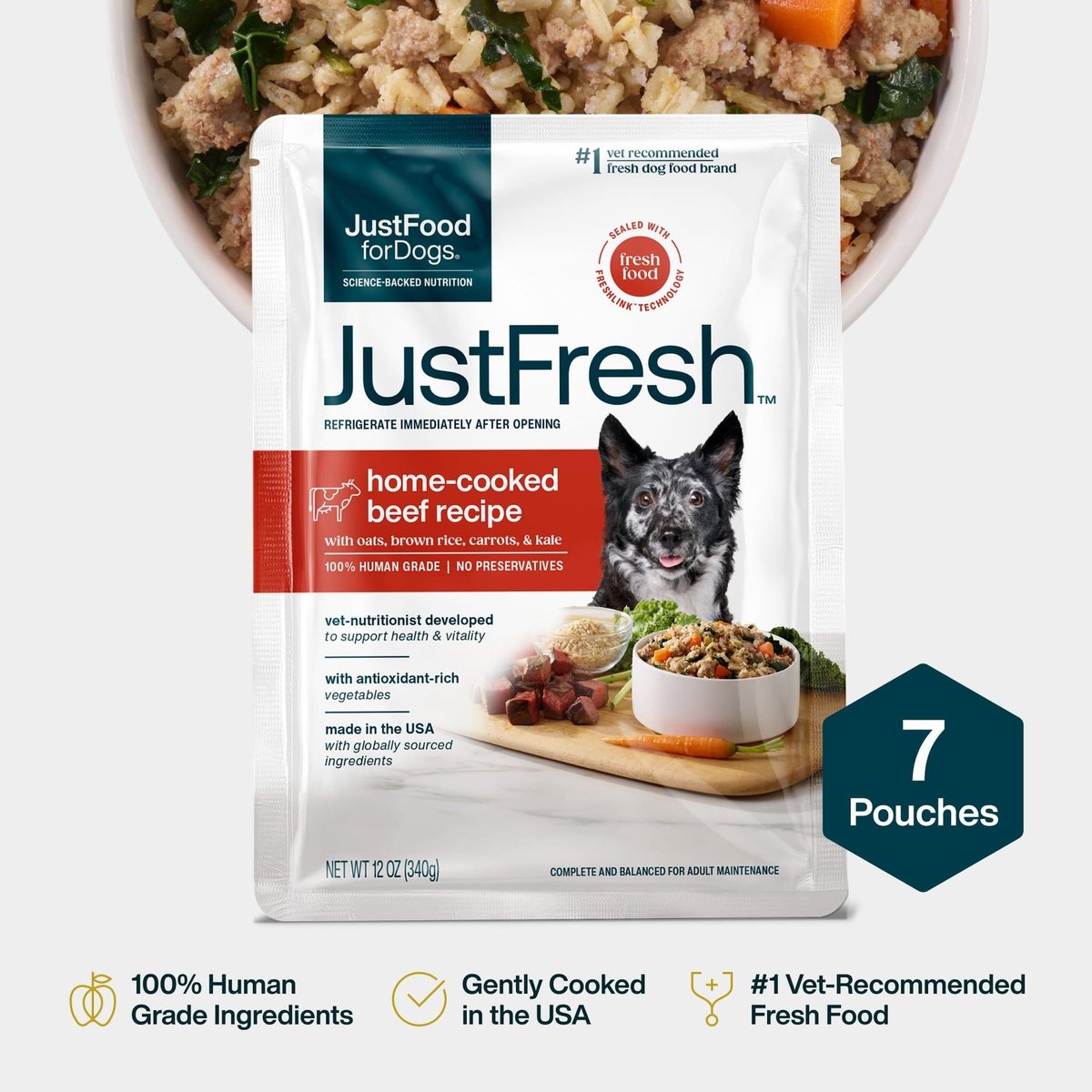
- Beef: Includes beef and beef liver, plus brown rice, oats, vegetables, oils and a nutrient blend.
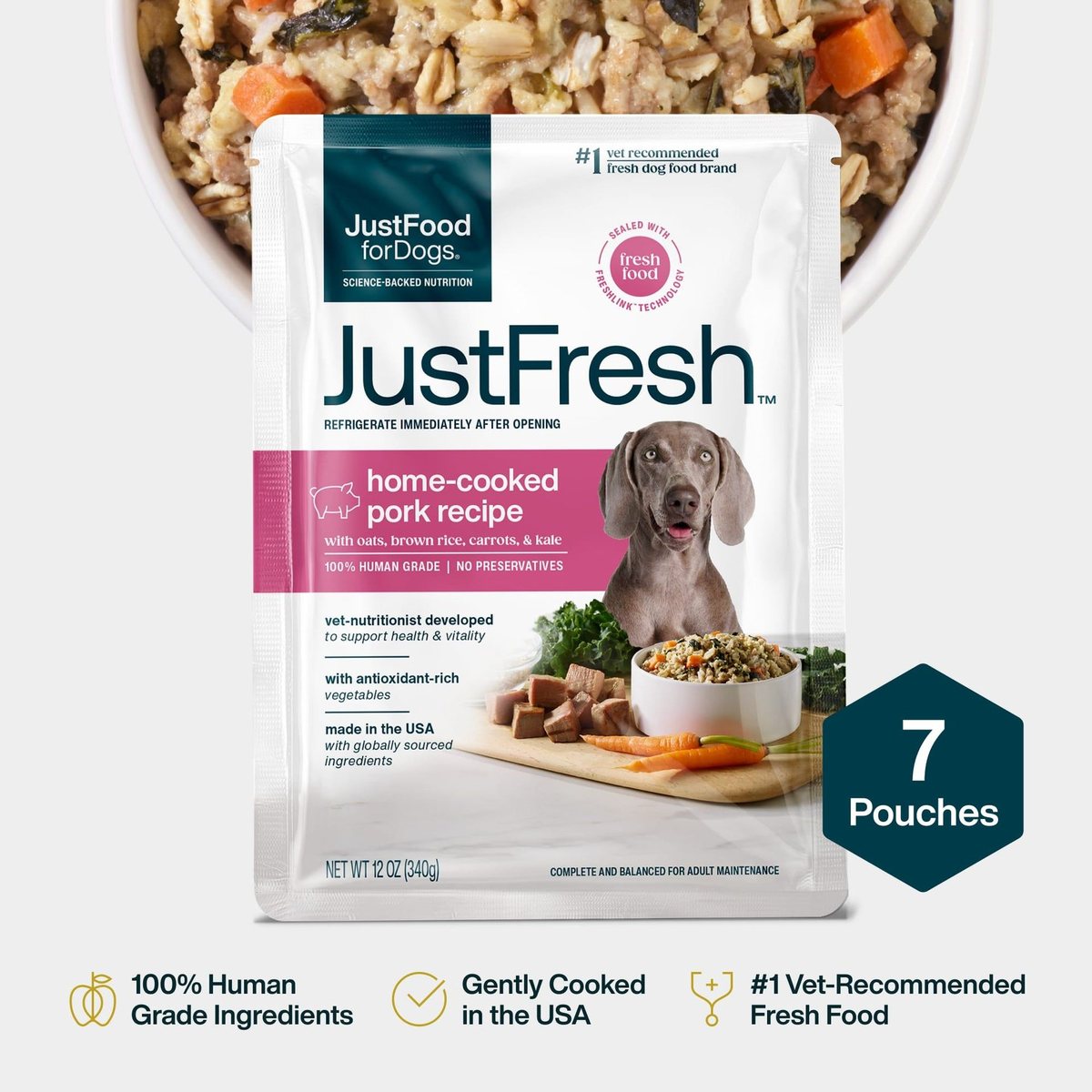
- Pork: Includes ground pork, oats, brown rice, vegetables, oils and a nutrient blend.
These ingredient summaries help distinguish the recipes, but they aren’t full ingredient lists. The named meat is only one part of each formulated meal. Check the complete current list if a particular ingredient needs to be avoided.
The Instant Fresh information reviewed describes a chicken-and-grain recipe for adult maintenance. The available material didn’t establish a full current ingredient list or detailed calorie and guaranteed-analysis values for this product. That means this comparison can’t responsibly rank it against JustFresh ingredient by ingredient or nutrient by nutrient. Request the exact current label if those details will determine your choice.
Don’t substitute the ingredient information for The Farmer’s Dog frozen chicken recipe when assessing Instant Fresh. A shared brand or protein name doesn’t prove the formulas are identical. Product format and recipe name matter when checking what you’re buying.
JustFresh complete meals should also be distinguished from JustFresh Boost toppers. Boost products are intended for intermittent or supplemental feeding, not as replacements for the complete adult meals discussed here. A topper’s format or product description doesn’t establish that it treats a disease.
Nutrition figures need careful comparison, too. A guaranteed minimum isn’t necessarily a typical measured amount or a maximum. Tufts’ explanation of nutrient comparisons describes why average analyses and an appropriate basis for comparison matter. Ingredient appeal, moisture and drying method alone can’t establish which food is nutritionally preferable.
Estimate JustFresh portions and spending
A fair cost comparison starts with a shared calorie target. Comparing a moist pouch with dry food by weight can mislead, especially when water is added during preparation. For JustFresh, the calculation is:
Daily food grams = daily food calories ÷ kcal per kilogram × 1,000.
A 12-ounce pouch weighs approximately 340 grams. The examples below use a 400-food-calorie daily allowance and regular prices observed October 24, 2026. This is a buying illustration, not a recommended calorie target for any dog. The estimates leave out discounts, shipping, tax, treats and food that may be discarded.
- JustFresh Chicken: $49 for seven 12-ounce pouches; 1,254 kcal/kg. About 319 grams, or 0.94 pouch, per day. Estimated cost: $6.56 daily, or $196.90 per 30 days.
- JustFresh Turkey: $49 for seven 12-ounce pouches; 1,197 kcal/kg. About 334 grams, or 0.98 pouch, per day. Estimated cost: $6.88 daily, or $206.28 per 30 days.
- JustFresh Beef: $63 for seven 12-ounce pouches; 1,622 kcal/kg. About 247 grams, or 0.72 pouch, per day. Estimated cost: $6.52 daily, or $195.72 per 30 days.
- JustFresh Pork: $56 for seven 12-ounce pouches; 1,221 kcal/kg. About 328 grams, or 0.96 pouch, per day. Estimated cost: $7.70 daily, or $231.12 per 30 days.
The monthly estimates use unrounded daily calculations, so they may differ slightly from multiplying the displayed rounded daily amount by 30. They represent estimated consumption over 30 days. Checkout happens in whole packages, and unused food may carry into the next month if it remains within the storage directions.
To estimate how many pouches to buy, divide the daily calories assigned to that recipe by the calories in one pouch. If the food supplies only part of the dog’s diet, calculate from the calories assigned to that food rather than the dog’s entire daily allowance.
In the example, halving the food allowance from 400 to 200 calories halves the measured quantity and estimated consumption cost. It doesn’t change the package price or lengthen the three-day period for using an opened pouch. Portion size and leftover planning need to be considered together.
Equal pouch weights don’t supply equal calories. The Chicken, Turkey, Beef and Pork figures show why price per package alone isn’t enough: a recipe’s calorie density changes the amount needed to meet a given allowance.
For Instant Fresh, the same kind of estimate requires its current dry-food calorie density and purchase price. Water adds meal weight and volume, not calories. Comparing the hydrated meal’s weight with a JustFresh pouch wouldn’t show that they provide the same amount of food energy.
A matched current Instant Fresh package price, food weight and calorie density weren’t established here, so a daily or monthly cost figure would be speculative. Before comparing budgets, gather the exact recipe and format, regular purchase price, package weight, calorie statement, daily calories supplied, shipping charge and terms after any introductory offer. Also consider whether your household can use the food within its storage window.
Whether Instant Fresh is cheaper than another Farmer’s Dog product depends on the exact product and the amount the dog eats. The available JustFresh figures don’t establish that JustFresh costs less than Instant Fresh. Compare both at the same calorie target, and check whether any personalized quote covers the full diet or just part of it. A smaller package price may simply cover fewer feeding days.
A 30-day estimate needs the recurring price and the quantity used under the dog’s feeding plan. A price for a frozen meal plan shouldn’t be presented as the monthly cost of Instant Fresh. For a packaged food, estimate cost per food calorie, multiply by the daily allowance supplied by that food, then multiply by 30. Four weeks covers 28 days, not a full month.
Buying and travel considerations
For home use, choose a buying routine that keeps the right recipe available. Current JustFresh product pages show regular prices for seven-pouch packs of the recipes calculated above. Check the recipe, pack size and purchase terms before ordering, particularly when recurring and introductory offers appear together.
The Farmer’s Dog has announced Amazon availability as well as direct purchasing options. This confirms an additional buying channel, but it doesn’t establish that each product is stocked in every physical store. We didn’t verify Walmart availability for the exact Instant Fresh product. Check the named recipe and format with a retailer before relying on it for regular replenishment or a trip.
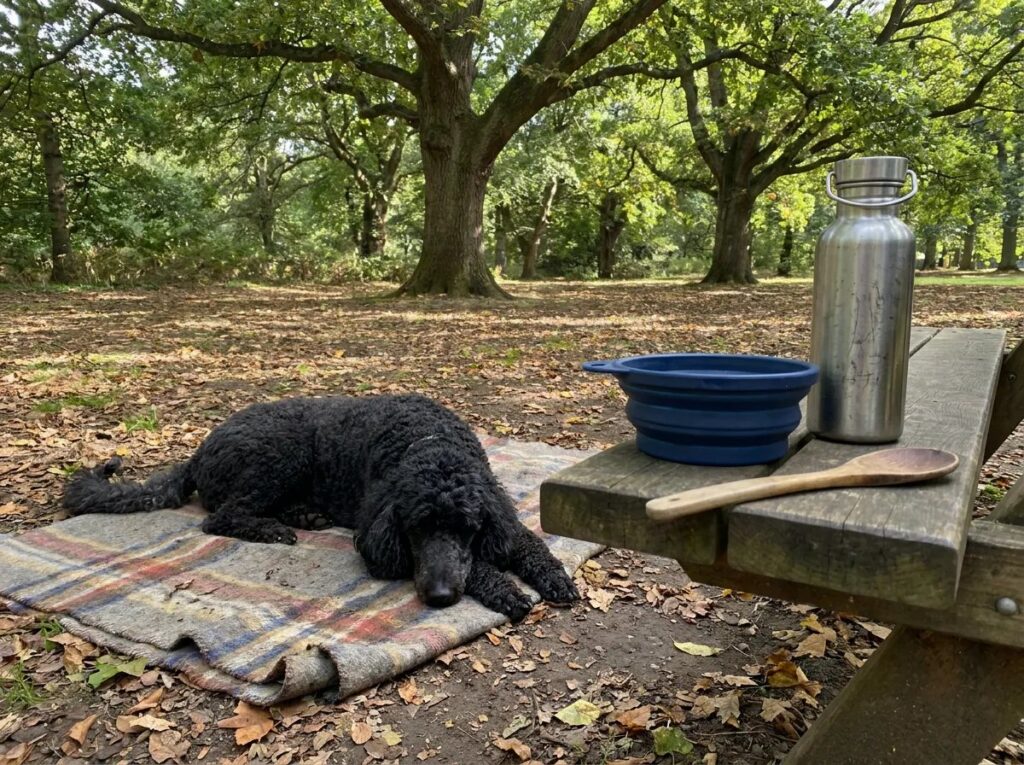
Travel highlights the difference between the routines. An unopened JustFresh pouch carries its prepared meal, so preparation water isn’t needed. With Instant Fresh, bring the dry food and enough water for mixing at the feeding stop. Dogs still need drinking water whichever format you choose.
Before leaving, pack the correct recipe and amount, a clean bowl and utensil, drinking water, and a way to measure portions consistently. For Instant Fresh, bring preparation water when suitable water may not be available. Plan appropriate refrigeration for opened JustFresh and prepared Instant Fresh leftovers, and leave the package directions with anyone else who will feed the dog.
If the dog eats the planned portion in one sitting, either format may fit a short stop. For trips with smaller meals or longer intervals, plan how leftovers will be stored. Pantry-friendly and shelf-stable describe the unopened product; they don’t remove the need to refrigerate opened or prepared food as directed.
A ready-to-serve pouch may simplify feeding for a sitter who wants fewer steps. Dry food mixed for each meal may fit an owner who is comfortable measuring food and water. These are practical differences in workflow, not measured findings that one food takes less luggage space or performs better on trips.
Match the food to the household routine
JustFresh is the option to consider when serving an adult complete meal without a water-measuring step is the priority. Several recipes share the pouch format. The main planning challenge is using opened food within three days, especially when a dog eats only a small amount.
Instant Fresh offers a dry-food routine: measure a portion, add an equal volume of water and serve. You can keep the rest dry under its own storage instructions, which may suit households that want to prepare individual portions. The trade-offs are the mixing step and the two-day refrigerated limit for prepared food.
- For fewer steps at mealtime: JustFresh is ready to serve.
- For preparing individual meals from dry food: Instant Fresh uses a separate food-and-water measuring routine.
- For a household with several feeders: Write down the portion, water amount if needed, and storage dates.
- For small daily portions: Consider how soon an opened pouch can be used before buying a pack.
- For a specific ingredient need: Review the full, current recipe label.
- For a firm budget comparison: Obtain matched prices and calorie information for both products.
Before committing to a larger order, map out where unopened food will be stored, who will measure meals, where leftovers will go, and how dates will be recorded. That small planning exercise can show whether a format fits the household’s routine.
The product information supports the difference in preparation and storage, and JustFresh’s ready-to-serve convenience. It doesn’t show which food a dog will prefer or whether either will affect digestion, coat quality or other health outcomes. Those questions weren’t tested here.
PantryFresh is a separate JustFoodForDogs shelf-stable line, not another name for JustFresh. The PantryFresh guide covers that product line. Check its own recipe labels, package sizes and handling directions rather than transferring details from either product in this comparison.
For context on the brand’s wider range, see the JustFoodForDogs review. The exact meal’s life-stage suitability, portion and handling routine still need to guide a purchase. Related comparisons include Petful’s JustFoodForDogs vs. Ollie and WebVet’s discussion of fresh-food costs for a small dog.
Frequently asked questions
Can puppies eat JustFresh or Instant Fresh?
The recipes compared here are labeled for adult maintenance, not puppy growth. Choose a food whose statement covers the puppy’s growth stage, including large-size growth when relevant. A growth-qualified recipe from the same company doesn’t change the life-stage statement on these products.
Do I add water to JustFresh?
No preparation water is needed for JustFresh complete meals; measure the food portion using its calorie information and serve. Keep drinking water available as usual.
Is Instant Fresh freeze-dried?
The product description says it is gently cooked and processed with Low-Heat Drying Technology. Its preparation directions call for adding water. Use that description rather than assuming it belongs to another dried-food category.
How long can an opened JustFresh pouch stay in the refrigerator?
Reseal and refrigerate the pouch, then use it within three days under the current directions. Mark when it was opened and follow any shorter instruction on the package. The unopened storage period no longer applies once the pouch is open.
Can I refrigerate Instant Fresh after mixing it with water?
The manufacturer’s directions allow prepared food to be refrigerated for up to two days. Keep that limit separate from the longer storage guidance for dry food. Mixing only the portion needed can reduce the amount of prepared food left over.
Does water count toward my dog’s food portion?
Water increases the prepared meal’s weight and volume, but it adds no food calories. Set the dry-food portion first and then add the required water. Don’t reduce the food amount just because the hydrated serving looks larger.
Can you buy The Farmer’s Dog food in stores?
Amazon and direct purchasing options have been confirmed for the company, but that doesn’t establish physical-store availability for every product or retailer. Confirm the exact product, format and availability before ordering.
What practical issues should I consider with Instant Fresh?
Check that the adult-maintenance recipe fits the dog, measure water and food separately, and follow the storage directions for dry and prepared food. These are handling considerations; this comparison didn’t test adverse effects or establish a medical concern.
Choose the format your household can prepare and store reliably, then confirm the exact recipe and portion. The three-day pouch window and two-day prepared-food window are useful planning details to keep visible wherever meals are handled.
JustFoodForDogs JustFresh Home-Cooked Chicken
Check the current Chicken recipe, portions and ordering options.
JustFoodForDogs JustFresh Turkey
Check the current Turkey recipe, portions and ordering options.
JustFoodForDogs JustFresh Beef
Check the current Beef recipe, portions and ordering options.
JustFoodForDogs JustFresh Pork
Check the current Pork recipe, portions and ordering options.
JustFresh Chicken, JustFresh Turkey, JustFresh Beef and JustFresh Pork product pages provide recipe and ordering details. Check the current package information when selecting a meal.