Sample No. 0213
Dog Calorie Needs: Daily Estimates, Portion Math and Body Condition
Use adult calorie ranges as a starting point, measure food by its label, count extras and adjust portions based on weight and body condition.
A calorie estimate can help set a dog’s routine, but it isn’t a permanent prescription. Weight, activity, reproductive status, life stage and body condition all affect daily needs. The most useful plan pairs a reasonable starting estimate with measured portions and regular checks on how your dog is doing.
The adult chart below gives ranges based on published veterinary guidance. A worked example shows how to turn a calorie target into grams of food. Use the exact food label, count treats and other extras, and review the plan when your dog’s weight or routine changes.
Start with resting energy needs
For healthy adult dogs, daily calorie estimates commonly begin with resting energy requirement, or RER. The American Animal Hospital Association guidelines give this formula:
RER = 70 × body weight in kilograms0.75
RER estimates energy needs at rest; it does not automatically equal the full daily allowance. A multiplier accounts for ordinary daily demands and differences between dogs. To convert pounds to kilograms, divide the weight in pounds by about 2.2046.

Body weight doesn’t translate into calories at one fixed rate. Because the formula raises weight to the power of 0.75, a simple calories-per-kilogram rule can give misleading results across dogs of different sizes.
Adult daily calorie estimates by weight
The following ranges use three adult factors from AAHA: 1.0–1.2 times RER for inactive adults, 1.4–1.6 for neutered adults, and 1.6–1.8 for intact adults. Figures are rounded to whole calories and are starting estimates for healthy adults.
| Adult weight | Inactive adult 1.0–1.2 × RER |
Neutered adult 1.4–1.6 × RER |
Intact adult 1.6–1.8 × RER |
|---|---|---|---|
| 5 lb / 2.27 kg | 129–155 | 181–207 | 207–233 |
| 10 lb / 4.54 kg | 218–261 | 305–348 | 348–392 |
| 20 lb / 9.07 kg | 366–439 | 512–585 | 585–659 |
| 40 lb / 18.14 kg | 615–738 | 862–985 | 985–1,108 |
| 60 lb / 27.22 kg | 834–1,001 | 1,168–1,335 | 1,335–1,501 |
| 80 lb / 36.29 kg | 1,035–1,242 | 1,449–1,656 | 1,656–1,863 |
The categories can overlap. A neutered dog may also be inactive; “intact” describes reproductive status, not activity level. Consider the whole dog when choosing a factor. Don’t add the columns together or pick the highest range simply because your dog enjoys walks.
Activity matters as routines change. A dog taking shorter outings than before may need a different amount even if its weight hasn’t shifted yet. Working and endurance dogs need an individual assessment; the intact-adult range doesn’t replace a plan suited to sustained exercise.
Turn a calorie allowance into a measured portion
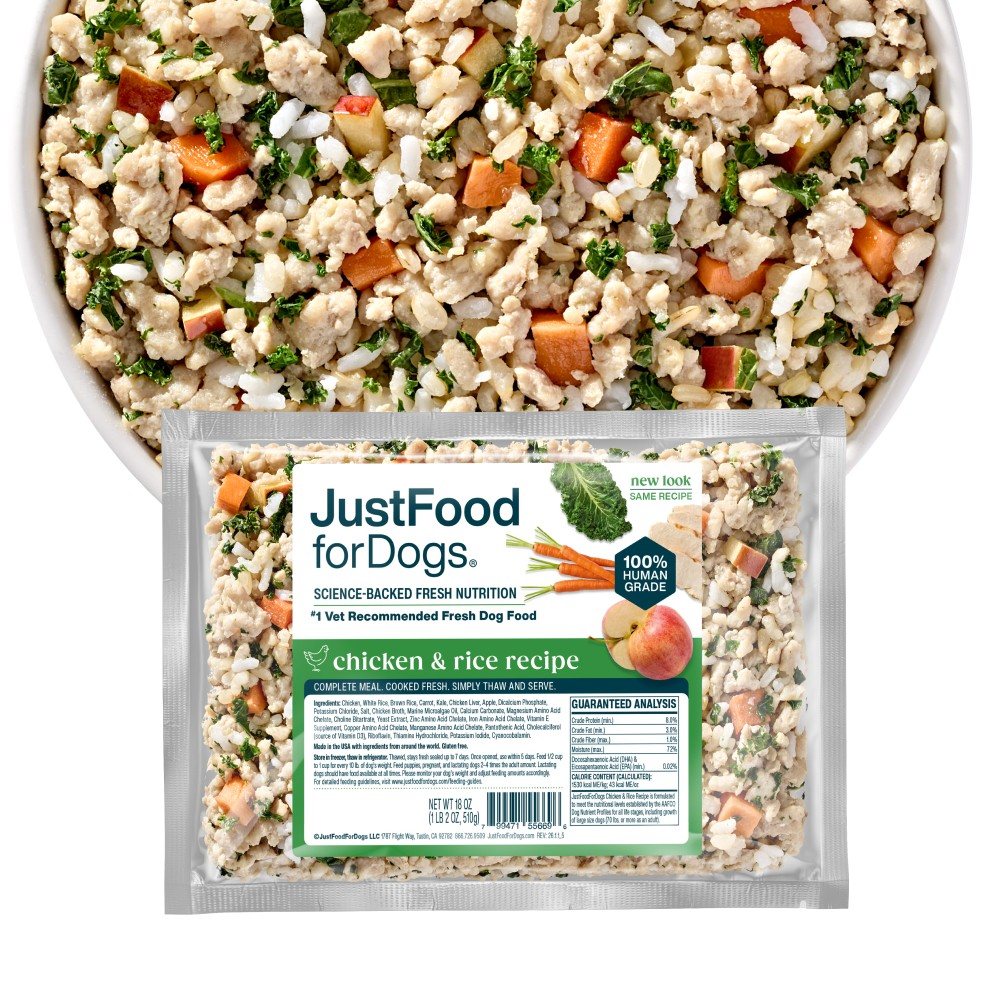
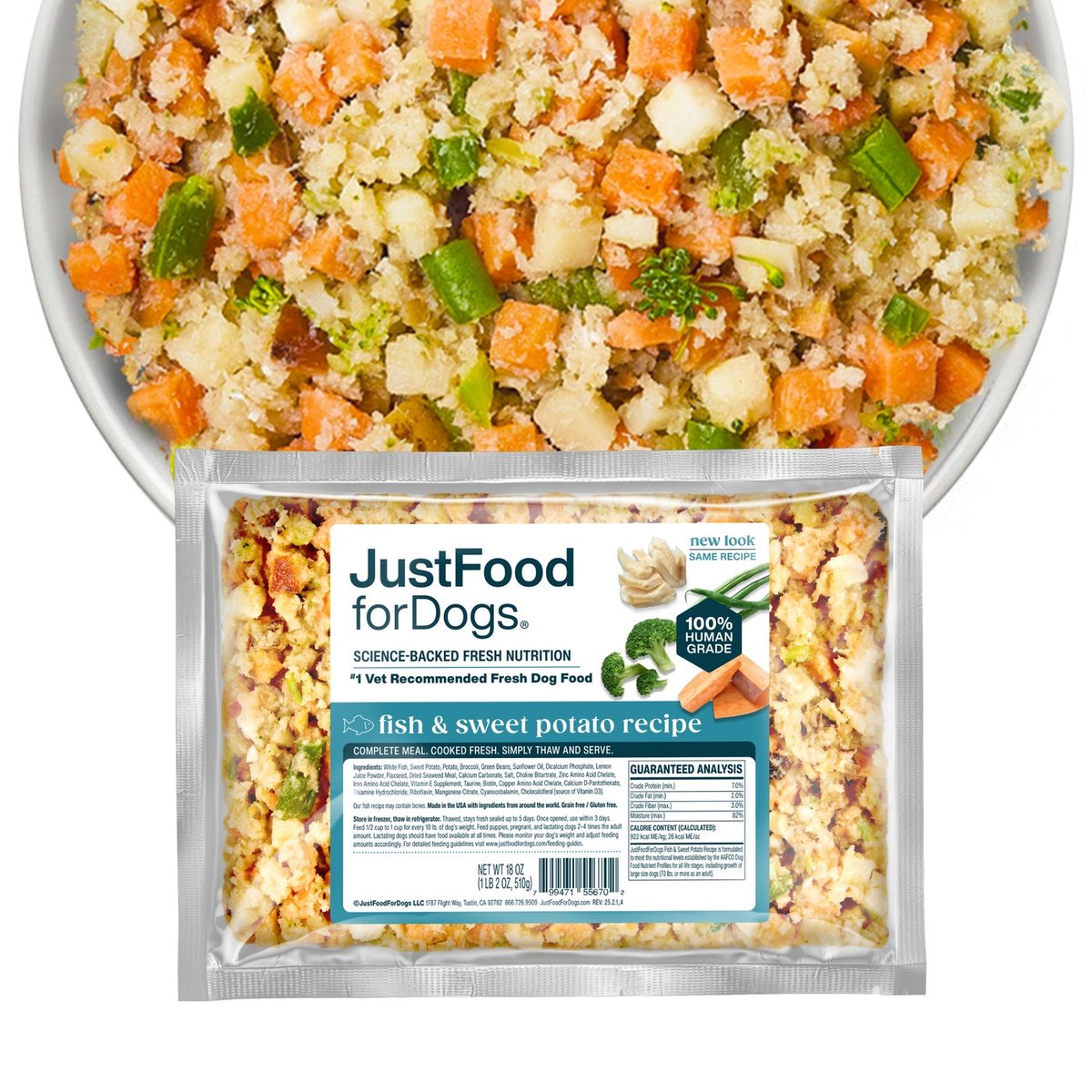
Food labels show how much energy a recipe provides, but the serving weight needed to meet a calorie target depends on that recipe’s calorie density. For example, the source lists JustFoodForDogs Chicken & Rice at 1,530 kcal/kg and Fish & Sweet Potato at 922 kcal/kg. A 600-calorie allowance is about 392 grams of Chicken & Rice or 651 grams of Fish & Sweet Potato. Equal calories can mean quite different food weights.
Use this formula to calculate a daily portion:
Food calories ÷ kcal/kg × 1,000 = grams of food per day
First set the calories assigned to complete food after allowing for treats and other extras. Then use the food’s label value. Check the unit carefully: kcal/kg means calories per kilogram; kcal/cup applies to the stated cup measure for that food; and kcal/package applies to the named package size.
Here’s a worked example for a hypothetical healthy 10-kilogram neutered adult. It uses a factor of 1.6 and reserves up to 10% of daily calories for extras. This demonstrates the math; it isn’t an individual feeding prescription.
| Step | Calculation | Approximate result |
|---|---|---|
| Resting energy requirement | 70 × 100.75 | 394 kcal/day |
| Daily calorie target | Unrounded RER × 1.6 | 630 kcal/day |
| Maximum extras allowance | Unrounded target × 0.10 | 63 kcal/day |
| Calories from complete food | Unrounded target × 0.90 | 567 kcal/day |
| Chicken & Rice portion | Unrounded food calories ÷ 1,530 × 1,000 | 370 g/day |
Keeping intermediate figures unrounded helps avoid small errors adding up. Once you’ve weighed the daily amount, divide it among meals and use the same measuring method consistently. If more than one person feeds the dog, keep the daily amount visible so separate meals don’t accidentally exceed the total.
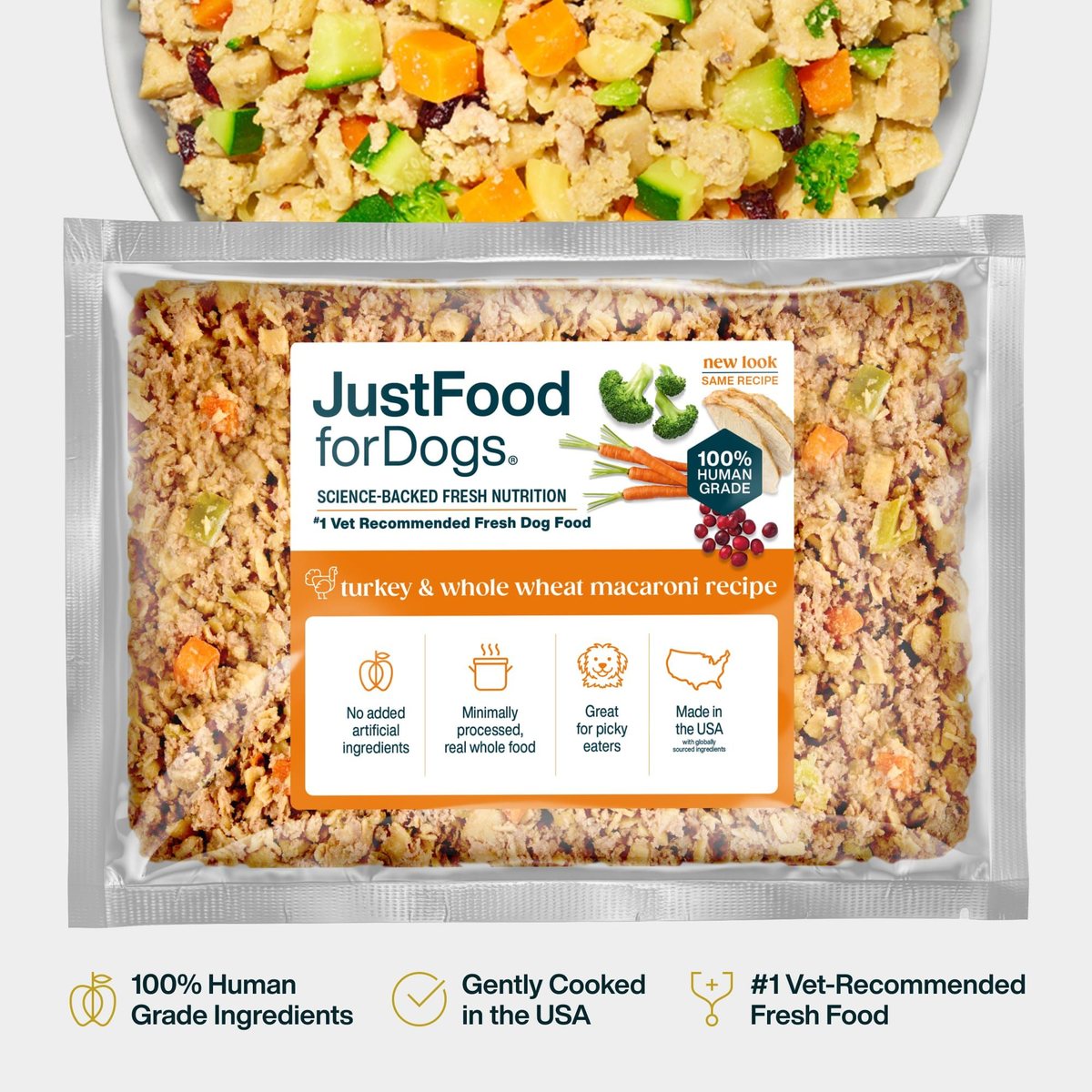
Recipe changes call for a new portion calculation, even when the calorie target stays the same. The source lists JustFoodForDogs Turkey & Whole Wheat Macaroni at 1,741 kcal/kg; 600 calories of that recipe is about 345 grams. Check the current label for the food you serve.
Count every edible extra
Meals are only part of the daily total. Include training rewards, biscuits, dental chews, table food, toppers and any food used to give medication. A chew still contributes calories even when it serves another purpose.
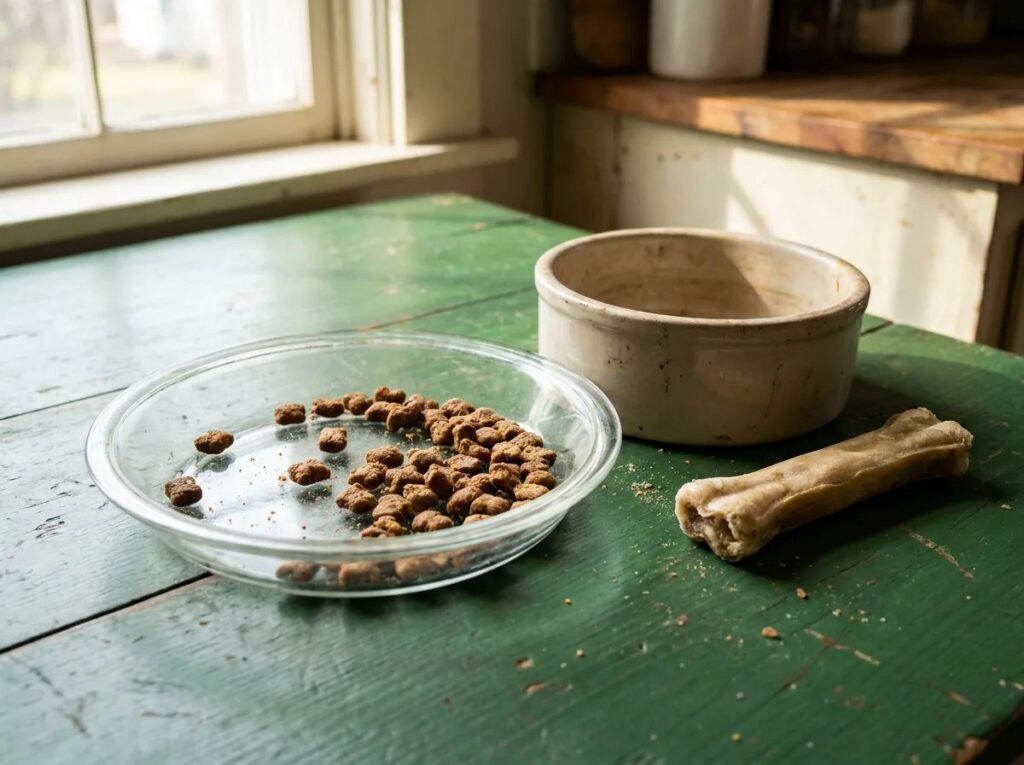
AAHA’s guidance recommends that at least 90% of calories come from complete and balanced food, with no more than 10% from treats and other extras. For a hypothetical 600-calorie daily target, that means up to 60 calories for extras and 540 from complete food. It’s a ceiling, not a requirement to give treats; using fewer extras leaves more of the daily intake for complete food.
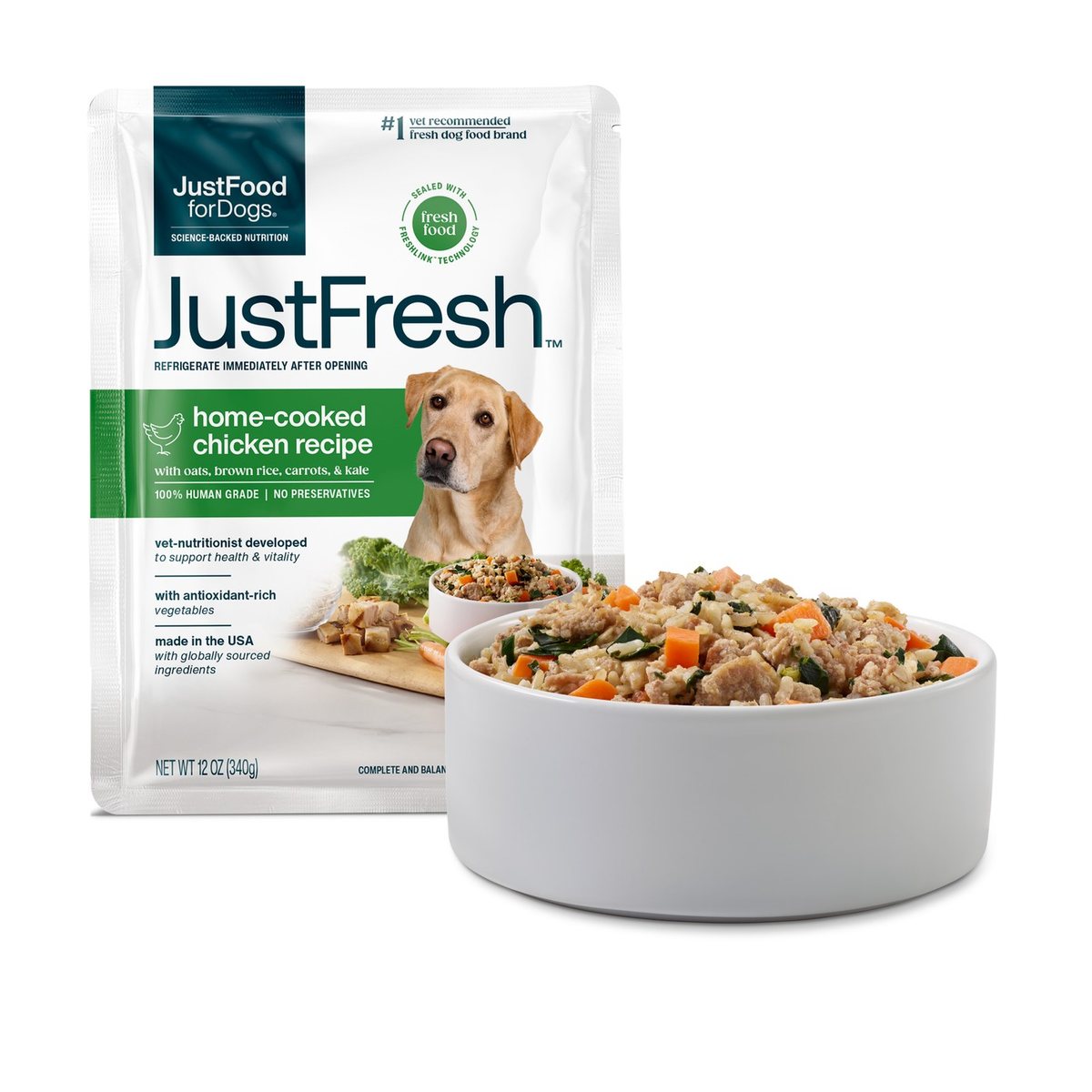
Check whether an item is a complete food or a supplemental product. The source describes JustFoodForDogs JustFresh Chicken as a complete adult-maintenance meal at 1,254 kcal/kg, while JustFresh Boost toppers are intended for supplemental or intermittent feeding. If one complete food replaces part of another, calculate the calories from both. Adding it to an unchanged full portion increases the total. A topper’s calorie content alone doesn’t show that it can replace a nutritionally complete meal.
When the adult chart isn’t the right guide
The chart applies to healthy adults at an appropriate body condition. It doesn’t set a target for puppies, pregnancy, nursing, illness, intensive work or intentional weight change. These situations can alter energy needs, nutritional requirements or both.
- Puppies: Growth requires an age-appropriate feeding plan and food suited to the relevant growth stage. Increasing the portion of an adult-maintenance food doesn’t make it appropriate for growth.
- Pregnancy or nursing: These stages need a separate plan suited to the dog’s condition and changing needs.
- Weight loss or gain: Current weight alone may not be the right basis for a target. Body condition, target weight, medical history and the food’s nutrient concentration all matter.
- Medical conditions or intensive work: Seek an individual plan when health needs or unusually high energy demands affect feeding.
For weight loss, don’t substitute a guessed ideal weight into the formula and assume the result is safe. Work with your veterinary team to set a target and monitor progress. The source also links to guidance on canine obesity and puppy feeding for these separate needs.
Adjust using trends, not one calculation
Estimated requirements are a starting point. Tufts’ feeding guidance emphasizes using actual weight and body condition to inform adjustments. Track what your dog consumes, how weight changes over time, and whether fat coverage or muscle condition shifts.
- Record intake: Note measured meals, treats, leftovers and extras, rather than just the food offered.
- Follow weight over time: Compare measurements taken in a consistent way instead of relying on a single reading.
- Watch body and muscle condition: The scale may not show changes in fat and muscle that happen in different directions.
Before changing portions, look for differences that can explain a change: uncounted treats, a new recipe, a different measuring cup or another person feeding. If weight changes unexpectedly despite a consistent routine, ask your veterinary team for guidance rather than repeatedly changing meals without understanding the cause. Their assessment is especially useful for older dogs or when activity has changed.
Common calorie questions
Should I use current weight or ideal weight?
For a healthy adult at an appropriate body condition, current weight can help estimate maintenance needs. If your dog is underweight or overweight, establish a target and monitoring plan with your veterinary team instead of relying on a guessed ideal weight.
Why might my dog need less than a calculator suggests?
A calculator provides a starting estimate, and individual needs vary. Check the recipe’s calorie density and count extras first. Then review weight trends and body condition. A healthy dog may maintain its condition on less than the estimate.
Do dental chews and training treats count?
Yes. Add them to the daily total, whatever their purpose. If several people reward the dog, setting aside that day’s allowance in one container can help everyone keep track.
Does kcal mean the same as a food calorie?
Yes. Food labels use kilocalories, written kcal, for the unit commonly called a calorie. Grams measure food weight, not energy, so use the label’s calorie value when converting a portion.
Can I use the adult chart for a puppy?
No. Age and growth affect both calorie needs and diet requirements. The source notes separate growth factors for puppies under four months and those four months or older, but individual adjustment is still needed. Follow a puppy feeding plan and check that the food’s adequacy statement covers the required growth stage.
Keep the estimate, exact food label and daily extras together as one feeding plan. Then use your dog’s weight trend and body condition to decide when it needs a review.


