Sample No. 0210
German Shepherd Food Guide: Puppy Growth, Adult Portions and Practical Feeding
Compare growth-eligible recipes, calculate portions by calories, and plan rewards, food changes and storage around your German Shepherd’s needs.

Choosing food for a German Shepherd starts with the dog in front of you: age, growth, activity, health, and the household’s ability to feed and store the food consistently. Breed reputation alone can’t set a portion. A puppy expected to become large needs a recipe whose growth statement covers that size, while an adult companion and a dog doing sustained work may need different calorie allowances.
This guide compares four JustFoodForDogs (JFFD) recipes: Chicken & Rice, Fish & Sweet Potato, Beef & Russet Potato, and Turkey & Whole Wheat Macaroni. It uses current product information to explain life-stage eligibility, calorie density, portions, rewards, food transitions, and storage. The calculations are examples, not feeding prescriptions or measured health outcomes.
Start with life stage and individual needs
For a puppy, check the full nutritional adequacy statement before comparing ingredients or prices. The relevant question for a German Shepherd expected to weigh 70 pounds or more as an adult is whether the food is suitable for growth of large-size dogs. That refers to expected adult size, not the puppy’s present weight.
Among the four recipes discussed here, Chicken & Rice and Fish & Sweet Potato are labeled for all life stages, including growth of large-size dogs expected to weigh at least 70 pounds as adults. Beef & Russet Potato and Turkey & Whole Wheat Macaroni are labeled for adult maintenance. That makes Chicken and Fish the growth-eligible options in this comparison.
For an adult, focus on whether the complete food fits the dog’s needs and whether the measured amount supports an appropriate body condition. An ordinary household companion shouldn’t automatically get the ration of a dog doing prolonged physical work. Describe the dog’s actual activity, rather than relying on the breed’s working reputation, when discussing calories.
Labels such as “natural,” “organic,” or “grain-free” describe product attributes; on their own, they don’t establish life-stage suitability or nutritional adequacy. Nor does a single ingredient’s position on a list answer every feeding question. Ask what specific feature makes a recommended food suitable for your dog.

A practical review begins with a few details:
- Is the dog growing, maintaining adult weight, or following a veterinarian-directed weight plan?
- Does the food’s adequacy statement cover that life stage and expected adult size?
- What does the dog actually do each day, and for how long?
- Are there diagnosed dietary restrictions or other health needs?
- Can the household manage the food’s preparation and storage?
- What will you track to judge whether the portion remains suitable?
Age can prompt a reassessment, but it doesn’t by itself identify the right protein or calorie density. An older dog may need a change because activity, muscle condition, appetite, dental comfort, or health has changed. Consider those factors together.
For broader brand context, see our JustFoodForDogs review. The comparisons here address the four prepared recipes and feeding decisions specific to German Shepherd owners.
Growth nutrition and puppy portions
A growth-eligible label tells you which food may be considered; it doesn’t set the puppy’s daily amount. Age and current weight affect an energy estimate, and both change during growth. The amount should be reassessed as the puppy develops, rather than carried forward unchanged from an earlier stage.

Growth eligibility among the four recipes
| Recipe | Current nutritional statement | Use for a growing German Shepherd |
|---|---|---|
| Chicken & Rice | All life stages, including growth of large-size dogs expected to weigh 70 pounds or more as adults | Eligible for consideration; calculate an individual portion |
| Fish & Sweet Potato | All life stages, including growth of large-size dogs expected to weigh 70 pounds or more as adults | Eligible for consideration; also assess ingredient tolerance |
| Beef & Russet Potato | Adult maintenance | Not the main diet choice for a growing puppy |
| Turkey & Whole Wheat Macaroni | Adult maintenance | Not the main diet choice for a growing puppy |
The AAHA guidelines use a starting factor of three times resting energy requirement (RER) for puppies younger than four months and two times RER for puppies aged four months or older. These are starting estimates that need individual adjustment, not fixed instructions or a reason to make a sudden change on a birthday.
For illustration, consider two hypothetical puppies that each weigh 10 kilograms. Their estimated RER is about 394 calories. Applying the age-based factors gives:
- Younger than four months: About 1,181 calories per day before individual adjustment.
- Four months or older: About 787 calories per day before individual adjustment.
- Still to assess: The recipe’s growth eligibility, the puppy’s growth pattern, any extras, and when the plan should be reviewed.
Holding weight constant here shows how the starting factor changes the estimate; it doesn’t describe a real puppy’s growth or prescribe either amount. In practice, age, current weight, body condition, food intake, and veterinary assessment belong in the same conversation.
Once the daily calorie allowance is set, convert it using the exact recipe. Chicken & Rice supplies 1,530 kcal/kg; Fish & Sweet Potato supplies 922 kcal/kg. A change between those foods calls for a new gram calculation, even though both recipes meet the relevant growth statement.
Keep a simple record of the feeding plan:
- The puppy’s age and most recent weight.
- The exact recipe and its calorie density.
- The measured daily amount and how it is divided among meals.
- Any food reserved for training.
- When the portion or plan should be reassessed.
This record helps everyone involved follow the same current amount. A puppy can look substantial before growth is complete; appearance alone doesn’t make an adult-maintenance recipe appropriate. Ask the veterinarian when the individual dog should move to an adult food instead of relying on a universal birthday or visual impression.
Before bringing a puppy home or changing its food, gather its current weight and recent growth information, expected adult-size estimate, exact food and daily amount, suggested meal schedule, and instructions for introducing the new recipe. Agree on how often the portion will be reviewed.
More food isn’t a shortcut to a healthier adult frame, and an adult weight-loss ration isn’t a growth plan. Don’t add calcium, vitamins, meat, or other ingredients to a complete growth food without discussing it with the veterinarian; additions can change the diet’s overall nutrient balance. A homemade meal made from similar-looking ingredients also doesn’t reproduce a complete commercial recipe or its nutrient blend. If you want to prepare a puppy’s main food at home, use an appropriately formulated recipe and follow its instructions.
Moisture affects serving weight and volume. A larger-looking portion of fresh food doesn’t necessarily supply more calories than a smaller-looking portion of dry food. Compare complete formulations and energy allowances rather than judging by bowl fullness.
JustFoodForDogs Chicken & Rice
Check the current Chicken & Rice recipe, portions and ordering options.
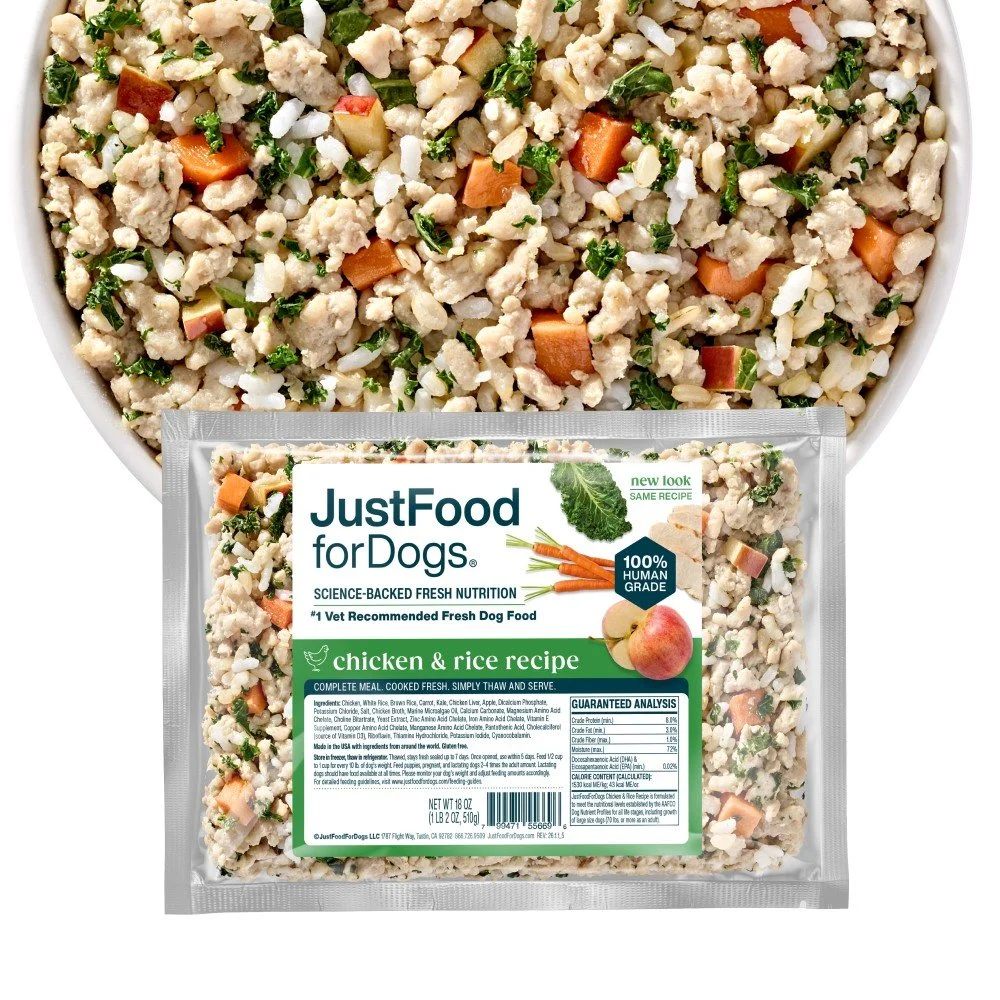
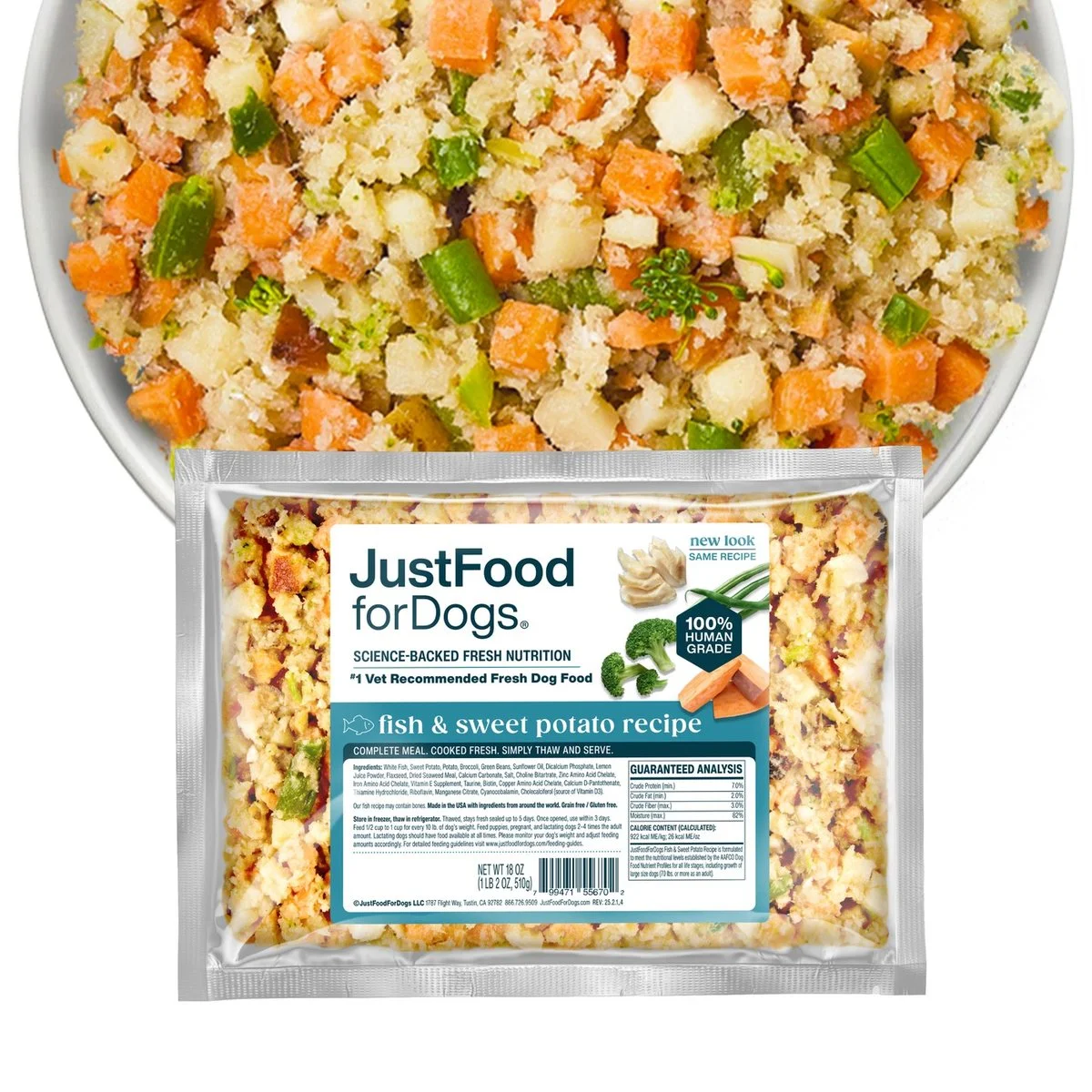
Chicken & Rice contains chicken, white and brown rice, carrots, kale, chicken liver, apples, chicken bone broth, algae oil, and a nutrient blend. Fish & Sweet Potato contains a white fish blend of cod, pollock, and haddock. Compare the current recipe information when considering ingredients or a possible food sensitivity.
The foods’ calorie densities also differ substantially. Fish requires more grams than Chicken to provide the same calories. Don’t carry the same gram portion across a recipe change; recalculate based on the selected food and the calorie allowance.
JustFoodForDogs Fish & Sweet Potato
Check the current Fish & Sweet Potato recipe, portions and ordering options.
Adult recipes, aging dogs, and calorie density
All four recipes may be considered for an adult, subject to the dog’s needs and any medical restrictions. Chicken and Fish carry all-life-stages statements; Beef and Turkey are adult-maintenance recipes. A dog maintaining healthy condition on a suitable diet doesn’t need a new protein simply because another recipe sounds more premium or seems more suited to an athletic breed.
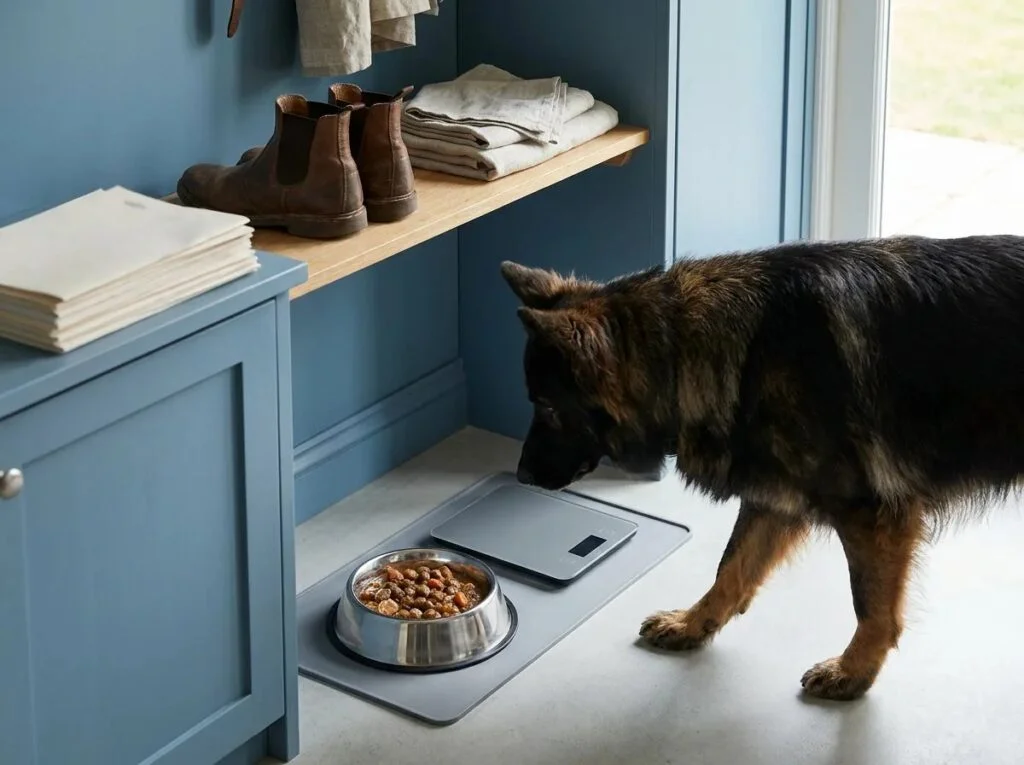
Current calorie densities are:
- Chicken & Rice: 1,530 kcal/kg.
- Fish & Sweet Potato: 922 kcal/kg.
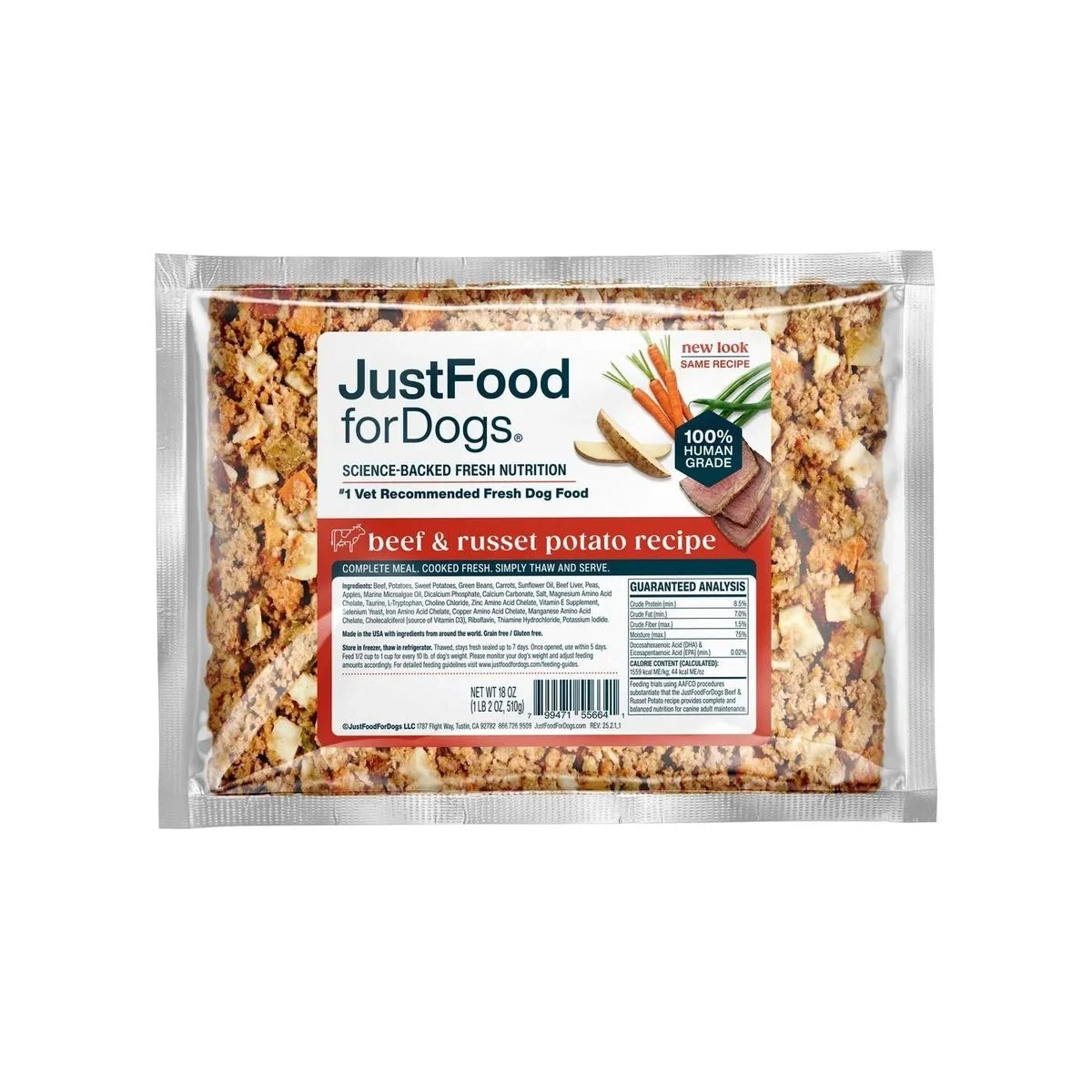
- Beef & Russet Potato: 1,559 kcal/kg.
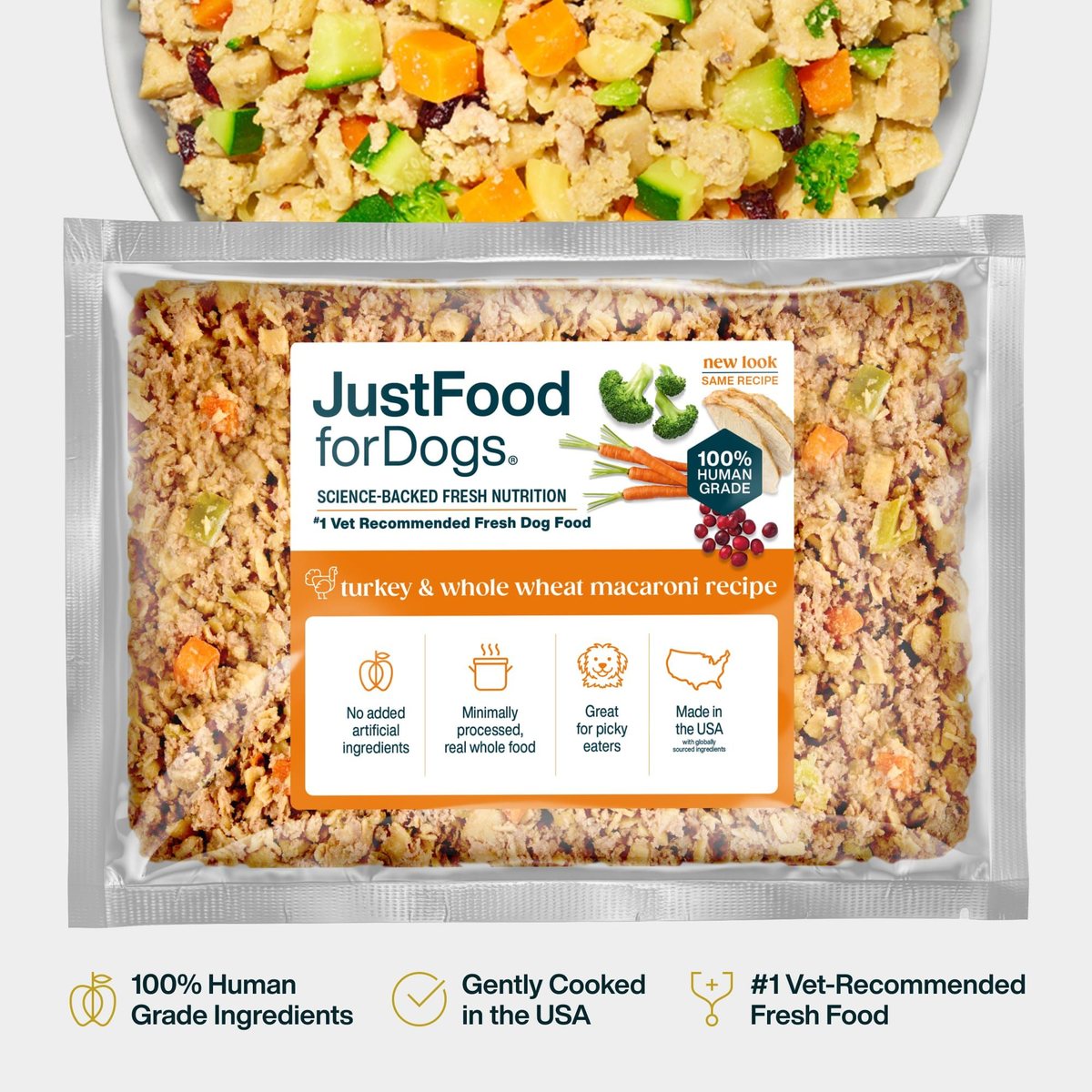
- Turkey & Whole Wheat Macaroni: 1,741 kcal/kg.
For the same calorie allowance, Fish requires the greatest food weight of these four recipes, while Turkey requires the least. That difference can affect meal preparation, package use, storage space, and recurring cost. It doesn’t establish a nutritional ranking.
As an arithmetic example, 1,400 calories supplied entirely by one recipe would require about 915 grams of Chicken, 1,518 grams of Fish, 898 grams of Beef, or 804 grams of Turkey. Those figures illustrate how calorie density affects food weight; they aren’t daily recommendations for every German Shepherd.
Turkey & Whole Wheat Macaroni is a denser option by calorie content among these recipes. Use its own calorie information when working out portions rather than borrowing a gram amount from Chicken or Fish.
For an older dog, review muscle condition as well as weight. Age doesn’t automatically call for lower protein or a particular ingredient. Consider whether activity, appetite, dental comfort, body weight, or health has changed, and whether the current food still meets the dog’s needs.
Unexpected weight loss deserves veterinary assessment rather than an automatic high-calorie topper. The right feeding adjustment depends on the reason, which may involve intake, eating comfort, changed needs, or an underlying condition. A “senior” label alone can’t answer that question.
Set portions from actual activity and count rewards
A companion German Shepherd and a dog doing sustained training or work may need different calorie allowances. The distinction is actual workload, not breed name or an occasional energetic outing. When discussing activity, describe its type, duration, frequency, and how much of the day the dog rests. Age, climate, body condition, and health can also matter.
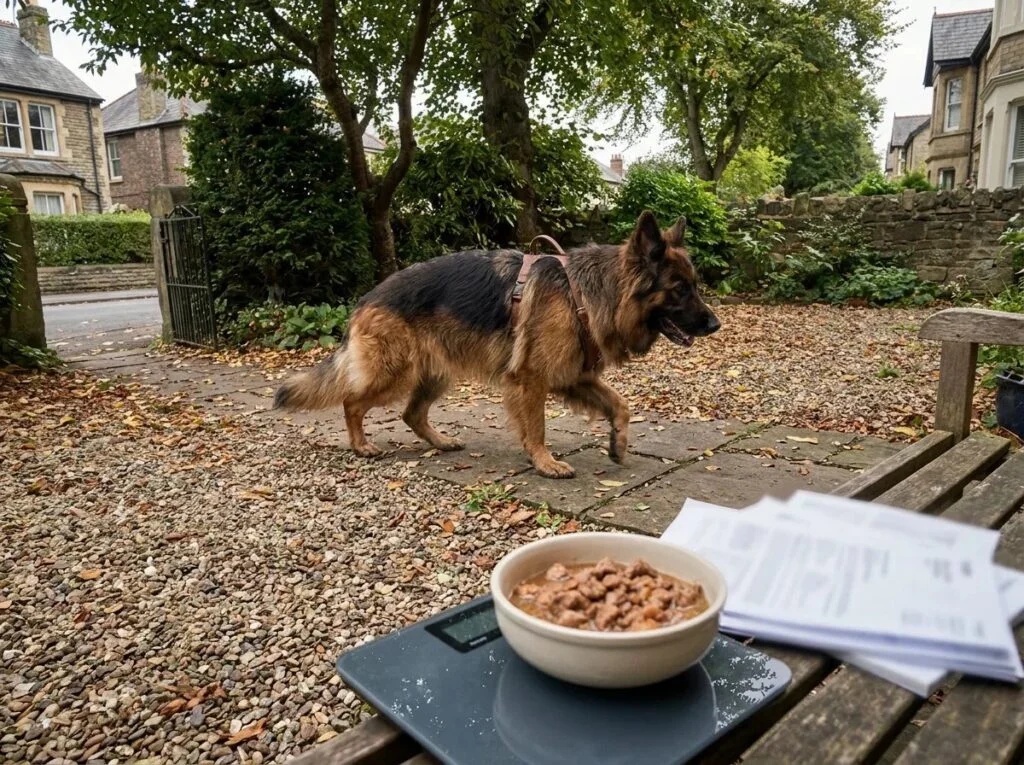
The AAHA nutrition and weight-management guidelines describe energy calculations as starting points that need adjustment. RER is calculated as 70 multiplied by body weight in kilograms raised to the 0.75 power. It is not automatically the total daily allowance.
For example, a 35-kilogram dog has an estimated RER of roughly 1,007 calories. That figure alone doesn’t determine the daily allowance for a working dog, a dog needing weight management, or a dog with a medical condition. The dog’s circumstances and response must also be considered.
After an appropriate daily calorie target is established, convert calories to food weight with this calculation: grams per day = calories assigned to the recipe ÷ recipe kcal/kg × 1,000. The following examples use Chicken & Rice at 1,530 kcal/kg. They show the arithmetic for two assumed calorie targets; they aren’t standard allowances for companion and active dogs.
Illustrative Chicken & Rice portions
| Example | Assumed calories from Chicken | Calculation | Approximate daily amount |
|---|---|---|---|
| Companion dog | 1,400 | 1,400 ÷ 1,530 × 1,000 | 915 g |
| More-active dog | 1,800 | 1,800 ÷ 1,530 × 1,000 | 1,176 g |
The second example contains about 261 grams more because its assumed calorie target is higher. A dog shouldn’t receive that larger amount just because someone calls it active; the workload and body condition need to support the allowance.
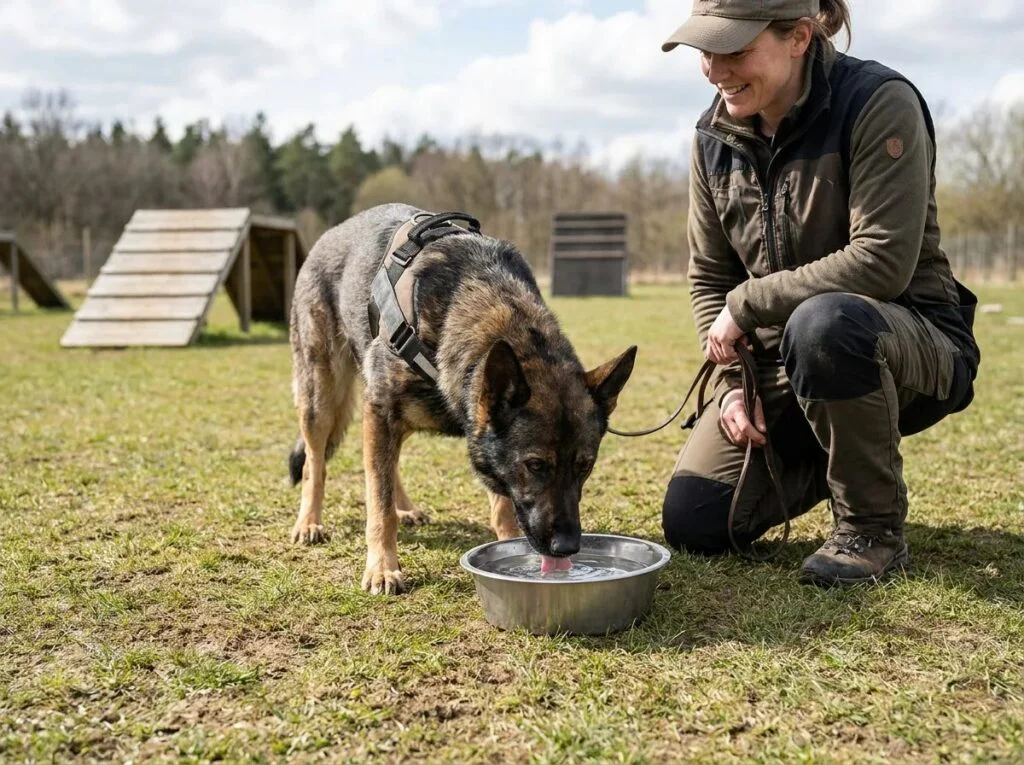
Training rewards count too, even when the session itself is brief. General guidance is to get at least 90% of daily calories from complete food, with no more than 10% from extras; a medical feeding plan may allow less. For an illustrative daily allowance of 1,400 calories, a 10% ceiling permits up to 140 calories from extras and leaves at least 1,260 for complete meals. At 1,530 kcal/kg, 1,260 calories of Chicken & Rice weigh about 824 grams.
That ceiling is not a target to fill. If the dog can use part of its daily complete food as a reward, set that portion aside and subtract it from meals later. This can make the daily total easier to track.
Protein percentage by itself doesn’t establish that a food is the right choice for a dog’s activity. Consider the complete formulation, calorie intake, adequacy statement, and individual needs together. Moisture also affects direct percentage comparisons between fresh and dry foods.
For a dog with hip dysplasia or another mobility concern, discuss body condition and nutritional needs with the treating veterinarian. Weight management may be part of the care plan, but no food can be presented as a cure for a structural joint condition. A high-calorie portion isn’t a suitable way to pursue a more muscular appearance without assessing the dog’s needs.
When workload changes, review the portion instead of applying an automatic percentage increase or decrease. A return to routine walks after sustained work may change the dog’s needs, but the amount depends on the individual. Measured portions, weight trends, appetite, and body condition make the effect of an adjustment easier to assess.
Make rewards manageable across the day
Before training starts, check the calorie information for the exact treats and decide how many are available that day. As a hypothetical example, suppose the daily target is 1,400 calories. If 20 treats provide 2 calories each and a separately planned chew provides 80 calories, extras total 120 calories. That leaves 1,280 calories for complete meals.
At 1,530 kcal/kg, 1,280 calories of Chicken & Rice weigh about 837 grams. The figures for the treats and chew are invented only to demonstrate the math; use the values printed for the actual products. The 20 rewards are for the whole day, not each person or session.
Coordinate the count among handlers. Include food given during grooming, recall practice, visitors’ arrivals, and medication, not just formal training. A shared container or simple tally can prevent several people from each using a full allowance. If ordinary complete food serves as a reward, subtract that amount from meals. Keep refrigerated food under the same handling conditions when using it for training.
Training frequency and physical workload are separate considerations. A short session with many repetitions can involve frequent rewards without creating the energy demands of prolonged physical work. Count the food and assess the activity separately.
JustFoodForDogs Beef & Russet Potato
Check the current Beef & Russet Potato recipe, portions and ordering options.
Digestive or skin concerns need an individual assessment
A product name that refers to digestion or skin doesn’t identify the cause of a dog’s symptoms. Persistent digestive or skin problems call for an individual history and, where appropriate, veterinary assessment. Don’t assume that every German Shepherd has the same food sensitivity.

When speaking with the veterinarian, note whether digestive signs are occasional or persistent, whether they began after a food change, and whether they appear with vomiting, poor appetite, weight loss, or discomfort. Bring a full food history: meals, treats, training rewards, chews, table scraps, supplements, oils, food used with medication, and recent ingredient or portion changes.
A fish-based recipe may suit an individual dog, but fish isn’t universally hypoallergenic. Fish & Sweet Potato contains cod, pollock, and haddock, so it isn’t a single-species cod diet. Prior food exposure matters when a veterinarian is considering a diagnostic diet trial.
A controlled food trial is different from trying several retail recipes in succession. It may call for one exact food, restricted extras, a planned duration, and a structured assessment. New treats during the trial can make its results harder to interpret, even if they seem like a small addition.
For itchy or dry skin, distinguish nutritional support from treatment of a diagnosed condition. A recipe can’t be assumed to resolve every skin problem, and ordinary shedding doesn’t automatically indicate a food deficiency. Ask whether food is suspected, whether a diagnostic diet or ordinary complete food is appropriate, which ingredients need to be excluded, what extras are allowed, and how the response will be assessed.
Medical restrictions may require details beyond the guaranteed minimum shown on a product page. For example, a dog that needs a specific fat limit may require typical analysis, calorie density, and a clinician’s target to make a useful comparison.
JFFD veterinary recipes also need individual assessment. Digestive Care is positioned for gastrointestinal concerns and fat intolerance, and its current product page advises checking with a veterinarian before ordering. That doesn’t mean every dog with an unsettled stomach needs it. Likewise, an adult-maintenance statement doesn’t establish that a recipe fits a puppy’s growth needs as well as a medical restriction.
Persistent symptoms shouldn’t lead to food changes without a clear reason and a way to judge the response. A veterinarian can help identify a suitable diet and decide how to assess whether it is helping.
JustFoodForDogs Turkey & Whole Wheat Macaroni
Check the current Turkey & Whole Wheat Macaroni recipe, portions and ordering options.
Food formats, transitions, and mixed meals
Fresh, dry, and canned foods involve different serving and storage routines. None is automatically the best choice because of its format. Compare nutritional adequacy, life stage, calorie density, ingredient restrictions, and practical handling. Don’t transfer a cup measurement from dry food directly into a fresh-food plan.
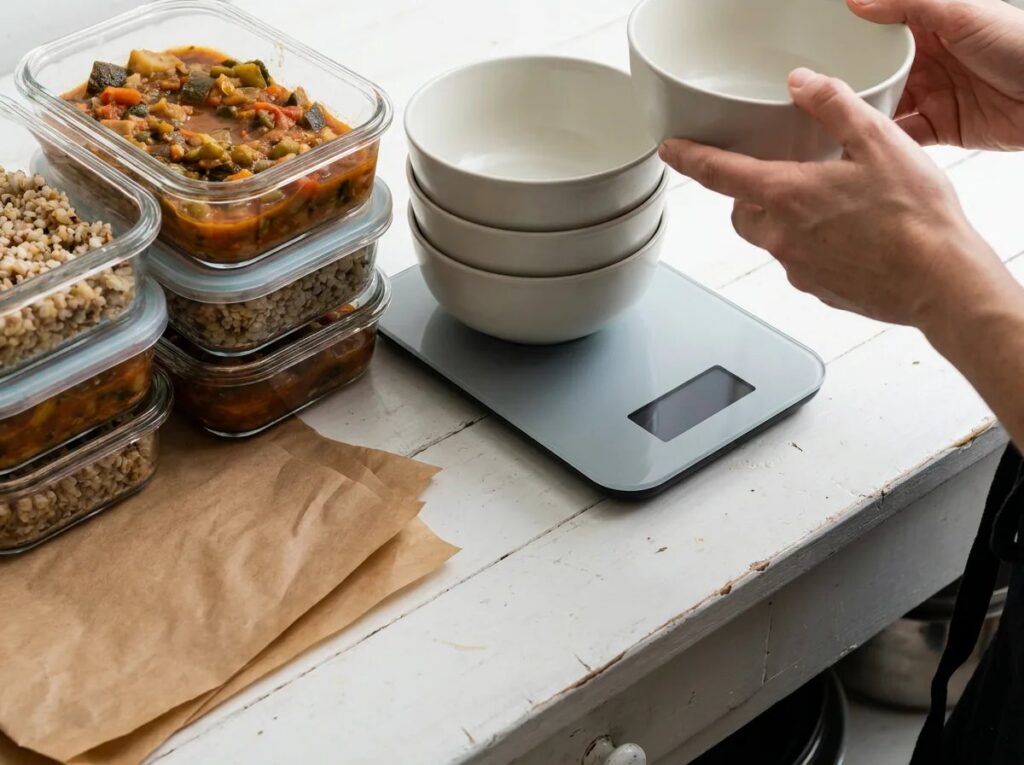
Raw ingredients don’t establish that a diet is complete, and a home-prepared mixture of meat, vegetables, and a separately chosen supplement isn’t automatically balanced. Anyone preparing a dog’s main diet should follow an appropriately formulated recipe and its exact supplementation instructions.
For a healthy dog changing between suitable foods, follow the manufacturer’s transition directions and introduce the new food gradually as tolerated. A medically directed change may need different steps, so follow the treating veterinarian’s instructions. During the change, calculate the calories from each food, measure each portion using its own calorie density, keep unrelated extras consistent, and recalculate the full serving when the transition is complete.
Divide a mixed meal by calories
A meal that is half one food and half another by calories won’t necessarily be half and half by weight. Consider the earlier example of a 1,400-calorie daily target, with 140 calories set aside for extras. That leaves 1,260 calories for complete meals. If half comes from Chicken & Rice and half from Fish & Sweet Potato, each provides 630 calories:
- Chicken & Rice: 630 ÷ 1,530 × 1,000 = about 412 grams.
- Fish & Sweet Potato: 630 ÷ 922 × 1,000 = about 683 grams.
- Combined meal amount: About 1,095 grams, supplying 1,260 calories.
The Fish portion weighs more but supplies the same calories as the Chicken portion. Supplying all 1,260 meal calories from Chicken would take about 824 grams. The mixed meal is heavier without exceeding the example’s calorie allocation.
This is a calculation example, not a required transition schedule or a recommendation to feed both recipes. Write the two food weights separately for anyone preparing meals; “half Chicken, half Fish” could be mistaken for equal weights.
The same calorie method applies when fresh food replaces part of a dry complete diet. Use the dry product’s calorie information rather than treating a scoop of kibble and a spoonful of fresh food as equivalent. If a product is a supplemental topper, check its nutritional role before letting it displace a substantial part of the complete diet.
Storage, package use, and household planning
Fresh food requires planning around freezer and refrigerator space, especially for a large dog that uses substantial quantities. The current JFFD FAQ gives different refrigerated limits for fish meals and other proteins:
- Fish-based meals: up to 18 months frozen, five days refrigerated when sealed and thawed, and three days refrigerated after opening.
- Other proteins discussed here: general refrigerated limits of seven days sealed after thawing and five days after opening.
- Follow any shorter instruction printed on the actual package.
Keep track of thawing and opening dates separately. A calculated number of feeding days doesn’t extend the refrigerated life of a package. Check the handling directions instead of judging by appearance alone.
Fish’s lower calorie density means that more grams are needed for the same allowance than with the other three recipes. Include that difference when estimating package use, storage, and ordering. Compare costs using the same daily calorie target and calculate the recurring cost per day rather than comparing only price per box or pound. Delivery charges and unused food can affect household cost.
Estimate package use
A current 18-ounce Fresh Frozen package contains about 510 grams. At the illustrative allowance of 1,400 calories supplied entirely by one recipe, daily food use would be approximately:
- Chicken & Rice: 915 grams, or about 1.8 packages.
- Fish & Sweet Potato: 1,518 grams, or about three packages.
- Beef & Russet Potato: 898 grams, or about 1.8 packages.
- Turkey & Whole Wheat Macaroni: 804 grams, or about 1.6 packages.
These estimates describe use, not an instruction to feed whole packages. Weigh the portion and store any remainder as directed. If rewards or other foods contribute calories, recalculate the amount assigned to the recipe.
A box of fourteen 18-ounce packs would supply approximately 7.8 days of Chicken, 4.7 days of Fish, eight days of Beef, or 8.9 days of Turkey at this example allowance. These are estimates for comparing delivery intervals, not individual feeding recommendations.
At the regular prices checked October 24, 2026, the same illustrative 1,400-calorie allowance costs approximately $19.72 daily for Chicken, $35.71 for Fish, $22.88 for Beef, or $18.91 for Turkey. These figures exclude delivery, tax, discounts, and unused food. Price alone doesn’t determine which recipe fits a dog.
Before ordering, consider how many days the package will last, where it will be stored, who will record thawing and opening dates, and what food is suitable if a delivery is delayed. A backup plan is useful when a dog relies on a particular food for medical or tolerance reasons.
Questions German Shepherd owners often ask
What should I feed a German Shepherd puppy?
Choose a complete food whose growth statement includes large-size dogs when that applies to the puppy’s expected adult size. Among these four recipes, Chicken and Fish have that eligibility. The daily amount still depends on current weight, age, growth, and individual needs.
Do German Shepherds need breed-specific food?
Not necessarily. Nutritional adequacy, life stage, actual activity, health requirements, and a workable feeding plan matter more than a breed name on the package. The breed label alone can’t identify the right food.
Should every German Shepherd get a working-dog portion?
No. Set the allowance according to actual workload, needs, and weight trend. A companion dog doesn’t need a larger ration simply because the breed can perform demanding work. Reassess when activity changes substantially.
What foods should a German Shepherd avoid?
Keep foods toxic to dogs out of reach, including chocolate, grapes and raisins, and products containing xylitol. Follow diagnosed restrictions and any prescribed diet. There aren’t breed-wide ingredient bans that make chicken, grains, or fish unsuitable for every German Shepherd.
Can food prevent hip dysplasia or bloat?
No food offers a prevention guarantee. Appropriate growth nutrition and healthy body-condition management are useful parts of care, but they don’t remove the risk of either condition. Discuss the dog’s individual care plan and feeding routine with a veterinarian.
The practical choice is the recipe that suits the dog’s life stage and needs, paired with a measured portion that accounts for meals and rewards. Recheck that plan as the dog grows, changes activity, or develops new health needs.
Related reading: Petful covers feeding a high-energy Australian Cattle Dog, and WebVet covers food choices for Goldendoodles by size and life stage.


