Sample No. 0209
Golden Retriever Feeding: Choosing Food for Puppies, Adults, and Seniors
Match food to your Golden’s life stage, calculate portions from recipe calories, and include treats in the daily allowance.
For Golden Retrievers, the right food depends on life stage, individual needs, and portion size. A recipe labeled for adult maintenance may suit a healthy adult or some seniors, but it shouldn’t be the main food for a growing puppy. The product’s exact nutrition statement matters more than a breed label or coat color.
This guide compares four JustFoodForDogs recipes using their published life-stage statements and calorie densities. It doesn’t report firsthand feeding tests or health outcomes. Use it to frame questions about growth, adult calorie needs, senior health, treats, and the practical cost of feeding.
Start with life stage and the exact recipe
A suitable food needs to provide complete nutrition for the dog’s life stage and fit its health needs. Puppies need food that qualifies for growth; adults need portions that support an appropriate body condition; older dogs may need adjustments based on activity, appetite, muscle condition, or a health change.
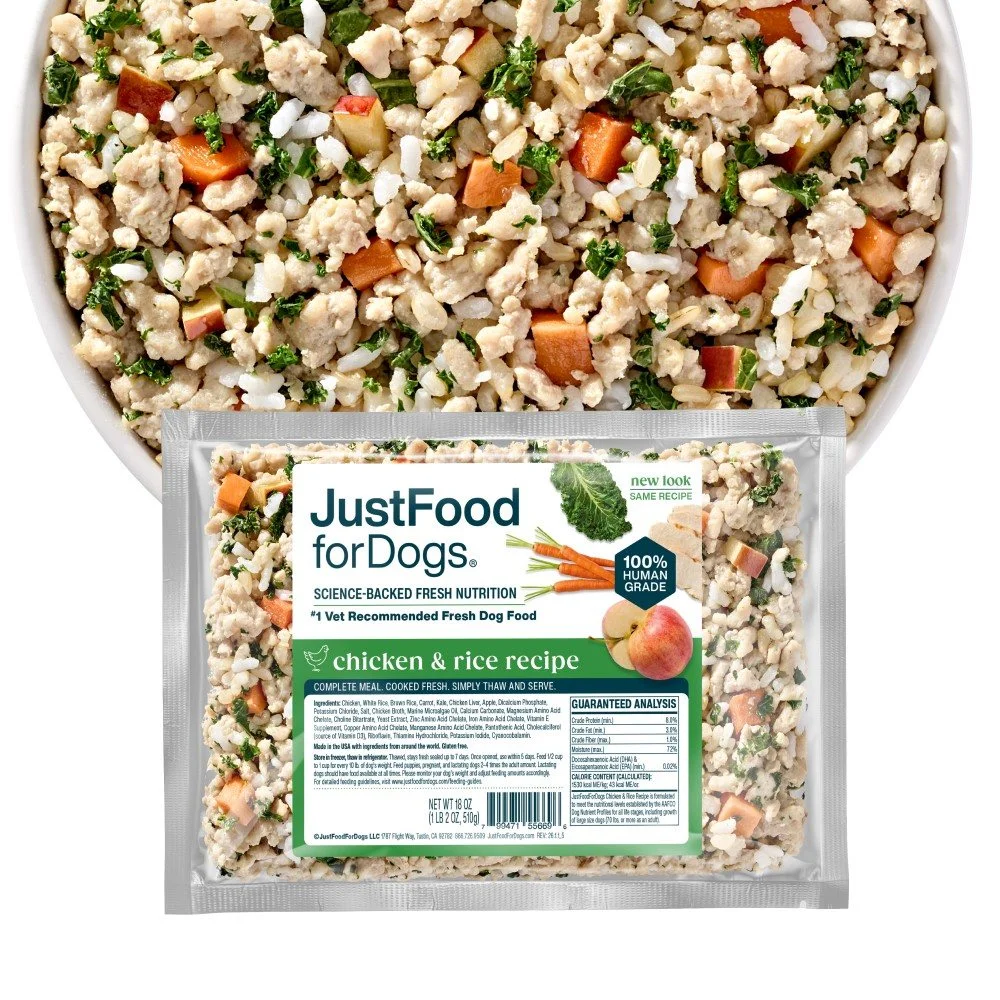
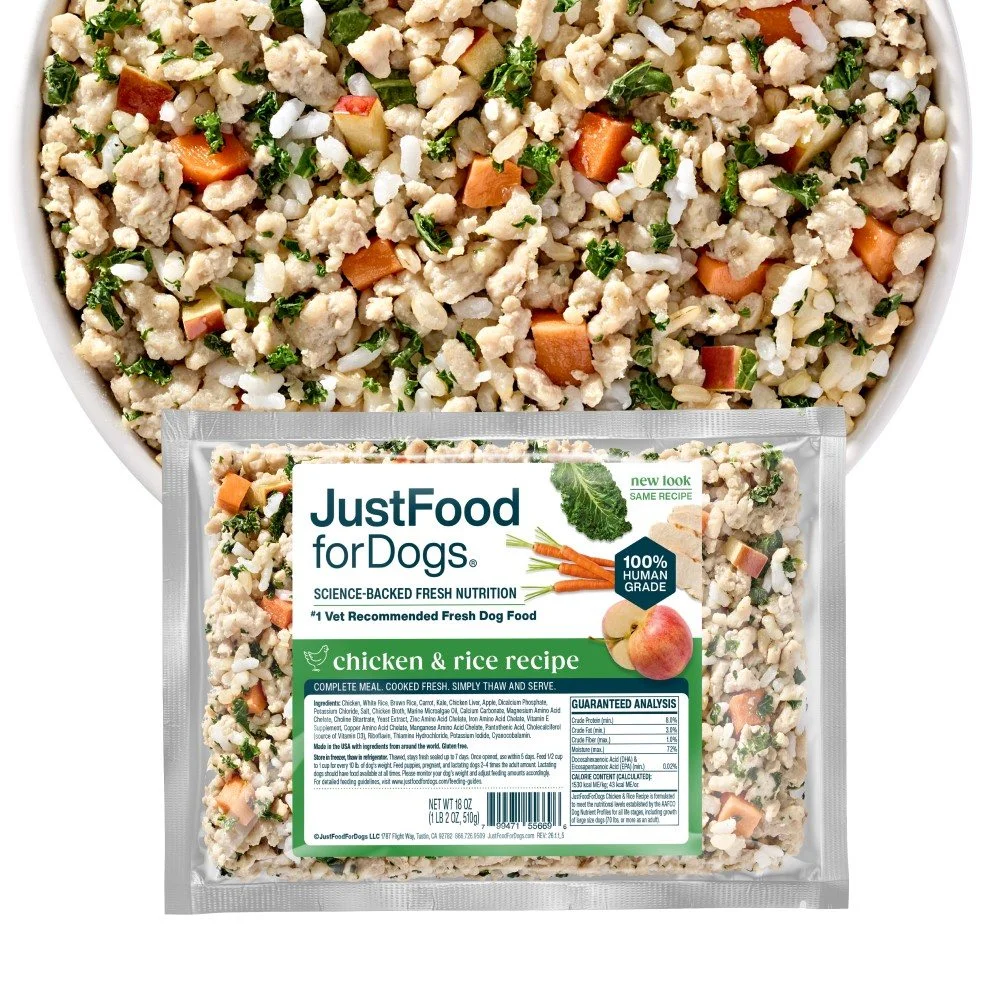
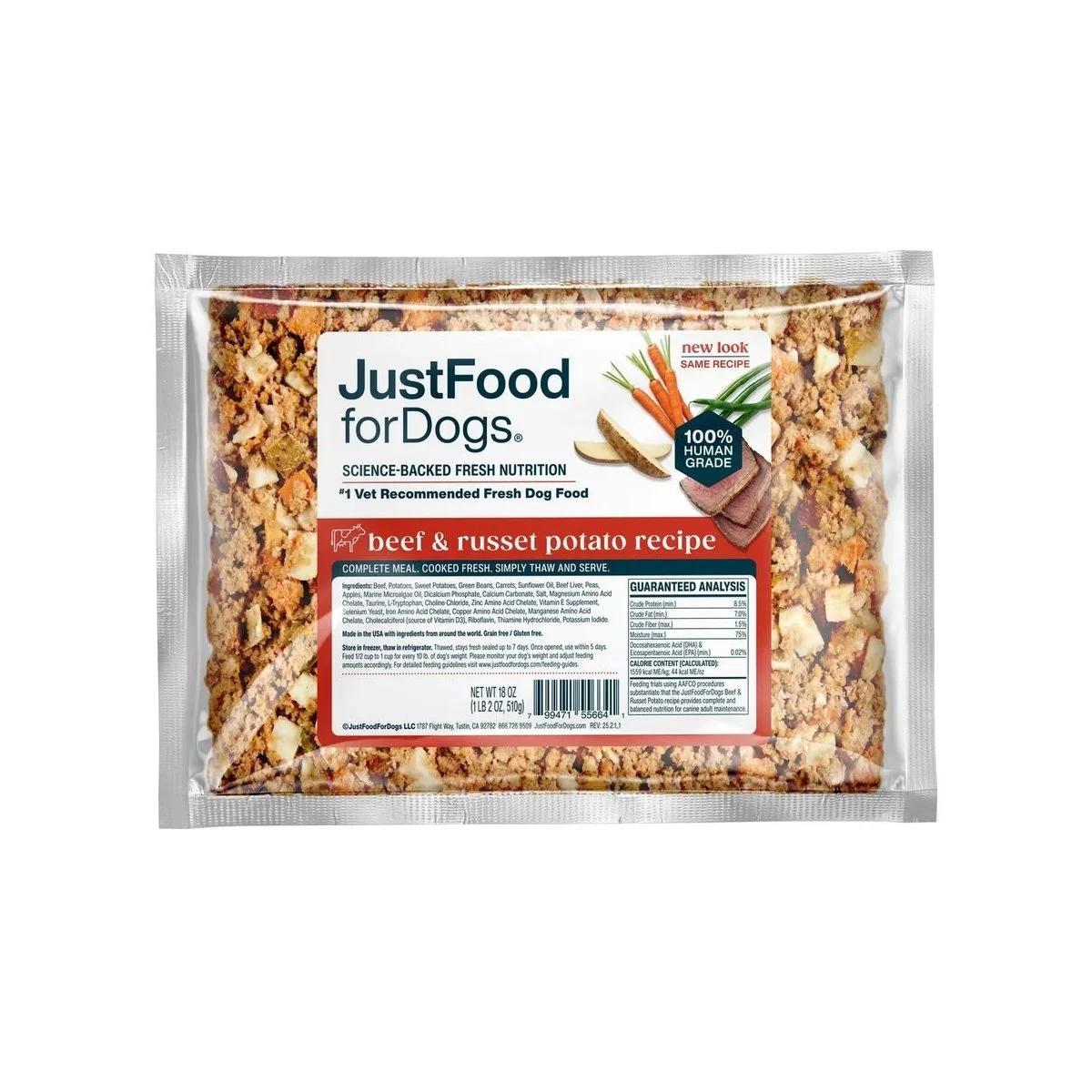
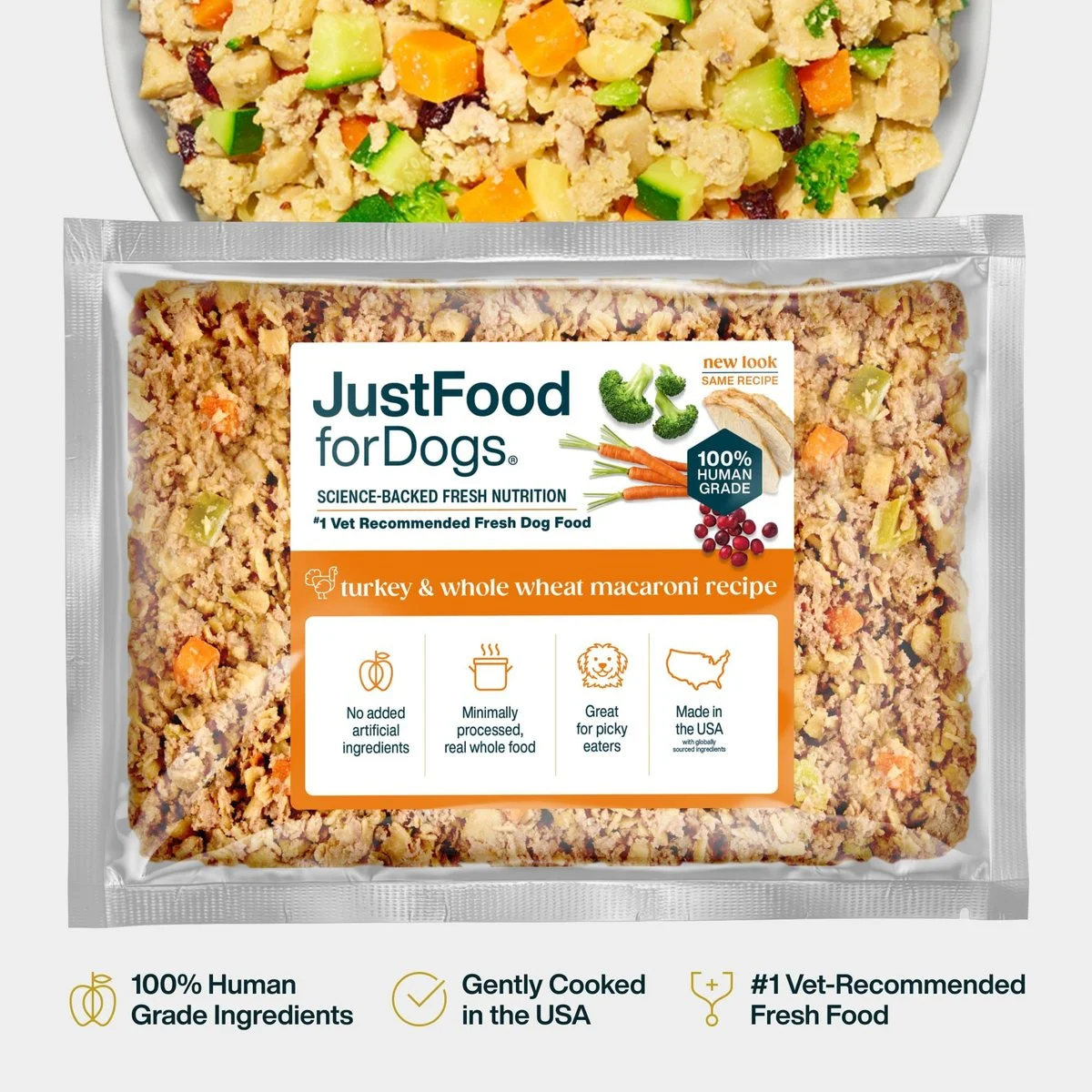
For puppies expected to weigh 70 pounds or more as adults, check that the recipe’s statement explicitly includes growth of large-size dogs. The current Chicken & Rice and Fish & Sweet Potato recipes have all-life-stages statements that include this growth category. Beef & Russet Potato and Turkey & Whole Wheat Macaroni are labeled for adult maintenance.
That distinction matters even if a puppy is already large or is eager to eat an adult recipe. An adult-maintenance food shouldn’t replace a growth-qualified main diet on the basis of size or flavor preference. Ask your veterinarian to help confirm expected adult size, set a starting calorie target, and adjust portions as the puppy grows.
The Golden Retriever’s breed characteristics can provide context, but they don’t create a separate prescription based on coat shade. English cream Golden Retrievers should be assessed using the same life-stage and individual-health principles. Dry, wet, canned, and fresh formats all call for the same basic check: does the exact food provide complete nutrition appropriate for this dog?
Terms such as “natural,” “grain-free,” or a short ingredient list don’t establish that a recipe is the right choice. Raw and home-prepared diets also need appropriate formulation and food-safety assessment. A home-cooked chicken-and-rice meal, for example, is not the same as a prepared Chicken & Rice recipe with its own nutrient blend.
Growth-eligible options for puppies

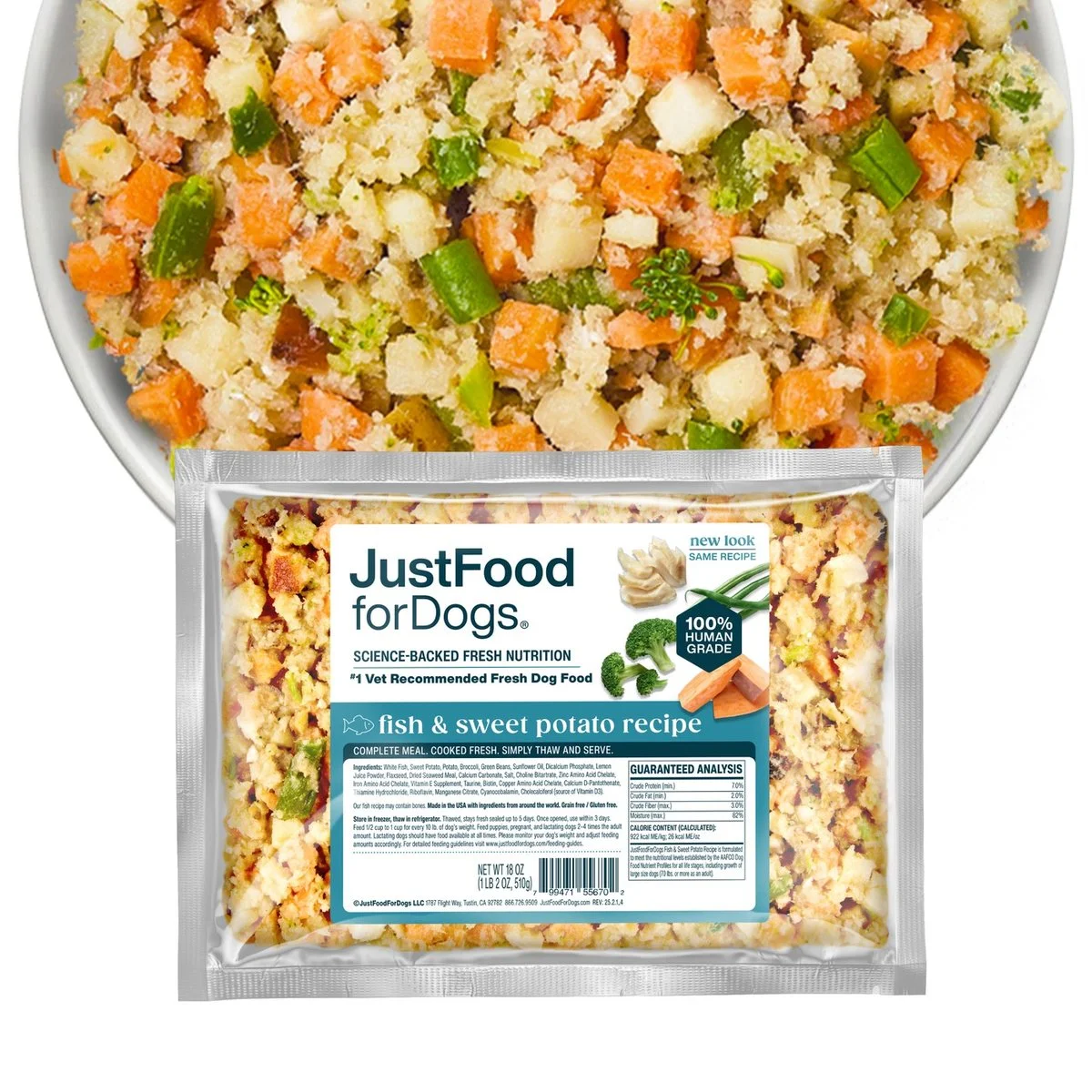
Chicken & Rice supplies 1,530 kcal/kg. Fish & Sweet Potato supplies 922 kcal/kg and uses a white fish blend containing cod, pollock, and haddock. These recipes offer different ingredient combinations, and the same serving weight won’t provide the same calories.
Work with your veterinarian on a feeding plan that accounts for the puppy’s current weight, growth pattern, meal schedule, and expected adult size. Revisit the portion as growth progresses, and ask when an adult-maintenance recipe may become appropriate. Avoid adding calcium or other nutrient supplements to complete puppy food unless the veterinarian has a specific reason to recommend them.
If Fish & Sweet Potato suits the puppy’s needs and ingredient tolerance, calculate its serving from its own calorie density. Don’t carry over the gram amount used for Chicken & Rice. A calorie target and a kitchen scale help keep portions consistent as the puppy’s needs change.
Adult portions depend on calorie density
All four recipes can be considered for an adult, subject to individual suitability. Their current energy densities are:
- Chicken & Rice: 1,530 kcal/kg.
- Fish & Sweet Potato: 922 kcal/kg.
- Beef & Russet Potato: 1,559 kcal/kg.
- Turkey & Whole Wheat Macaroni: 1,741 kcal/kg.

For the same number of calories, Fish & Sweet Potato takes more grams than the other recipes; Turkey & Whole Wheat Macaroni takes fewer. This affects serving size and how long a package lasts. It doesn’t make one recipe automatically better for every adult.
For an adult who needs Turkey & Whole Wheat Macaroni, compare its ingredients and serving requirements with the dog’s current diet before switching. A keen appetite can make feeding easier, but it doesn’t tell you how much food the dog needs.
Introduce a suitable new food gradually, following its instructions unless the veterinarian advises otherwise. Measure both foods during the transition so a changing mix doesn’t accidentally increase or reduce total calories. For a broader look at the brand’s range, see the JustFoodForDogs review.
Older dogs need an individual check

Age alone doesn’t mean a Golden Retriever needs a smaller ration. Some older dogs become less active and need fewer calories; others have trouble maintaining weight or muscle. Check body condition and muscle condition separately with the veterinary team, since weight alone can’t show whether the dog’s composition is changing.
Unexplained weight change, muscle loss, reduced appetite, or new difficulty eating deserves attention. Consider whether the dog can comfortably reach its bowls, chew and pick up food, and maintain its usual activity. A softer food texture may help some dogs eat, but it won’t treat dental disease or explain a new reluctance to eat.
An adult-maintenance recipe may remain appropriate for a senior, while a new diagnosis could call for a different nutritional plan. If weight management is needed, preserve adequate nutrition instead of simply diluting meals with large amounts of vegetables or removing protein-containing ingredients. Ask the veterinarian how to adjust calories while meeting the dog’s needs.
Calculate meals and count extras
Start with a daily calorie target, then calculate the food weight from the exact recipe:
Grams per day = calories assigned to the food ÷ recipe kcal/kg × 1,000.
A kitchen scale makes portions repeatable, particularly in homes where several people feed the dog. Dividing a package by eye can lead to inconsistent servings.
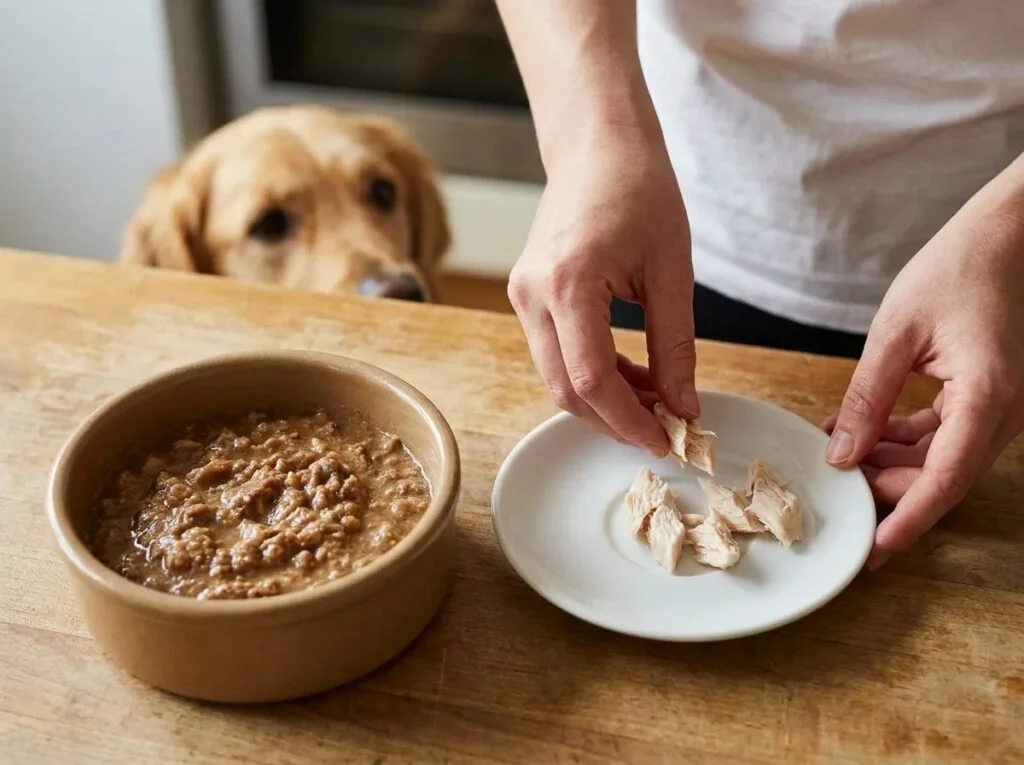
Count training rewards, chews, table scraps, and food used to give medication as part of the daily calories. The AAHA nutrition guidelines support getting at least 90 percent of calories from complete food, with no more than 10 percent from extras. A medical plan may set a stricter limit.
Here’s an illustration using 1,200 calories per day. That figure shows the arithmetic; it isn’t a feeding recommendation for every Golden Retriever.
| Part of the daily allowance | Calculation | Result |
|---|---|---|
| Total allowance | Illustrative target | 1,200 calories |
| Maximum from treats at 10 percent | 1,200 × 0.10 | 120 calories |
| Calories remaining for meals | 1,200 − 120 | 1,080 calories |
| Complete-food share | 1,080 ÷ 1,200 | At least 90 percent |
| Chicken & Rice for meal calories | 1,080 ÷ 1,530 × 1,000 | About 706 grams per day |
You don’t need to use the full treat allowance. If the dog gets fewer extras, more of the allotted calories can come from complete food. For some training routines, reserving part of the regular ration for rewards may also help keep the daily total steady.
Weight management should use an appropriate calorie target that preserves nutrition. The recipe with the lowest fat isn’t automatically the best choice for weight loss, and an adult weight-loss example shouldn’t be applied to a puppy. Reassess the plan using weight trend, body condition, actual activity, appetite, treats, and any health changes; involve the veterinarian when illness or unexplained weight change is part of the picture.
Account for package use and storage
Once you know the portion, compare package prices by the number of feeding days at the same calorie target. Include delivery and food that may go unused. A low price per pound doesn’t necessarily mean a lower daily cost, and a package that contains several days of food may not remain usable for that long after opening.
According to the current JFFD FAQ, fish-based meals have refrigerated limits of five days sealed after thawing and three days after opening. The other proteins discussed here have general limits of seven days sealed after thawing and five days after opening. Follow any shorter storage instructions on the package. Mark thawing and opening dates, use clean utensils, and plan orders around the amount the dog will eat within those limits.
Skin and digestive changes need context

A complete diet supports general nutrition, but food shouldn’t be treated as a cure for every coat, skin, or digestive concern. Itching, hot spots, recurring ear problems, and persistent digestive changes call for veterinary assessment. Bring a complete food history, including treats, chews, supplements, table scraps, and recent changes.
A fish recipe isn’t automatically hypoallergenic, and grain-free food isn’t automatically the answer to a skin problem. If a food reaction is suspected, the veterinarian may recommend a controlled elimination trial with specific restrictions. During a prescribed trial, follow the selected diet and instructions about treats and chews; ask about flavored medications, and avoid adding unrelated supplements. Keep the follow-up appointment so the response can be assessed.
For a sensitive stomach, choose based on the dog’s tolerance and symptoms, not the recipe name alone. A guaranteed minimum fat percentage doesn’t establish that a food meets a clinical fat restriction. If a veterinary diet is needed, follow the clinician’s instructions and check the exact nutritional analysis.
Frequently asked questions
Can a Golden Retriever puppy eat an adult JFFD recipe?
Adult-only recipes shouldn’t serve as a growing puppy’s main diet. Chicken & Rice and Fish & Sweet Potato have growth eligibility that includes large-size dogs; Beef & Russet Potato and Turkey & Whole Wheat Macaroni are labeled for adult maintenance. Check the current statement and feeding guidance.
Does every senior Golden Retriever need fewer calories?
No. Activity, health, appetite, and muscle condition all affect the plan. Some seniors need fewer calories, while others need help maintaining weight or muscle.
How often should Golden Retrievers eat?
Divide the daily allowance into a schedule that suits the dog. Puppies commonly need more frequent meals, while many healthy adults eat two meals a day. Medical needs or individual veterinary instructions may call for a different routine.
What is the most common food allergy in Golden Retrievers?
Breed alone can’t identify an individual food allergy, and there isn’t one ingredient every Golden Retriever should avoid. A feeding history and a properly conducted veterinary elimination trial are more useful than assuming a breed-wide trigger.
What foods should Golden Retrievers avoid?
Keep foods toxic to dogs away, including chocolate, grapes, raisins, and products containing xylitol. Follow any restrictions for diagnosed conditions, and remember that an adult-only recipe isn’t a puppy diet.
How should I choose a dry food?
Check that the food is complete for the dog’s life stage, including the large-size growth statement for puppies when applicable. Then consider calorie density, relevant ingredient restrictions, and the dog’s tolerance. Food format alone doesn’t establish suitability.
The practical takeaway is to match the recipe to life stage, calculate portions from its calorie density, and revisit the plan when growth, activity, appetite, weight, or health changes.


