Sample No. 0208
Choosing Chihuahua Food: Life Stage, Portions and Safe Storage
Compare complete recipes by life stage, measure small meals by calories, and plan treats and storage around your Chihuahua’s needs.
For Chihuahuas, choosing a suitable food is only part of the feeding plan. Small portions make accurate measuring matter, while package size and storage instructions can affect whether a fresh food fits your routine. Start with the dog’s life stage and nutritional needs, then work out the portion and how you’ll handle leftovers.
Choose for life stage and the individual dog
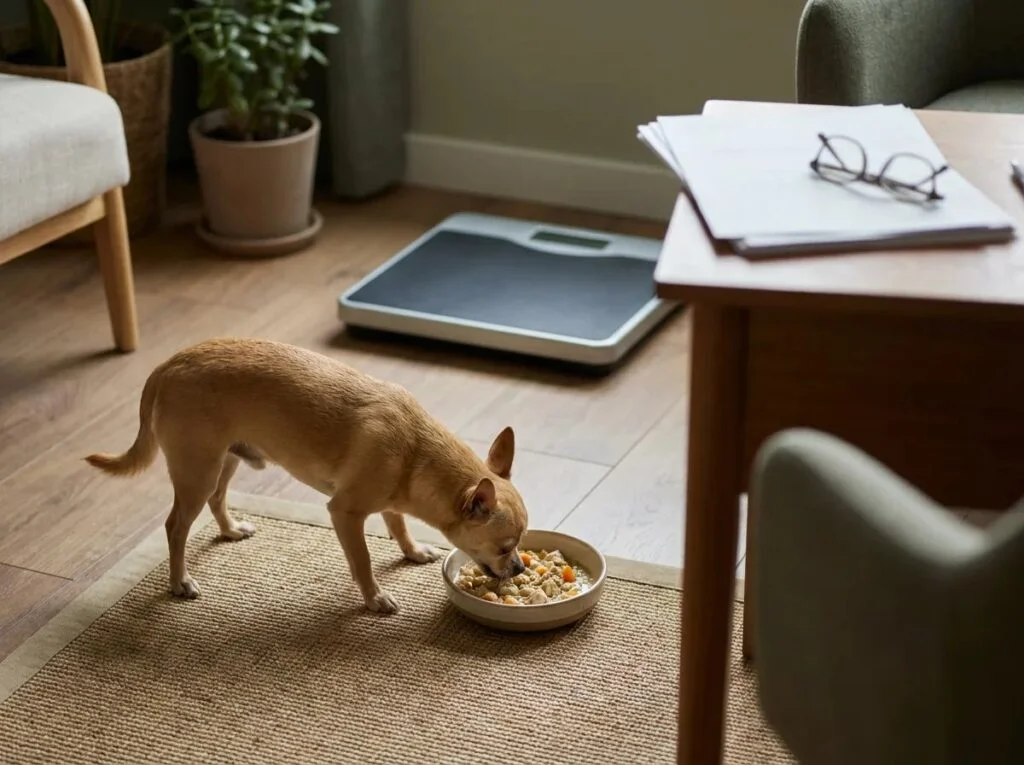
No single food suits every Chihuahua. A useful choice provides complete nutrition for the dog’s life stage, agrees with the individual dog, and comes in a texture the dog can eat comfortably. The storage and serving routine also needs to be practical for the household.
A breed label doesn’t settle what a particular dog should eat. The same applies to Chihuahua mixes: consider the dog’s age, body condition, activity, health, appetite, and tolerance. A veterinarian can help set a calorie target and adjust it as the dog grows or its needs change.
Read the nutritional adequacy statement on the exact recipe. It should indicate whether the food is complete and balanced for growth, adult maintenance, or all life stages. Food labeled for intermittent or supplemental feeding has a different role: it isn’t intended to provide all of a dog’s nutrition as the main diet.
Ingredients alone don’t establish whether a recipe is complete. Nor does a homemade meal become balanced simply because it includes meat, rice, and vegetables. If you cook for your dog, follow a professionally formulated recipe and its specified ingredients and supplements. Raw food also needs careful assessment for nutritional completeness and food safety; serving it raw doesn’t establish an advantage for Chihuahuas.
Questions about stomach sensitivity deserve the same individual approach. Recurrent vomiting, diarrhea, or changes in appetite call for veterinary advice rather than a series of ingredient guesses. Chihuahuas don’t all share the same allergy, and no food can be treated as a breed-wide cure.
When comparing foods, check the life-stage statement, calorie density, feeding guidance, and storage instructions. A veterinarian’s recommendation is most useful when it connects those details to the dog’s health and body condition.
How the four recipes differ
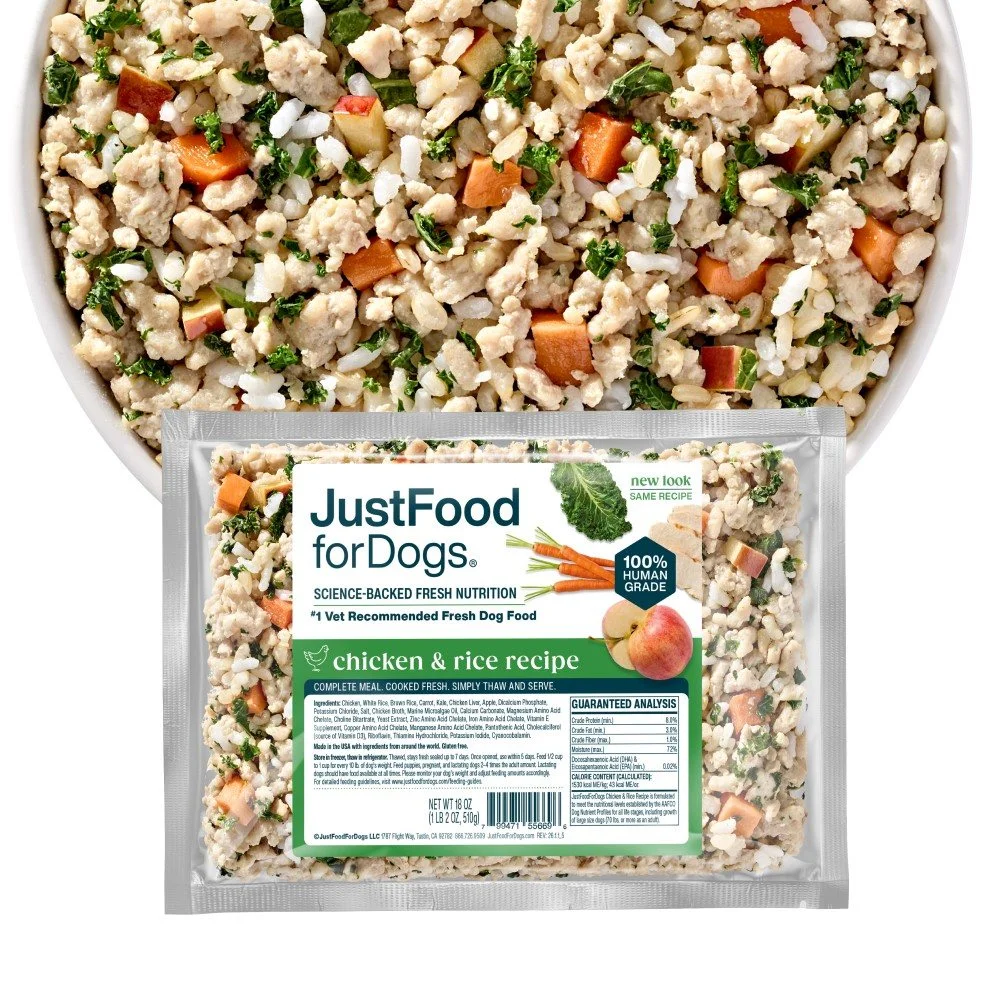
Among the four JustFoodForDogs recipes compared here, Chicken & Rice and Fish & Sweet Potato are listed for all life stages, including growth. Beef & Russet Potato and Turkey & Whole Wheat Macaroni are listed for adult maintenance.
- Chicken & Rice: 1530 kcal/kg; suitable for all life stages, including growth.
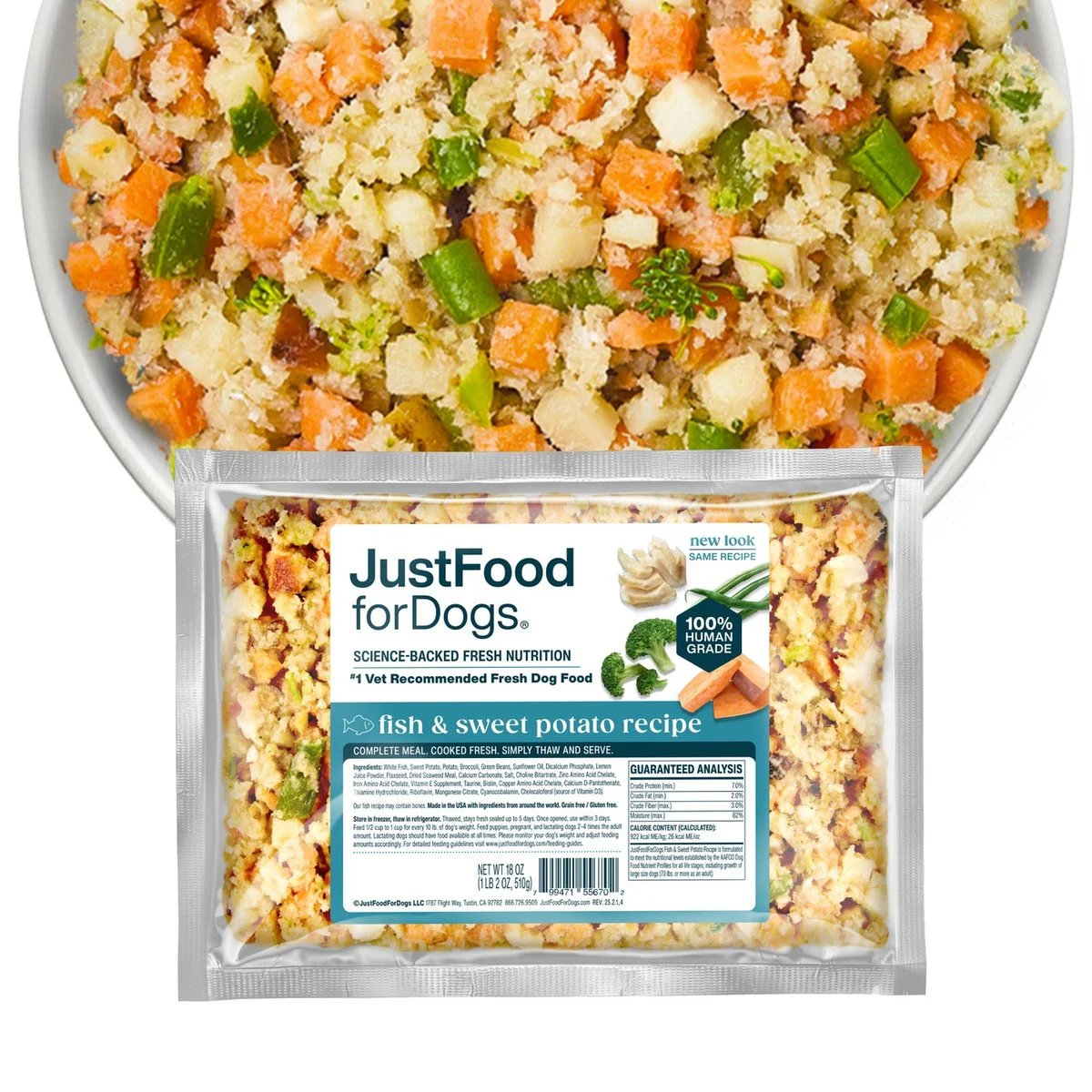
- Fish & Sweet Potato: 922 kcal/kg; suitable for all life stages, including growth.
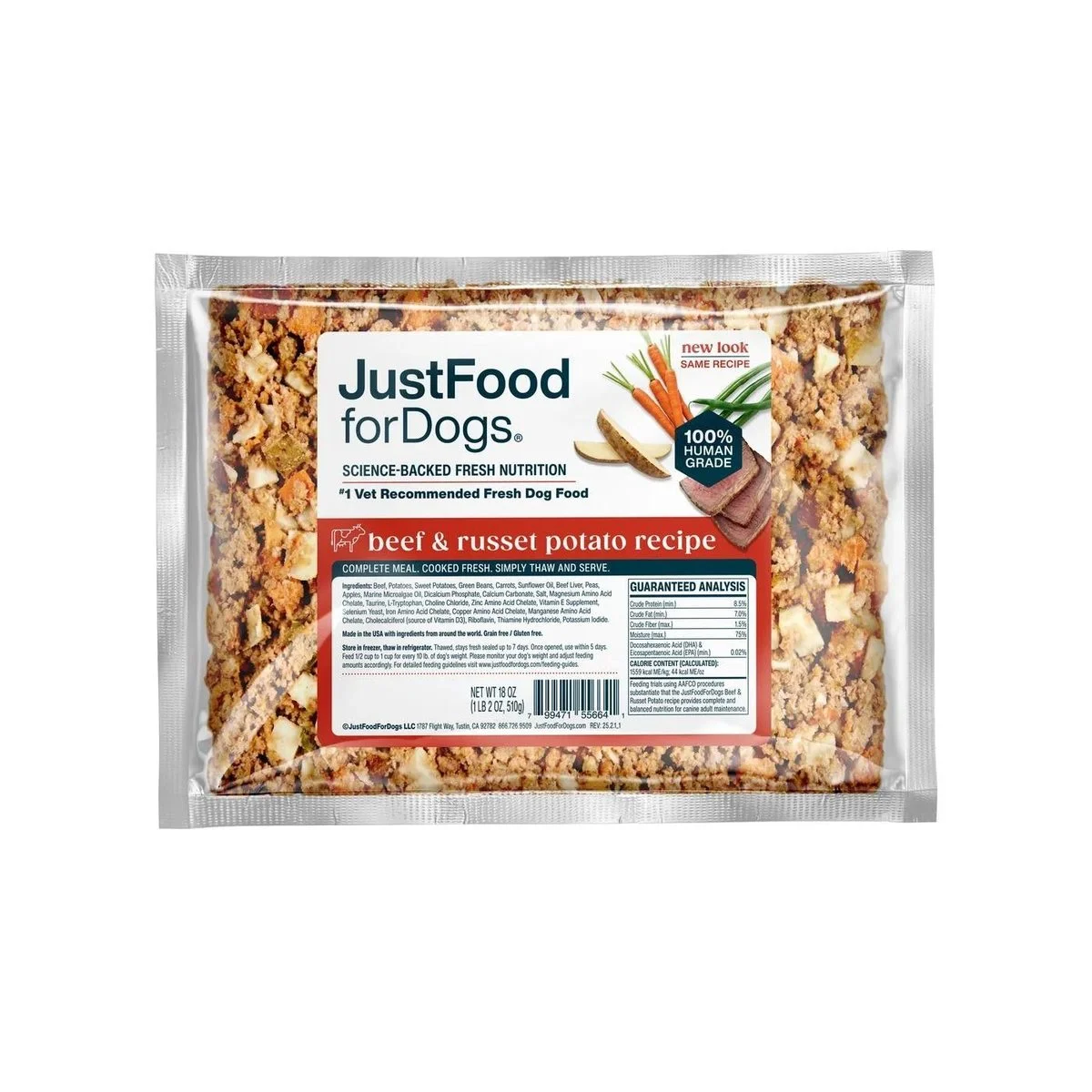
- Beef & Russet Potato: 1559 kcal/kg; intended for adult maintenance.
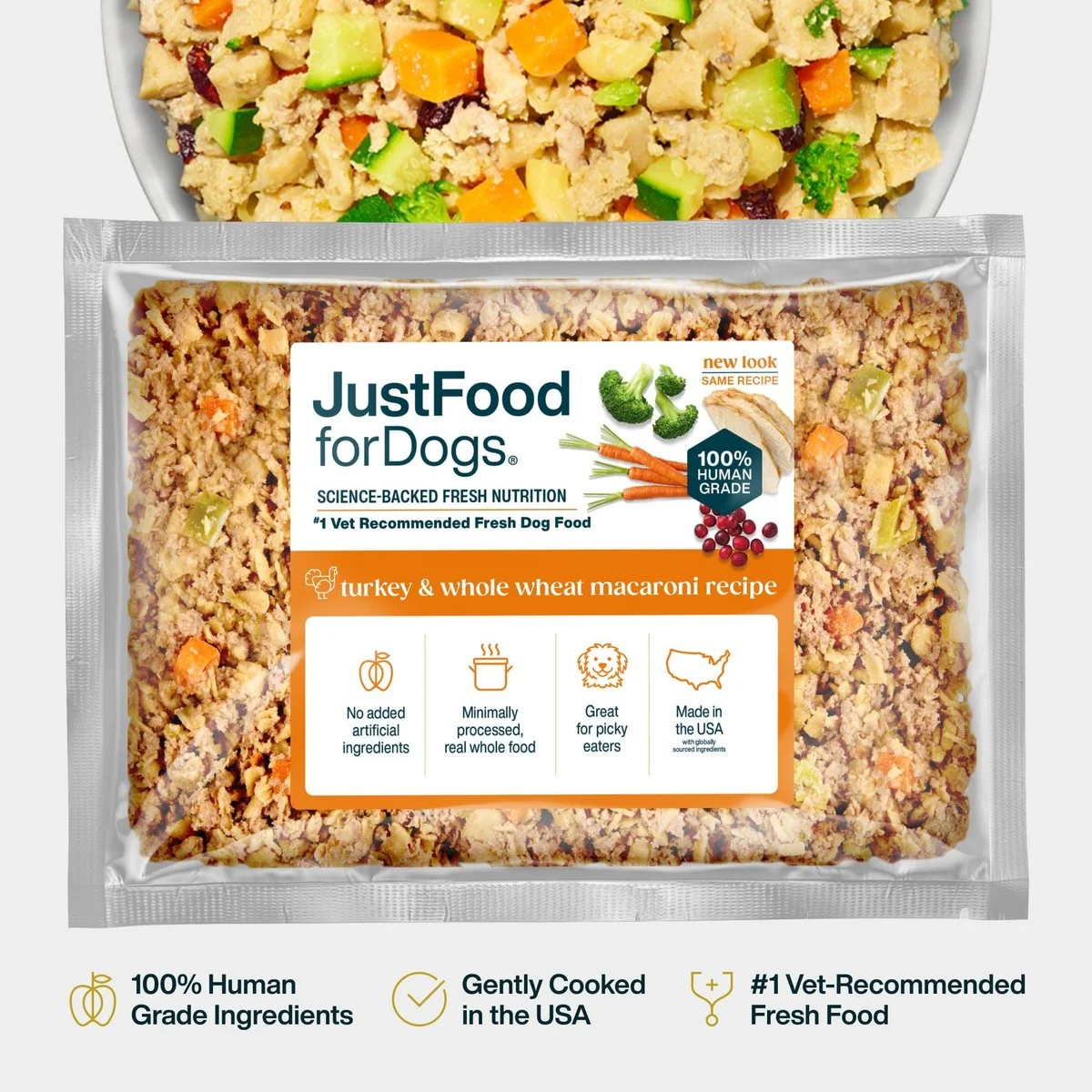
- Turkey & Whole Wheat Macaroni: 1741 kcal/kg; intended for adult maintenance.
The calorie densities affect the weight of food needed to provide a given number of calories. Fish & Sweet Potato is less calorie-dense than the other three, so its calculated serving weighs more for the same calorie target. A larger portion by weight doesn’t mean it’s less complete; a smaller one doesn’t mean it’s inadequate.
Chicken & Rice includes chicken, white and brown rice, vegetables, chicken liver, and a nutrient blend. It offers a cooked chicken option whose adequacy statement covers growth as well as adult needs.
Fish & Sweet Potato contains cod, pollock, and haddock. It’s not a salmon recipe, so check the actual ingredients when comparing foods. Fish varieties aren’t interchangeable just because they share a broad category.
Check Fish & Sweet Potato details
For a puppy, use a complete main food whose adequacy statement includes growth. Of these four recipes, Chicken & Rice and Fish & Sweet Potato meet that description. Beef & Russet Potato and Turkey & Whole Wheat Macaroni are adult-maintenance foods and shouldn’t replace a growing puppy’s main diet just because the puppy likes them.

Ask your veterinarian to set a puppy’s meal schedule and portion as it develops. The adult example below isn’t a puppy feeding plan. Age, weight, growth, appetite, and the puppy’s ability to eat reliably all matter; don’t extend gaps between meals based on adult guidance. For more context on breed fit, see reasons a Chihuahua might be the right breed for you and this JustFoodForDogs review.
Calculate portions in grams
“Small breed” and “teacup” don’t provide a calorie target. A Chihuahua’s needs depend on individual factors such as age, body condition, activity, health, and whether the dog is still growing. Treat any calculation as a starting point for discussion with your veterinarian, not a permanent prescription. The AAHA nutrition guidelines emphasize tailoring feeding to the individual animal.

Once you have a daily calorie target for a recipe, its kcal/kg figure can be converted into grams:
Grams per day = calories assigned to that food ÷ kcal/kg × 1000.
The following is an illustrative adult calculation. It assumes 150 calories a day are assigned to the main recipe, split evenly between two meals. It is not a recommended daily intake for every Chihuahua. Include treats and other extras in the dog’s overall calorie allowance.
| Recipe | Calorie density | Grams per day at 150 calories | Grams per meal, two meals |
|---|---|---|---|
| Chicken & Rice | 1530 kcal/kg | About 98 g | About 49 g |
| Fish & Sweet Potato | 922 kcal/kg | About 163 g | About 81 g |
| Beef & Russet Potato | 1559 kcal/kg | About 96 g | About 48 g |
| Turkey & Whole Wheat Macaroni | 1741 kcal/kg | About 86 g | About 43 g |
The values are rounded. At this target, the unrounded Fish & Sweet Potato amount is about 162.7 grams a day, or 81.3 grams per meal. Calculate the day’s total first, then divide it according to the feeding schedule.
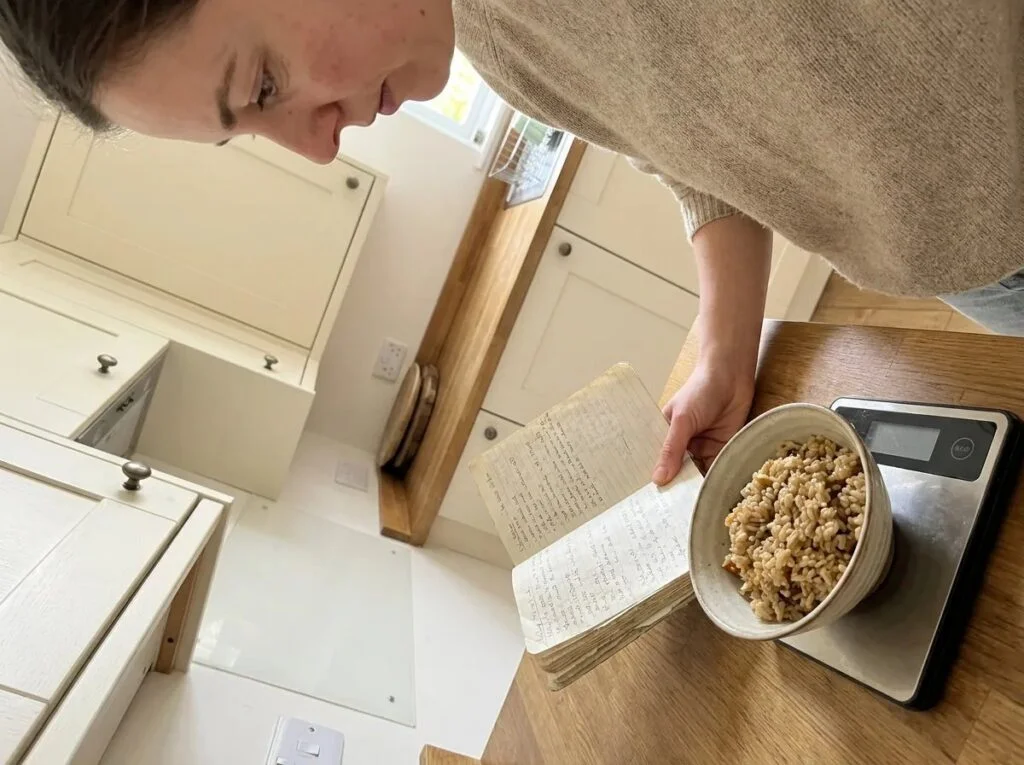
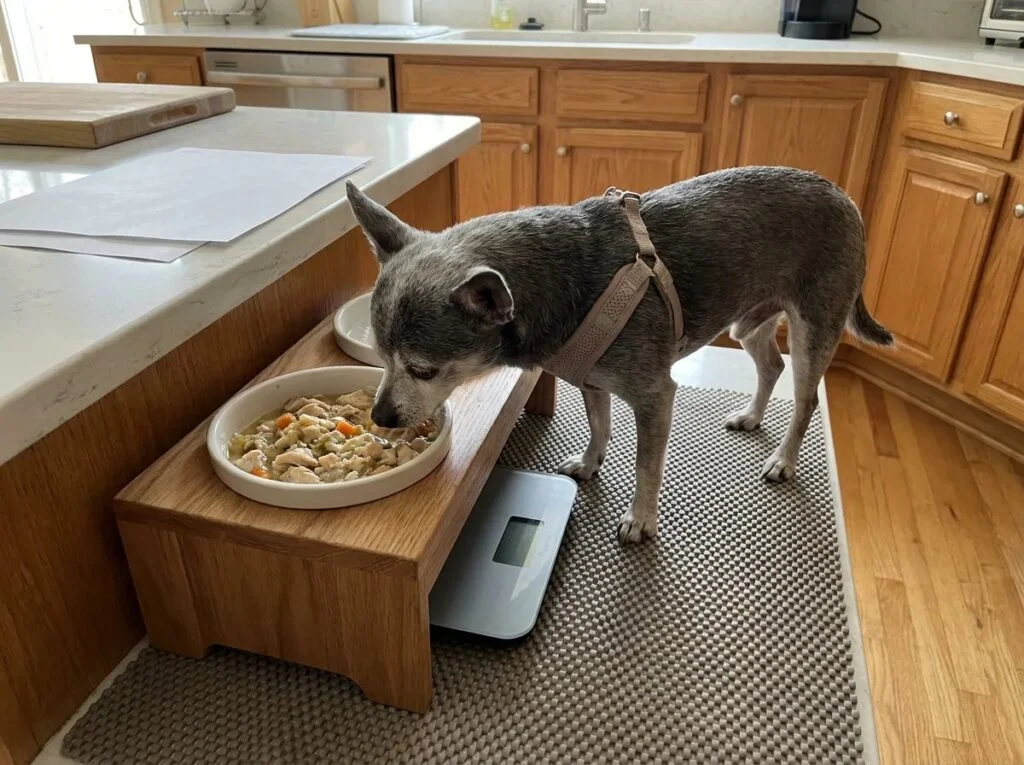
Recalculate when changing recipes. At the same weight, 98 grams of Fish & Sweet Potato provides about 90 calories, while 98 grams of Chicken & Rice provides about 150. Keeping the same scoop or portion during a switch can therefore change calorie intake substantially. A kitchen scale helps make small meals repeatable; spoonfuls vary with the utensil, how firmly food is packed, and the ingredients in each serving.
- Place a clean, empty bowl on the scale.
- Tare the scale so it reads zero with the bowl in place.
- Add the calculated food weight.
- If preparing several meals, weigh portions into separate clean containers.
- Refrigerate the remaining food according to its package instructions.
Weigh a representative portion of the recipe rather than selecting only favorite pieces. If your dog regularly leaves part of the meal, discuss the pattern with your veterinarian or the manufacturer. The amount offered doesn’t tell you how much the dog actually ate.
Match package size to storage limits
A small daily portion can make a package last longer than its opened refrigerated storage window. Check both the package weight and the recipe’s storage instructions before settling on a purchase or routine. The current JFFD storage FAQ gives different timelines for fish meals and other fresh frozen proteins: fish meals can be kept sealed in the refrigerator for up to five days after thawing and used within three days after opening. The other fresh frozen proteins discussed here have seven-day sealed-thawed and five-day opened limits. Follow shorter instructions on the package itself.
Check Beef & Russet Potato details
This comparison uses an approximate 510-gram package, equivalent to 18 ounces, and the same illustrative 150-calorie daily allocation. The feeding days use unrounded daily portions. Check the weight printed on the package you buy.
| Recipe, approximate package weight | Grams per day | Feeding days per package | Opened storage limit | Approximate food remaining after full days within limit |
|---|---|---|---|---|
| Chicken & Rice, 510 g | 98 g | 5.2 days | 5 days refrigerated | 20 g after 5 days |
| Fish & Sweet Potato, 510 g | 163 g | 3.1 days | 3 days refrigerated | 22 g after 3 days |
| Beef & Russet Potato, 510 g | 96 g | 5.3 days | 5 days refrigerated | 29 g after 5 days |
| Turkey & Whole Wheat Macaroni, 510 g | 86 g | 5.9 days | 5 days refrigerated | 79 g after 5 days |
These leftovers are a planning concern, not a reason to stretch the storage limit or feed extra. At the example allowance, the turkey package contains almost six days of food, but the opened limit remains five days. Ask the manufacturer about suitable package sizes and approved ways to handle smaller portions. Don’t assume thawed or opened food can be refrozen without checking its instructions.
Opening a package doesn’t restart the clock on food that has already been thawing in the refrigerator. Keep track of thawing and opening dates, use clean utensils, and follow the stated limit even if the food still looks appetizing. Include possible waste when deciding whether a package size makes sense.
Plan meals and treats together
Base the routine on the dog’s daily allowance, not on how empty the bowl looks. Dividing the day’s measured food into meal containers can help household members avoid serving the same meal twice. In a multi-dog home, feed separately when needed so another dog can’t take the Chihuahua’s portion.
For many adults, dividing the day’s food into two meals is practical. Breakfast and an evening meal can be convenient, but no particular clock time makes a food healthier. Use a consistent schedule that suits the dog and household. Puppies need a veterinarian-guided schedule, and medical or medication-related feeding directions take priority.
Count rewards and extras, too: training treats, chews, table scraps, and food used to give medication all contribute calories. AAHA recommends that complete food supply at least 90 percent of daily calories, leaving no more than 10 percent for treats and other incomplete extras. That’s a maximum for extras, not a target every dog needs to reach. Individual dietary restrictions may call for a different plan.

For instance, with a hypothetical 200-calorie daily allowance, treats and other extras would account for no more than 20 calories under that guideline. This is only an arithmetic example. Check calories per treat, offer smaller rewards when practical, and count what the dog actually receives. A suitable portion of the complete daily food can sometimes be set aside for training. Fresh food still needs safe handling; don’t carry it unrefrigerated in a pocket through the day.
Turkey & Whole Wheat Macaroni is the most calorie-dense of these four recipes at 1741 kcal/kg. If feeding it to an adult, calculate the allowance rather than reusing the same volume of food or extras from a less calorie-dense recipe.
Check Turkey & Whole Wheat Macaroni details
Notice changes in eating
Wet, dry, canned, and cooked fresh foods can all work when the exact product is complete for the appropriate life stage. Texture affects whether a dog eats comfortably, but it doesn’t establish nutritional adequacy. A soft food may be a topper rather than a complete meal, so check the label and calories as you would for any other format.
JFFD’s fresh recipes have a moist texture that some owners find convenient for measured servings. Offer food in a clean, stable bowl the dog can reach comfortably, and provide fresh water separately. Pay attention to what the dog eats rather than only its initial interest in the food.
A longstanding preference differs from a new appetite change. Consider whether your Chihuahua refuses all food or only one texture, drops food while eating, appears uncomfortable chewing, receives enough treats to lose interest in meals, or faces interference from another pet. Note whether a change started after a new food, medication, or illness.
When changing recipes, transition gradually according to the manufacturer’s guidance and your veterinarian’s advice. Keeping other changes limited can make it easier to track appetite, stool quality, and tolerance. Replacing each rejected meal with richer extras can obscure the reason for the change.
Soft food may be easier to manage, but changing texture won’t treat the cause of pain or chewing difficulty. New reluctance to chew, reduced appetite, or persistent food refusal warrants veterinary attention. Don’t assume a new feeding problem is simply pickiness.
Adjust for weight, age, and health
For a Chihuahua that needs to lose weight, involve a veterinarian in assessing body condition and setting a calorie allowance. Cutting an ordinary maintenance food sharply without guidance can create nutritional problems. First account for everything the dog receives; food from several household members can add up even when the main meal is measured.
Recheck progress with your veterinarian and make deliberate adjustments. “Senior” doesn’t automatically mean a dog needs less food. A less active dog gaining weight has different needs from one losing muscle or struggling to eat. Weight alone may not show the whole picture.
Some older Chihuahuas continue to do well on an appropriate adult-maintenance food. For others, activity, appetite, body condition, muscle condition, or health changes may call for a revised plan. Age alone doesn’t require switching from dry food to fresh food. If you do change recipes, verify life-stage suitability and recalculate the portion. A softer texture shouldn’t delay investigation of a new chewing problem.
Bring these details to a feeding discussion:
- The exact main food and amount served.
- Treats, chews, supplements, and food used with medication.
- Recent changes in appetite or weight.
- Difficulty reaching the bowl or chewing.
- Known conditions that may affect food selection.
A low-fat food isn’t automatically necessary for a senior or for a Chihuahua with stomach sensitivity. If fat restriction is medically indicated, a veterinarian needs nutrient information suited to that dog. A guaranteed minimum fat percentage doesn’t reveal a recipe’s typical or maximum fat content.
Therapeutic foods have specific uses and feeding directions. Choose one to fit the dog’s needs with veterinary guidance, rather than relying on a reassuring-sounding product name. Related reading includes a review of JustFoodForDogs Fish & Sweet Potato and an overview of fresh food costs for a small dog.
Common questions
Should a Chihuahua eat once a day?
Meal frequency depends on age and individual needs. Dividing an adult’s daily allowance into more than one meal is practical for many dogs. Toy puppies need veterinary guidance and shouldn’t simply follow an adult schedule. Splitting the planned food into more meals doesn’t mean increasing the daily total.
Can a Chihuahua have scrambled egg as a treat?
A small amount of plain cooked egg may fit within a healthy dog’s treat allowance. Prepare it without butter, oil, salt, or seasoning, and account for any dietary restrictions. Egg isn’t a complete meal and shouldn’t replace a substantial share of balanced food.
Will soft fresh food fix dental problems?
No. It may be easier to eat, but it doesn’t treat dental disease. Ask a veterinarian to assess changes in appetite, chewing difficulty, or dropped food, and follow their advice about treatment and food texture.
What if a package lasts longer than its opened storage window?
Plan portions before opening and follow the recipe-specific instructions. Ask the manufacturer about package sizes and approved handling for small servings. Don’t extend the refrigerated limit or feed extra to empty a package. Fish meals have a shorter opened window than the other fresh frozen proteins compared here.
What foods should a Chihuahua avoid?
Keep chocolate, grapes, raisins, and products containing xylitol away from dogs. Don’t let extras replace complete meals, and follow individual dietary restrictions. A growing Chihuahua’s main food needs an adequacy statement that covers growth; adult-maintenance food doesn’t meet that description.
A reliable routine connects the right life-stage food to a measured daily allowance, counted treats, and storage limits you can follow. For a Chihuahua, weighing small portions and checking what the dog actually eats can make that routine easier to maintain—and help you spot changes that deserve a veterinarian’s attention.


