Sample No. 0207
Shih Tzu Food Guide: Life Stage, Portions, and Safe Storage
Choose a Shih Tzu food by life stage, measure portions by calories, and watch for changes in appetite or chewing that may need veterinary care.
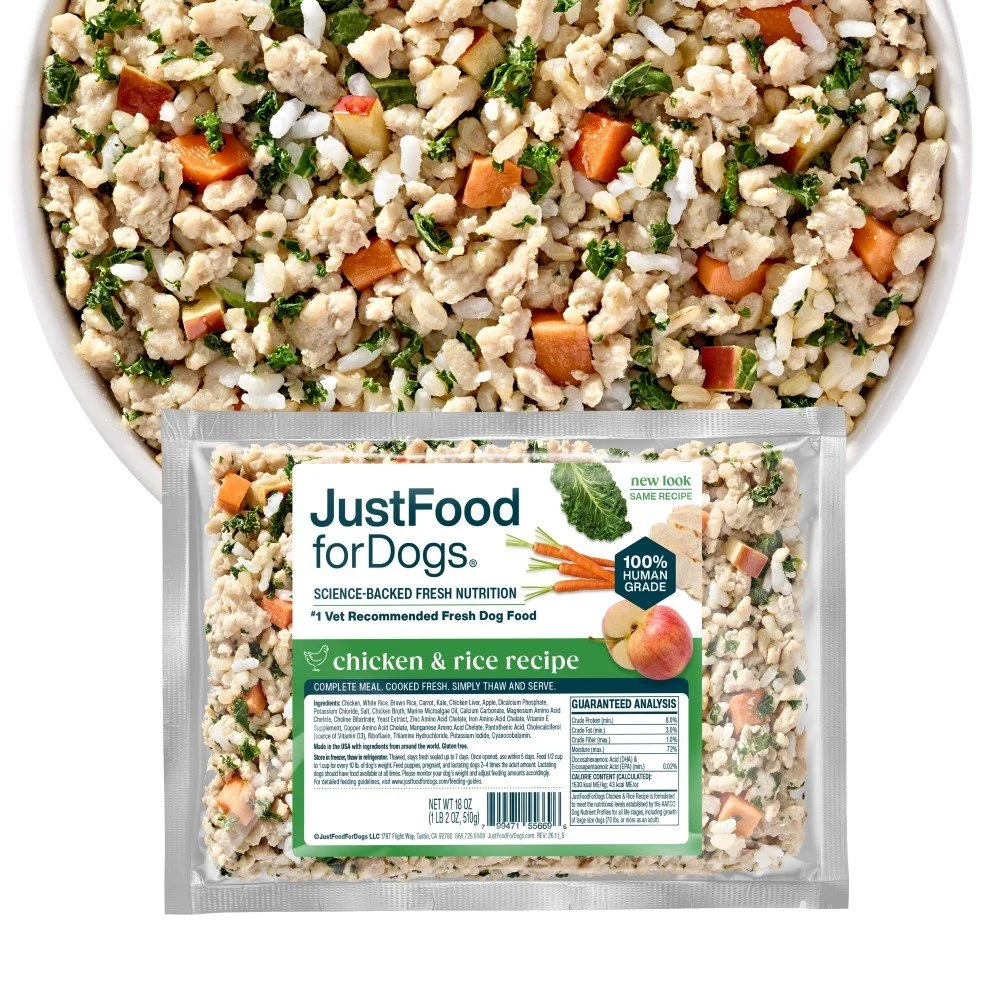
For a Shih Tzu, a suitable food starts with the right life-stage statement and a portion matched to the individual dog. The recipe’s calorie density, how comfortably your dog eats, and whether you can store leftovers safely all matter. A food’s texture or familiar ingredients can help with the decision, but they can’t replace those checks.
JustFoodForDogs offers recipes with different life-stage statements and calorie densities. The label details below give owners a way to compare them, plan measured small meals, and tell an ordinary texture preference from a change in eating that deserves veterinary attention. This guide draws on published labels and veterinary nutrition guidance; no hands-on feeding test was performed. The article’s publisher may earn commission from some product links.
Start with the individual dog
Breed alone doesn’t determine an ideal protein, portion, or feeding schedule. Two adult Shih Tzus may need different amounts because their size, body condition, activity, and health differ. Begin with a complete food that suits the dog’s current life stage, then consider ingredients, calories, tolerance, convenience, and cost.
Before settling on a recipe, check whether its current life-stage statement covers your dog, whether its ingredients fit known restrictions, how many calories the intended daily amount provides, and whether you can measure and store it consistently. Pay attention to how your dog eats, too. Comfortable eating at a preferred texture is different from struggling to chew or losing interest in food.
For a cost comparison, calculate the price of the amount your dog actually needs each day. A lower package price may not mean a lower daily cost, while a small dog’s modest intake can leave leftovers that exceed the storage window. “Natural” and “grain-free” don’t establish nutritional adequacy. Grain-free food should have a specific role in an individual feeding plan, rather than being assumed necessary for the breed.
Breed background is available in this Shih Tzu profile, but a breed description can’t set an individual dog’s calorie needs. The same principle applies to product selection: a brand is a starting point, and the exact recipe label determines whether a particular food suits a puppy or adult.
Compare the recipe statements
For puppies, look for an explicit statement that the exact food supports growth. Moist texture, a protein name, or a product’s placement near a puppy food doesn’t establish that it provides the nutrients a growing dog needs. The current JustFoodForDogs labels listed here distinguish growth-qualified recipes from adult-maintenance recipes.
| Recipe | Current life-stage statement | Calories per kilogram | What to consider |
|---|---|---|---|
| Chicken & Rice | All life stages, including growth of large-size dogs expected to reach 70 pounds or more as adults | 1,530 kcal/kg | Growth-qualified; also an option to assess for adults |
| Fish & Sweet Potato | All life stages, including large-size growth | 922 kcal/kg | Growth-qualified; the larger gram portion reflects its lower calorie density |
| Beef & Russet Potato | Adult maintenance; not for growing puppies | 1,559 kcal/kg | Consider for an adult if the ingredients and feeding plan fit |
| Turkey & Whole Wheat Macaroni | Adult maintenance | 1,741 kcal/kg | More calories per gram than the other recipes in this comparison |
A Shih Tzu puppy can be fed a recipe whose all-life-stages statement also mentions growth of large dogs. That wording adds a large-dog growth qualification; it doesn’t mean the recipe is reserved for large breeds. For an adult, any of the four recipes may merit consideration, but adult-maintenance status doesn’t mean a recipe meets every medical need or dietary restriction.
For a puppy with ordinary feeding needs, Chicken & Rice or Fish & Sweet Potato are growth-qualified choices to assess. A puppy with digestive symptoms still needs a growth-appropriate plan; an adult-only food doesn’t become suitable because its name sounds “sensitive.” If a veterinarian has prescribed a feeding plan, use that plan to guide the choice.
Fish & Sweet Potato contains a blend of cod, pollock, and haddock, rather than cod alone. Its calorie density is lower than Chicken & Rice, so an equal-calorie portion weighs more. Record the precise recipe name and current calorie statement before buying in quantity; that makes it easier to avoid applying an older feeding note to a different formulation.
JustFoodForDogs’ broader range is covered in this brand review. The label on the food you plan to serve remains the practical reference for life-stage eligibility.
JustFoodForDogs Chicken & Rice
Check the current Chicken & Rice recipe, portions, and ordering options.
JustFoodForDogs Fish & Sweet Potato
Check the current Fish & Sweet Potato recipe, portions, and ordering options.
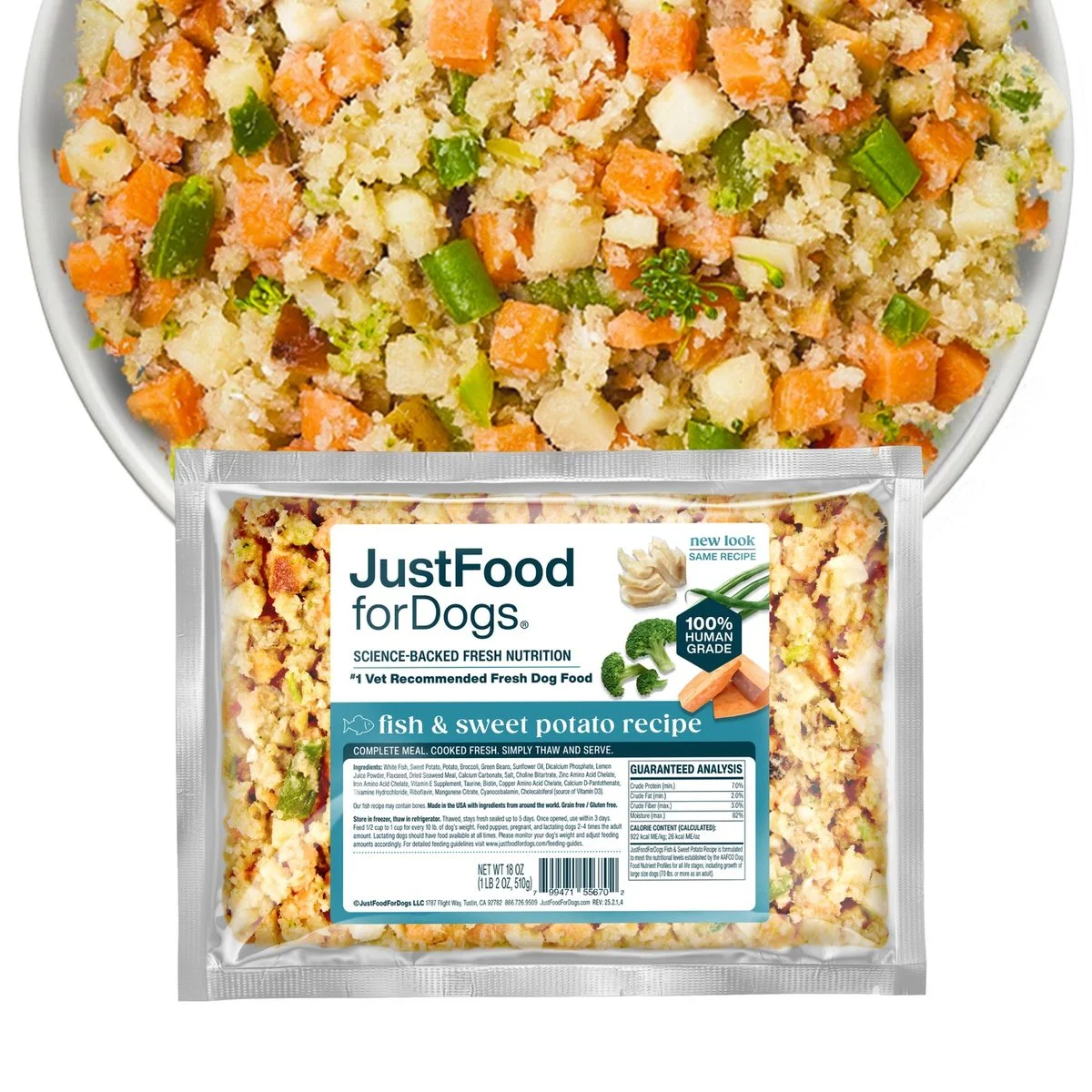
Fish & Sweet Potato recipe details
Measure calories, then portion the meals
With a small daily allowance, extras can meaningfully change the total. Training rewards, dental chews, table food, and food used to give medication all count. The AAHA nutrition guidelines recommend that complete and balanced food provide at least 90 percent of daily calories, with treats and other extras generally using no more than the remaining 10 percent. That’s a limit for extras, not a target every dog needs to reach. See the AAHA nutrition guidelines.
Here’s a calculation example, not a feeding recommendation for the breed. If an adult dog’s agreed daily target is 350 calories and treats account for 35 calories, the complete food supplies the remaining 315 calories. To convert that allowance to grams, use:
Daily grams = complete-food calories ÷ recipe kcal/kg × 1,000.
For that 315-calorie allowance, the daily portions work out to approximately:
- Chicken & Rice: 206 grams daily, or 103 grams at each of two meals.
- Fish & Sweet Potato: 342 grams daily, or 171 grams at each of two meals.
- Beef & Russet Potato: 202 grams daily, or 101 grams at each of two meals.
- Turkey & Whole Wheat Macaroni: 181 grams daily, or about 90.5 grams at each of two meals.
These are alternatives, not portions to combine. Fish weighs more because it supplies fewer calories per gram; Turkey weighs less because it supplies more. A bowl that looks the same size can contain a very different number of calories after a recipe change.

A kitchen scale makes repeatable portions easier. Set the bowl on the scale, zero it, and add the planned amount. If several people feed the dog, write down the daily total and each meal’s portion. That prevents a well-meaning second feeder from adding food to a complete daily ration.
The calorie target needs to fit the individual dog and may need revision. Monitor weight and body condition with your veterinary team. A puppy’s allowance changes as it grows; an adult’s needs may change with activity, neuter status, or health. For an overweight adult, ask for a planned calorie adjustment that preserves nutritional adequacy rather than shrinking portions by guesswork or replacing complete food with scraps.
Meal frequency changes with age and need
Divide the day’s measured allowance into meals suited to the dog. Puppies need more frequent meals than adults. Many healthy adults can follow a regular two-meal routine, while a puppy or a dog with a medical concern may need another schedule. More meals don’t mean more food: three meals share the daily allowance, and a bedtime snack adds calories unless you subtract them elsewhere.
For a puppy, an older dog with changing health, or a dog that needs food with medication, agree on meal times and amounts with the veterinary team. A two- or three-month-old Shih Tzu needs an age-appropriate puppy plan, not the adult example above. Being a small breed doesn’t mean a puppy can be fed an adult weight-control portion.
An “imperial” or senior label alone doesn’t set a calorie prescription or establish that a special recipe is needed. Use the dog’s actual age, growth status, size, condition, and health to make that decision.
Extras such as egg need to fit the plan
If the dog’s feeding plan allows it, a small amount of plain, thoroughly cooked egg can be an occasional extra. It isn’t a complete meal, and its calories count toward the daily total. Avoid onion, garlic, and seasoned leftovers; butter, oil, cheese, and other additions change the food and its calorie content.
Egg isn’t needed to balance a complete JustFoodForDogs recipe. If your dog follows an elimination trial, has a known restriction, or eats a prescribed diet, check with the veterinary team before introducing it.
JustFoodForDogs Beef & Russet Potato
Check the current Beef & Russet Potato recipe, portions, and ordering options.
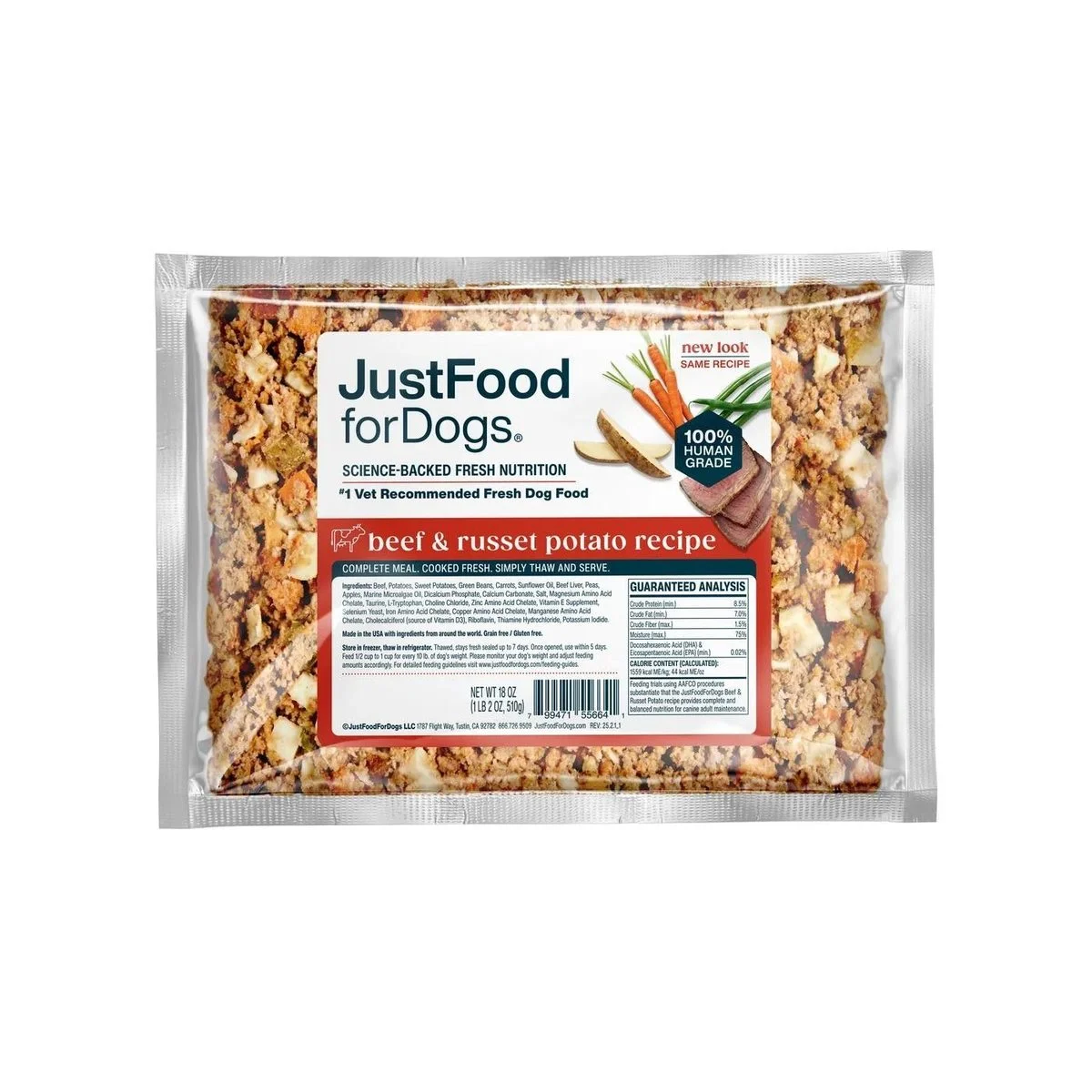
Beef & Russet Potato recipe details
Read eating behavior with care
A preference for moist food may simply be a preference. A new change in chewing, appetite, or willingness to approach the bowl calls for closer attention. A soft texture can be part of veterinary feeding advice, but it doesn’t treat a painful mouth or explain why a dog is eating less.

Watch what happens at mealtime. Does your dog approach readily, pick up food and drop it, eat only when hand-fed, or walk away without trying? These details help you describe the change; they don’t diagnose its cause. The American Veterinary Medical Association lists abnormal chewing, drooling, dropping food, and reduced appetite among signs that can accompany dental problems. See its pet dental care guidance.
Ask two practical questions: does your dog comfortably eat enough of an appropriate food while favoring a particular texture, or does the dog seem interested but struggle to take, chew, or swallow it? Don’t assume that eating a favorite treat rules out discomfort, and don’t force the mouth open to investigate. A softer meal shouldn’t conceal continuing difficulty.
For a dog whose eating behavior is otherwise stable, offer measured meals in a quiet place, use a stable bowl, and keep track of extras. A slippery or busy feeding area can make it harder to see whether the food, access to the bowl, or the dog’s comfort is affecting the meal.
A short feeding record can help clarify what’s happening. Note the recipe and amount offered, how much the dog ate, all extras received that day, whether the dog approached willingly, and any unusual chewing, drooling, or food dropping. Record whether the pattern occurs at every meal or only in a particular setting.
When checking ordinary food preferences, avoid changing several things at once. Changing the recipe, adding toppers, and moving meal times together makes the response hard to interpret. Once health concerns have been addressed, a steady routine gives you a clearer view.
Turkey & Whole Wheat Macaroni is another JustFoodForDogs prepared-meal option to consider for eligible adults. Its higher calorie density means a smaller measured weight supplies the same calories. That’s a portioning feature; it doesn’t show that the recipe will resolve picky eating or chewing discomfort.
JustFoodForDogs Turkey & Whole Wheat Macaroni
Check the current Turkey & Whole Wheat Macaroni recipe, portions, and ordering options.
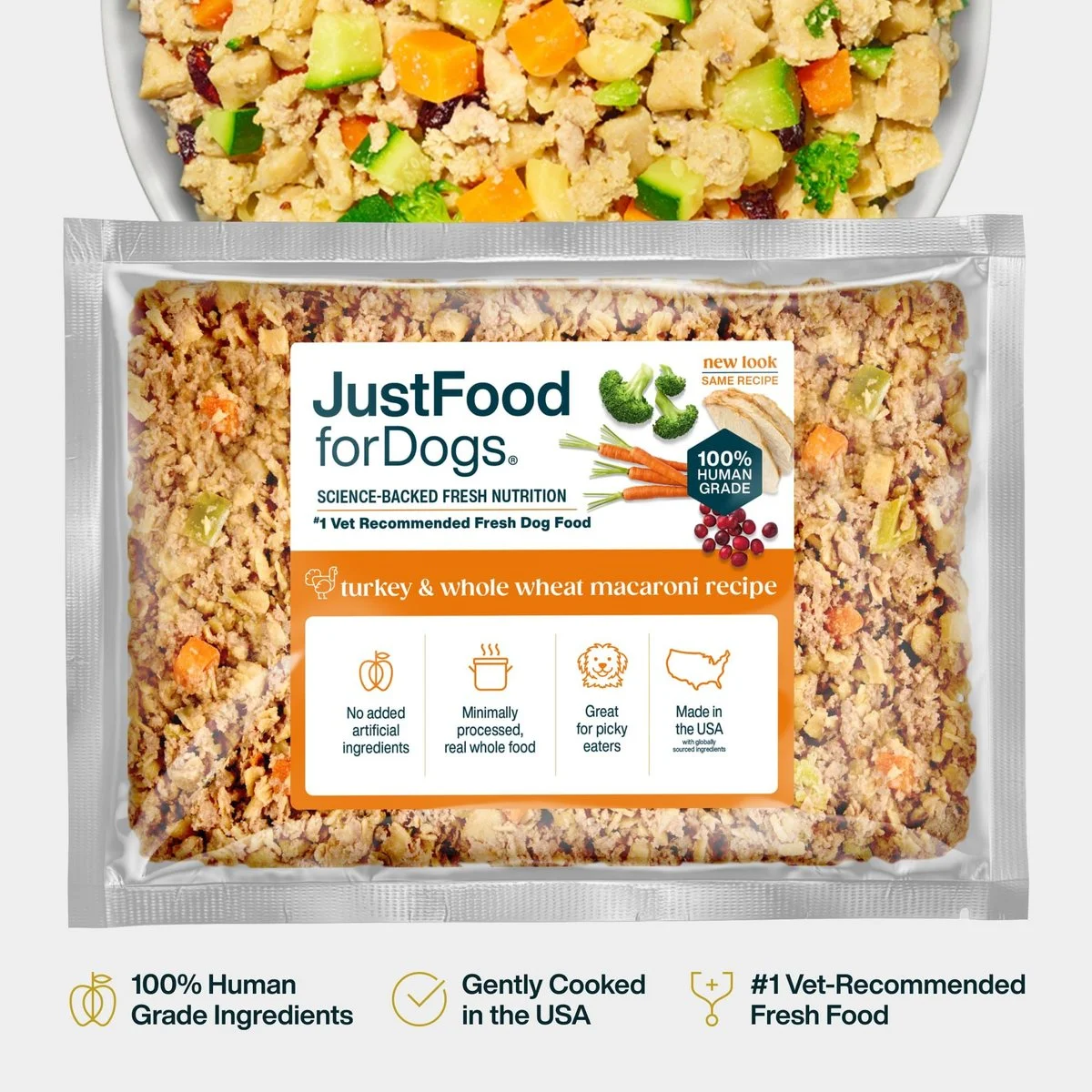
Turkey & Whole Wheat Macaroni recipe details
Don’t wait for a survival deadline when a dog stops eating. New appetite loss needs veterinary advice, especially in a puppy or when the dog seems unwell. Tell the veterinary team when the change began, what the dog has eaten, whether it is drinking, and whether you’ve seen vomiting, weakness, or apparent pain. AAHA guidance on pain signs notes that discomfort can affect chewing, swallowing, and appetite.
Approach skin and digestive concerns as individual questions
Itchy skin or digestive changes don’t establish a food allergy, and a product name containing “sensitive” doesn’t identify the cause. Gather the dog’s full feeding history before changing food: current and previous complete foods; treats, chews, toppers, supplements, and table food; flavored products given with medication; when symptoms began; recent food changes; and any changes in appetite, weight, or stool.

That record is more useful than choosing a new protein based only on the breed. A different food isn’t necessarily a suitable choice for investigating allergy. The Merck Veterinary Manual describes the role of a complete elimination diet. Such a trial needs a defined food and controlled extras; switching among ordinary recipes or adding treats can make the results harder to interpret.
The current JustFoodForDogs Sensitive Skin recipe is for adult maintenance. Its name doesn’t make it growth-qualified for a puppy with a skin or digestive concern. Fish & Sweet Potato is growth-qualified, but that doesn’t make it an allergy diet for every dog. Review its full ingredient list, including its blend of whitefish species, against any restrictions set for your dog.
Don’t assume chicken, beef, grains, or another ingredient is responsible just because it appears in the current food. A food change may form part of a plan, but no recipe here is presented as a cure for itching or digestive symptoms.
Tear staining alone doesn’t prove food allergy or show that a particular food will remove discoloration. Discuss persistent or changing eye-area concerns with your veterinary team, especially if your dog seems uncomfortable or you notice another eye change. Likewise, “sensitive stomach” can describe very different observations. Occasional reluctance, repeated vomiting, and ongoing loose stool aren’t interchangeable, and a label can’t determine whether medical assessment is needed.
If a nutrient restriction matters, obtain the appropriate current information for the exact recipe. A guaranteed minimum for fat is a minimum, not the typical amount or a maximum. A general product comparison shouldn’t be used to select a medical feeding plan based on whichever minimum looks lowest.
Kidney disease needs a veterinary feeding plan
A Shih Tzu with kidney disease needs an individual feeding discussion based on diagnosis and monitoring needs. Breed, texture, and protein name aren’t enough to choose a food. Bring the exact label, current portion, appetite history, and a list of other foods to the treating veterinarian. An ordinary fresh-food recipe shouldn’t be assumed equivalent to a prescribed renal diet. More information is available in this guide to kidney disease in pets.
Transition gradually and plan for leftovers
For a dog that’s well and changing food as a routine choice, gradually replace the old food with the new one while observing how the dog responds. A dog with ongoing symptoms or a prescribed diet needs an individual transition plan. Keep the calorie allowance in view: replace food calories rather than adding a full new serving on top of the old one.
For example, if complete food supplies 315 calories a day, a stage with three-quarters of those calories from Chicken & Rice and one-quarter from Fish & Sweet Potato would contain about 154 grams of Chicken & Rice and 85 grams of Fish & Sweet Potato. Together, those amounts supply about 315 calories. This is a calculation example, not a required transition schedule; the appropriate pace depends on the dog and veterinary advice.
Write down the recipe mix, amount of each food, and meal schedule. If someone else feeds breakfast, they should be able to follow the plan without guessing from the appearance of the previous meal.

For Fresh Frozen meals, follow the current package handling instructions. JustFoodForDogs’ FAQ gives different storage windows for fish and other proteins: Fish & Sweet Potato can be kept sealed in the refrigerator for up to five days after thawing and for up to three days after opening. Other Fresh Frozen proteins are generally listed for up to seven refrigerated days sealed after thawing and five days after opening. If the package gives a shorter period, use the shorter direction.
Opening a package doesn’t restart its storage window. Record the thawing and opening dates, and follow whichever limit comes first. Small dogs may not finish a package within the opened-food period, so check the package size and storage instructions before you buy. Don’t serve extra calories to use up food, and don’t assume transferring leftovers to another container resets the clock. If your planned use doesn’t fit the instructions, ask the manufacturer about approved portioning and freezing practices.
For perspective, an 18-ounce Chicken & Rice package contains about 7.8 days of food at an illustrative intake of 100 calories daily, longer than the general five-day opened window. An 18-ounce Fish package contains about 4.7 days at the same calorie allowance, longer than its three-day opened window. These examples show why the amount a small dog eats and the package’s specific directions should be considered together.
A practical routine is to check the next package’s handling directions, write down thawing and opening dates, keep the daily gram and calorie allowance visible, and measure each meal. Return stored food promptly to refrigeration and record what the dog leaves uneaten. Plan purchases around actual use and safe storage rather than package count alone.
Homemade meals need more than familiar ingredients
Meat, rice, and vegetables put together at home aren’t automatically a complete diet. Familiar ingredients don’t guarantee the right nutrient balance. For a homemade plan, use a properly formulated recipe developed for that dog rather than copying a commercial product’s ingredient list. Growth, health restrictions, supplements, and substitutions all need careful planning. See this guide to homemade pet diets.
For a purchased meal, follow its own label and feeding instructions. A reliable routine combines a recipe suited to life stage, a measured calorie allowance, comfortable eating, and storage that fits the amount your dog actually consumes. More reading: Petful’s guide to food for Bernedoodles and WebVet’s discussion of fresh food costs for small dogs.
Frequently asked questions
Do Shih Tzus share a favorite food?
No single recipe is a favorite for every dog in the breed. Individual preferences vary, and liking a food doesn’t establish that it suits a dog’s needs. Choose a complete food for the appropriate life stage and assess whether your dog comfortably eats the planned amount. A sudden change in preference or appetite deserves attention before an automatic flavor swap.
When can a Shih Tzu move to adult food?
Make the change when the individual dog has finished growing, with maturity assessed for that dog rather than assumed on one date for every puppy. In the recipes discussed here, Beef & Russet Potato and Turkey & Whole Wheat Macaroni are adult-maintenance foods; Chicken & Rice and Fish & Sweet Potato include growth. Recheck the label and portion when the feeding stage changes.
What makes a good breakfast?
Breakfast can be the measured morning share of the dog’s daily complete-food allowance. Count later treats and extras in the same daily plan. A complete food doesn’t need egg, scraps, or another addition to make it balanced.
Which food is healthiest for a Shih Tzu?
There isn’t one universally healthiest recipe. Start with life-stage adequacy, then consider the dog’s health, body condition, ingredient restrictions, calories, and practical feeding routine. “Fresh,” “natural,” or a preferred protein doesn’t settle the choice by itself.
Can the same gram amount be served after a recipe change?
Recalculate whenever calorie density changes. Fish & Sweet Potato supplies 922 kcal/kg, while Turkey & Whole Wheat Macaroni supplies 1,741 kcal/kg. The same weight therefore provides different calories. Match the new portion to the planned calorie allowance instead of copying the old bowl amount.
How long can opened Fish & Sweet Potato stay refrigerated?
The current instructions give up to three refrigerated days after opening and up to five days sealed after thawing. Record the dates, keep the food refrigerated, and follow any shorter instructions printed on the package. Don’t apply the longer general storage period for other recipes to this fish recipe.


