Sample No. 0196
Choosing a Donut Cat Bed: Nine Cozy Styles and What to Consider
Compare nine donut bed styles and learn how to choose a comfortable, easy-to-use resting spot that suits your cat’s habits.
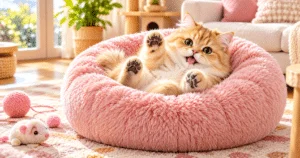
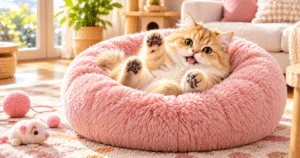
A donut bed can be a welcome resting spot for a cat who likes to curl up against a soft edge. Its round shape and raised sides offer a different feel from a flat mat, while variations such as heated beds, memory foam designs, caves, and tunnels suit different preferences. The useful question isn’t whether a bed promises to “calm” a cat, but whether its size, materials, access, and location make it a comfortable choice for that individual.
These nine options cover several popular styles. Product names and designs are drawn from the source; check each listing for current dimensions, materials, care directions, and safety details before buying. Cats vary, and no bed can guarantee anxiety relief or replace veterinary advice when behavior or mobility changes.

Nine donut bed styles to consider
A good fit depends on how your cat sleeps and how easily they can get in and out. A cat that curls tightly may enjoy raised bolsters; a cat that sprawls could need a larger interior or a flatter surface. Here are nine designs with different features to weigh.
1. Bedsure Calming Cat Bed Donut
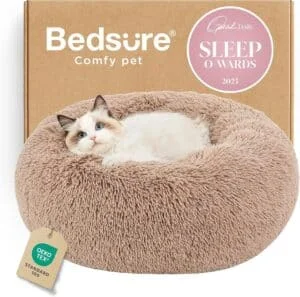
This round, nest-like style is intended for cats who prefer curling up beside a cushioned edge. The raised perimeter can give a cat a place to lean or rest their head. It may suit a quiet spot in a bedroom or beside a chair, especially if your cat already naps in that area.
“Calming” in a product name describes a style, not a proven effect on anxiety. Before choosing this bed, compare its usable sleeping area with your cat’s relaxed curled-up size, and review the care instructions. A bed that’s too small or difficult to clean may be less practical than it first appears.

2. Bunny Ear Round Donut Calming Cat Bed

The bunny-inspired appearance gives this round bed a decorative touch. Its basic appeal is familiar: a compact sleeping space with raised sides for cats who like to curl into a ball. It could fit a bedroom, reading nook, or other calm corner where the cat can rest without frequent interruptions.
Consider the bed’s shape and dimensions along with its appearance. A cat should have room to settle naturally, and the sides should not make entry awkward. Let your cat approach and investigate at their own pace; a cute design alone won’t make an unfamiliar bed attractive to every feline.
3. Heated Cat Donut Bed
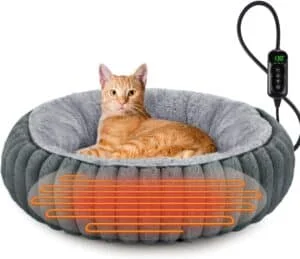
This style pairs a round bolster bed with a source of warmth. It may appeal to cats that regularly settle in sunny places or snuggle into warm blankets, particularly when the room is cool. First determine whether the model uses electricity or self-warming materials, since the safety details and care requirements differ.
Follow the maker’s instructions and ensure the cat can move away from the warm area whenever they choose. Take extra care if a cat has reduced mobility or may not respond readily to temperature changes; ask a veterinarian for guidance about suitable bedding in those circumstances. Warmth can make a resting place inviting, but the bed must remain accessible and comfortable to leave.
4. LE SURE Donut Cute Cat Bed
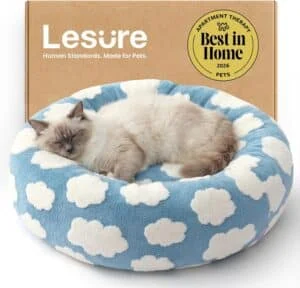
This bed offers the familiar round layout for cats that like to curl up and rest their heads on a soft edge. The source describes it as a plush lounging spot but doesn’t give specific measurements or material details. Check those points in the product information, especially the interior dimensions and cleaning directions.
Placement can shape how readily a cat tries a new bed. Set it near a current favorite resting place and allow the cat to decide whether to use it. A quiet, familiar location may make the bed easier to explore than a busy walkway or a spot where other pets frequently interrupt.
5. 4-in-1 Peekaboo Cat Cave Donut Bed
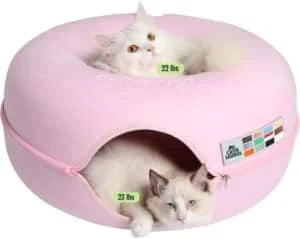
This design combines a donut-style lounging area with cave features. That may suit a cat who likes both an open place to curl up and a more concealed place to retreat. Cats differ: some prefer to watch household activity from an open bed, while others settle more readily when they have cover.
Review the possible configurations and dimensions before choosing it. Any enclosed section should leave enough space for your cat to enter, turn, and exit comfortably. A cave bed can offer another resting choice, but it doesn’t need to replace open beds or other familiar places around the home.
6. Anti-Anxiety Round Fluffy Plush Cat Donut
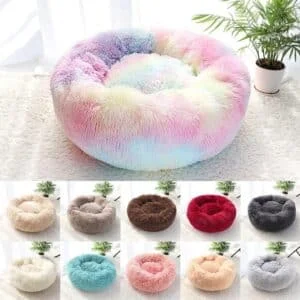
With a plush surface and raised sides, this bed follows the nest-like format often marketed as calming. It may appeal to cats that like soft blankets or enjoy resting with their bodies pressed against a cushion. A quiet, undisturbed location gives a cat the option to use the bed when they want to rest.
The “anti-anxiety” wording should not be read as a promise to treat distress. A comfortable bed can be one part of a cat-friendly setup, but it cannot address every source of fear or discomfort. If a cat’s behavior changes or signs of distress persist, contact a veterinarian to discuss what may be happening.
7. Orthopedic Memory Foam Donut-Themed Cat Bed
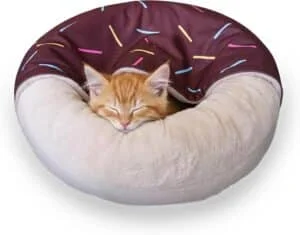
This option brings memory foam cushioning into a rounded design. For cats who spend long periods resting, consider whether the sleeping surface feels supportive and whether the bed is easy to enter and leave. Older cats or cats with mobility concerns may need a lower entrance rather than tall, firm bolsters.
An “orthopedic” label by itself doesn’t establish that a bed will ease arthritis or joint pain. Look at the construction, cushioning, and dimensions, and ask your veterinarian about bedding if your cat has difficulty moving comfortably. A bed can support daily comfort, but it doesn’t take the place of assessment or care for pain.
8. Love’s Cabin Round Donut Cat Bed
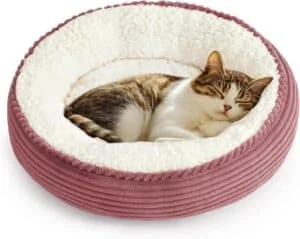
This classic round style gives a cat a curled-up sleeping area bordered by soft edges. It may work as an everyday lounging place in a bedroom or shared living space, depending on where the cat prefers to rest. For cats that like to lean against something while sleeping, the perimeter may be a useful feature.
Compare the interior size with your cat’s sleeping posture and check the cleaning recommendations. If you have more than one cat, consider whether each will have a separate resting option as well. Some cats share happily; others prefer a place to themselves.
9. Cat Tunnel Donut Bed
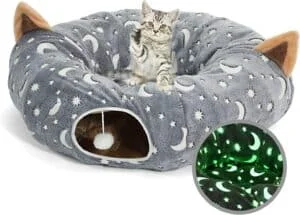
This design combines a circular resting area with a tunnel for exploring or hiding. It may suit a curious cat that enjoys moving through enclosed spaces before settling down. One cat might curl up in the center; another may spend more time investigating the tunnel.
Choose a location with enough room for safe movement and check that the structure stays stable during play. Keep an eye on its condition, especially if your cat pulls at fabric or seams. A tunnel bed can add variety, but its play features shouldn’t obstruct access to the resting area.
Why some cats choose a donut bed
Cats select resting places for individual reasons, including comfort, warmth, familiarity, and a sense of shelter. A donut bed brings a few of these qualities together, though no single feature will appeal to every cat.
Raised sides offer a soft boundary
A bolster gives a cat something to lean against, and some cats like to rest their chin on the edge or tuck their nose beside it. That can feel different from lying on a flat, open mat. The height and firmness matter, though: a cat that enjoys a soft border may still find high sides awkward to climb over.
The round shape suits a curled posture
Many cats sleep with paws tucked in and tails drawn close. A circular bed offers a compact place for that posture and may hold warmth better than a thin mat. Cats who prefer to stretch out need enough interior space to do so, or may be happier on a larger bed or flat surface.
Some cats like sheltered resting places
A cat may choose a spot where they can rest without being approached or disturbed. Raised bed edges offer a partial boundary, while a cave provides more cover. A donut bed is not a substitute for a hiding place for a cat that seeks full concealment. Offer choices and observe which spaces your cat uses.
Material and familiarity count
Faux fur, fleece, and other soft fabrics may suit cats that already choose plush blankets. Others prefer a smooth surface, firmer cushioning, or a cooler place to lie down. A bed kept in a consistent location may become familiar through use and household scent. Avoid strong fragrances when washing it; an unfamiliar smell can put a cat off.

What a “calming” bed can and can’t do
A soft, predictable resting spot may be comforting for a cat that likes snug places. Still, labels such as “calming” and “anti-anxiety” don’t prove that a particular product prevents or treats feline anxiety. Think of the bed as one environmental option rather than a treatment.
The wider setting matters too. Noise, visitors, other pets, changes in routine, and limited access to safe retreat spaces can affect how secure a cat feels. A cat-friendly home offers quiet resting places and opportunities to withdraw without being followed or disturbed. Some cats may prefer an open donut bed; others may choose a covered hideaway.
Pay attention to changes in behavior. Hiding more than usual, avoiding people, changes in eating habits, or other signs of distress warrant a conversation with your veterinarian. Behavior changes can be associated with discomfort or illness, so a new bed shouldn’t replace an appropriate assessment.
Comfort and access for senior cats
A senior cat may enjoy soft cushioning and a place to rest their head, but the right design depends on mobility and preference. High or firm bolsters can be hard to step over for a cat with arthritis or reduced movement. Look for an easy entrance and a supportive surface that your cat can use without climbing or jumping.
Place the bed at floor level if reaching furniture has become difficult, and avoid slippery surfaces around it. Memory foam may be an option for someone seeking a more supportive surface, but product labels alone don’t establish comfort or suitability. Ask your veterinarian for advice if your cat has pain, arthritis, or trouble getting around. A bed can make resting more comfortable; it cannot replace recommended care.
Choosing a bed that fits your cat
Measure the usable sleeping area
Compare your cat’s curled sleeping size with the bed’s interior dimensions, rather than relying only on its outside diameter. Raised bolsters occupy space. A cramped bed may restrict movement, while an oversized one may not offer the snug feel some cats seek. For cats that stretch out, choose more room or consider a flatter style.
Check bolster height and entry
Raised sides can be inviting, but your cat should be able to get in and out without struggling. This is especially relevant for kittens, senior cats, and cats with mobility limitations. Think about the cat’s movement, not only how plush the bed looks.
Match the fabric to your cat
Warm, fluffy materials may suit a cat that seeks soft blankets, while a less padded surface may work better for a cat that prefers cool places. Inspect seams, filling, and decorative parts. If your cat chews or pulls at bedding, choose a design without loose pieces or accessible stuffing.
Make cleaning manageable
A washable bed can make routine care easier. Some designs have removable covers; others are washed as a whole. Follow the maker’s washing and drying directions, particularly for thick beds, and make sure the filling dries fully before the cat uses it again. Remove loose fur and debris between washes.
Consider warmth and safe use
Fluffy bedding may retain warmth in a cool room. A heated bed adds another consideration: confirm how it warms, read its safety instructions, and ensure your cat can leave the heated area freely. Don’t assume a product is suitable simply because it is sold for pets. For cats that have trouble moving away from heat or sensing temperature, seek veterinary guidance.

Helping a cat accept a new bed
A cat may ignore a new bed at first, even if it seems comfortable to the people in the household. Give them time and choice. Start by placing it where they already nap, such as a quiet bedroom corner, beside a desk, or near a preferred window. Avoid loud appliances and busy walkways.
A small blanket that already carries familiar home or cat scent may make the bed feel less unfamiliar. Keep it from crowding the sleeping area, and skip strong fragrances. You can leave a favorite toy nearby or offer a treat for calm investigation, but don’t repeatedly place the cat inside the bed. Voluntary exploration is more likely to keep the experience comfortable.
Keep other resting choices available. Cats often rotate between sleeping places as conditions change through the day. In a multi-cat home, several resting areas give each cat room to choose privacy and reduce competition for a favorite spot.
Donut beds compared with other styles
| Bed style | Main features | May suit |
| Donut bed | Round sleeping area with cushioned raised edges | Cats that curl up or lean against a soft bolster |
| Flat mat | Open surface without raised sides | Cats that stretch out or need easy entry |
| Cat cave | Covered or partly enclosed resting space | Cats that seek more shelter |
| Heated bed | Warmth from a pet bed heating design or self-warming material | Cats that seek warm spots, with suitable safety precautions |
| Orthopedic bed | Cushioning designed to provide support, often using foam | Cats whose comfort needs favor a supportive surface |
| Tunnel bed | Enclosed tunnel space combined with a resting or play area | Cats that enjoy exploring and lounging |
No style is right for every cat. Watch where and how your cat chooses to rest, then use those preferences to guide your choice.
Common questions
Why do cats like donut beds?
Some cats enjoy the round sleeping area and raised edges because they can curl up, lean against the bolster, or rest their head on it. Individual preferences differ.
Do calming beds treat anxiety?
A bed may offer a comfortable place to rest, but a product label isn’t evidence that it treats anxiety. Persistent distress or a sudden behavior change deserves veterinary advice.
Is a donut bed suitable for a nervous cat?
It may appeal to a cat that likes soft, partly sheltered spaces. A cat that seeks more concealment may prefer a cave or another covered hiding place, so offer options.
Can kittens use donut beds?
They can, provided the bed is appropriately sized, made from safe materials, and easy to enter and leave. Avoid loose parts and check that the kitten isn’t crowded by the sides.
Are donut beds a good choice for senior cats?
Some senior cats like the cushioning and raised edge. Cats with reduced mobility may do better with a low entrance and supportive bedding, placed where they can reach it without jumping.
How do I choose a size?
Check the usable interior dimensions and compare them with your cat’s relaxed sleeping posture. Remember that the bolsters reduce the space available inside.
Should I choose a donut bed or a cave?
That depends on whether your cat prefers an open bed with raised sides or a more concealed resting place. Having both available can let the cat choose.
Can a fluffy bed help a cat stay warm?
Fluffy materials may retain more warmth than a thin mat. Heated styles need careful use according to the maker’s instructions, with an easy way for the cat to move away.
How often should I wash the bed?
Wash it when it becomes dirty or develops an odor, and follow the care directions. Removing loose fur and debris between washes helps keep the sleeping area tidy.
Why might my cat avoid a new bed?
The location, size, fabric, scent, or shape may not suit them, or they may need more time to investigate. Try a familiar resting spot and let them approach without pressure.
Can two cats share one bed?
Some bonded cats choose to sleep together. Still, give each cat access to separate resting places so either can rest alone when they prefer.
Is memory foam better than a fluffy bed?
Memory foam designs focus on cushioning and support; fluffy beds emphasize softness and a snug feel. The suitable choice depends on the cat’s preferences and mobility.

A comfortable place, chosen at the cat’s pace
A bed can become part of a cat’s everyday routine when it matches their preferred sleeping posture and sits somewhere they feel comfortable. Compare the usable space, entry height, materials, cleaning needs, and any warmth features before deciding. Then give your cat the choice to explore it on their own terms.
Whether the best fit is a fluffy donut, a heated lounger, a memory foam design, or a tunnel bed, the clearest guide is your cat’s behavior. Keep other comfortable resting spots available, and ask your veterinarian about changes in behavior, pain, or mobility.
This content was created with AI assistance and edited by the iHeartCats team.
iHeartCats is reader-supported. When you buy via links on our site, we may earn an affiliate commission at no extra cost to you.
The post 9 Best Donut Cat Beds for Cozy, Calming Comfort appeared first on iHeartCats.com.


