Sample No. 0195
Veterinary Technology Works Best When Paired With Human Judgment
PET/CT and AI can guide veterinary decisions, but their value depends on thoughtful interpretation, clear client conversations and skilled teams.
Advanced tests can uncover disease earlier, sharpen treatment choices or help a veterinary team avoid an invasive procedure. Their value depends on a more practical question: will the information improve care for this individual animal? That judgment sits at the center of responsible technology use.
About one in four dogs will develop cancer during their lifetime, making timely diagnosis a meaningful concern for many families. Veterinary medicine has gained access to increasingly detailed imaging, laboratory tests, artificial intelligence (AI) and minimally invasive tools. These options can widen what clinicians can investigate, but they cannot decide on their own whether an intervention fits a patient’s needs.
Information matters when it guides a decision
Advanced testing can reveal anatomy, biological activity, disease progression and response to treatment in greater detail. Earlier detection may give a care team more opportunities to act, while better staging can help guide treatment choices and sometimes reduce the need for more invasive procedures.
Still, a detailed image is not necessarily a diagnosis. An imaging finding may need additional tests to establish what it means, and incidental discoveries can prompt follow-up procedures that bring little benefit. Before ordering a test, veterinary professionals need to consider whether its likely result could change the plan in a useful way.
PET/CT can support action—or restraint
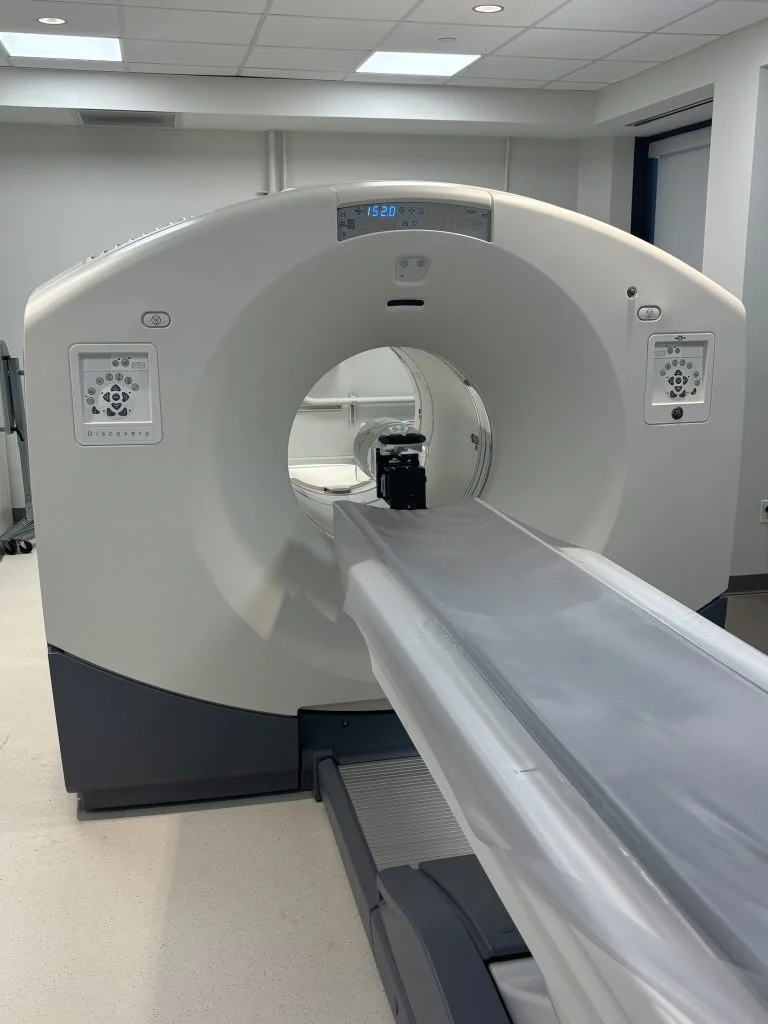
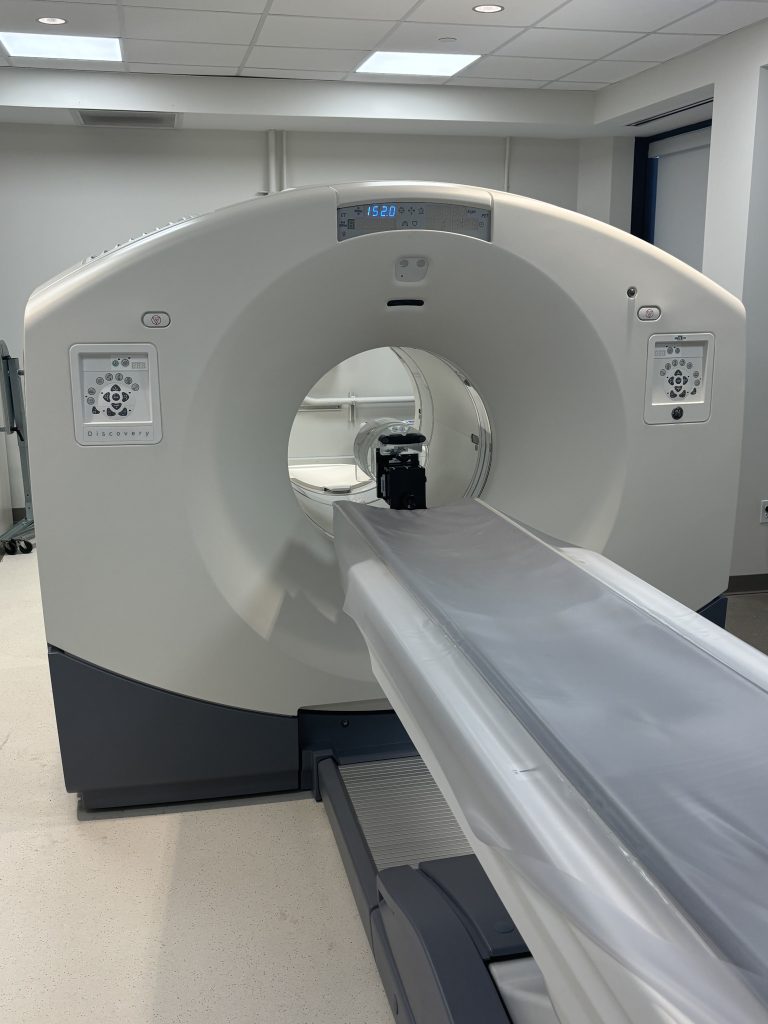
Positron emission tomography combined with computed tomography, or PET/CT, brings together two kinds of information. CT shows an abnormality’s location, size and physical features. PET uses a radiopharmaceutical tracer to show metabolic activity. Together, these views can help clinicians assess both what a lesion looks like and how active it appears.
PET/CT is most familiar in cancer assessment, where it may help identify lesions and stage disease. It can also be considered in some other investigations, including a fever with no clear cause or unexplained lameness.
Two cases at Red Bank Veterinary Hospital in Tinton Falls, New Jersey, illustrate how the same tool can support different choices. In one, a dog received PET/CT for an unrelated concern. The scan revealed a small, previously unnoticed lesion under the skin. An excisional biopsy identified it as a mast cell tumor. Finding it before it progressed or caused signs allowed the veterinary team to provide timely treatment that was likely curative.
In another case, a dog had an atypical cystic lesion in the liver. PET/CT showed no uptake of the tracer, a finding that suggested a low likelihood of aggressive disease. That information supported avoiding a high-risk liver biopsy and surgery. Follow-up ultrasound examinations have shown the lesion to remain stable. One patient’s results supported intervention; the other’s helped the team and family choose observation.
Shared decisions start with the patient and family
A diagnosis alone doesn’t determine the right plan. Age, temperament, expected quality of life and the demands of treatment can all affect what makes sense for a particular pet. Families also have their own circumstances and goals. Veterinary teams can use stronger diagnostic information to explain options more clearly, while recognizing that the best choice may differ from one patient to another.
Before recommending an advanced test, a care team can ask whether the result is likely to change treatment, clarify prognosis or quality of life, and justify the financial expense and practical demands, such as anesthesia or travel. It also matters whether the team can explain the result’s limits in plain language. These conversations bring medical, emotional, ethical and financial factors into the decision.
The most sophisticated option isn’t automatically the right fit. Technology should give families and veterinary professionals better information to discuss together, with the patient’s welfare guiding the choice.
AI can assist, but people remain accountable
Veterinary practices are using AI for diagnostic support, record keeping, client communication and administrative work. When a tool helps organize information or prepare documentation, it may free clinicians to spend more time with animals and their owners.
AI outputs can also be incomplete, biased or wrong. Clinicians need to check them against the full medical picture. Practices need clear expectations for privacy, appropriate use, human oversight and verification, along with training that helps staff understand where these tools can fall short.
A 2026 study of 673 veterinary workers found that 72.3 percent expected AI to change the profession, while 90.5 percent said they had received little or no formal training in it. The gap points to a practical need: as AI enters more parts of veterinary work, teams need opportunities to learn how to assess its output. Clinical judgment, accountability and communication must stay with people.
Invest in the people who use the tools
Equipment is replaced and software gets updated. The knowledge a team builds through mentorship, internships, residency programs and continuing education can carry forward. Training gives veterinary professionals the chance to understand how a tool works, question its limits and use it in ways that serve patients.
That knowledge also helps care teams work well with referring veterinarians and explain choices to clients. Even a capable diagnostic system has limited value when the people involved cannot tell what it contributes or how much confidence to place in its results.
The next useful advance may be an imaging method or an AI platform. Its contribution will depend on whether it helps a veterinary team reach a better-informed decision and guide a family through the choices with care. Owners can ask what a proposed test may change, what its findings cannot establish and how the results will shape the next step.
Peter S. Chapman, BVetMed, DECVIM-CA, DACVIM, MRCVS, earned his veterinary degree from the Royal Veterinary College (RVC), University of London, in 1998. He completed a small animal rotating internship and a Small Animal Internal Medicine residency at the RVC. From 2003 to 2009, Chapman served as staff and faculty at the University of Pennsylvania. He joined BluePearl in Levittown, Pennsylvania, in 2009, practicing as a Small Animal Internal Medicine specialist through 2025, serving as residency program director and medical director. He is now medical director at Red Bank Veterinary Hospital in Tinton Falls, New Jersey, an emergency and specialty hospital within National Veterinary Associates (NVA).
References
- American Veterinary Medical Association. Cancer in pets. Available from: https://www.avma.org/resources/pet-owners/petcare/cancer-pets
- Ofer O, Pearl DL, Singh A, Appleby R. Veterinary workers report low knowledge of artificial intelligence but positive attitudes toward its adoption in diagnostic imaging and the workplace as a whole. Journal of the American Veterinary Medical Association. 2026 Jun 1;264(6):1-7. Available from: https://avmajournals.avma.org/view/journals/javma/264/6/javma.25.08.0545.xml


