Sample No. 0184
Slow, Clear Veterinary Updates Help Owners Stay Confident
A difficult wound case taught one veterinarian that unhurried, honest updates can build trust, especially when a client needs extra time to communicate.
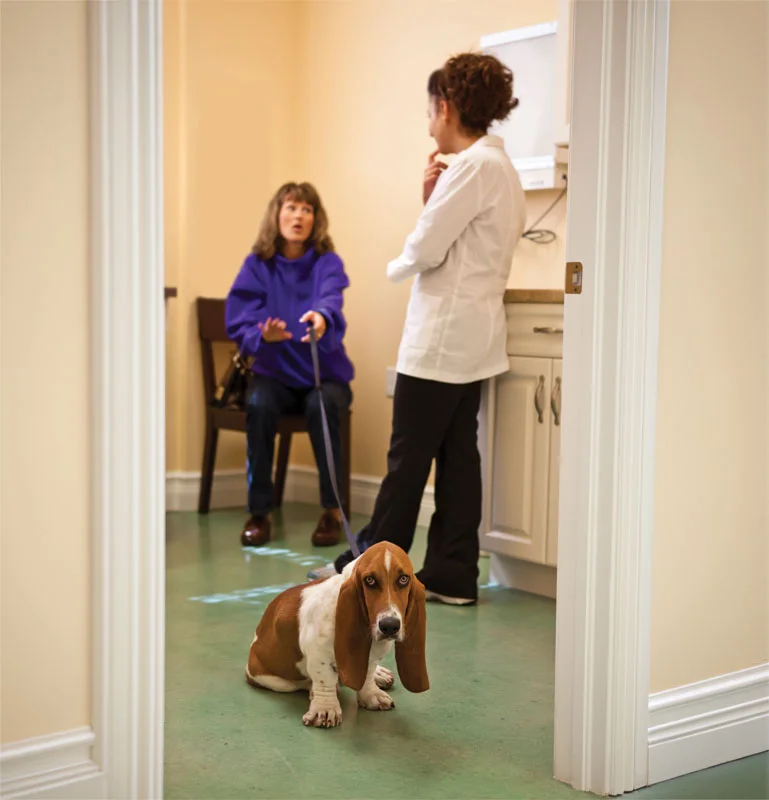
In a hard case, the pace of a veterinarian’s explanation can shape how supported a family feels. Greg Bishop, DVM, learned this while treating Tom, a 14-year-old neutered black Labrador with a pressure sore on his left hock. The wound was initially expected to respond to basic care, bandaging, antibiotics and a prompt recheck. Instead, it became a months-long challenge—and a lesson in slowing down.
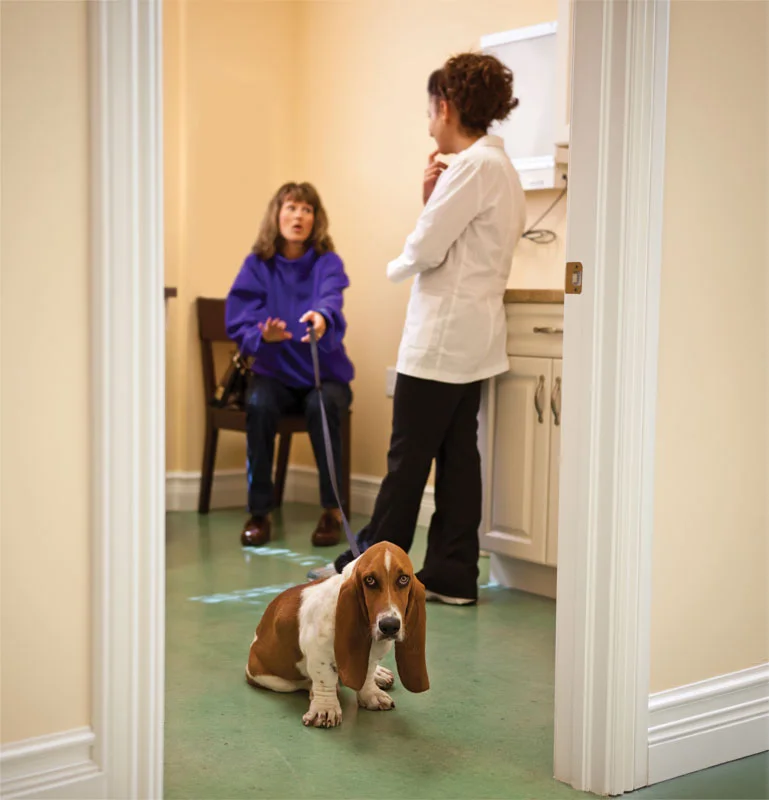
A family with different communication needs
Tom’s owner was in her early 70s and listened carefully as Bishop discussed the care plan, costs and next steps. When she asked him to repeat the explanation for her husband, she also explained why her husband couldn’t join them in the exam room: he had Parkinson’s disease, which made walking difficult. The clinic hallway and room were hard for him to manage.
Bishop went to the lobby to speak with him. The husband, a very tall man with a still expression, was waiting there. Unsure how to read his face, Bishop hurried through the same explanation he had just given his wife. The man listened without much visible response, then gave a small nod. His wife later told Bishop that Tom meant everything to her husband, who was gradually losing his ability to communicate. The dog helped keep his spirits up.
That context changed the weight of each update. Bishop understood that Tom mattered deeply to the couple, but he focused on finding a solution and filling the silence with detailed explanations. When the wound worsened at the first bandage change, he had to deliver disappointing news. A culture was submitted, and the family returned the next day. Bishop again rushed through technical terms about bacterial resistance and antibiotic susceptibility. The husband answered simply, “Okay, Doc.”
When treatment stalled
Over the following days, the wound showed little progress despite regular dressing changes. The culture results found several bacterial isolates, with no clear antibiotic choice that stood out. Bishop consulted an internist and colleagues, adjusted the plan and tried other approaches, including advanced dressings and low-level laser therapy. He also offered referral to a specialist, but Tom’s owners said they trusted him. They continued to bring Tom in and accepted the growing costs.
The wound remained difficult to heal. A surgical attempt to remove it while Bishop was away failed when the incision opened again. The family often waited in the lobby while Tom received care in the back. Bishop tried to sound hopeful during updates, though he was discouraged by the lack of progress. He also kept trying to explain the case in a rushed, technical way to a client whose expression gave him little feedback.
In hindsight, Bishop connected his experience to communication research showing that clients may judge care partly by whether a veterinarian seems hurried. A clinician’s technical skill matters, but speed can affect whether an owner feels heard and trusts the interaction. That distinction mattered especially here: the husband’s limited facial expression and difficulty communicating did not mean he wasn’t listening or needed less time.
Making room for uncertainty
After months of unsuccessful treatment, Bishop stopped trying to sound certain. He told Tom’s owner he wasn’t sure what to do next. She looked pained, then reassured him that she and her husband still trusted him and were willing to consider his recommendations.
Bishop proposed treating the fragile tissue as an open wound and trying ciprofloxacin, despite concerns about its bioavailability. He was candid that the plan was uncertain. When the owner asked him to explain it to her husband, who was waiting in the car because he was too weak to come inside, Bishop felt the familiar pressure—but this time he chose a different pace.
He walked out to the parking lot and spoke simply. They were nearly out of options, he said, but they weren’t giving up. They could try this approach, though he couldn’t promise it would work and didn’t know what the next step would be if it failed. He didn’t dress up the prognosis or force optimism into the conversation.
The husband looked down, his eyes glistening slightly, and gave a small nod. Bishop’s account doesn’t suggest that the slower explanation changed the medical plan. It did give the couple space to hear what was known, what remained uncertain and what they were agreeing to try.
A healing wound and a lasting lesson
Within two days, granulation tissue appeared, and the wound gradually filled in. About a week later, Tom’s sore had healed. At the final visit, the husband managed to come into the lobby with his wife. Bishop shared the good news, and the man slowly smiled, extended his hand and thanked him.
For veterinarians, the practical lesson is to match the pace of an update to the person receiving it. Pause after key points. Use plain language before adding medical detail, and check whether the owner wants a repeat or has questions. When a client has difficulty speaking, moving or showing expression, allow time for a response instead of filling every silence. If a plan is uncertain, say so clearly and explain what the team will watch for next.
Tom’s case also shows how emotionally demanding a prolonged, nonhealing wound can be for a care team and family. Honest communication doesn’t require certainty or a cheerful forecast. Sometimes the most supportive update is a calm account of the options, the limits and the next attempt—delivered slowly enough for everyone to take it in.
Greg Bishop, DVM, is a small animal veterinarian and part-time veterinary technology instructor in Portland, Oregon. He also creates the monthly cartoon series “The Lighter Side.”


