Sample No. 0185
Low-Stress Care for Cats With Heart Disease: Practical Steps for Veterinary Teams
Quiet surroundings, minimal handling and early oxygen support can help reduce strain for cats with heart disease. Learn what to monitor and when to adapt care.
For a cat with heart disease, routine handling can add physical strain at a time when breathing and circulation may already be vulnerable. Veterinary technicians can help protect these patients by treating each interaction as part of their care: observe first, reduce stimulation, and prioritize stabilization when breathing is compromised.
These steps apply in general practice and emergency settings. They don’t replace a veterinarian’s assessment, but they can shape how a patient is approached while the team decides what care is needed.
Why quiet handling matters
Stress can trigger the release of catecholamines such as epinephrine and norepinephrine. In a cat with cardiac disease, that response may raise heart rate and blood pressure, increase the heart’s oxygen needs, contribute to arrhythmias, or worsen pulmonary edema.
Cats with hypertrophic cardiomyopathy (HCM), the most common feline cardiac disease, may have reduced ventricular compliance. Their hearts can have difficulty adapting to increased demands, so a period of struggling or a rapid rise in heart rate may be especially concerning.
That makes handling a clinical consideration as well as a practical one. The aim is to reduce avoidable exertion while gathering the information needed to guide care.
Observe before reaching for the carrier door
Start by making the room quieter: dim the lights, limit foot traffic and keep the number of people nearby as low as possible. Move a cardiac cat out of a busy waiting area promptly, with as little disturbance as circumstances allow.
Resist the urge to remove the cat from its carrier immediately. Some cats feel safer there, and a visual assessment may reveal useful information without the added strain of a physical examination. Watch respiratory rate and effort, body posture, and the cat’s responsiveness.
Small changes can signal rising distress. Dilated pupils, a moving tail, ears turning back and forth, increased respiratory rate, or a tense body may appear before more severe signs. Open-mouth breathing, blue-tinged gums or other signs of cyanosis, vocalizing while breathing is labored, or collapse call for immediate veterinary reassessment. If restraint appears to worsen breathing, continuing it may add to the problem.
Use the least handling needed
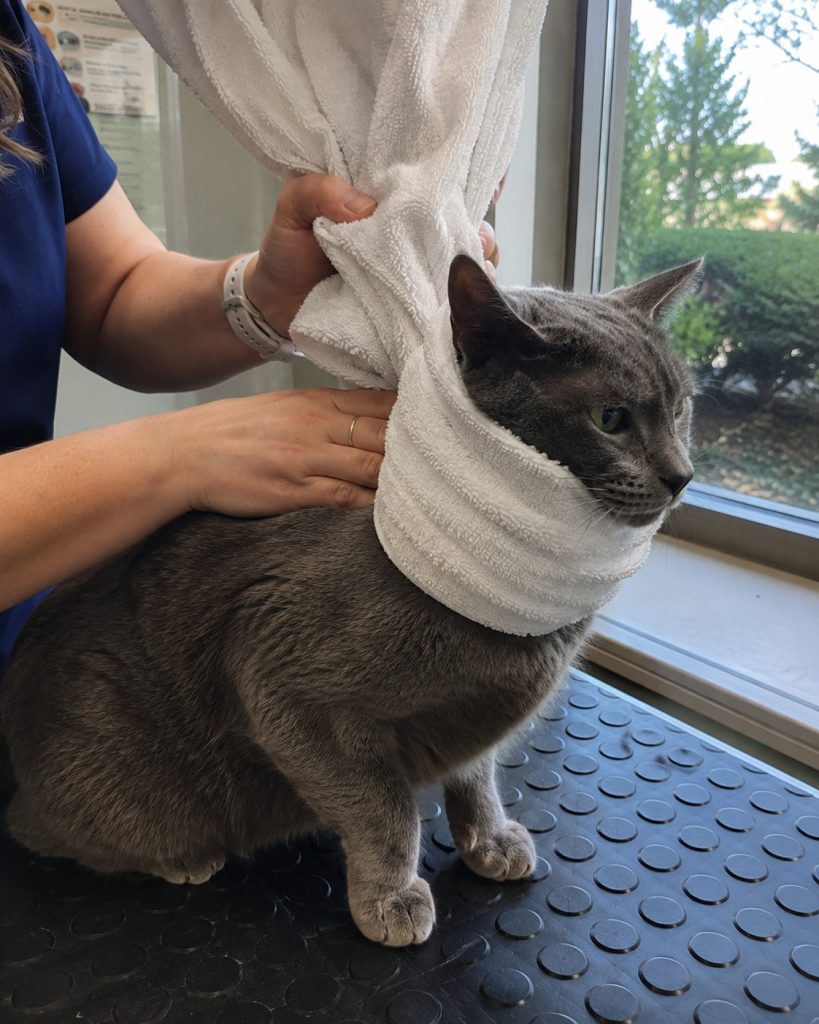
When contact is necessary, move slowly and support the chest and hindquarters. Avoid scruffing when possible, and don’t force a cat onto its side if it is breathing more comfortably on its chest, in a sternal position. Towels can provide gentle containment and block some visual stimulation; even partial coverage may help.
Keep handling brief and combine procedures when the patient is stable enough for them. Repeated approaches can add up, so skip interactions that don’t contribute to immediate care. A calm voice and a familiar carrier can also help keep stimulation down.
Support breathing before pursuing diagnostics
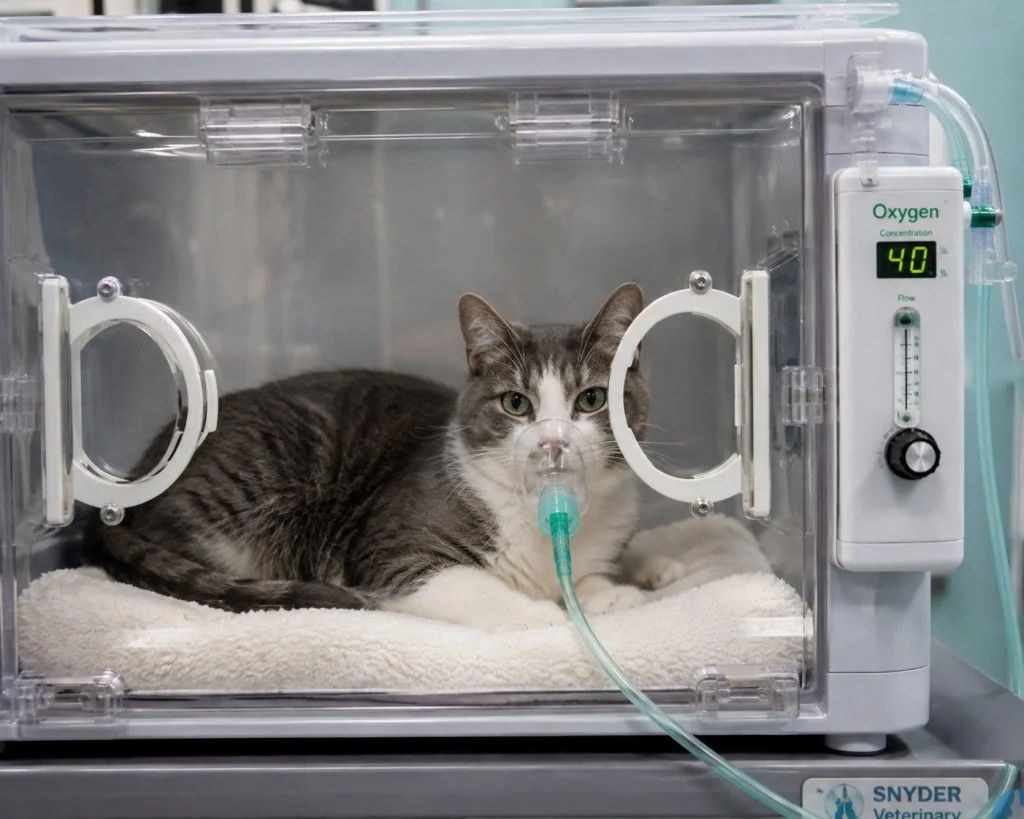
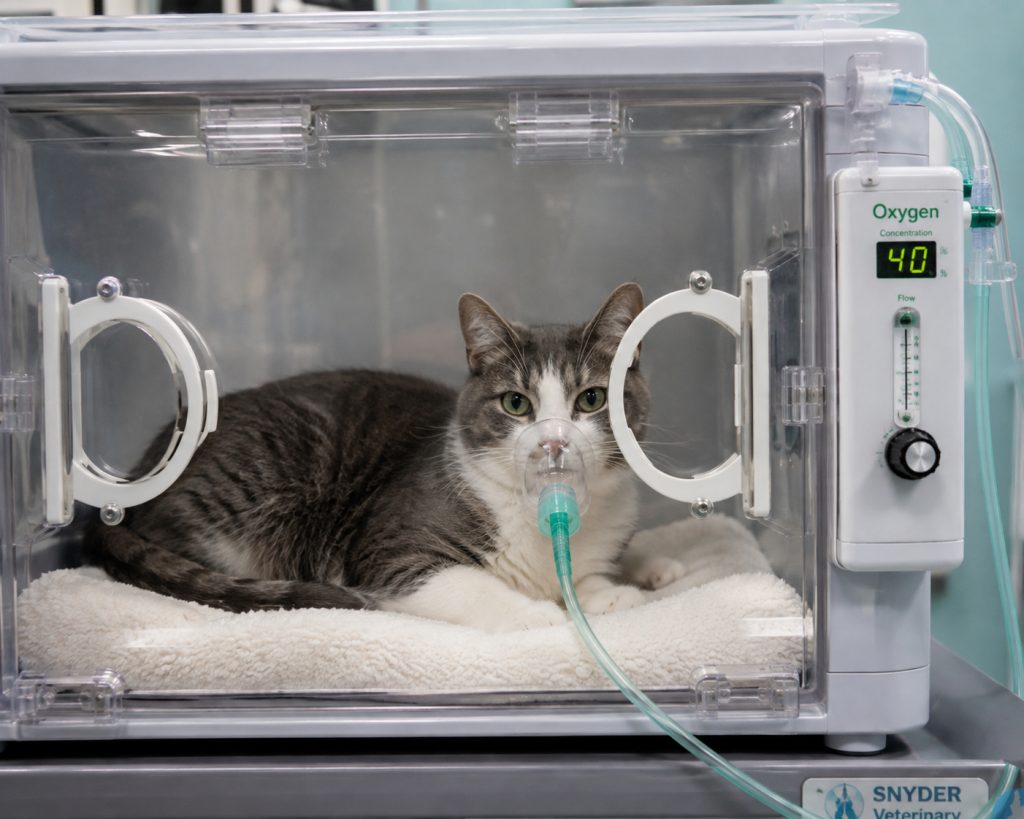
When a cardiac patient has breathing difficulty, oxygen support takes priority over tests that can wait. An oxygen cage can provide support while limiting contact. Flow-by oxygen may be an initial option as the team prepares a more stable setup. Nasal oxygen may suit some patients if they tolerate it.
Radiographs and blood draws can involve handling or positioning that may worsen respiratory distress before a patient is stable. The veterinarian can determine when diagnostics are appropriate. If they can’t be delayed, the team can consider ways to shorten handling, including pre-oxygenation before radiographs and positioning aids.
Food or treats may help some stable cats, but they aren’t appropriate for a patient in respiratory compromise. In that moment, keep the focus on stabilization and the care directed by the veterinarian.
Make necessary checks brief
Technicians can adapt diagnostic procedures to reduce time and restraint. Take blood pressure in a quiet space with minimal handling; Doppler methods are often faster and more reliable in cats. When blood sampling is needed, use experienced staff and the least stressful site available. Limiting attempts matters because repeated restraint can increase distress.
Sedation may also be considered under veterinary direction when a cat is highly stressed, fractious, or needs a procedure that can’t wait. The source describes appropriate sedation as a way to reduce catecholamine release and heart rate, and to make handling safer. Technicians can help by recognizing when struggling is becoming a concern and raising that concern with the veterinarian.
Keep hospitalization calm and consistent
Set up the cage so food, water and litter are easy to reach. Soft bedding and fewer reasons to move can reduce exertion; avoid high-sided litter boxes. Cluster treatments when feasible, and use observation rather than repeated interaction to check on a patient.
Monitor resting respiratory rate, breathing effort, posture and appetite. A calm patient makes these observations more useful, so note changes without unnecessary disturbance and share them with the veterinary team.
The same principles can help at home. Technicians can show owners how to monitor resting respiratory rate, recognize signs of distress and keep the home environment as calm as possible. Discuss medication routines in clear, practical terms so they can be carried out consistently with minimal struggle. If breathing becomes labored or the cat shows other signs of distress, owners should contact their veterinary team promptly.
Oliver’s case: stabilization came first
A nine-year-old male domestic shorthair named Oliver arrived after his owner noticed an increased respiratory rate over 24 hours. He had no known cardiac history. In his carrier, he was lying on his side, breathing with his mouth open at about 80 breaths per minute, and responding minimally. His pupils were dilated.
The initial plan called for removing him quickly for triage, radiographs and an IV catheter. A technician instead advocated for stabilization first. Oliver stayed in the bottom half of his carrier while the team started flow-by oxygen. Staff limited contact to visual assessment and kept the room dim and quiet, with few people present.
After about 10 minutes, his breathing improved and his mouth closed. One technician then performed a brief examination while keeping him in a sternal position. Under the veterinarian’s direction, sedation allowed the team to proceed with diagnostics more safely. Radiographs showed pulmonary edema consistent with congestive heart failure secondary to suspected HCM. Oliver stabilized with oxygen and diuretics and went home 48 hours later with a long-term management plan.
The case illustrates how the order of care can matter: observe, support breathing, then proceed with handling and diagnostics as the patient’s condition allows.
Consistency across the team
Low-stress care depends on a shared approach. Clear updates about a patient’s breathing and response to handling help the team make decisions together. After a difficult case, discussing what helped can build consistency for future patients.
For cats with cardiac disease, good care often means choosing each interaction carefully. Quiet observation, prompt support for breathing and coordinated handling give the team a practical way to reduce avoidable strain while providing needed care.