Sample No. 0172
Australian Firehawks: How Three Raptors Use Moving Flames to Hunt
Black kites, whistling kites and brown falcons have been seen carrying burning material, a hunting behavior researchers are working to document.
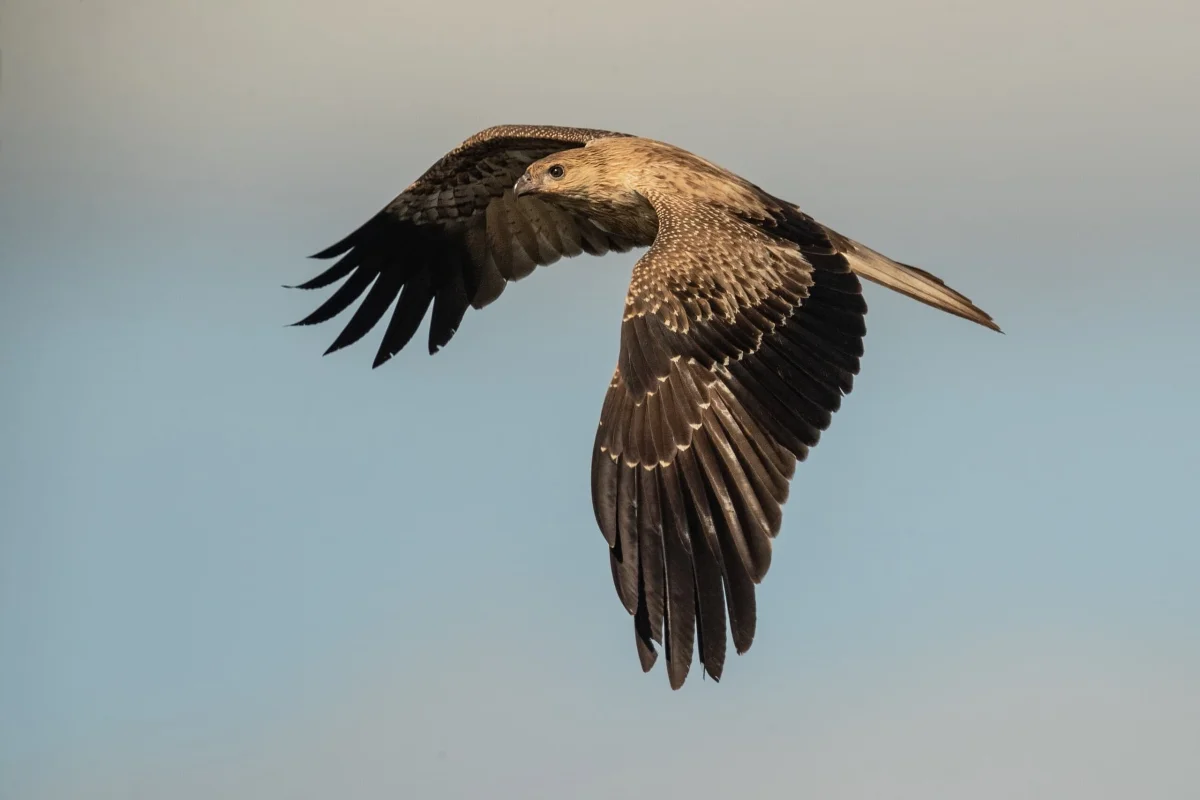
Three Australian raptors have been observed carrying burning or smoldering vegetation to start fires, apparently to flush out prey. The behavior gives black kites, whistling kites and brown falcons a hunting opportunity at the edge of a blaze—and raises practical questions for people managing fire-prone savannas.
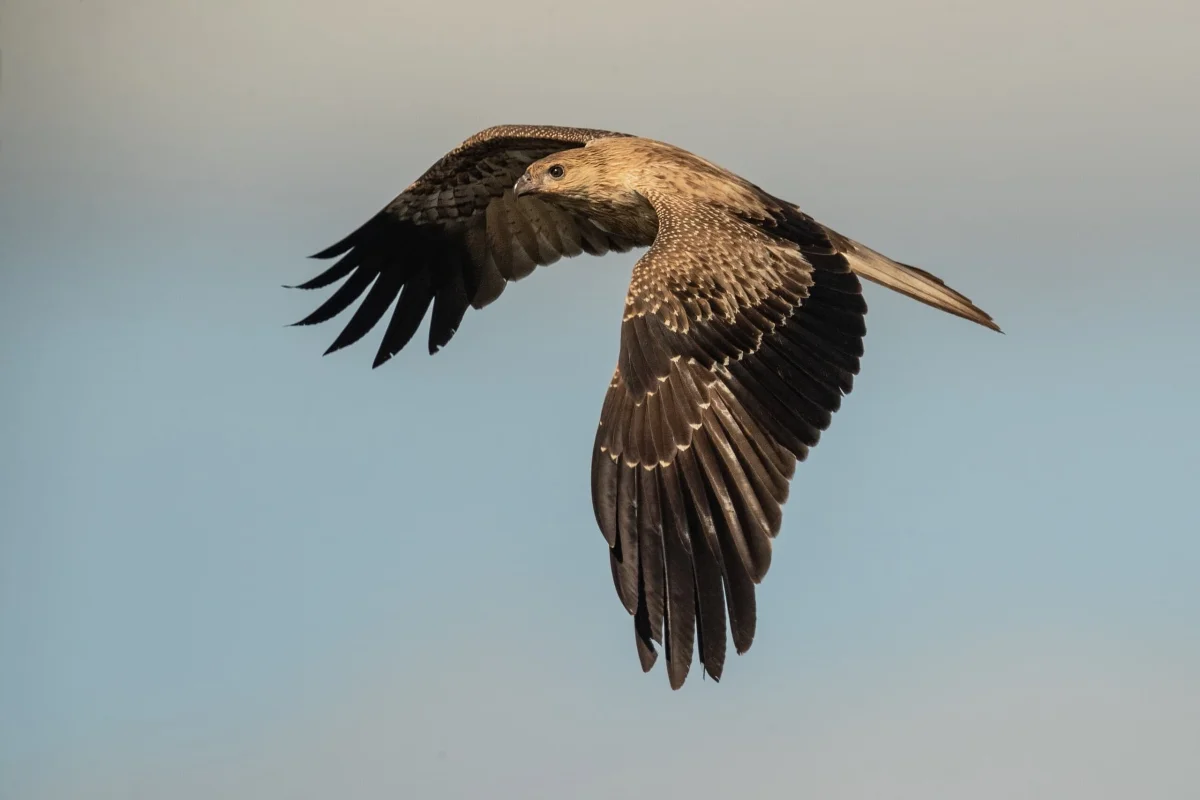
Whistling kites (Haliastur sphenurus) are one of three Australian raptor species known to move burning or smoldering vegetation.
A hunting tactic at the fire’s edge
The birds commonly called “firehawks” are the black kite (Milvus migrans), whistling kite (Haliastur sphenurus) and brown falcon (Falco berigora). Observers report them carrying flaming or smoldering plant material and dropping it elsewhere. The likely payoff is access to animals fleeing the flames: the raptors circle near a fire’s advancing edge, watching for mice, rabbits, lizards and snakes, then swoop down to catch prey.
People who have watched savanna fires describe multiple kites and falcons gathering to hunt. The birds’ behavior appears purposeful, but it hasn’t been documented systematically enough for researchers to explain all its steps. Nor does every population of these species show the behavior. That variation has led ornithologists to consider whether the tactic is learned by watching other birds, rather than being equally common across the species.
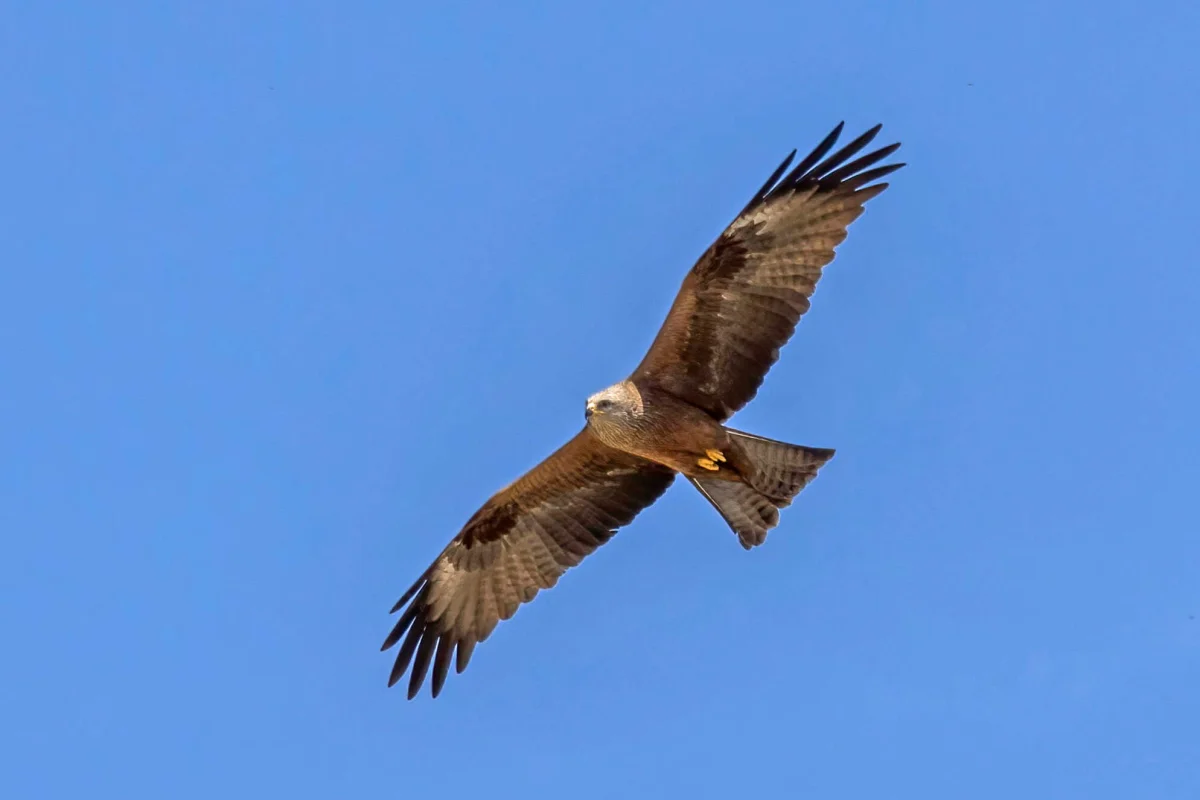
Black kites occur across Eurasia, Africa and Australia and are seen hunting near fires. Reports of them spreading fires come from Australia.
©By Charles J. Sharp – Own work, from Sharp Photography, sharpphotography.co.uk, CC BY-SA 4.0, https://commons.wikimedia.org/w/index.php?curid=118002774 – Original / License
Fire can create hunting chances for other predators, too, though the source describes them responding to a blaze rather than carrying fire. Bobcats, bears, coyotes and raccoons have been observed following fires or positioning themselves where animals flee. They may catch escaping prey or scavenge animals killed by flames. In the American West, wood-boring beetle larvae colonize burned forest, attracting woodpeckers; spotted owls, which typically favor old-growth forest, can also nest in woodland that has burned moderately.
These examples show that a fire can change where food and shelter are available. The reported firehawk behavior is distinct because the birds appear to move burning material themselves. Outside Australia, the source reports no comparable observations of animals actively spreading fire.
Local knowledge guides the research
Aboriginal people have long used fire to manage grasslands and flush prey. Their accounts also describe birds taking burning sticks from cooking fires or carrying burning vegetation across rivers. Some stories tell of firehawks bringing embers to the earliest humans. Researchers investigating the birds began by recording this Indigenous knowledge alongside reports from bush firefighters.
One firefighter, Dick Eussen, described putting out a roadside blaze and then seeing a new fire start across the road. As he drove toward it, he saw a whistling kite carrying a smoking stick in its talons and dropping it onto dry grass. By the end of the day, Eussen had extinguished seven fires that had begun from the first blaze and counted 25 raptors foraging around the burn.
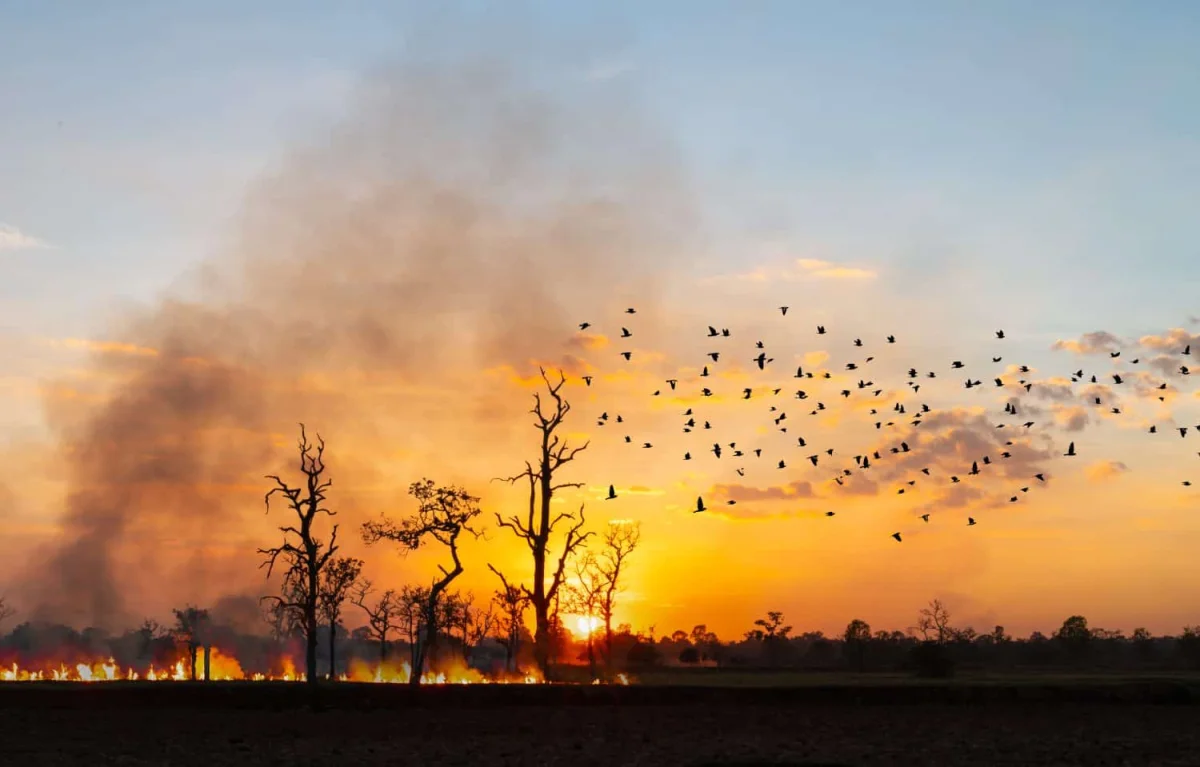
Many grassland species live in ecosystems shaped by fire. Removing fire can change habitats and affect biodiversity over time.
©frank60/Shutterstock.com
That account illustrates why the behavior matters to people as well as researchers. A bird moving an ember could contribute to a new ignition, complicating efforts to contain a blaze. At the same time, fire has a natural role in many grassland ecosystems. The article notes that without it, grasslands can shift into other ecosystems, changing habitats and excluding some species.
Traditional Aboriginal burning practices became less common during Australia’s early colonial era. As land and management practices have returned to Aboriginal control, managed burns have become more common again. Understanding how firehawks behave may help people working in these landscapes account for another source of fire movement while recognizing the ecological and cultural role of carefully managed burning.
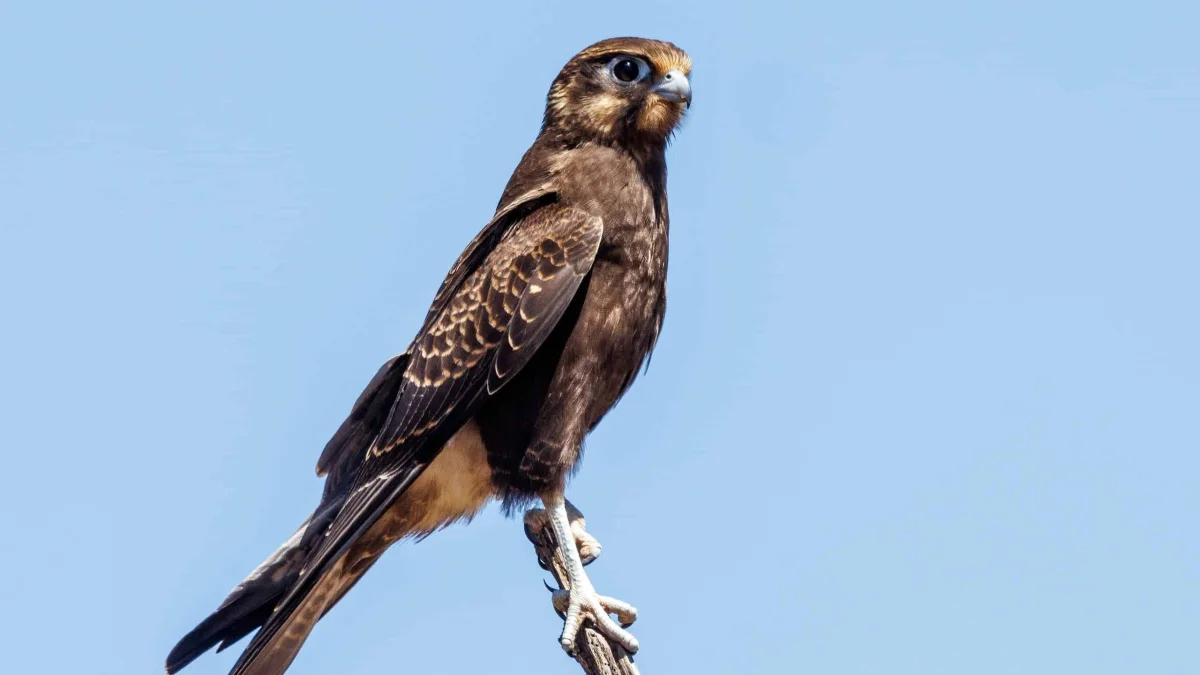
The brown falcon (Falco berigora) eats small mammals, including house mice and young rabbits in summer, as well as small reptiles, birds and invertebrates.
©Imogen Warren/Shutterstock.com
What researchers still need to see
Accounts of firehawk behavior come from Indigenous observers, firefighters and others in the field, but researchers have not yet captured the birds carrying burning sticks on camera. To build a clearer record, they have trained fire rangers and volunteer ornithologists to make observations and supplied cameras. Recorded footage could help establish how the birds pick up and transport material, where they drop it and whether the behavior varies between species or locations.
For now, the reports point to a striking intersection of hunting, animal behavior and fire ecology. The birds seem to take advantage of prey displaced by flames, while their actions may also help a fire spread. Careful observation, paired with Indigenous knowledge and practical experience in the savanna, will be key to understanding when this happens and how it fits into a landscape shaped by fire.




