Sample No. 0170
Why Lions Retreat When a Hippo Charges
A hippo’s size, speed and powerful jaws make a close encounter risky, so even lions may choose to move aside.
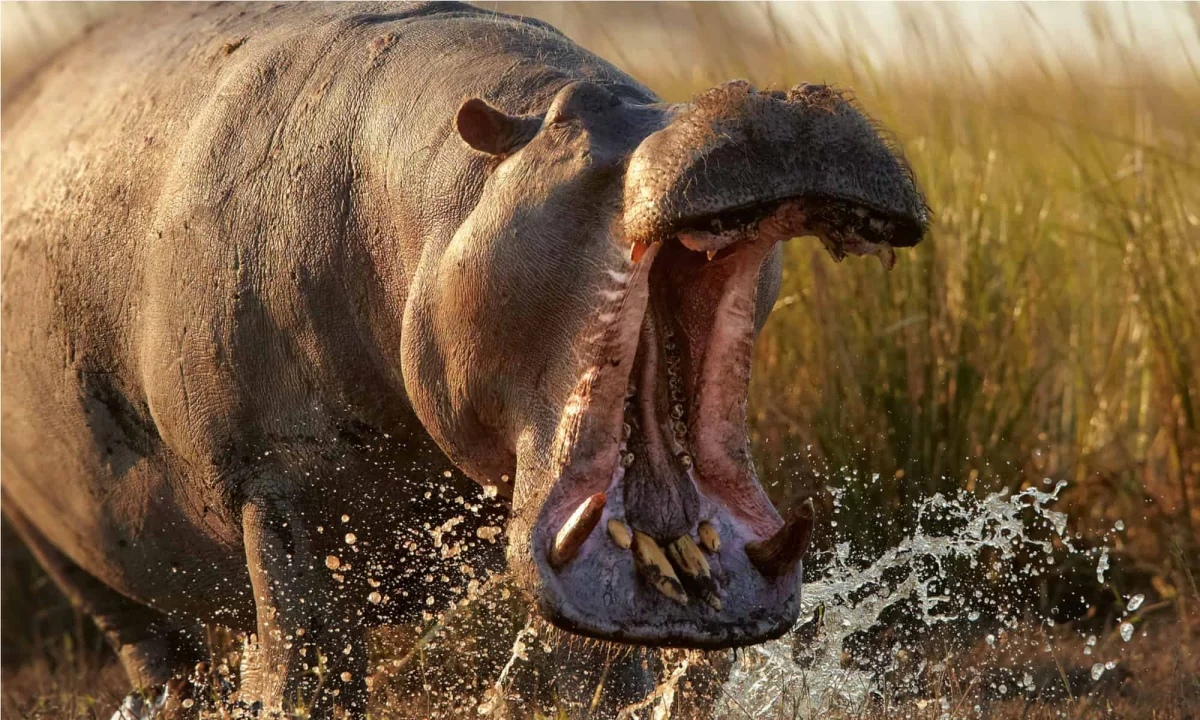
A charging hippo can make a pride of lions abandon the water’s edge in seconds. The retreat seen in this encounter is a practical response to a serious risk: a large adult hippo has the strength, speed and formidable jaws to badly injure an animal that gets too close.
The footage, shared by Latest Sightings, shows several lions gathered beside water when a hippo approaches. The reason the cats were there isn’t clear; they may have been drinking, resting or seeking shade. What the video does show is the hippo moving toward them and the lions clearing its path.
Why a hippo might charge
Hippos are plant eaters, but that doesn’t make them harmless or easy to approach. They spend much of their time in and around water, where they rest, cool off and interact with other hippos. An animal entering that space may be met with a defensive response.
The International Fund for Animal Welfare describes hippos as capable of aggressive behavior when defending territory. Dominant males can be particularly territorial in aquatic habitats, though either sex may react defensively when threatened.
That can create tension at rivers and watering holes, which both species use. Lions may come to drink, while hippos rely on the same areas for shelter and social activity. When they meet at close range, the encounter can turn dangerous quickly.
The video doesn’t establish what prompted this hippo to approach. It could have been responding to the lions, attempting to pass through, or reacting to something outside the camera’s view. The observable outcome is simpler: the hippo advances, and the lions move away.
Speed changes the risk
A hippo’s bulk can make its movement on land easy to underestimate. Common hippos can reach about 30 kilometers per hour, or 19 miles per hour, over short distances, according to the University of Michigan’s Animal Diversity Web. Their powerful legs help them accelerate despite their massive bodies.
That burst of speed matters when another animal is nearby. A hippo doesn’t need to chase for long to become a threat; at close range, its weight and momentum add to the danger. The lions are fast hunters, but choosing to avoid a charge can be a sound way to protect themselves.
This doesn’t mean lions are always afraid of hippos, or that the two species never come into conflict. Lions have been documented attacking hippos, particularly younger or vulnerable animals. Taking on a healthy adult, however, presents a much greater risk. A fight could leave a lion with an injury that makes hunting or defending itself difficult.
Powerful jaws and costly injuries
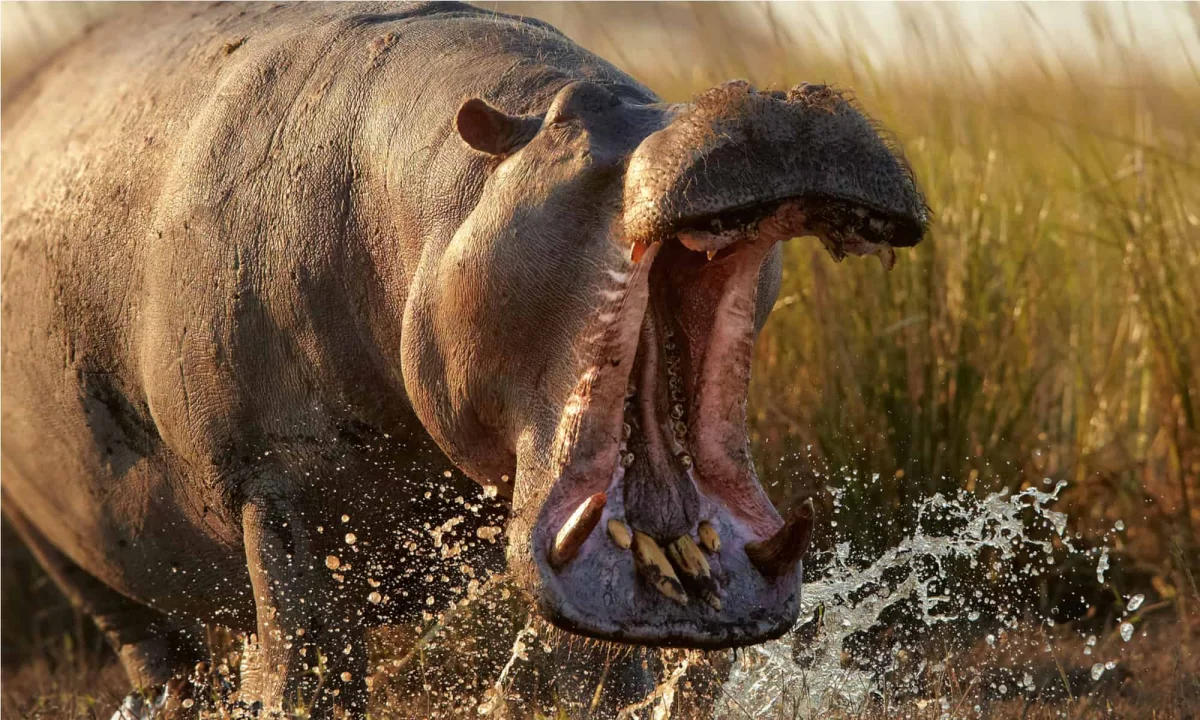
A hippo’s large jaws and elongated canine teeth make it a formidable opponent.
©Martin Mecnarowski/Shutterstock.com
The common hippo (Hippopotamus amphibius) has an enormous mouth and long canine teeth used mainly in fighting and defense. A 2020 study in Oxford Medical Case Reports describes how a hippo can open its mouth to roughly 150 degrees. Its lower canine teeth can measure about 30 to 50 centimeters, or 12 to 20 inches.
The study cites an estimated bite pressure of around 12,600 kilopascals, equivalent to about 1,830 pounds per square inch. Bite-strength estimates can vary with measurement methods, but a hippo’s jaws are capable of causing catastrophic harm.
Researchers in that study examined 11 people who had suffered hippo bites in Burundi. Their injuries included extensive tissue damage and serious infections; some required amputation. The authors described these wounds as major trauma. For a wild animal such as a lion, severe damage to a leg, jaw or another vital area could compromise its ability to hunt and survive.
Space is the safer choice
The encounter is a reminder that an apex predator still has limits. Lions can bring down formidable prey, but they don’t benefit from taking every fight. Against a healthy adult hippo, avoiding injury may matter more than holding a spot beside the water.
The same caution applies to people visiting hippo habitat. Keep a safe distance, follow guidance from experienced local guides and avoid placing yourself between a hippo and the water. Approaching or provoking a wild animal can put both people and wildlife at risk.
When a hippo approaches, giving it room is the sensible response. In this encounter, the lions’ retreat shows how quickly a powerful predator can recognize that moving away is the better option.


