Sample No. 0169
Namibia Seal Rescue Shows the Risks of Discarded Fishing Gear
A young Cape fur seal was freed from fishing material in Namibia. The rescue shows why entangled wildlife needs trained responders.
A short rescue can remove a hazard that might otherwise keep injuring a wild animal. In footage from Namibia, a team from Ocean Conservation Namibia runs toward a crowded seal colony to reach a young Cape fur seal caught in green fishing material. The other seals scatter toward the ocean, but the rescuers focus on the entangled animal, catch it, remove the material, and release it.
A quick response on a crowded shore
Cape fur seals gather in large colonies along Namibia’s Atlantic coast and the coast of neighboring South Africa. In the footage, the rescuer has to reach the trapped seal before it enters the water. Once there, the animal would be harder to locate and capture safely.
The sudden rush understandably looks alarming to the colony. The seal being pursued can’t know that the people approaching intend to help, and it struggles while the team restrains it. Experienced responders work quickly to cut away the material restricting its body, then let it go. The clip doesn’t establish how long the seal had been trapped or what would have happened if it had escaped into the water. It does show a hazard removed before it could continue causing harm.
Discarded nets, line, plastic straps, and other marine debris can stay wrapped around an animal rather than falling away by themselves. The NOAA’s guidance on seal entanglements describes possible consequences including wounds and trouble swimming or feeding. The danger can build over time: as a young animal grows, a loop of fishing line or rigid plastic may tighten around its neck or body. A small-looking strand can cause deep wounds, infection, or tissue damage.
Young seals are often affected
Research from Namibia helps put the rescue in context. A 2021 study in Marine Pollution Bulletin examined Cape fur seal entanglements at two colonies in central Namibia. Researchers recorded 366 cases; fishing-related materials made up 53% of the 347 cases analyzed in detail. Juveniles were the most commonly affected age group, and about 8% of those analyzed cases involved very severe injuries. The study also recorded 191 successful disentanglements.
Those findings point to both the scale of the problem and the value of organized rescue work. They don’t tell us the outcome for every animal, and an entanglement won’t always become fatal. But if debris interferes with swimming or hunting, a seal may have difficulty finding food. Severe cases can lead to starvation, drowning, or fatal injury. Removing the material ends that particular source of ongoing risk.
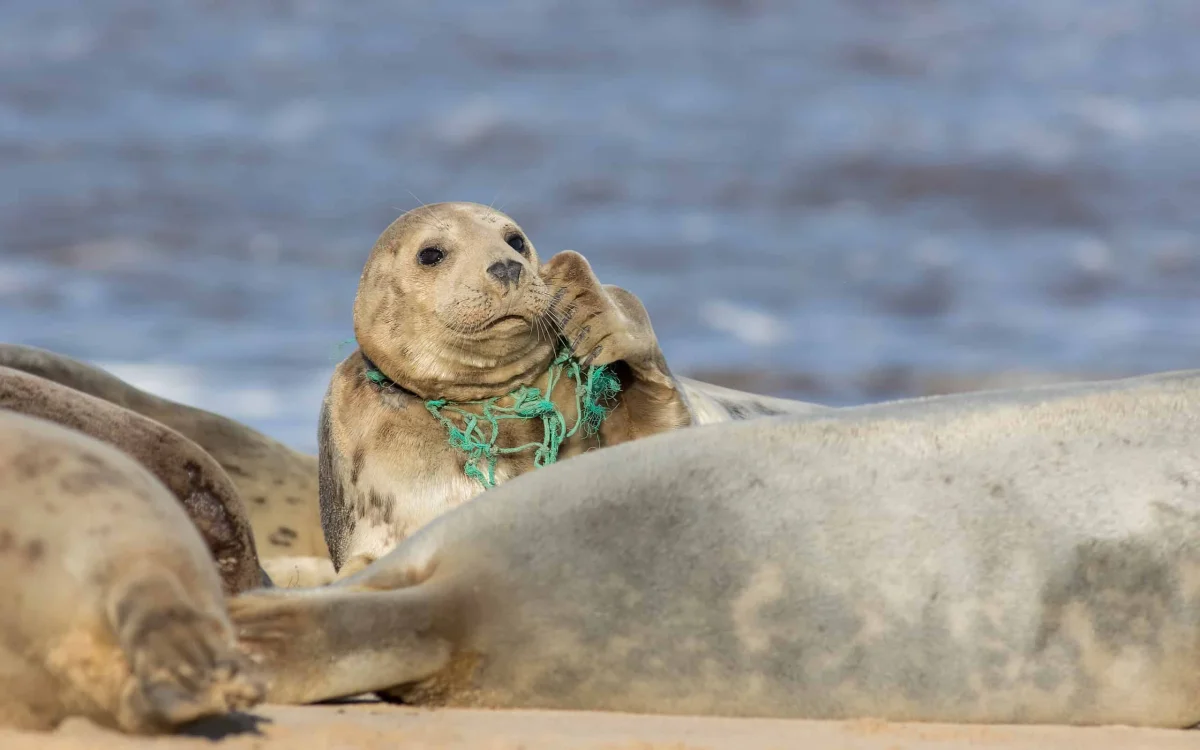
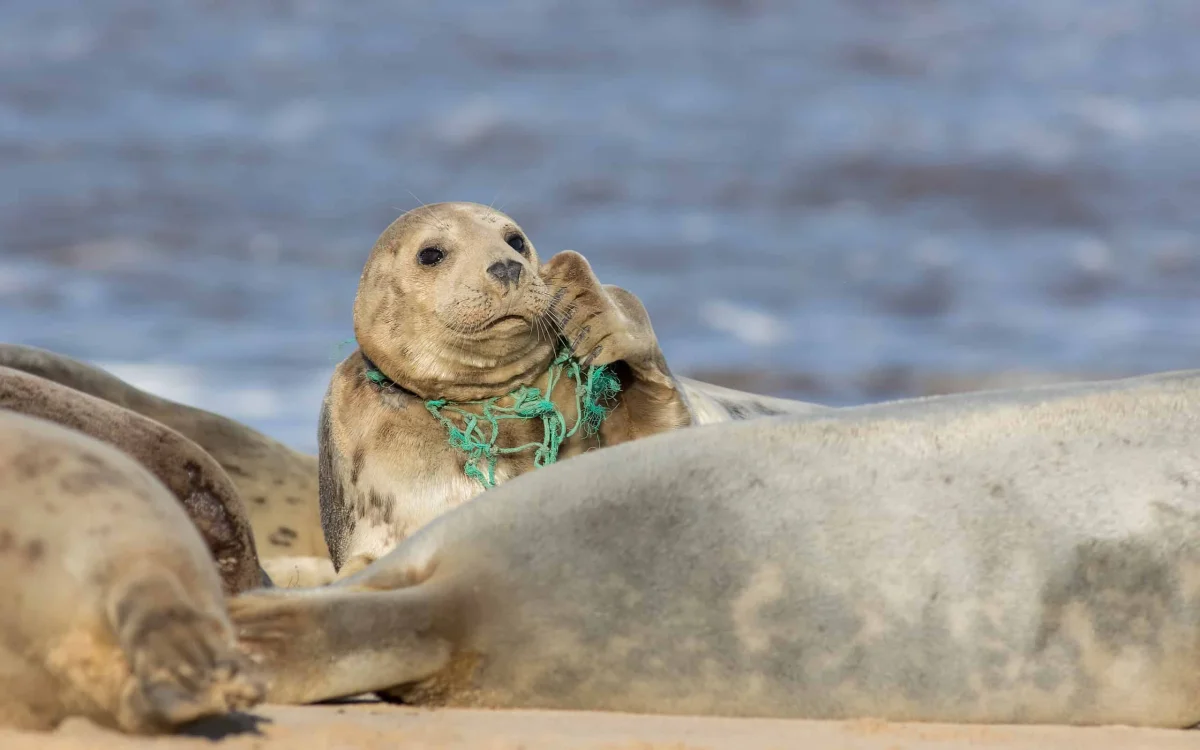
Fishing gear and other marine debris can seriously injure seals. Photo: Ian Dyball/iStock via Getty Images.
©Ian Dyball/iStock via Getty Images
Seals are only one of many animals affected by discarded gear. Sea turtles, dolphins, whales, and seabirds can also become entangled. Fishing wire can injure birds away from the shore, too, as shown in this osprey rescue. Lost or abandoned equipment can remain a danger long after it leaves someone’s hands.
Leave seal rescues to trained responders
A struggling seal can prompt a strong urge to intervene, but approaching or trying to restrain one can put both the animal and a person at risk. Cape fur seals have powerful jaws and sharp teeth, and they may bite when frightened or handled. They also can’t recognize a person’s intent; a rescue attempt may feel like a threat.
There’s an added health concern in southern Africa: rabies has been confirmed in Cape fur seals, including in Namibia in June 2025. Ocean Conservation Namibia advises people to avoid direct contact and seek medical attention promptly after potential exposure. The practical response to an entangled or injured seal is to keep a safe distance and contact a qualified marine mammal rescue organization or local wildlife service. Trained teams can assess the situation and choose an approach that protects people while giving the animal a chance to be freed.
Preventing the next entanglement
This seal’s trouble began with material that didn’t belong in its habitat. Rescue groups such as Ocean Conservation Namibia patrol colonies, locate animals in distress, and remove debris when they can. Their work helps individual animals and draws attention to a preventable source of suffering: fishing gear and plastic waste left where wildlife can encounter it.
The seal may have experienced the rescue as a frightening chase followed by restraint. Once freed, it could return to the colony without that piece of material tightening around its body. For anyone who spots an entangled seal, the useful next step is clear: stay back, note where the animal is, and contact trained responders.


