Sample No. 0168
Esophageal Obstructions in Dogs: A Veterinary Case and Three Key Questions
A Chihuahua’s gagging and coughing prompt questions about esophageal obstructions, where they occur, and reported recovery at discharge.
A short history can signal a problem that needs prompt assessment
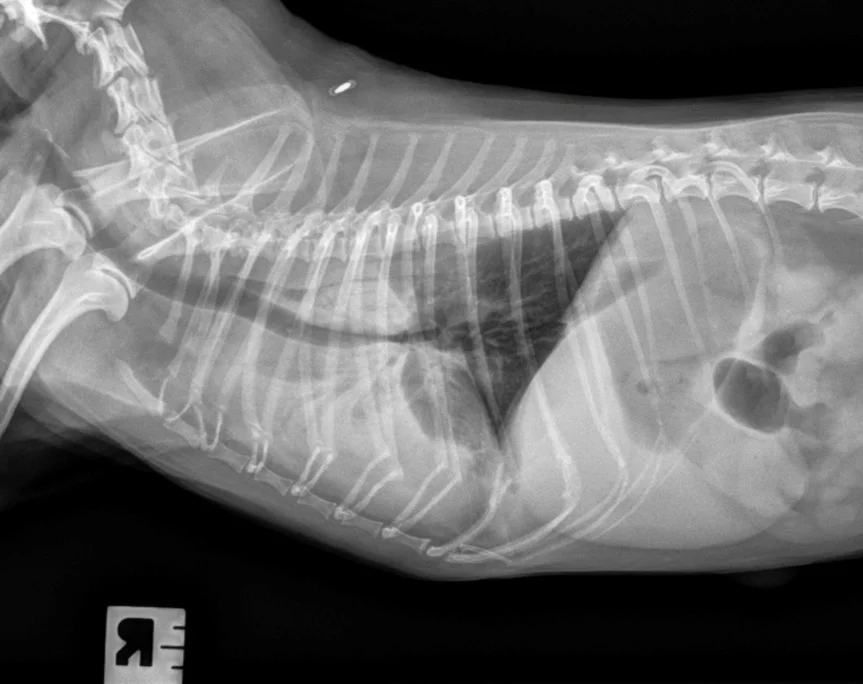
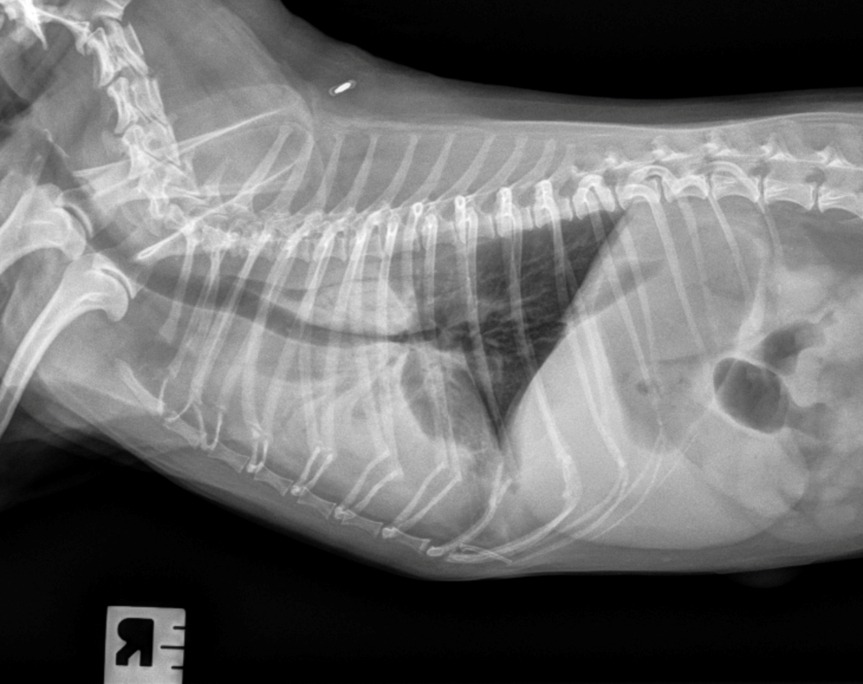
A 12-year-old spayed Chihuahua has been gagging and coughing for 24 hours. Those signs are the starting point for a veterinary case challenge about esophageal foreign bodies: material lodged in the tube that carries food from the mouth to the stomach. The case supplies an X-ray image of the dog’s chest, but no diagnosis or outcome. Its questions ask readers to consider what these obstructions are commonly made of, where they most often lodge, and how frequently dogs have fully recovered by discharge in a cited study.
Gagging and coughing can be unsettling for an owner, but they do not establish that an object is stuck in the esophagus. A veterinarian needs to assess the dog and interpret imaging alongside the history and physical examination. The useful detail here is the duration: the signs have continued for a full day. When a dog has persistent or worsening trouble swallowing, repeated gagging, or difficulty keeping food or water down, contacting a veterinarian promptly is a sensible next step. Breathing difficulty, collapse, or marked distress calls for urgent veterinary care.
What the case asks
The first question offers bone, dental treats, and fishhooks as possible materials involved in canine esophageal obstructions. The second asks whether the distal esophagus—the portion nearer the stomach—is the most common location. The third asks what percentage of cases had full clinical recovery at discharge, with choices of 50, 75, or 90 percent.
These are focused questions about frequency and outcome. The case itself does not provide the correct choices, so readers should consult the cited research rather than infer an answer from the Chihuahua’s signs or the radiograph alone. A single patient’s presentation cannot establish which material is most common or predict an individual dog’s recovery. Those conclusions depend on case data and clinical assessment.
The cited paper is a retrospective cohort study by A.G. Burton, C.T. Talbot, and M.S. Kent. It examined 222 dogs treated for esophageal foreign body obstruction from 1998 through 2017 and was published in the Journal of Veterinary Internal Medicine in 2017. The case challenge draws its questions from that study’s subject matter. The citation identifies a substantial group of treated dogs, but the information provided here does not include the study’s detailed findings or the answers to the quiz.
Why location and material matter
An object lodged in the esophagus can irritate or injure the tissue around it. The type of material and the point where it is stuck can shape a veterinary team’s assessment and treatment decisions. That makes the quiz’s first two questions clinically relevant: they direct attention to what dogs may swallow and where obstructions may be found. They do not, on their own, tell an owner what to do at home or what treatment a particular dog will need.
Owners can help by sharing a clear timeline and any known details about what the dog may have chewed or swallowed. Mention when the signs began, whether they occur during or after eating or drinking, and whether the dog can swallow normally. If a suspected item is available, tell the veterinary team what it is. Don’t try to retrieve an object from deep in the mouth or throat, and don’t force food or water while the dog is having trouble swallowing; seek veterinary advice instead.
Recovery figures need context
The final question asks about full clinical recovery at discharge, an outcome that describes the dogs in the study rather than guaranteeing what will happen to another patient. A discharge measure also has a defined time point: it doesn’t by itself describe longer-term health or explain how different patients fared. To use a percentage responsibly, readers need the study’s reported result and the surrounding details, including what the researchers counted as recovery.
For this Chihuahua, the responsible takeaway is straightforward: persistent gagging and coughing deserve veterinary attention, and an X-ray should be interpreted by the treating team. The study offers a way to examine broader patterns across treated dogs, while the dog’s own examination guides care. Owners who notice continued swallowing difficulty or worsening signs should contact a veterinarian promptly and share the timing and any possible exposure to swallowed material.


