Sample No. 0152
Why Dogs Mount: Common Triggers and Humane Ways to Redirect the Behavior
Dogs may mount from excitement, play, stress or sexual arousal. Tracking the trigger can guide calm redirection and help you spot changes that need veterinary attention.
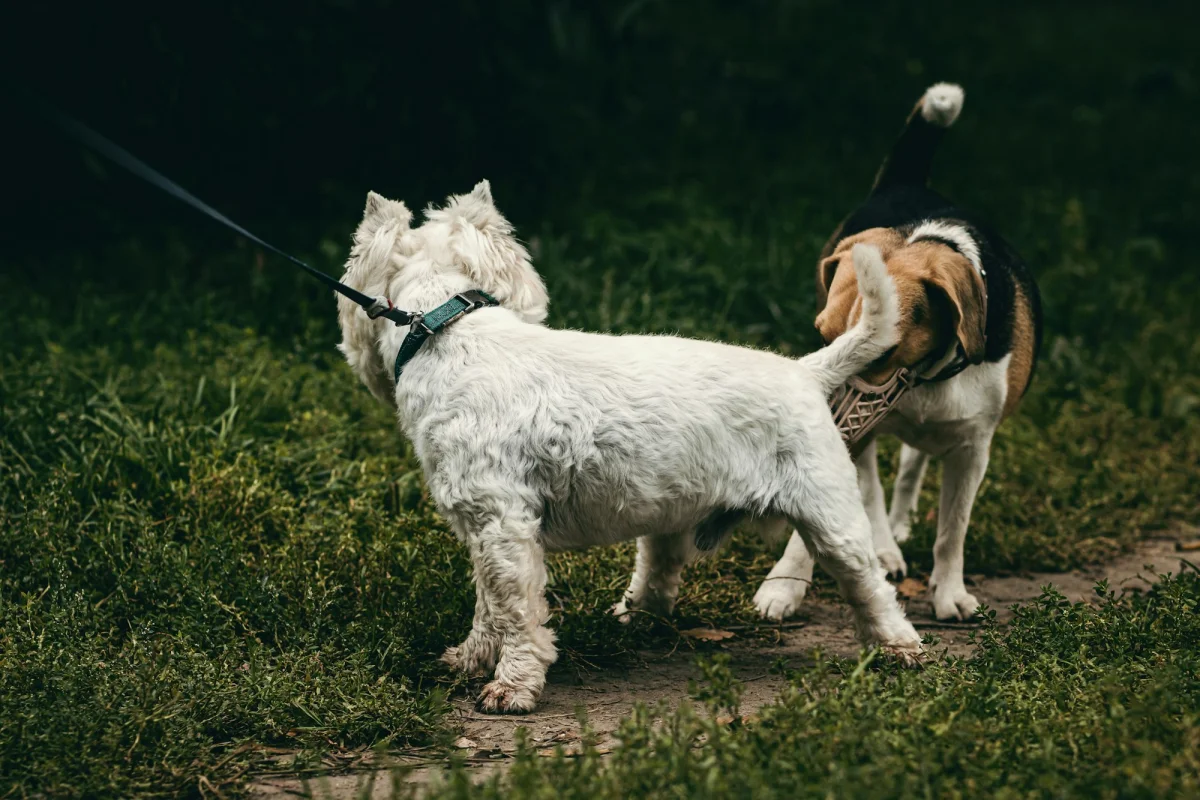

Mounting can look like a clear social message, but the behavior alone rarely tells the whole story. Dogs may hump because of sexual arousal, play, excitement, stress, anxiety or a learned pattern that brings attention. My dog Arthur, for example, mounted when he became overstimulated. The useful question was not what he was trying to prove; it was what had happened just before he got wound up.
That distinction matters for owners. Mounting is common, but it can still be uncomfortable for people and unwelcome to other dogs. Watching for the setting, the dog’s body language and what follows can help you choose a response that keeps everyone comfortable.
Read the situation around the behavior
Sexual motivation is one possible reason for mounting, especially for sexually mature dogs. But it’s only one possibility. A dog may also mount during rough play, when greeting an exciting person, or when social activity becomes too intense. Anxiety and stress can contribute, too. In some cases, the behavior continues because it reliably earns a reaction from people nearby.
Mounting can also appear as a displacement behavior: a dog experiencing strong or mixed emotions may turn to an action that seems unrelated to the moment. A dog might be eager to meet another dog while also feeling uncertain, and mounting may emerge as that interaction becomes more intense. This doesn’t establish a single explanation for every dog. It’s a reason to look at what was happening before and during each episode.
A dog owner described a related pattern in an online discussion about a 10-month-old Labrador, shepherd and husky mix. The dog was nervous around people but generally friendly at an off-leash park, where he would sometimes fixate on one dog and repeatedly try to mount. That account illustrates why the wider context matters: a dog can seem comfortable in much of an outing and still struggle with a particular interaction.
Female dogs and puppies can mount, too
Mounting isn’t limited to male dogs. Females may mount people, objects or other dogs during play, excitement, stress or sexual arousal. Seeing a female dog mount another dog doesn’t, by itself, establish that the behavior is sexual or an attempt to control the other dog. Consider the interaction as a whole, including whether the other dog can move away and whether play stays relaxed.
The behavior can begin early in life. Veterinary behavior expert Dr. Bonnie Beaver notes that mounting, pelvic clasping and thrusting may appear in puppies as young as three to six weeks. At that age, these actions can be brief parts of juvenile play rather than sexual behavior. Age and context therefore matter when interpreting what you see.
What the target can tell you
Male dogs may mount people, toys or other dogs, and the choice of target can help owners notice patterns. A dog that mounts a family member during an enthusiastic homecoming may be reacting to an exciting greeting. Mounting a toy during energetic play may occur as arousal rises. With other dogs, it may happen during play or highly stimulating social contact.
Hormones can influence mounting in sexually mature, intact males. Still, a dog may continue mounting after being neutered, because sexual motivation isn’t the only cause. For that reason, neutering alone may not explain or resolve a behavior that is linked to excitement, stress or a learned response.
Keep track of when mounting starts, who or what is involved, and what immediately preceded it. Note whether it happens during greetings, particular kinds of play, busy social settings or moments when your dog seems tense. This simple record can reveal a trigger and help you adjust the routine around it. It also gives your veterinarian or a qualified behavior professional clearer information if you seek help.
Interrupt calmly and offer another action
Punishment isn’t needed to address mounting. The behavior may be unwelcome, but a calm interruption and a clear alternative give your dog a more useful direction. If you can see your dog becoming overexcited, step in early, before mounting has become difficult to interrupt.
Ask for a familiar behavior that can’t happen at the same time, such as sitting, going to a bed or engaging with a toy. When your dog makes that choice, reward the alternative. If a greeting or play session repeatedly leads to mounting, shorten the interaction or offer a quiet break. Teaching your dog to settle can help make enthusiastic greetings and play easier to manage.
Look for the trigger rather than waiting for the behavior to happen again. For instance, if mounting tends to follow an intense greeting, make arrivals calmer and give your dog a familiar task. If it appears during play, pause before excitement escalates and resume only when the dogs are comfortable. These adjustments help protect the other dog’s space while giving your own dog a predictable way to rejoin the activity.
When to contact a veterinarian
Talk with your veterinarian if mounting suddenly increases, becomes difficult to interrupt, leads to fights or appears alongside other changes. Frequent licking, changes in urination, signs of pain or irritation around the genitals are also reasons to seek veterinary guidance. A sudden behavior change can have several explanations, and a veterinarian can assess whether a health concern needs attention.
Owners who want to review behavior while away can use the Petcube App to observe their pet remotely; the service also offers access to online veterinary support. Whatever tools you use, keep notes on the pattern and seek professional advice when the behavior changes or your dog seems uncomfortable.
Mounting is a behavior with several possible causes, so the most helpful response starts with observation. Notice the trigger, interrupt gently, reward a familiar alternative and give your dog space to settle. That approach supports your dog’s welfare while helping you decide when a veterinarian should take a closer look.


