Sample No. 0151
Puppy Alone-Time Training: Build Confidence Before Your Routine Changes
Gradual, positive practice can help puppies learn to settle alone. Watch for escalating distress, and seek veterinary guidance when behavior is severe or persistent.
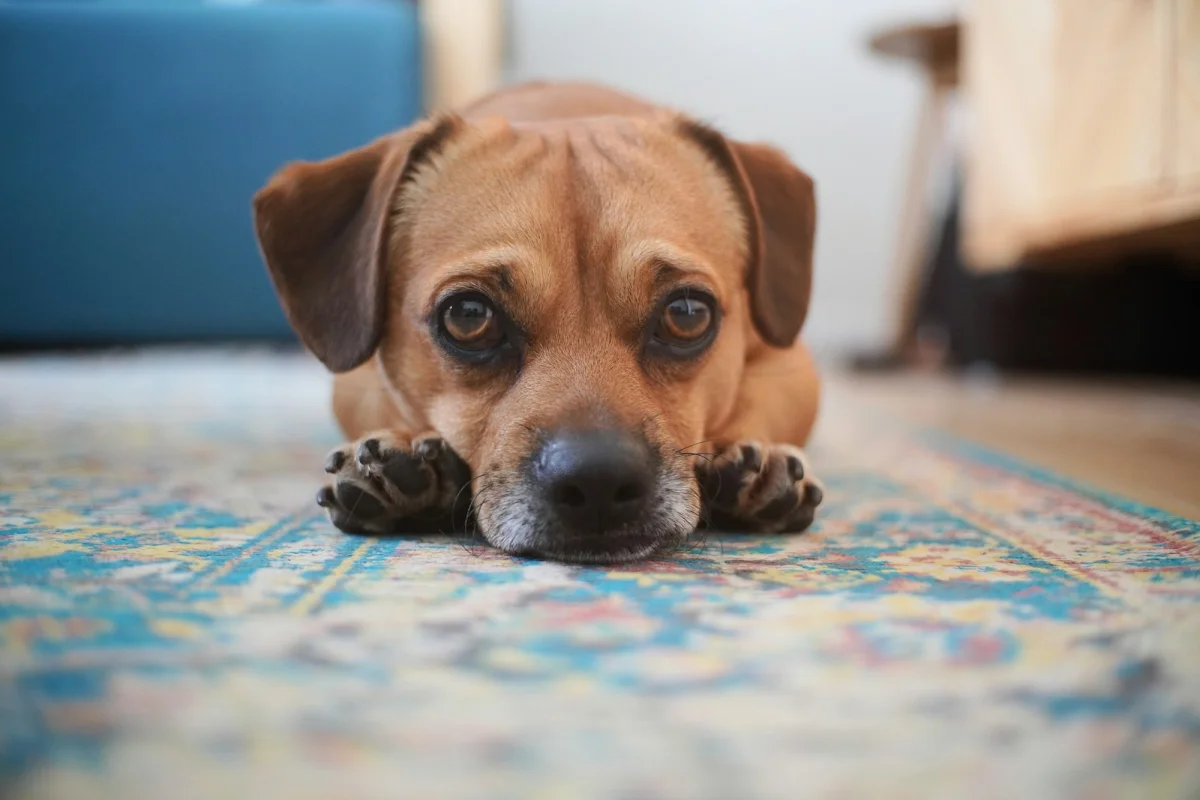

A puppy who has people nearby most of the day may find a sudden stretch alone difficult. That shift can come when school resumes or household members return to work. The useful response isn’t to wait for a long absence and see what happens. Instead, introduce brief, manageable separations while the puppy is still settling into home life.
For families planning to bring home a puppy, independence belongs in the early routine alongside rest, play, and toilet training. It doesn’t mean leaving a young dog to cope with more than they can handle. It means helping them discover, step by step, that a comfortable place to rest can still feel safe when their person moves away.
Read the whole picture, not one behavior
Separation anxiety refers to genuine distress connected with being apart from a person or left alone. Possible signs include repeated barking or howling, panting, pacing, drooling, toileting indoors, destructive behavior, and frantic efforts to escape. Damage concentrated near doors or windows may be part of that picture, especially when paired with other signs.
When the behavior happens can help clarify what’s going on. Notice whether it begins as you prepare to leave, continues after you’ve gone, or also appears at other times. A puppy who chews a shoe, whines briefly, or has a house-training accident isn’t necessarily experiencing separation-related distress. Puppies may also protest when play ends, dislike a newly introduced crate, or cry during their first nights in an unfamiliar home.
Look at the puppy’s emotional state and how the behavior develops. Frustration may ease as the puppy settles; serious distress can intensify rather than subside. A single noisy moment doesn’t tell the whole story. Repeated patterns, difficulty recovering, and several signs occurring together deserve closer attention.
Make independence part of everyday life
Start with small moments when you’re home. Encourage your puppy to relax on a bed or mat a short distance from you, or to spend calm time in a puppy pen. A crate can be another option if it’s introduced gradually and the puppy is comfortable there. Pair these spaces with rewards for relaxed, independent behavior, and let the puppy choose to settle rather than relying on confinement to stop distress.
Once the puppy can rest while you’re nearby, practice tiny separations. Step into another room and come back. Briefly close a door, then return before your puppy becomes overwhelmed. Later, you can step outside for a short moment. Keep the increase in duration gradual; the aim is to build confidence, not to test how long the puppy can endure being alone.
That pacing matters. If a puppy repeatedly reaches a level of distress they can’t manage, longer absences may become harder rather than easier. A useful principle shared in a Reddit discussion is to avoid leaving a puppy alone longer than they can handle while working through separation difficulties. In practice, that means planning around the puppy’s current ability where possible and increasing time in small steps.
Departure cues can be practiced separately from actual departures. Pick up your keys, then sit down; put on your shoes and make coffee. These ordinary repetitions can make such cues less likely to predict an immediate, lengthy absence. Keep the practice low-key, and watch the puppy’s response rather than assuming each repetition is comfortable.
Observation after you leave can fill in gaps that aren’t visible when you return. A pet camera app may help you see whether your puppy settles, vocalizes, or becomes more upset. Use what you observe to adjust the next practice session. A chewed cushion alone can’t reveal exactly when the behavior began or how the puppy felt throughout the absence.
When routine adjustment needs professional support
Contact your veterinarian and a qualified behavior professional if your puppy panics, injures themselves while trying to escape, can’t settle, stops eating when alone, or makes little progress despite gradual practice. These signs call for more support than simply extending the time away. A professional can help assess the pattern and shape a plan suited to the individual dog.
Behavior changes can also have a medical component. Veterinary behaviorist Dr. Bonnie Beaver has noted that separation-related behavior can sometimes occur alongside health problems, including hypothyroidism. That’s a reason to involve a veterinarian when a change is significant or concerning, rather than assuming every new behavior is only a training issue.
Don’t punish a puppy for panicking or for damage caused while alone. Punishment doesn’t resolve the fear behind the behavior and may add stress. If a puppy is struggling, make the next practice easier and seek guidance instead of demanding a longer absence.
The practical goal is a puppy who learns that brief separations are safe, with time and support matched to their response. Build that skill before a busier schedule makes long stretches unavoidable, and let the puppy’s behavior—not the clock—guide the pace.


