Sample No. 0148
Olive Ridley Sea Turtle Nesting in Southern California Prompts Careful Beach Protection
Two sea turtle nests were reported in Southern California, including the first recorded West Coast nesting. Protected sites need space and minimal disturbance.
The reported nesting of an olive ridley sea turtle in Surfside, California, is significant not only because of the species involved, but because it marks the first recorded sea turtle nesting event of any species on the U.S. West Coast. Three days later, another sea turtle was seen laying eggs in Huntington Beach, several miles south. That second turtle’s species had not been identified when the sightings were reported.
For beachgoers, the immediate lesson is practical: give both nesting areas room. NOAA Fisheries said local, state, and federal partners would monitor the sites during incubation, which typically lasts 45 to 60 days. The nesting zones were fenced and had signs explaining their protection. People should stay outside those boundaries and avoid approaching, touching, or disturbing the nests.
Two nests, with one species still unknown
The first turtle was identified as an olive ridley (Lepidochelys olivacea), a sea turtle that is the smallest of the sea turtle species. The second animal was observed nesting near the Huntington Beach Pier, but its identity was not established in the report. Keeping that distinction clear matters: the unusual event involves two nesting observations, but only one confirmed olive ridley.
Olive ridleys can reach about 100 pounds and measure roughly 2.5 to 3 feet long. They occur around the world, mainly in tropical waters of the Pacific, Indian, and Atlantic oceans. Pacific nesting populations are found primarily in Mexico, Nicaragua, Costa Rica, and Panama. A beach in Southern California is therefore far north of the principal nesting areas described in the report.
The first sighting was announced September 22. The date is useful context for understanding the expected monitoring period: a typical incubation window of 45 to 60 days means the nests need protection over an extended stretch, not just on the day a turtle comes ashore. The report did not specify when hatchlings might emerge or whether either nest would produce hatchlings.
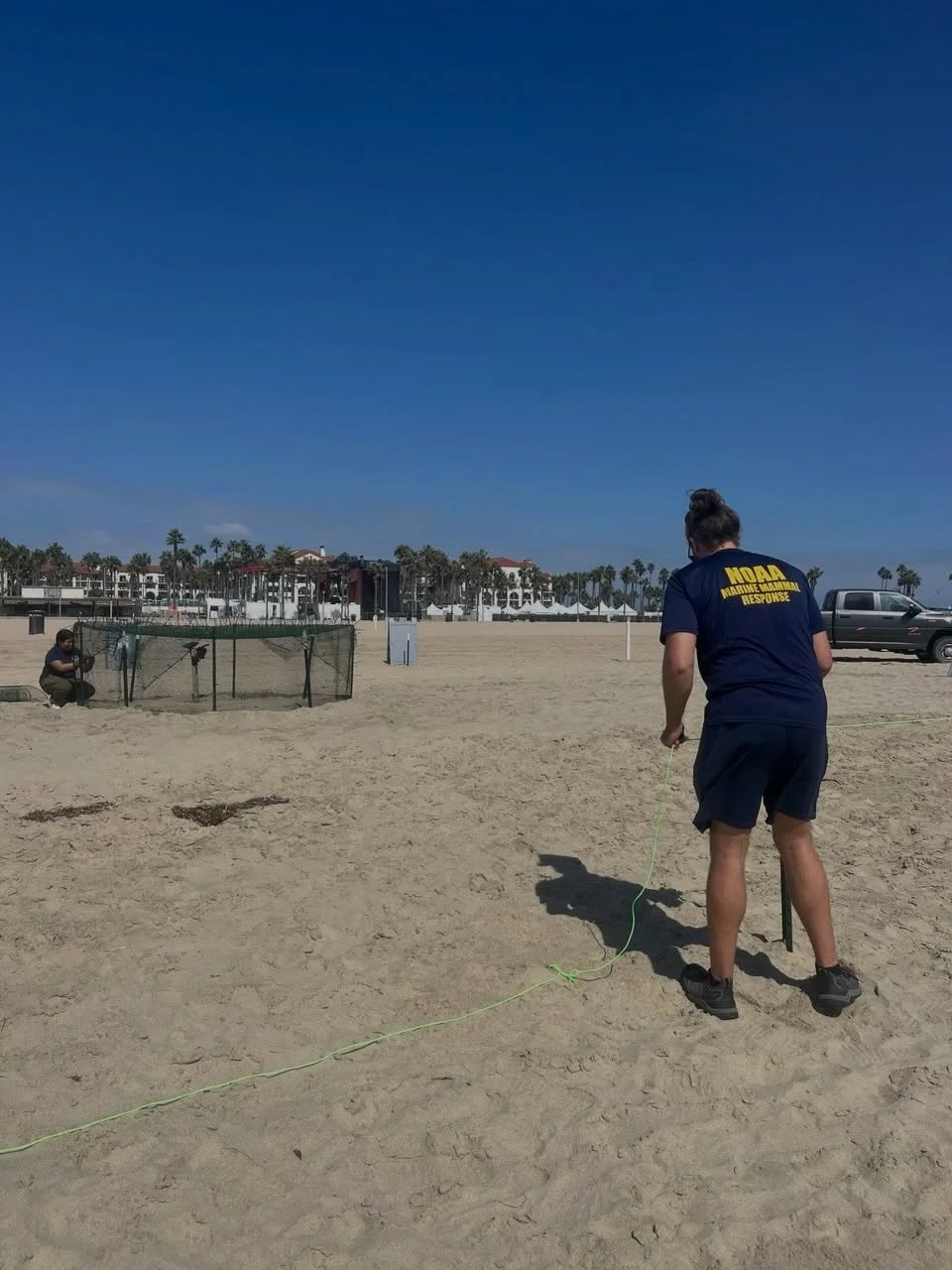
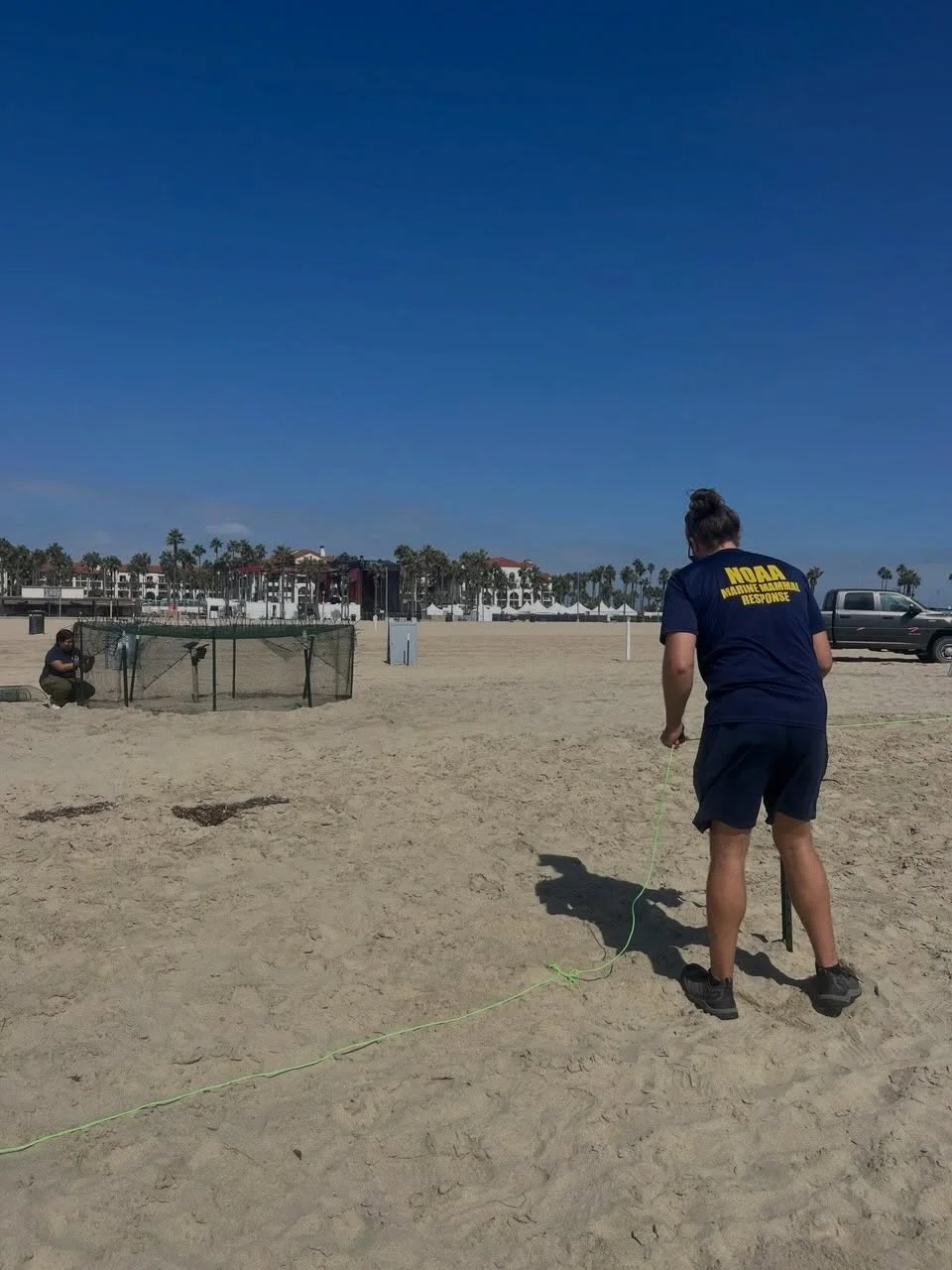
Officials with NOAA prepare a barrier to protect the eggs of an olive ridley sea turtle. Photo by NOAA Fisheries.
Why a protected nesting area matters
A fenced area helps keep people away from a nest while allowing teams to observe the site. For visitors, the best response is simple: respect the boundary, follow the posted directions, and do not try to get a closer look. Avoid walking over the nesting area, moving barriers, or handling eggs or hatchlings. Even well-intentioned attention can interfere with the care and monitoring of a nest.
At a busy beach, that restraint may take coordination. Visitors can keep their distance, alert nearby people to the posted signs without entering the protected space, and leave any questions or concerns to the teams responsible for the site. If a turtle or hatchlings are visible, give them space rather than surrounding them or using a camera flash. The source specifically urges beachgoers not to disturb the sites; a calm, hands-off approach is the most useful contribution visitors can make.
These measures also help keep observations meaningful. When a nesting site remains undisturbed, monitoring teams can assess it without added interference from foot traffic or curious onlookers. The report does not describe any nest relocation or other intervention, so there is no basis to assume that either site will be managed in a particular way beyond the stated protection and monitoring.
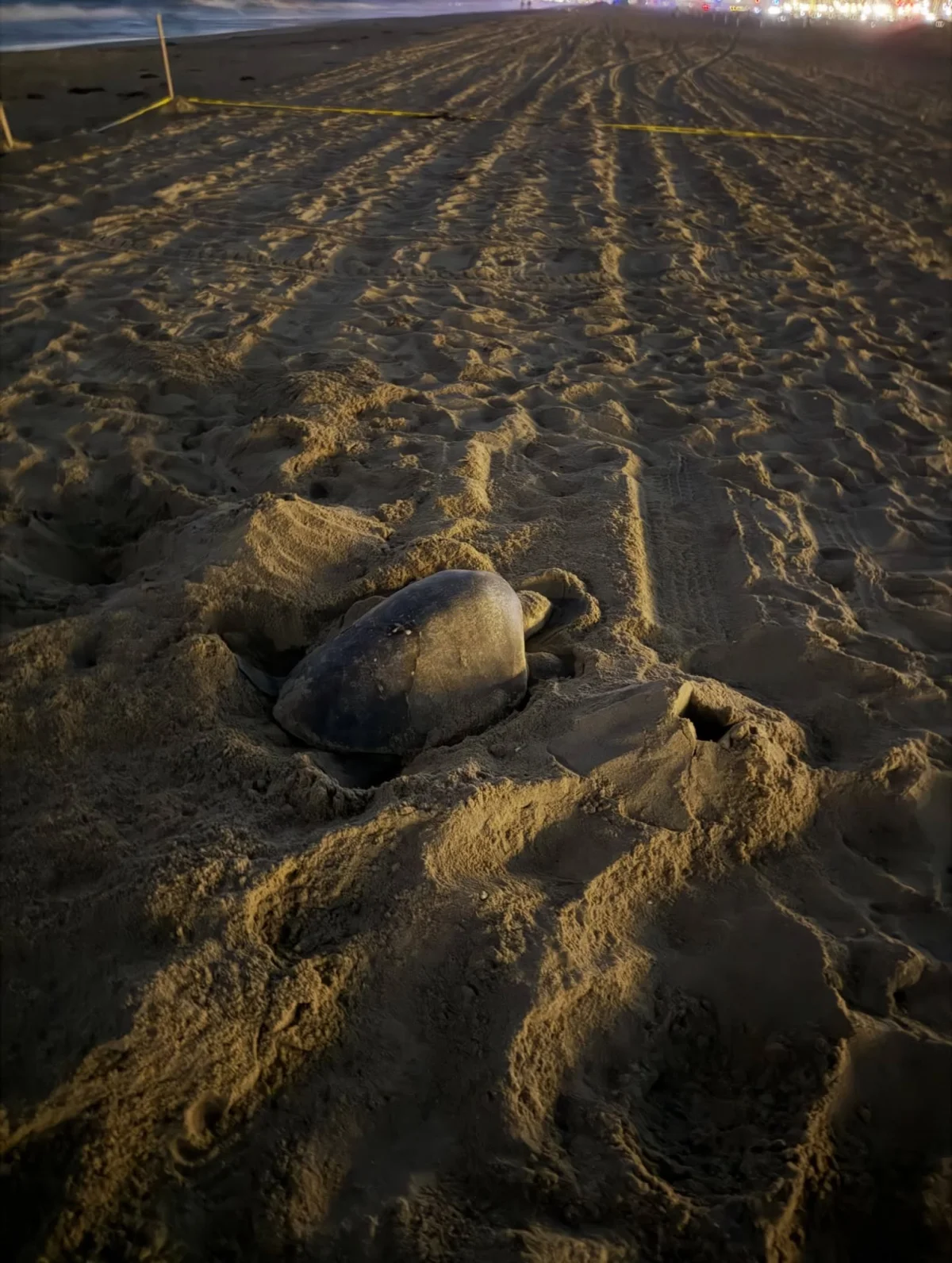
Nesting olive ridley sea turtle near the Huntington Beach Pier. Credit: Huntington Beach Fire Department.
A rare event in a warmer coastal setting
Southern California is not without sea turtles. A resident population of green sea turtles (Chelonia mydas) lives in the San Gabriel River, which lies between Orange and Los Angeles counties. The report describes it as the eastern Pacific’s northernmost green sea turtle population. But the presence of those resident turtles is different from a nesting event on a local beach, and it does not establish why the two turtles came ashore.
The source also points to unusually warm coastal water, with temperatures reaching 80 degrees Fahrenheit on some days during a strong El Niño pattern. It raises a reasonable question about what conditions hatchlings might face if the water cools substantially before they enter the sea. That question remains open: the article offers no forecast for water temperatures at hatching, no outcome for either nest, and no evidence that warmer water caused the nesting.
Incubation is a period of waiting, and the next meaningful information will be whether the nests hatch and what becomes of any young turtles. Until then, the most reliable and humane guidance is also the least complicated: let trained monitors do their work, obey the fencing and signs, and keep the nesting areas quiet and clear.
Sea Turtles Die From Plastic Ingestion More Than Sea Birds And Marine Mammals


