Sample No. 0111
Why Bison Travel in Herds and What to Do When They Cross a Road
Bison herds move to find food and seasonal range, with calves keeping close. If they cross your route, stay in your vehicle and wait.
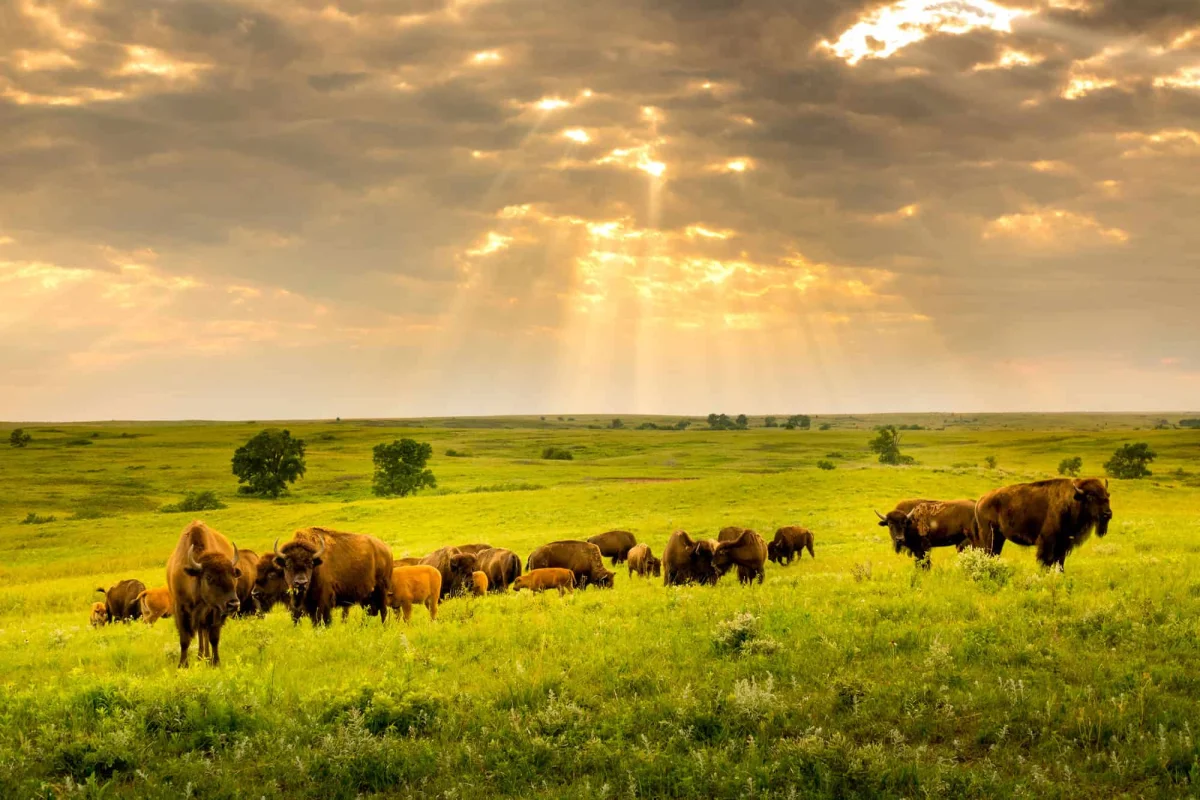
A herd crossing a road can make a vehicle feel very small. In the video below, bison stream down a hillside and onto the pavement, with reddish-brown calves moving among the adults. The drivers wait while the animals pass. That patience matters: bison are powerful, quick on their feet and difficult to predict at close range.
Why a herd might cross the road
The video doesn’t identify where it was filmed, so the reason for this particular crossing is unknown. But roads can cut through the places bison use as they move between grazing areas, water and seasonal range. Pavement doesn’t necessarily stop a herd already traveling toward suitable habitat.
Yellowstone National Park provides a well-studied example of these movements. Bison there respond to forage and winter snowpack, sometimes moving to lower elevations as snow deepens. The National Park Service says they may travel as much as 70 miles between seasonal ranges. Because they graze across that range and move back and forth, some individuals may cover roughly 1,000 miles in a year.
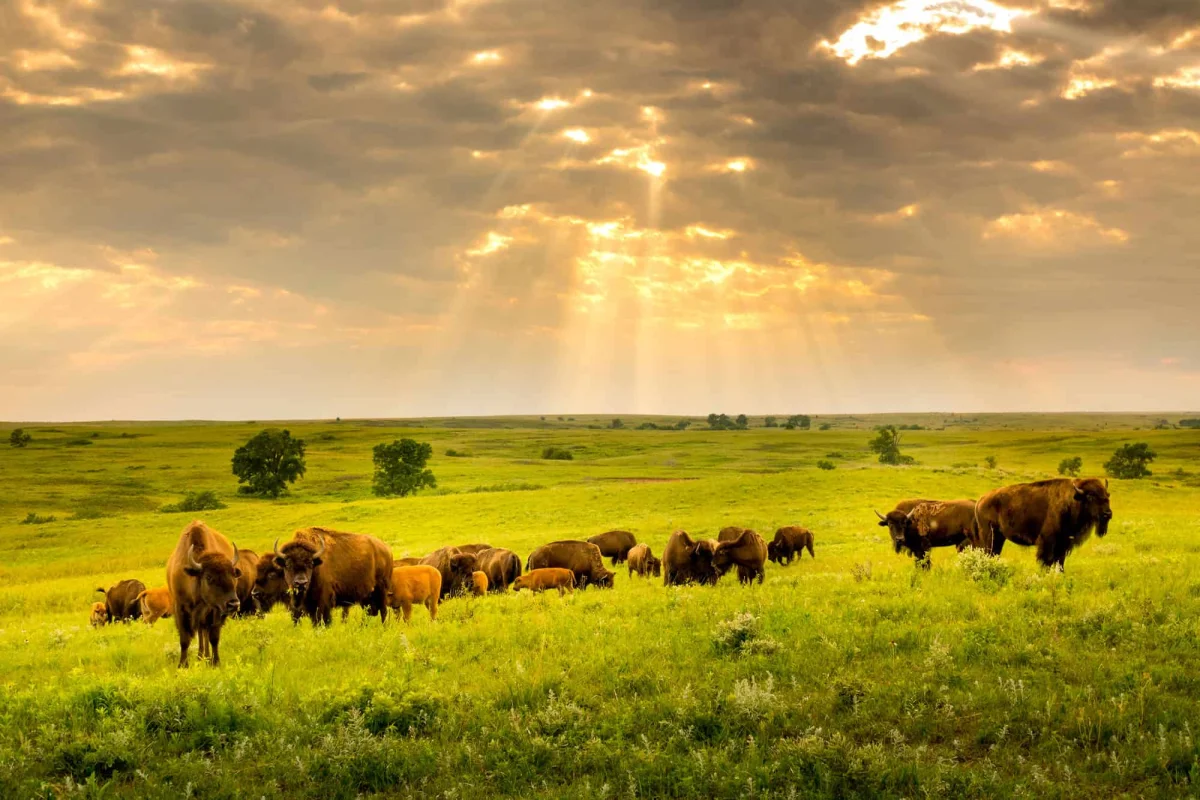
Bison travel in search of suitable grazing habitat and seasonal range.
©Ricardo Reitmeyer/Shutterstock.com
Following a herd’s movement can help explain why a crossing happens, but it doesn’t make it safe to approach. When bison occupy a road, drivers should give them room and wait for the animals to leave on their own.
Calves keep pace early in life
The smaller, rusty-colored bison in the footage are calves. Newborns weigh about 30 to 70 pounds and have reddish-brown coats that darken as they grow. Most are born in spring, after a pregnancy lasting roughly nine to nine and a half months.
Young calves need to keep up with their mothers and the herd. National Park Service biologists report that a calf can stand and nurse within about 30 minutes of birth and travel with the herd within two to three hours. That early mobility helps it stay close to adult protection while the group moves. Wolves and grizzly bears may prey on young bison.
Cows and calves commonly stay together in groups. Mature bulls are more often alone or with other males outside the breeding season. During the summer rut, bulls return to groups that include females and compete for mating opportunities. Herds therefore aren’t simply a uniform crowd: age, sex and season all shape how bison associate.
A herd today reflects a narrow escape
The sight of many bison together can seem timeless, yet their numbers fell dramatically in the 1800s. National Park Service estimates put the historic population at roughly 30 million to 60 million animals before the collapse. Commercial hunting, the hide trade, habitat changes, competition with livestock, disease and deliberate destruction of herds all contributed to the decline. By the 1890s, fewer than 1,000 bison remained.
Conservation programs, private herds, tribal efforts and protected populations helped the species recover from that point. A large herd moving across the landscape is a reminder of both the animal’s social life and how close bison came to disappearing from much of their former range.
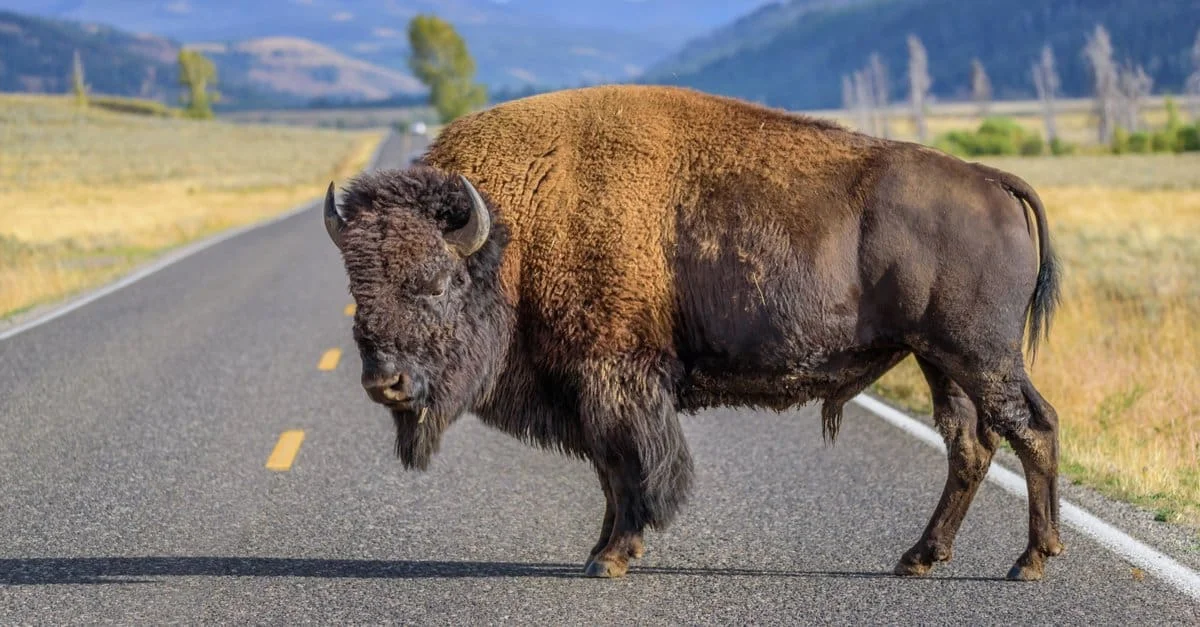
Although often called buffalo in North America, these animals are bison.
©iStock.com/IngerEriksen
Give crossing bison time and space
Bison may look unhurried while grazing, but they can run about 35 mph and move with surprising agility. Trying to drive between animals, honking to hurry them along or stepping out for a photograph can put people at risk. A vehicle also shouldn’t be treated as a reason to crowd or pressure a herd.
Yellowstone National Park advises visitors to stay at least 25 yards from bison and remain inside their vehicles when animals block a roadway. Slow down, leave space and wait for the herd to move on. If you’re on foot, keep the recommended distance and don’t approach for a closer look. The practical takeaway is simple: let the bison choose when the crossing is over.


