Sample No. 0108
Why a Still Nile Crocodile Can Still Be Dangerous Near Canoes
A basking crocodile’s calm appearance doesn’t mean it’s unaware or safe to approach. Learn why it rests ashore and how paddlers can give it space.
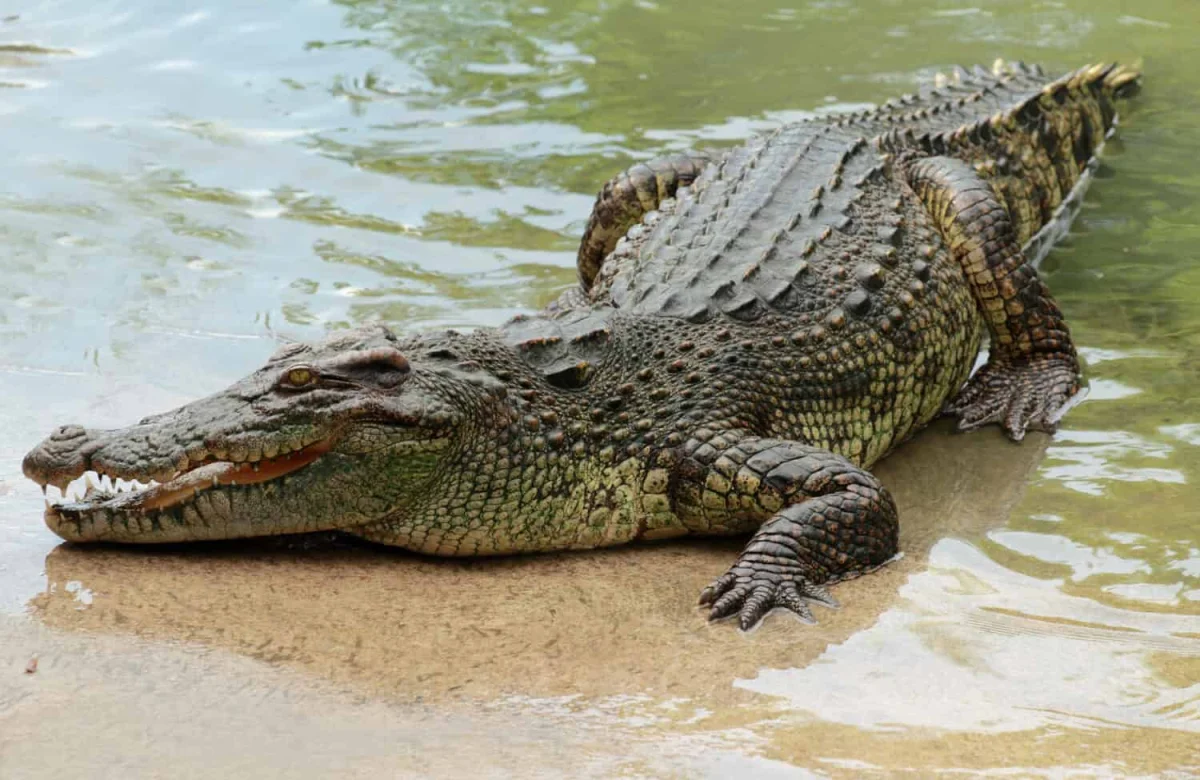
A crocodile that barely moves as canoes pass may look unconcerned, but stillness is no measure of safety. In footage shared by the YouTube channel Snakes in Zimbabwe, several paddlers pass a large crocodile resting along a riverbank in Zimbabwe. The reptile shows no visible response. That quiet moment offers a useful lesson in wildlife viewing: people can observe an animal without disturbing it, but should never mistake an apparently calm crocodile for a harmless one.
What the footage shows—and what it can’t tell us
The canoeists slow as they see the crocodile, then continue past without touching or provoking it. The animal remains motionless, with no visible lunge or pursuit. That’s what the clip captures; it doesn’t establish the crocodile’s exact size, age, awareness, or temperament. Nor can a brief video show how it might respond in different circumstances.
That distinction matters around a predator adapted to wait without drawing attention. A crocodile may remain still while resting, warming itself, or simply conserving energy. Its lack of an obvious reaction to these boats doesn’t mean it was asleep, unable to move, or comfortable with close approach. The safest interpretation is modest: during this particular encounter, the animal did not visibly react.
A riverbank is part of a crocodile’s habitat
Zimbabwe is home to the Nile crocodile (Crocodylus niloticus), a species found across much of sub-Saharan Africa. It lives in rivers, lakes, reservoirs, and wetlands, moving between water and land. A crocodile stretched out at the water’s edge isn’t necessarily out of place or in distress; the bank can be an important resting spot.
Large Nile crocodiles can exceed 16 feet, though many are smaller. Their muscular tails help propel them through water, and their jaws and ambush-hunting strategy make them effective predators. Depending on their size and the prey available, they eat fish, birds, reptiles, and mammals. The footage doesn’t provide enough information to estimate this individual’s size or identify what it may have been doing before the canoes arrived.
Basking helps regulate body temperature
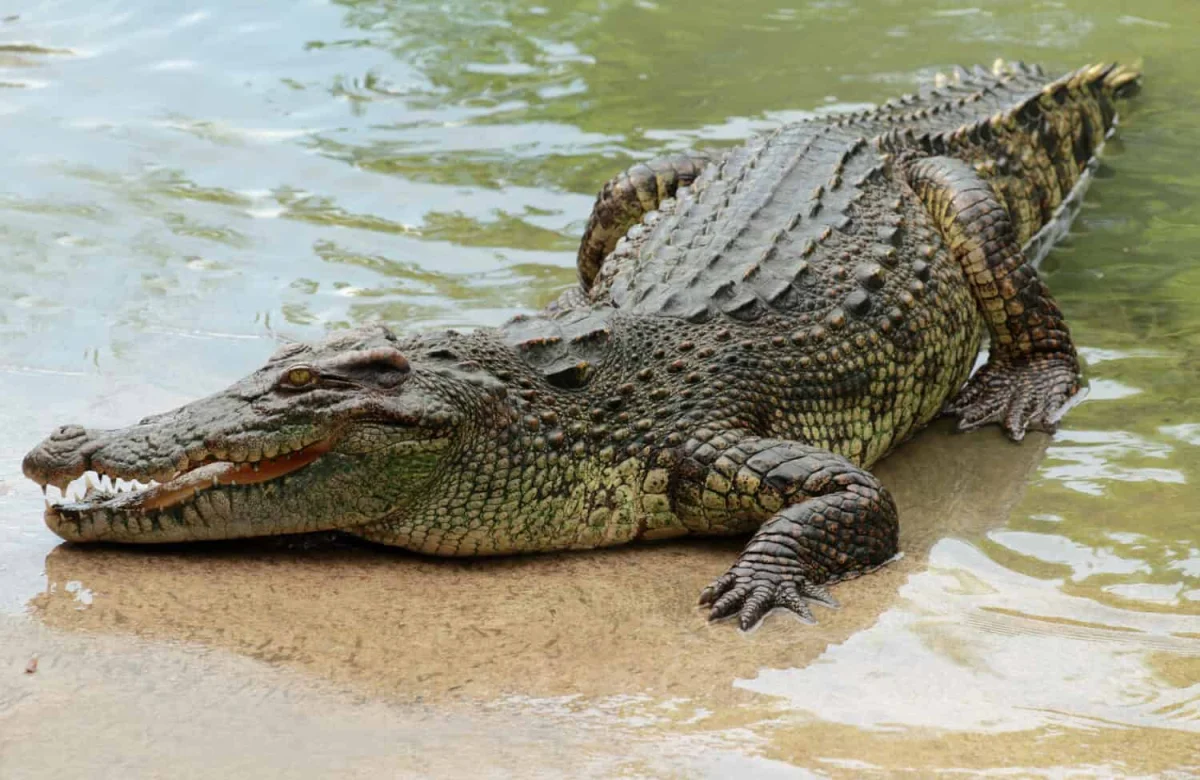
Nile crocodiles bask in the sun to help regulate their body temperature. Photo: Naypong Studio/Shutterstock.com.
©Naypong Studio/Shutterstock.com
Crocodiles are ectothermic: they rely on heat from their surroundings to help regulate body temperature. Sunlight can warm them, while shade or water can offer a cooler place to rest. Temperature affects bodily functions such as movement and digestion, so basking is part of normal daily life, not simply idling in the sun. Other reptiles, including turtles, also bask as a way of managing their body temperature (learn more about turtle basking).
A basking crocodile may appear remarkably relaxed because stillness is ordinary for the species. It can also help a hunter avoid attracting attention. A person watching from a boat, though, can’t reliably tell whether a crocodile is resting, alert, or ready to move. Don’t use stillness as a reason to close the distance.
Territorial behavior depends on context
Nile crocodiles can defend areas, particularly when breeding opportunities or valuable habitat are involved. Large males may guard parts of a shoreline or waterway against rivals, and females may defend nests and young. But crocodile behavior isn’t as simple as treating every nearby animal as an intruder. Individuals may tolerate one another at favorable basking sites, depending on the conditions.
Research on Nile crocodile territoriality describes behavior that can vary with factors such as sex, season, habitat, and access to resources. The canoe footage doesn’t show a clear territorial display, and the animal’s stillness alone can’t reveal its motivation. It’s a reminder to avoid reading a single visible behavior as a complete account of an animal’s state.
Give crocodiles room, even when they seem calm
For paddlers, the practical response is simple: keep a generous distance from crocodiles on shore or in the water, and don’t approach for a closer photograph. Keep hands and feet inside the canoe rather than trailing them over the side. Never feed or provoke wildlife; trying to draw a reaction can put people at risk and disrupt the animal’s behavior.
People exploring waterways where crocodiles may be present should follow experienced local guides’ instructions. Avoid swimming or entering the water unless a responsible local source has specifically established that the area is safe. Conditions and wildlife presence can vary, so a calm-looking stretch of river shouldn’t be assumed to be free of risk.
The striking part of this encounter is not a chase or confrontation. It’s the contrast between the paddlers’ close passage and the crocodile’s apparent stillness. The better takeaway isn’t that the animal was unbothered, but that a quiet sighting can remain just that when people observe from a distance and leave wildlife undisturbed.


