Sample No. 0107
Brown Bear Encounter Shows Why Mountain Bikers Need a Plan on Forest Trails
A bear briefly ran behind a cyclist in Slovakia. The encounter shows why speed alone is no substitute for awareness and local safety guidance.
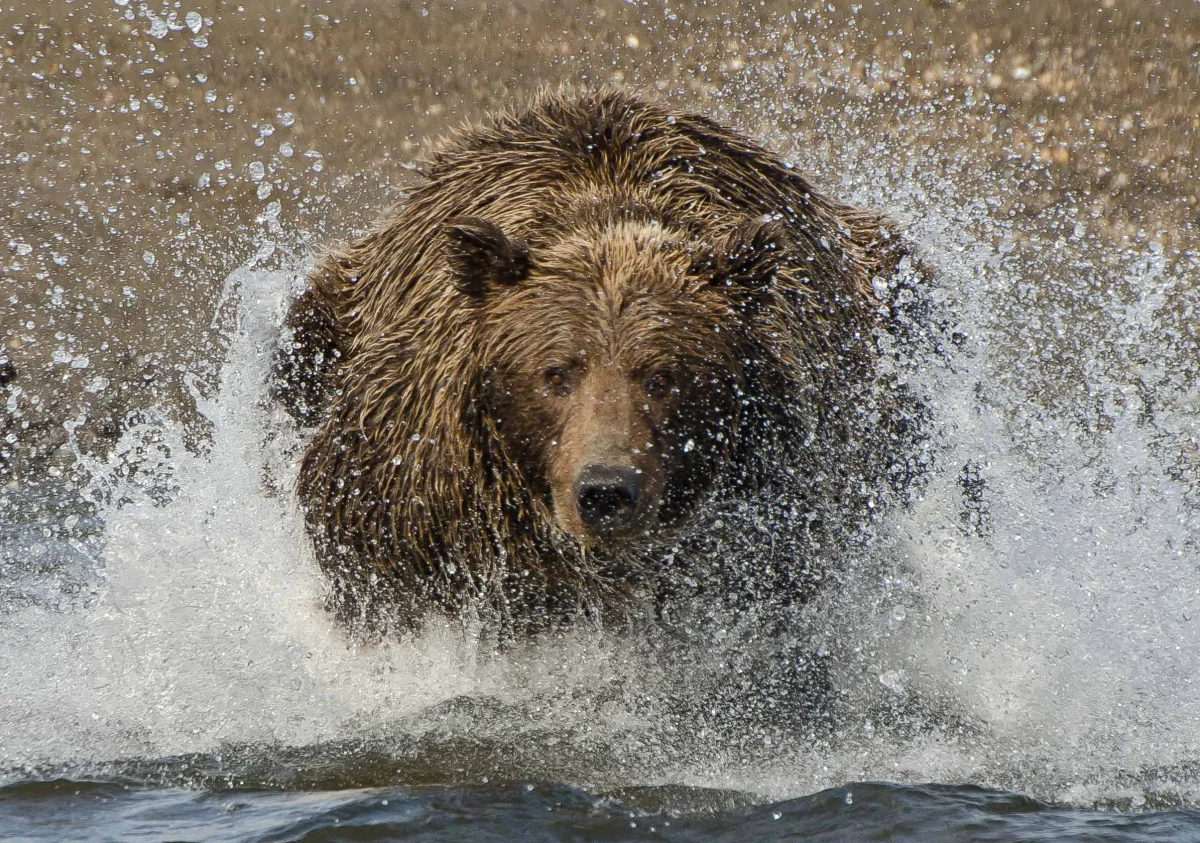
A mountain bike can reach high speeds on a downhill course, but that doesn’t make racing a brown bear a safe way to escape. A video filmed in Slovakia captures a bear running behind a cyclist for a few seconds before turning back into the woods. The riders left without injuries, yet the brief encounter illustrates how quickly a quiet ride through forest can become unpredictable.
The footage shows two cyclists descending a wooded trail. A bear suddenly comes out of the trees on the lead rider’s right and runs in the same direction. The second rider shouts a warning while filming. The lead cyclist picks up speed, and the bear soon veers off and disappears. The riders slow down and regroup.
The recording shows what happened for a few seconds; it can’t establish why the bear ran. It might have been startled, trying to get away, responding defensively, or briefly following the cyclist’s movement. There’s no clear view of what happened before the animal appeared, and no evidence in the footage that it was hunting the rider. That uncertainty doesn’t make a close encounter harmless. It means the animal’s intent can’t be confidently read from the video.
A sudden encounter on a familiar trail
Vinžík filmed the incident at Malinô Brdo bike park, near Ružomberok, Slovakia. Information provided to the footage licensor places it on May 7, 2017, the park’s first day open for its new season. He was following another cyclist when the bear entered the course from the right.
Brown bears, Ursus arctos, are native to Slovakia. The brief footage doesn’t reveal this bear’s age, sex, size, or condition. It does show the challenge riders face when speed and limited sightlines bring people and wildlife together with little time to react. A rider can come around a bend or pass dense cover before a bear has a chance to move away.
Slovakia’s Brown Bear Intervention Team describes sudden close encounters as situations in which defensive behavior, including a rush, can occur. A rush may end before contact, but a person in the moment can’t count on that outcome. In this incident, the bear left on its own. That was a fortunate end to an encounter whose cause the video can’t settle.
Speed is only one part of the equation
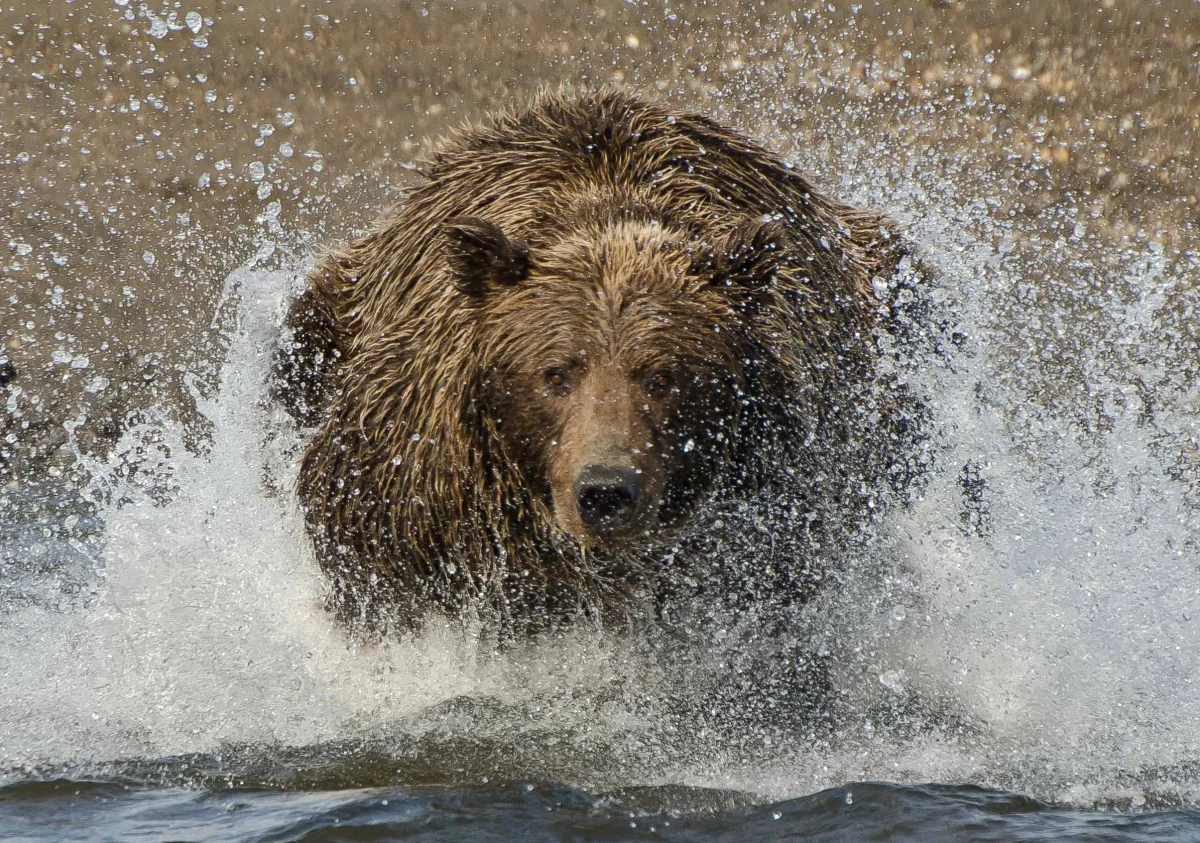
Brown bears can run powerfully and accelerate quickly, including on uneven ground.
©David Rasmus/Shutterstock.com
The National Park Service says brown bears can reach about 35 miles per hour over short distances. Elite downhill cyclists, meanwhile, may reach approximately 80 kilometers per hour, or about 50 miles per hour, on fast sections of competition courses, according to the Union Cycliste Internationale. That comparison may invite the question of whether a bike can outrun a bear. It doesn’t provide a useful answer for a rider caught off guard on an ordinary trail.
The racing figure describes elite riders on prepared courses, not the speed of the cyclists in this video. Conditions on a recreational trail can be very different. A bike’s speed depends on the surface, slope, visibility, rider skill, and room to turn or brake. A fallen branch, tight corner, or mechanical problem can quickly remove any advantage.
A bear can also move through vegetation and across terrain that a cyclist can’t safely cross at speed. The rider in the video had a downhill path and room to accelerate, while the bear ultimately left the trail. The footage doesn’t show that the cyclist would have stayed ahead if the animal had continued. Treating the event as proof that bikes can outrun bears would put too much weight on a few seconds of video.
Build awareness into a ride
Bikes can move quietly and cover ground quickly, making blind corners and dense cover especially important places to stay alert. Riders can scan ahead, avoid headphones that block surrounding sounds, and ride with others where possible. In areas with poor visibility, making noise can give wildlife more notice that people are approaching. These habits help reduce surprise, though they can’t prevent every encounter.
If a bear appears and isn’t pursuing, don’t turn the moment into a race. Keep calm, avoid sudden movements, speak steadily, and slowly create distance while leaving the animal an escape route. Guidance for cyclists may recommend getting off the bike and keeping it between the rider and the bear. Advice varies with local conditions and species, so check the guidance for the area before setting out.
In bear habitat, Slovakia’s Brown Bear Intervention Team recommends carrying bear spray and learning its use before an emergency. Where local guidance recommends it and carrying it is permitted, keep it accessible rather than packed under other gear. Riders should check current local instructions and know where to find the spray quickly.
A downhill bike may move faster than a bear on a suitable stretch of trail, but speed is a poor safety plan when the terrain, distance, and animal’s behavior are unknown. Awareness, room to react, and preparation give riders more useful options when wildlife appears. The clearest lesson from this encounter is simple: leave bears space, and don’t count on a race to resolve a surprise.
Read more about the bear and cyclist encounter | A-Z Animals


