Sample No. 0106
Why a Zebra Escaped by Cutting Through a Pride of Lions
A zebra slips through a cluster of lions by changing direction at close range. The escape shows why a hunt can fail even when predators get near.
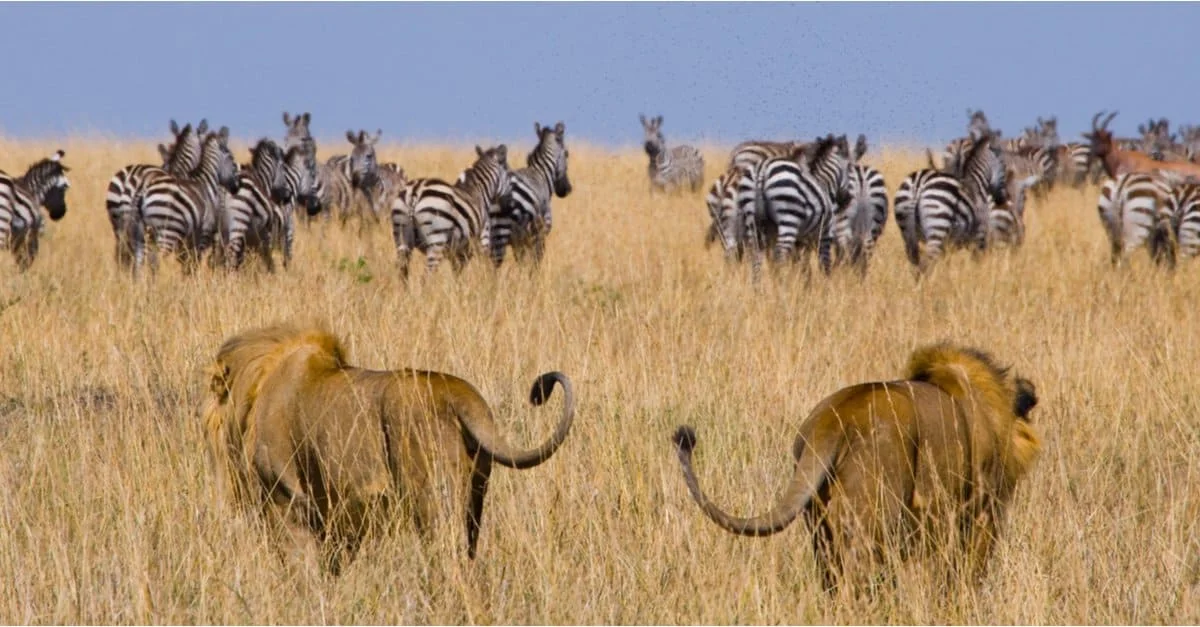
A narrow escape, not a simple footrace
The remarkable part of this zebra’s escape isn’t just its speed. It runs straight through a cluster of lions, adjusting its path as they turn and lunge, then makes it beyond the pride without being brought down. The clip captures a split-second contest in which the zebra needs one opening, while the lions need to secure a hold. They don’t.
That distinction matters. A predator’s proximity doesn’t guarantee a successful hunt, and a prey animal doesn’t have to outrun every pursuer over a long distance if it can break free from the immediate attack. Here, quick changes of direction appear to help the zebra avoid giving any single lion a clear, sustained approach. Once it clears the group, it has room to keep moving.
What the footage shows—and leaves unknown
In the visible sequence, the zebra approaches from the left and passes between several lions rather than turning away from them. The cats pivot, swipe, or lunge as it goes by. The zebra stays on its feet and continues past the cluster; none appears to hold it for more than a moment.
The post doesn’t identify where or when the clip was recorded, which animals are shown, or what happened outside the frame. The lions may have been pursuing the zebra already. Terrain, or other pride members beyond the camera’s view, may have shaped its route. Without that information, the safest reading is the simplest one: the zebra escaped the attack shown, but the footage can’t establish the full story.
Running into a group may seem like an odd choice from a human viewpoint. For an animal reacting under pressure, though, the usable gap may be the most promising route in that instant. A wide turn could leave a predictable path for a lion close behind. The zebra’s route was dangerous, but it appears to have found a way through before the lions could coordinate a secure attack.
Why top speed doesn’t settle the contest
A study published in Nature analyzed thousands of high-speed runs by lions, zebras, cheetahs, and impalas in Botswana. Within the predator–prey pairings studied, the predators showed greater speed, acceleration, and deceleration capacity than their prey. Those findings complicate the popular idea that zebras can simply rely on a higher top speed to escape lions.
But measured athletic ability is only part of a hunt. Lions typically rely on stealth and a short, explosive attack, rather than chasing prey indefinitely. Their speed and acceleration matter only if they can turn them into contact and control. A zebra that detects danger early may gain distance, tire a pursuer, or reach ground that disrupts the chase. In this clip, the zebra is already close to the lions, so its first task is to survive the initial rush—not win a long straight race.
After it gets beyond the cluster, the challenge changes. The lions have to accelerate, orient themselves, and close the gap again. That takes effort, and a failed first attempt can make a continued pursuit less promising. Lions can catch zebras, but no hunt is guaranteed; a growing gap can make giving up the chase the better use of energy.
Turns create choices for prey—and split-second problems for predators
The same Nature study found that prey may have more options for changing direction at lower speeds. At a full sprint, turning choices become narrower, which can let a predator anticipate the route and use its acceleration or braking ability to stay close. A prey animal that adjusts its pace to cut sharply may make its path harder to predict and force a pursuer to overrun the turn.
The zebra’s movement in the clip fits that principle: it angles between lions, shifts course as they converge, and doesn’t settle into a straight run until it has passed the closest danger. Each lion has only a brief moment to judge where the zebra will be next. When one cat misses, its movement can also complicate the approach of another. The pride’s numbers don’t automatically make the space easier to navigate.
Speed remains part of the escape. The zebra needs enough power and balance to keep moving while changing direction at close range. But the outcome depends on timing and route as well as raw pace. A speed figure by itself can’t predict what happens when animals meet at a particular angle, on particular ground, with almost no time to react.
Cooperative hunting is not a perfectly scripted play
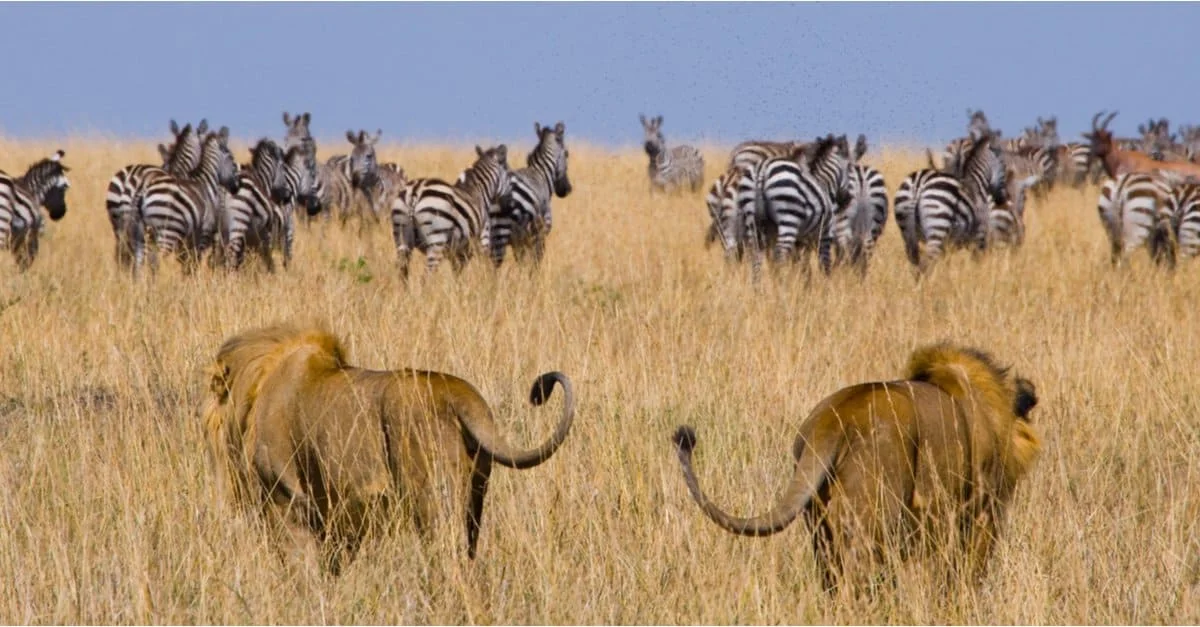
Lions usually rely on stealth and a short attack rather than an extended chase.
©GUDKOV ANDREY/Shutterstock.com
Female lions do most of the hunting in many prides, although males hunt too. The Smithsonian’s National Zoo describes lions as cooperative hunters whose pride members often split into smaller subgroups. Some may approach from different directions, while others can help move prey toward a waiting lion.
That cooperation shouldn’t be mistaken for a rehearsed routine that always works. Individuals may take different roles, and more hunters don’t improve every hunt equally. Zebras are large and alert, and their kicks can injure a lion. To bring one down, a predator has to get close, gain a secure hold, and manage the risk from its hooves. In this clip, the lions reach striking distance but don’t gain enough control to finish the attack.
A flexible diet, and plenty of failed attempts
Lions are carnivores and feed primarily on other animals. In Africa, their prey often includes medium- and large-sized hoofed mammals. Depending on what lives nearby, that can mean zebras, wildebeest, buffalo, warthogs, or impala.
Lions also eat smaller animals, scavenge carcasses, and take kills from other carnivores when the opportunity arises. Their varied food sources matter because hunts fail, and the chances of success shift with prey, cover, weather, pride composition, and the distance between hunter and target at the start. The pride in this clip gets close, but closeness isn’t enough. For the zebra, a fleeting opening was all it needed.


