Sample No. 0053
Seven Cat Breeds and Types With Roots in Thailand
From blue-eyed Siamese to rare copper-coated Suphalak, these cats reflect Thailand’s rich feline history and a range of distinctive appearances.
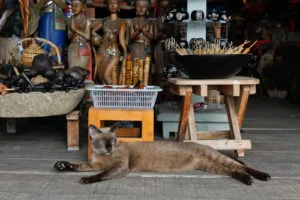
Thailand’s cat heritage includes familiar pedigreed breeds, older regional types and cats whose histories are tied to traditional descriptions of local animals. Their differences are more than coat color: the seven cats and types below range from the sleek, pointed Siamese to the rounder Thai, while some have clearer modern breed recognition than others.
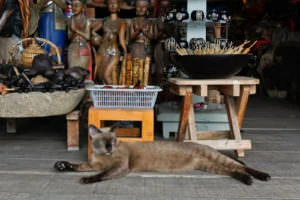
For prospective owners, those distinctions matter. A name can describe a recognized breed, a recently standardized type or a rare cat with limited recognition. Appearance and history can help identify what makes each one distinctive, but they don’t tell you everything about an individual cat’s needs or personality. Meeting the cat and learning about its care are still essential.
Thailand’s best-known pointed cats
Siamese
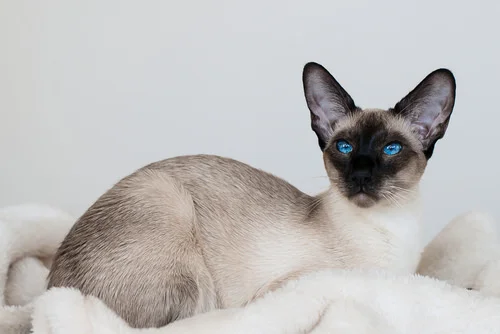
The Siamese takes its name from Siam, the former name of Thailand, and is often described as the original Oriental cat. Its familiar appearance includes a pointed coat and blue eyes. The source notes that early Siamese cats in Thailand were often solid-colored, while breeders later purposefully developed the recessive point pattern.
The breed is also associated with an elongated body and a vocal nature. Those traits make the Siamese easy to distinguish in general terms, but individual cats vary. Anyone considering one should focus on the temperament and daily needs of the cat in front of them, rather than assuming every member of the breed behaves alike.
Thai, or Wichian Mat
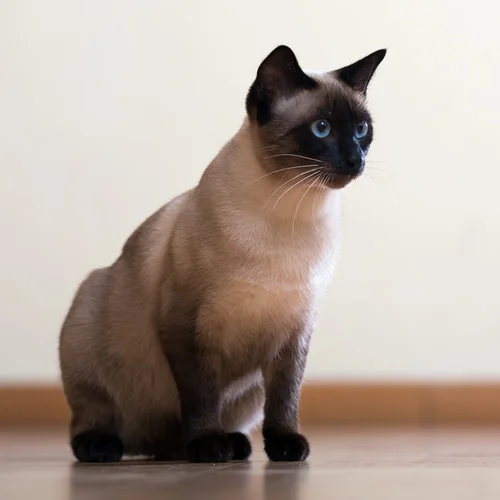
The Thai, also called the Wichian Mat or Thai domestic shorthair, represents a more traditional-looking type related to the Siamese. It comes from landrace cats in Thailand and has existed for centuries, although classification as a breed is comparatively recent. Its pointed coat recalls the Siamese, while its head is rounder than the elongated shape associated with Oriental breeds.
This difference is useful when comparing the Thai with modern Siamese lines: the two are connected, but they aren’t simply interchangeable names for the same look. A cat’s build and head shape can help describe its type, while a breeder or rescue can offer more information about its background.
Blue coats, green eyes and traditional associations
Korat
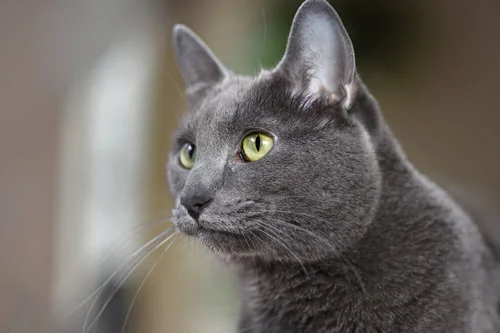
The Korat is known for a solid blue-silver coat and green eyes. It appears in the Thai book of cat poems, Tamra Maew, which Martin R. Clutterbuck’s scholarly translation dates to between 1350 and 1767 AD. The breed has also traditionally been given to newlyweds as a good-luck gift.
That custom is part of the Korat’s cultural history, not a guide to how a cat will act in a home. Its distinctive coloring may draw attention, but responsible care starts with the same practical questions that apply to any cat: whether the household can meet the animal’s needs and provide a stable, attentive home.
Suphalak
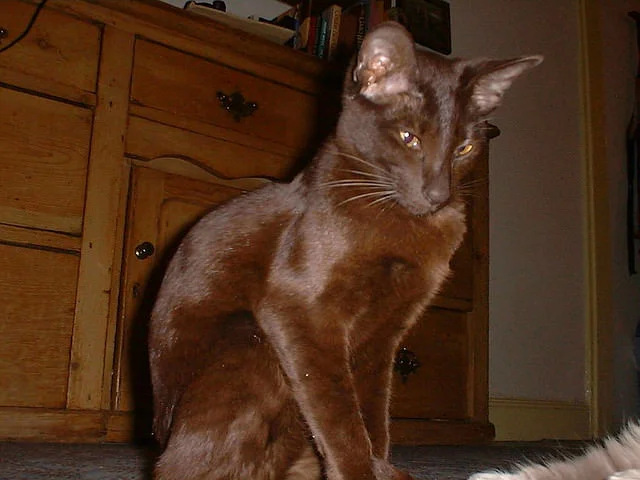
The Suphalak is described as a naturally occurring, very rare Thai cat, prized for a solid coat ranging from copper to mahogany brown. A poem in Tamra Maew describes a “Thong Daeng,” or copper cat, according to Martin R. Clutterbuck’s translation of the manuscript. Enthusiasts have tried to restore the Suphalak’s popularity, but with little success.
Its coloring can resemble the sable Burmese, yet the two should not be confused. The Suphalak’s rarity and limited breed recognition also make careful identification important: a brown coat alone doesn’t establish that a cat belongs to this type. The breed’s appearance is among the subjects discussed in this overview of rare cat coat colors.
White coats and a varied palette
Khao Manee
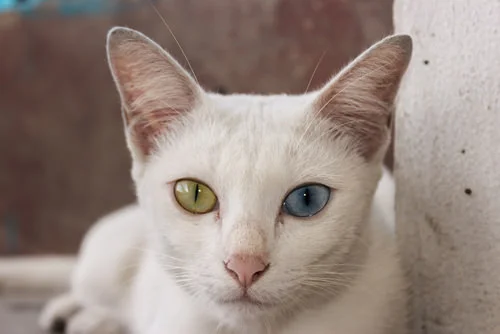
The Khao Manee, sometimes called the diamond-eyed cat, has a centuries-old history and ties to the Thai royal court. Its defining appearance is a solid white coat paired with eyes that may be blue, gold or different colors from one another. The last feature, known as heterochromia, is common enough to be closely associated with the breed, but it isn’t present in every Khao Manee.
The source lists TICA recognition in 2009. That kind of registry detail helps distinguish the breed’s modern status from its much older history. For a potential owner, the striking eyes are only one part of the picture; a cat’s individual health, social behavior and care requirements deserve equal attention.
Oriental Shorthair
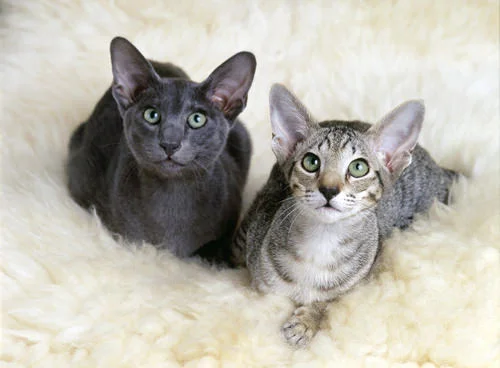
Developed in Thailand and the United States, the Oriental Shorthair is closely related to the Siamese. It shares a Siamese-style body but comes in many coat colors rather than the pointed pattern. Green eyes are typical, according to the source. This combination shows how a shared body type can appear with a very different coat.
Burmese roots across borders
Burmese
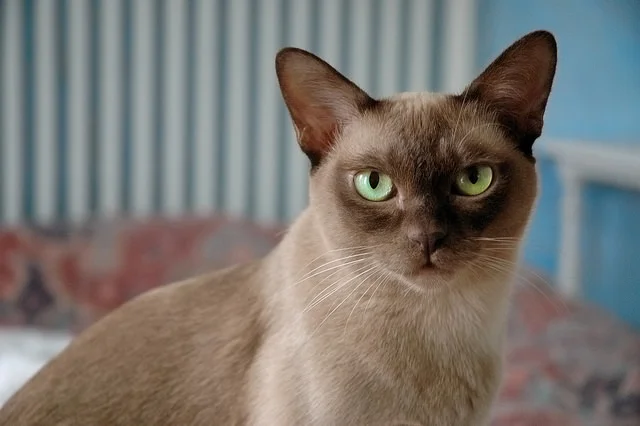
The Burmese has connections to both Burma and Thailand, although most modern cats in the breed descend from an import brought to the United States from Burma in the 1930s. A record of cats resembling the present-day breed appeared earlier, in Harrison Weir’s 1871 book Our Cats and All About Them.
Described as muscular, with a rounded head and sable or other solid coats, the Burmese is sometimes called “a brick wrapped in silk.” The phrase captures the contrast between a substantial build and a smooth-looking coat; it shouldn’t be taken as a substitute for evaluating an individual cat’s character or care needs.
Heritage is a starting point, not a care plan
These seven cats connect modern breed names and appearances with Thailand’s older feline traditions. Some, such as the Siamese, Korat and Burmese, have established recognition in major registries; the Thai was standardized more recently, while the Suphalak remains rare and is not widely registered. The Khao Manee and Oriental Shorthair add further examples of how varied the region’s cat heritage is.
When choosing a cat, use breed history to guide questions, not to make assumptions. Ask about the individual animal’s background, routine and observed behavior, and make sure your home can support its needs. A cat’s distinctive coat or ancestry may start the conversation; attentive, consistent care is what supports its welfare over time.


