Sample No. 0043
Cat-Friendly Air Fresheners: Safer Choices and Signs of Irritation
Choose fragrance-free odor absorbers or use sprays cautiously: ventilation, ingredient checks, and watching your cat’s response all matter.
Managing household odors matters, but a pleasant scent isn’t worth making a cat uncomfortable. Cats can be sensitive to airborne fragrances and residues, and some ingredients in scented products can be hazardous. A practical starting point is to remove the odor source, improve ventilation, and choose fragrance-free odor absorbers where they meet the need.
For an occasional fabric odor, a manual pump spray keeps the product out of the air more than an aerosol does, though it still needs careful use. Keep your cat away while applying any spray and until the treated area is dry and the room has aired out. Labels and marketing claims can help you compare products, but “pet friendly” does not mean a specific fragrance blend has independent veterinary certification.
What to know before choosing a product
Cats groom their coats and paws, so material that settles on fur or surfaces may later be swallowed. They also experience strong scents differently from people. Products containing phenols or certain essential oils deserve particular caution. Tea tree, eucalyptus, cinnamon, citrus, and pine oils are among those identified as hazardous to cats by animal poison resources. Cats have limited ability to process some compounds, which can increase concern about exposure.
“Natural” is not a safety guarantee. Essential oils are concentrated plant extracts, and a product’s plant origin does not make it appropriate to diffuse or spray around a cat. Avoid adding oils to homemade air fresheners unless your veterinarian has advised you on the specific product and use. When ingredients are not clearly disclosed, choosing an unscented option is a sensible way to reduce uncertainty.
Odor absorbers such as activated charcoal or baking soda can help manage smells without adding fragrance. Keep them in a container or location your cat can’t reach, especially if your cat is prone to chewing or tipping objects. These products are not a substitute for cleaning soiled surfaces, maintaining the litter area, or addressing a persistent odor source.
Products described in the source
The products below differ in how they’re applied and where they’re intended to be used. The source’s price information was checked on May 22, 2026, but retailer prices can change. Its assessment was evidence-reviewed rather than based on hands-on testing. Product descriptions and safety statements attributed to a company should be understood as that company’s claims.
| Product | Format and intended use | Points to consider |
|---|---|---|
| One Fur All Pet House Spray | Manual pump spray for general pet odors; offered in several scents. | The brand describes it as non-toxic and odor-neutralizing. The source found no independent veterinary certification. |
| Febreze Pet Odor Eliminator | Manual pump spray for fabrics and upholstery. | The maker attributes odor removal to OdorClear Technology. Avoid leather, suede, silk, and fabrics that may water spot; no independent certification was found in the source. |
| Febreze Heavy Duty Spray | Aerosol intended for strong household odors. | Because it disperses a fine spray, keep cats out of the room while applying it and until the space has aired out. |
| Febreze Small Spaces | Passive scent release for small enclosed areas, with a stated duration of up to 45 days. | Keep the unit out of your cat’s reach. Continuous fragrance may not suit a scent-sensitive cat. |
| Activated charcoal or baking soda | Fragrance-free passive odor absorption. | A practical option for people seeking to avoid added scent. Store securely so a cat can’t eat or scatter it. |
Sprays and fabric treatments
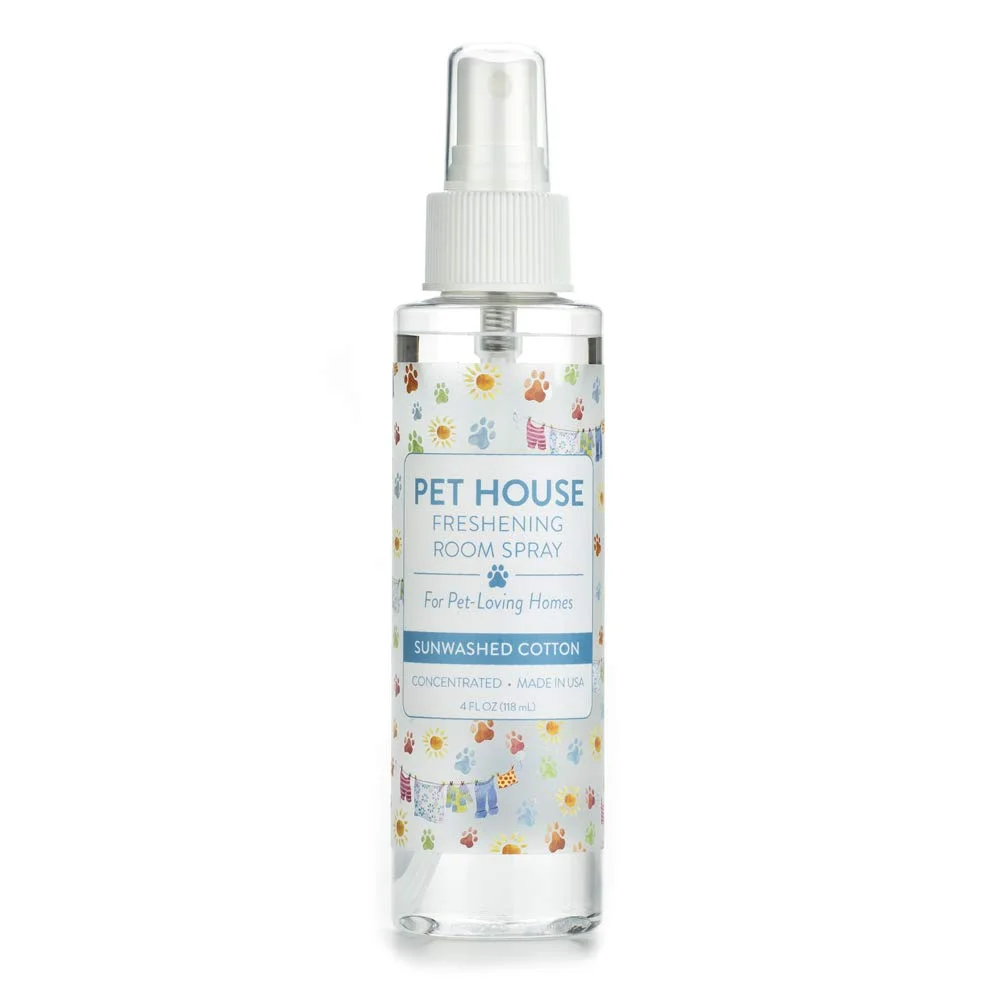
One Fur All’s Pet House spray is a non-aerosol pump product that the brand says neutralizes pet odors. The source describes Sunwashed Cotton, Fresh Citrus, and Evergreen Forest as scent options with the same base formula. Since the fragrance differs, a cat’s response may differ too. If you choose a scented product, start with a small amount in a well-ventilated room and observe your cat’s behavior before using it more widely.

Other listed scent links include Fresh Citrus and Evergreen Forest. A scent’s name alone doesn’t show what is in its fragrance blend, so check the current label and contact the maker if you need ingredient details.
The Febreze Pet Odor Eliminator is described as a pump spray for washable or hard-to-wash fabrics, including upholstery, carpets, clothing, and window treatments. The maker says its OdorClear Technology removes odors and leaves a light scent. The source reports that independent veterinary testing of this specific claim was not publicly available. Follow the label for fabric use, avoid materials the label excludes, and keep your cat away while the fabric is damp.
The Heavy Duty product is an aerosol, which puts more product into the surrounding air during application. If you use it, remove your cat from the room first, follow the label, and ventilate the space. Wait until the spray has settled and the room is aired out before letting your cat back in. A pump spray or odor absorber may be a better fit for homes where a cat is especially sensitive to scents.
Febreze Small Spaces is a passive, plug-free scent product intended for enclosed areas such as closets and bathrooms. The source says it releases fragrance continuously for up to 45 days. Keep it where a cat cannot touch, chew, or knock it over. Continuous release also means there’s no simple pause after each use; if your cat seems bothered, remove the product and air out the space.
Using scented products with care
The source says Febreze markets some pet odor products as suitable for use around pets when used as directed, and that the manufacturer describes OdorClear Technology as removing rather than masking odors. Those are company statements. The source did not find a published independent toxicology assessment of the specific fragrance blends in the pet line or third-party cat-safety certification for the products discussed. That leaves room for individual sensitivity even when a product is used according to its label.
Fragrance can also come from other household products, including scented litter. If your cat sneezes, paws at their face, has watery eyes, coughs, develops skin irritation, or avoids a treated room, stop using the product and move the cat to fresh air. Ventilate the space and contact your veterinarian for advice if signs continue or seem concerning. Vomiting, marked tiredness, breathing difficulty, or other sudden, severe symptoms call for prompt veterinary attention. If you think your cat has licked or swallowed a product, contact a veterinarian or animal poison service promptly and keep the packaging nearby.
Choosing a better fit for your home
Check the full ingredient information when available, and be wary of phenols and essential oils identified as hazardous to cats. Prefer fragrance-free or lightly scented choices, and consider a passive odor absorber if your cat reacts to sprays. “Vet approved” language or a safety badge can be useful only when the source and scope of the review are clear; don’t assume that a general pet-friendly label is the same as a cat-specific assessment.
For any spray, apply the smallest amount that meets the need, keep your cat elsewhere, and ventilate. Avoid spraying near food and water bowls, bedding, scratching posts, litter, or places your cat regularly rests. Don’t spray a cat directly or use a room product on the cat’s coat. Test fabric products on a small, hidden section first and follow the label’s surface restrictions.
At the litter area, clean the box and surrounding surfaces regularly and provide ventilation. Scented products placed nearby may mask an odor without addressing its source, and a strong fragrance in a small space can be difficult for a cat to avoid. If an odor persists despite routine cleaning, consider whether a surface needs deeper cleaning or whether a health concern could be changing your cat’s elimination habits; a veterinarian can help assess a change in behavior.
Common questions from cat owners
Are ordinary air fresheners harmful to cats?
Some products contain ingredients or fragrances that can irritate cats or pose a toxicity risk, depending on the substance and exposure. The ingredient list, application method, room ventilation, and your cat’s response all matter. Don’t assume that a product is suitable just because it is sold for household use.
Can essential oils provide a natural scent?
Many essential oils are unsuitable around cats, including tea tree, eucalyptus, and citrus oils. Avoid diffusing or spraying them unless your veterinarian has assessed the specific product and situation. “Natural” does not establish that a scent is safe for cats.
Will odor absorbers work?
Activated charcoal and baking soda absorb odors without adding fragrance, so they can be useful when scented products bother a cat. Keep them inaccessible and continue cleaning the source of the smell. An absorber may help with lingering odor, but it won’t replace care of the litter box or soiled materials.
Can I use a spray near the litter box?
Use extra care in a small or poorly ventilated area. Don’t apply spray to litter, the box, or nearby surfaces your cat may lick. Fragrance-free odor absorption and good airflow are alternatives to adding scent around a place the cat visits frequently. See this guide on cats and apartment living for related air-quality considerations.
Are plug-in products or scented devices a good choice?
A continuous fragrance source may be hard to avoid, especially in a compact room. Keep any product out of reach and discontinue it if your cat shows signs of irritation or starts avoiding the area. Fragrance-free options offer a simpler choice for scent-sensitive cats.
Can I make a homemade air freshener?
Baking soda can be used as a fragrance-free odor absorber if it is secured where the cat can’t reach it. Avoid adding essential oils or other scented ingredients based on assumptions about natural safety. Ask your veterinarian before introducing a new substance into your cat’s environment.
Could a product affect other pets?
Pets differ in how they respond to airborne products. Cats, dogs, and birds don’t share identical sensitivities, and birds can be especially vulnerable to airborne irritants. If several species live in the home, ask a veterinarian familiar with those animals before using a scented product.
A practical takeaway
Start with cleaning, airflow, and fragrance-free odor absorption. If you decide to use a scented product, read its label, keep your cat away during application, ventilate the room, and watch for changes in breathing, eyes, skin, or behavior. A product that smells pleasant to people may not be comfortable for a cat, so your cat’s response should guide what stays in the home.
For other cat-care topics, see the guides to dental water additives and cat puzzle toys.


