Sample No. 0030
Cat Weight Management: Max’s Senior Years Show Why Gradual Care Matters
Max lost weight with veterinary guidance, measured meals and regular check-ins, helping ease the challenges of weight management alongside kidney disease.
For a cat, a kilogram can make a major difference. Max’s experience shows why weight management deserves individual veterinary guidance, especially when an older cat also has health conditions that shape what and how much they can eat.
Canada’s Pet Wellness Report, developed by the Canadian Veterinary Medical Association with Hill’s Pet Nutrition, estimates that 50 to 60% of pets in Canada are overweight or obese. Extra weight can contribute to chronic health problems and may shorten a pet’s life. Max’s story offers a closer look at the daily care behind a weight loss plan: balancing nutrition, tracking progress and keeping comfort in view.
Cathy Ren adopted Max in 2017, when he was eight years old and already overweight. As he aged, excess weight added to the strain of chronic kidney disease and osteoarthritis. His veterinarian, Dr. Shannon Gowland, referred Cathy and Max to the Weight Management Clinic at the Ontario Veterinary College (OVC) Hill’s Pet Nutrition Weight Care Program. Launched in 2025, the program offers veterinary support for pets working toward a healthy weight.
Why small changes in weight can matter
At Max’s first clinic visit, he weighed 6.09 kilograms, more than one kilogram above his ideal weight. That difference may sound modest, but on a small cat it can affect mobility and comfort. In Max’s case, excess weight was contributing to pain from osteoarthritis.
The clinic also assessed Max’s Body Condition Score (BCS), a measure of body fat estimated by looking at and feeling the cat’s body. His score was 8 out of 9; a score of 5 out of 9 is considered healthy for most pets. The assessment gave the team another way to understand his condition alongside the number on the scale.
A target weight is only one part of a useful plan. Cats differ in size, age and health, and a plan needs to take those factors into account. For Max, reducing weight had to be gradual and carefully managed because his kidney disease created nutritional needs that could conflict with weight loss.
Balancing weight loss with other health needs
“What made Max’s case particularly challenging is that weight loss and kidney disease can have competing nutritional priorities,” said Dr. Laura Teeger, a veterinarian and Veterinary Nutrition Resident at the OVC Hill’s Weight Care Clinic. The team needed to help Max lose excess weight without putting his kidney function at risk or reducing lean muscle, a concern for an older cat.
His plan combined dry and wet therapeutic weight management food. The wet food was included to support hydration and offer more food volume. The clinic tailored the approach to Max’s needs, and he gradually reached his goal weight without compromising his renal system.
This kind of case is a reminder that owners should consult a veterinarian before making substantial changes to a cat’s food, particularly when the cat has a chronic condition or is senior. A plan designed for one cat may not fit another. A veterinarian can help set an appropriate goal and decide how to monitor progress while protecting the animal’s broader health.
Routine made progress sustainable
Cathy measured Max’s portions, kept a close eye on treats, and attended regular weigh-ins and veterinary follow-ups through the OVC program. She also continued his leash walks. Because she has two cats, she had to manage a familiar household challenge: keeping Max from eating the other cat’s meals.
Steady routines helped Max reach his goal in April 2026, when his BCS was 6 out of 9. Cathy saw the result in terms of his comfort in old age, not just his weight. “It makes me happy to think I might have made his last few years a bit more comfortable,” she said. “I just want him to be as comfortable as he can be, for as long as he can be.”
For households with more than one pet, feeding cats separately or keeping meals supervised may help owners follow each animal’s portion plan. Consistent weigh-ins and follow-up appointments also give the veterinary team a chance to review progress and adjust the approach when needed. Max’s routine depended on his own circumstances, so owners can ask their veterinarian which practical steps suit their cat.
Signs to discuss with a veterinarian
A cat’s shape, movement and everyday habits can offer clues that weight may be affecting comfort. The following signs warrant a conversation with a veterinarian, who can assess the cat’s health and body condition:
- A waistline that is no longer easy to see
- Shortness of breath
- Difficulty grooming hard-to-reach areas
- Irritability or changes in personality
- Slower movement
These signs do not establish a cause on their own. A veterinarian can help determine whether weight is a factor and whether another health concern needs attention.

Portions and treats matter because even a small extra serving can add up for a small animal. The source compares one ounce of cheese for a cat, in calorie terms, with a person eating three and a half hamburgers. The comparison is a reminder to measure treats thoughtfully and include them when considering a cat’s daily food. Owners can ask their veterinarian about suitable portions and treat choices for their pet.
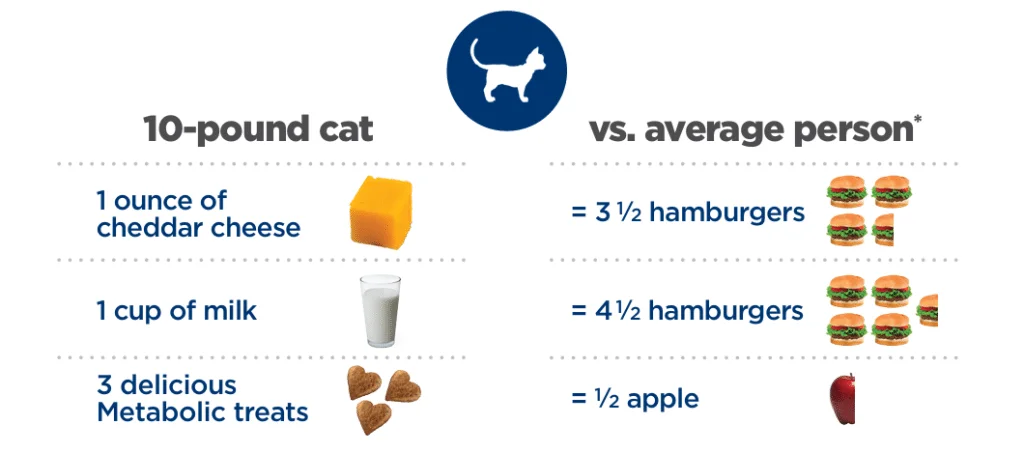
*based on a human 2,000 kcal/day diet
Hill’s Pet Nutrition offers online tools, including the L.O.V.E. Weight Test. Owners concerned about a cat’s weight can also speak with their veterinarian about assessment, monitoring and nutritional options. Max’s progress came through a plan shaped around his health, followed with patience and regular care.


