Sample No. 0246
Who Still Holds the Scalpel in General Practice?
Surgery is sliding from a core general practice skill to an optional specialty. Here's what that shift costs clients, new grads and the profession.
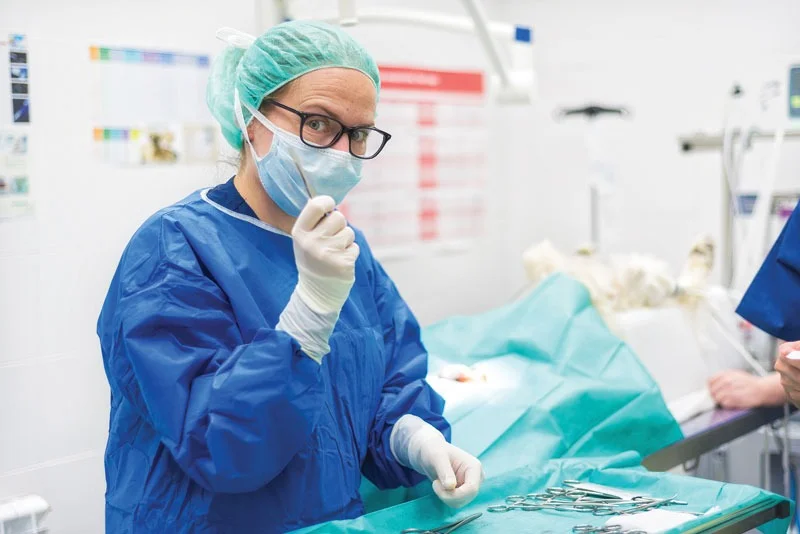
Ask a prospective employer about surgical comfort today and you'll rarely get a real answer, because most practices already know cutting is optional. A veterinarian can build a solid career around wellness, dentistry, internal medicine, urgent care or telemedicine without ever doing a routine soft-tissue procedure. That's reasonable for the individual. Collectively, though, it changes what a general practitioner is.
The training gap starts in school
Surgery exposes the weak spots in how we teach. Knowing the steps of a spay is very different from having done enough of them to stay calm when a pedicle slips. Most graduates leave with little independent surgical experience, yet the profession still expects them to be competent in core procedures on day one.
The economics explain part of the problem. Surgical teaching needs case volume or cadavers, anesthesia, instruments, consumables, facilities, technicians and a lot of faculty time. Nearly every efficiency incentive points away from that model. Schools aren't careless here. Hands-on surgery is just expensive to deliver well.
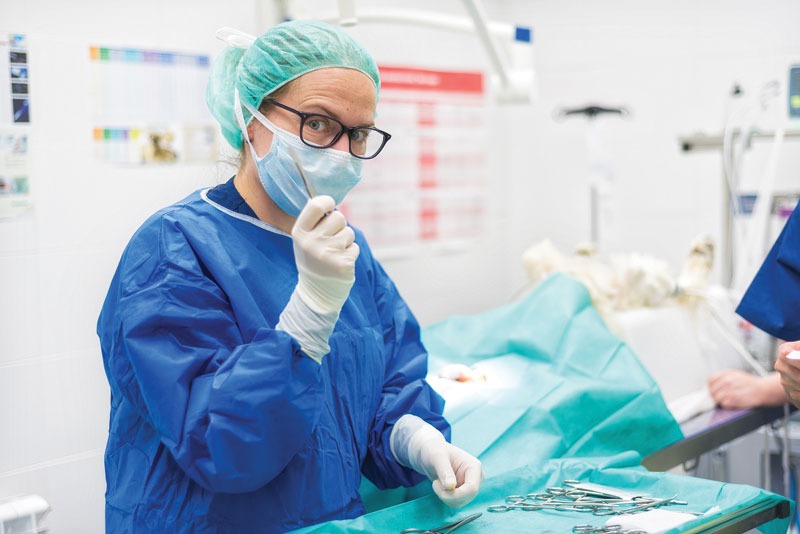
Mentorship is getting squeezed
School teaches you how not to kill a patient. Real operating skill comes after licensure, and it depends on a senior vet who will scrub in, watch, advise, step in when needed and then step back. That's the mentorship model, and short-staffed hospitals have very little room for it. When every doctor's production is tracked, sitting beside a new associate through a two-hour procedure starts to look like a luxury even owners struggle to justify.
Early career paths make this worse. A new grad who lands in a high-volume vaccine and wellness clinic may get some guidance, but rarely the kind that builds surgical hands. By the time that vet reaches a standard practice, years later, the gap can feel overwhelming. Fear is a predictable result.
Referral changed what "normal" looks like
The profession has built remarkable surgical expertise, and that's a good thing. But availability changes behavior. Practitioners who started decades ago often had no boarded surgeon nearby, so they learned unfamiliar procedures with the textbook open beside the instrument tray. Today a surgeon is often an hour away, and "I don't do those" has quietly become an accepted answer. Referral is a sound option, but it's also an easy off-ramp from skill acquisition.
Liability gets blamed too easily
Litigation, board complaints and demanding clients are real pressures, and they deserve weight. Still, liability is often invoked as a reason to avoid procedures a general practitioner is trained to perform. A specialist may do a given operation to a higher standard, but that doesn't mean every abdominal surgery belongs in a specialty facility. Offering a referral option is not the same as being in the clear, and treating it that way lets the skill set erode.
Surgery's uncertainty is the real test
Surgery stands apart because mistakes are immediate, visible and almost always traced back to us. That's frightening. But we also prescribe potent drugs, manage unstable diabetic patients and anesthetize geriatric animals, and those carry their own serious risks. The fear is understandable. It just shouldn't be the only thing steering decisions.
Medicine always allows another diagnostic, another day of watching a response, or a phone call to an internist. Surgery doesn't. At some point you pick up the scalpel and commit to the first cut. That makes surgery unusually dependent on professional confidence under uncertainty, a trait the profession has become less practiced at building. Confidence grows with repetition, which means getting comfortable being uncomfortable.
I've seen that cycle play out. A late-night bloat case stalled when an ER colleague hesitated to operate, and the moment called for less testing and more action. Uncertainty tends to feed a loop: fear leads to avoidance, avoidance leads to fewer cases, fewer cases lead to less competence, and that brings more fear and worse outcomes. Clients who can't afford specialty care end up with nothing.
The healthier sequence looks different: supervised exposure, growing competence, confidence, then harder cases. We expect that progression in every other part of practice. There's no good reason surgery should be the exception.
What gets lost when we opt out
"I don't do surgery" shouldn't function as a scheduling preference. When a practice reorganizes itself around one doctor's comfort zone instead of developing its veterinarians, the change feels small each time and becomes hard to reverse. The losses add up.
Income. A surgery is never just the procedure. It brings diagnostics, medications, rechecks and use of the surgical suite, along with the goodwill clients attach to it. Practices that can't offer it also lose resilience.
Affordability. When routine surgery disappears from general practice, a $1,500 procedure can become a $5,000 one. Specialists then absorb cases that never needed specialty skills.
Continuity. Someone has to judge the incision on Monday, decide whether the swelling is expected and talk to the client when recovery goes off script. Splitting that responsibility across providers makes care harder to follow.
Professional identity. Being a general practitioner has always meant wearing many hats: dermatologist, dentist, surgeon, internist, grief counselor. Surgery is part of that range.
Insight. Working with tissue up close builds an understanding of anatomy and disease that informs everything else a vet does.
Credibility. When one doctor becomes "the surgery person" and everyone else is a medical clinician, clients get confused, and the generalist identity suffers.
What we gain, and the question we should ask
This isn't all loss. Clinicians can focus on what they do best, patients may get technically strong surgery from the doctors who enjoy it, and referring out can lower complication rates. Nobody should be pushed into procedures they aren't yet competent to perform, and well-run specialization can improve workflow.
So the question isn't whether every veterinarian must operate. It's which surgical skills define a competent small animal general practitioner. That's harder to answer, and I suspect the list will keep shrinking, especially if non-surgical sterilization methods mature. Whatever happens there, the profession needs to decide deliberately which skills stay in the core, rather than letting surgery drift into an optional interest.