Sample No. 0237
Electrosurgery in Veterinary Practice: Choosing the Right Tool for Hemostasis
Monopolar, bipolar and vessel-sealing devices each have different strengths. Safe use depends on matching the tool to the tissue and following device guidance.
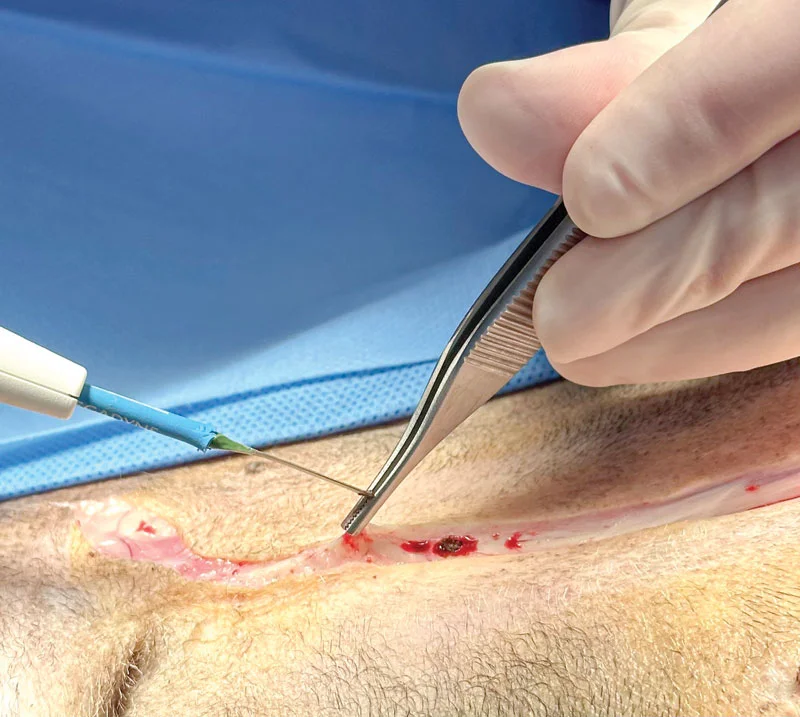
Electrosurgery can help veterinary surgeons control bleeding, improve visibility and work efficiently, but the results depend on choosing the right device and using it within its limits. Research in veterinary and human medicine has found less blood loss with electrosurgical tissue incisions than with traditional scalpel incisions; other studies have reported shorter procedures. These benefits make electrosurgery useful in the operating room, while careful technique remains essential.
How electrosurgery works
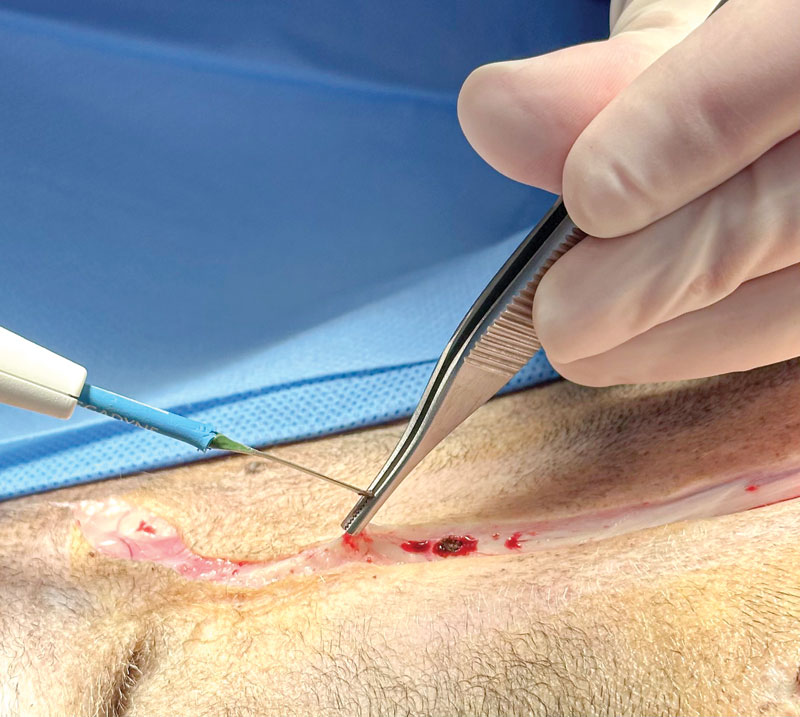
An electrosurgical generator sends an electrical waveform through an active electrode to tissue. The waveform and delivery method determine whether the effect is cutting, coagulation or vessel sealing.
This differs from electrocautery. An electrocautery instrument is heated by electricity and then applied to tissue; current does not pass through the patient. Electrosurgery applies current directly to tissue. Its two main circuit types are monopolar and bipolar, with vessel-sealing devices representing a more specialized form of bipolar electrosurgery.
Monopolar: versatile, with setup requirements
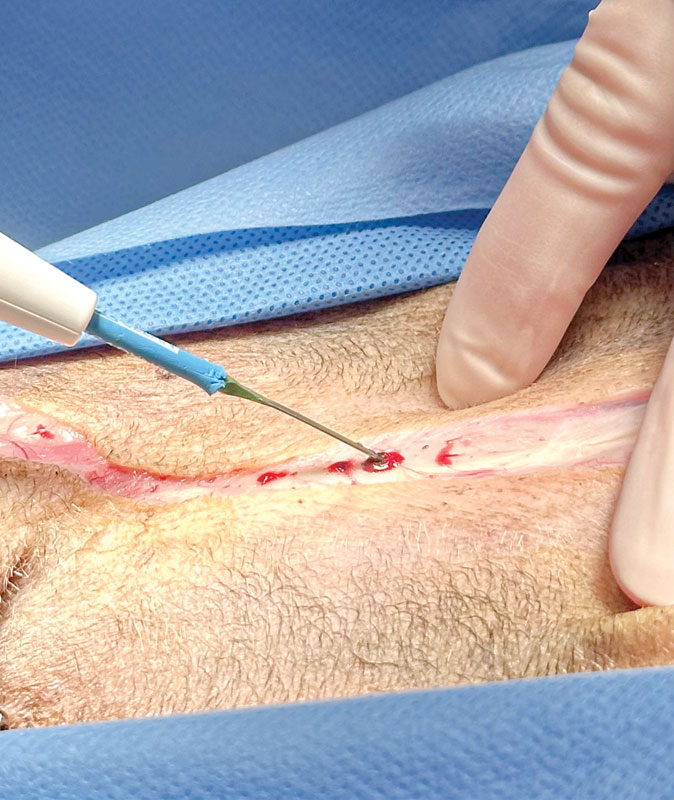
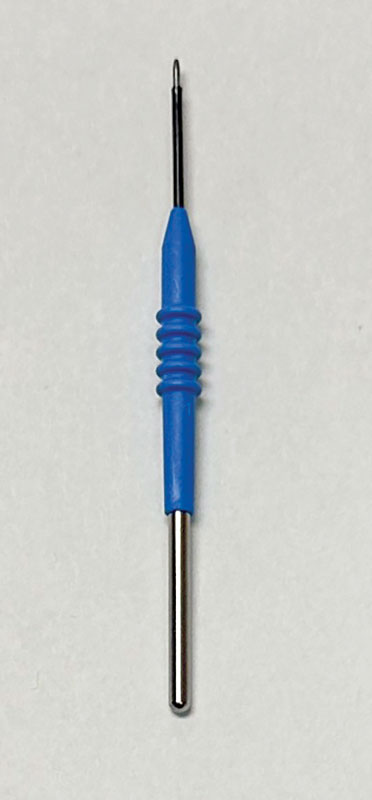
Monopolar systems use a handpiece with an active electrode at its tip and a dispersive pad on the patient. Current travels from the tip through the patient’s tissue to the pad, then returns to the generator. This approach is common in veterinary practice and generally offers both cutting and coagulation modes.
In cutting mode, a continuous waveform vaporizes tissue as the electrode moves through it. Coagulation uses interrupted bursts of energy to heat tissue and denature proteins, helping achieve hemostasis. The surgeon can apply coagulation directly or pass energy through a metal instrument holding a vessel when a more focused application is needed.
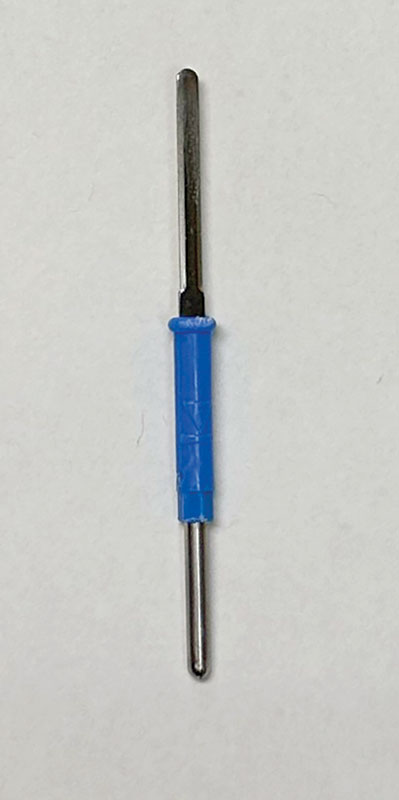
Blade and needle tips are among the available options. A blade tip is commonly used; a needle point can support more precise energy delivery. Reusable handpieces may be suitable when sterilized according to the manufacturer’s directions, including any stated limit on autoclave cycles.
Monopolar safety in the operating room
Monopolar energy may be less effective when the surgical field is wet, since fluid can provide another route for current. Safe use also depends on correct dispersive-pad placement, full pad contact and patient positioning. Follow the instructions for the specific pad: some require conductive gel, while others do not.
Insulate the patient from a metal operating table, and remove conductive items such as metal collars or harnesses that could create unintended current paths. Alcohol-based skin preparations need time to dry fully before activating electrosurgery because their vapors can ignite. Follow appropriate fire-safety practices.
Some modern generators monitor the dispersive pad and prevent activation if it is not connected correctly. That feature adds protection, but it does not replace careful pad placement and patient preparation.
Bipolar energy and vessel sealing
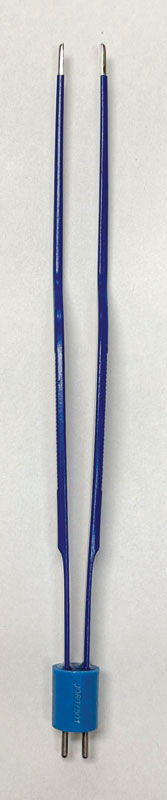
Bipolar instruments often resemble forceps. One tip delivers current and the other returns it, so energy passes through tissue held between the two electrodes. Because the circuit is localized, a dispersive pad is not needed. Bipolar electrosurgery can be useful when precision matters and can work well in wet fields, though coagulation may take longer than with monopolar energy, depending on the tissue and device.
Device-specific guidance still matters. Surgeons should know which tissue types the instrument is intended for, which settings and activation times are recommended, and what limitations apply.
Vessel-sealing devices combine bipolar energy with pressure. The instrument compresses tissue while energy denatures collagen and elastin, creating a seal. Many devices are marketed for vessels up to 7 mm, but the permitted size varies. The manufacturer’s guidance should determine whether a particular structure is within the device’s intended range.
A vessel sealer can replace ligatures in selected procedures, but seal strength depends on the tissue, structure size and device. In a study of canine uterine horns and bodies, researchers found no significant difference in burst pressure between vessel sealing and encircling ligatures for structures smaller than 9 mm. At 9 mm or larger, sealed tissue performed worse; the researchers advised against using the device on uterine horns or bodies at or above that size.
A retrospective study also assessed cystic duct sealing during open cholecystectomy in 47 dogs with gallbladder mucocele. The researchers concluded that the method was safe and effective in the dogs studied. That finding applies to the population and procedure evaluated; it does not establish suitability for every patient or tissue.
Reuse requires cycle tracking
Many vessel-sealing handpieces are labeled for single use, although some veterinary practices resterilize them to manage costs. Reuse carries a risk of device failure, so practices need a way to track sterilization cycles and monitor performance.
In an evaluation of repeated sterilization, smaller scissor-like handpieces failed after an average of 17.2 cycles, with the earliest failure at 10. Larger handpieces failed after an average of 20 cycles, with the earliest failure at 17. The researchers recommended discarding reused small scissor-like handpieces after nine cycles and larger handpieces after 16, or earlier if there were signs of failure during a procedure.
Those cycle counts describe the devices tested; they do not predict the lifespan of every model. The practical lesson is to follow device guidance, keep accurate reuse records where reuse occurs, and retire any handpiece that shows unreliable function.
Match the tool to the task
Electrosurgery can support tissue dissection and hemostasis, but no single device suits every situation. Monopolar systems offer cutting and coagulation with attention to pad placement and current pathways. Bipolar instruments keep energy concentrated between their tips, while vessel sealers can simplify hemostasis for selected structures when their size and tissue type fit the device’s limits.
For the surgical team, the useful question is not simply whether to use electrosurgery, but which instrument fits the tissue and procedure at hand. Knowing how each system delivers energy—and checking its instructions before use—helps make that choice safer and more effective.