Sample No. 0236
Sublingual Lesions in Cats: Causes Beyond Oral Cancer
A lump under a cat’s tongue can have several causes. Learn what signs veterinarians consider and why an examination and tissue diagnosis may matter.
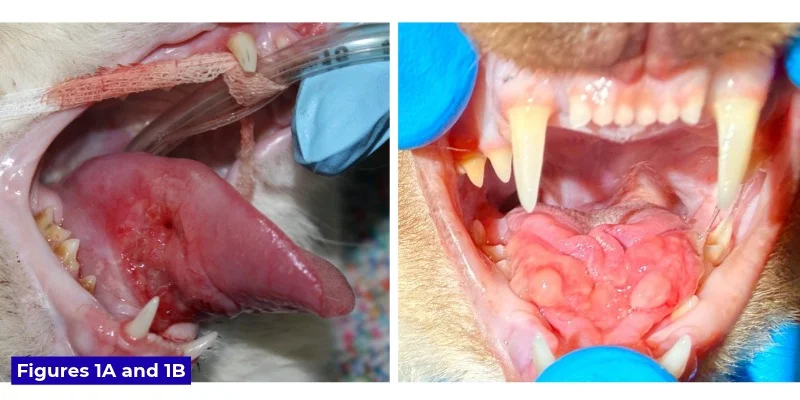
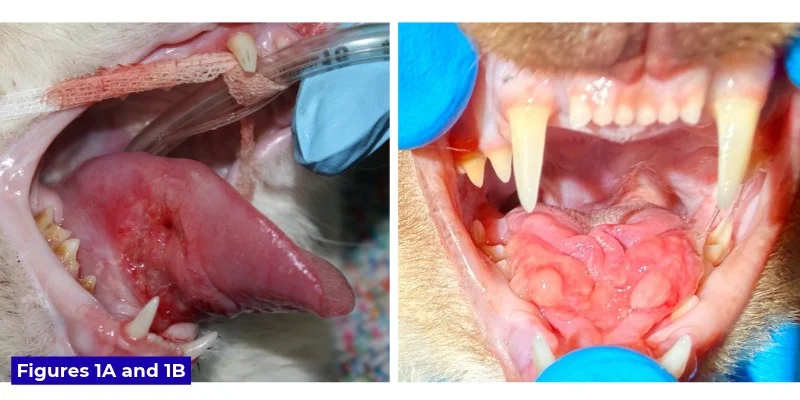
A growth beneath a cat’s tongue deserves prompt veterinary attention, but its appearance alone can’t tell you what caused it. Squamous cell carcinoma is one possibility, particularly in an older cat with bloody drool, reduced appetite, or trouble swallowing. Other causes include saliva collecting under the tongue, eosinophilic disease, and material wrapped around the tongue. These conditions can look alike, so identifying the cause matters for choosing appropriate care.
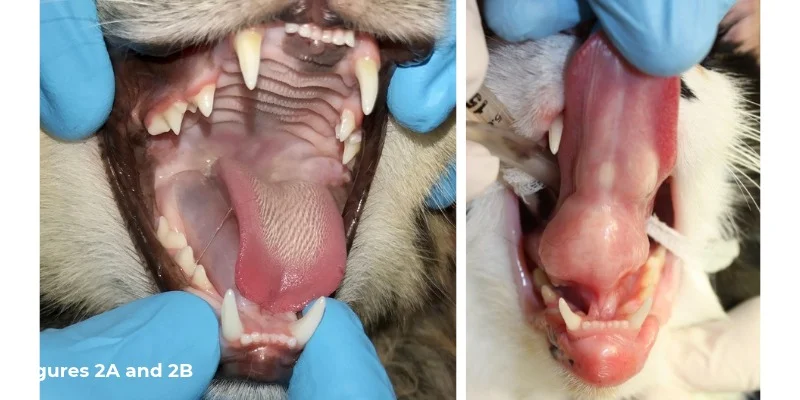
Saliva buildup can form a ranula
A ranula is a smooth swelling beneath the tongue caused by saliva leaking from a damaged salivary gland or duct and collecting in nearby tissue. The name comes from rana, Latin for “frog”: the swelling’s shape can resemble a frog’s underside. It may appear on one side or both and usually isn’t inflamed at first. If it grows large, contact with the teeth can injure its surface.
The paired openings of the mandibular and sublingual salivary ducts sit near the middle of the mouth, beneath the tongue. Damage to an opening or to a duct leading from a gland can allow saliva to escape and create a swelling. Some ranulas may go away on their own, while others need veterinary surgery to remove the affected mandibular and sublingual glands.
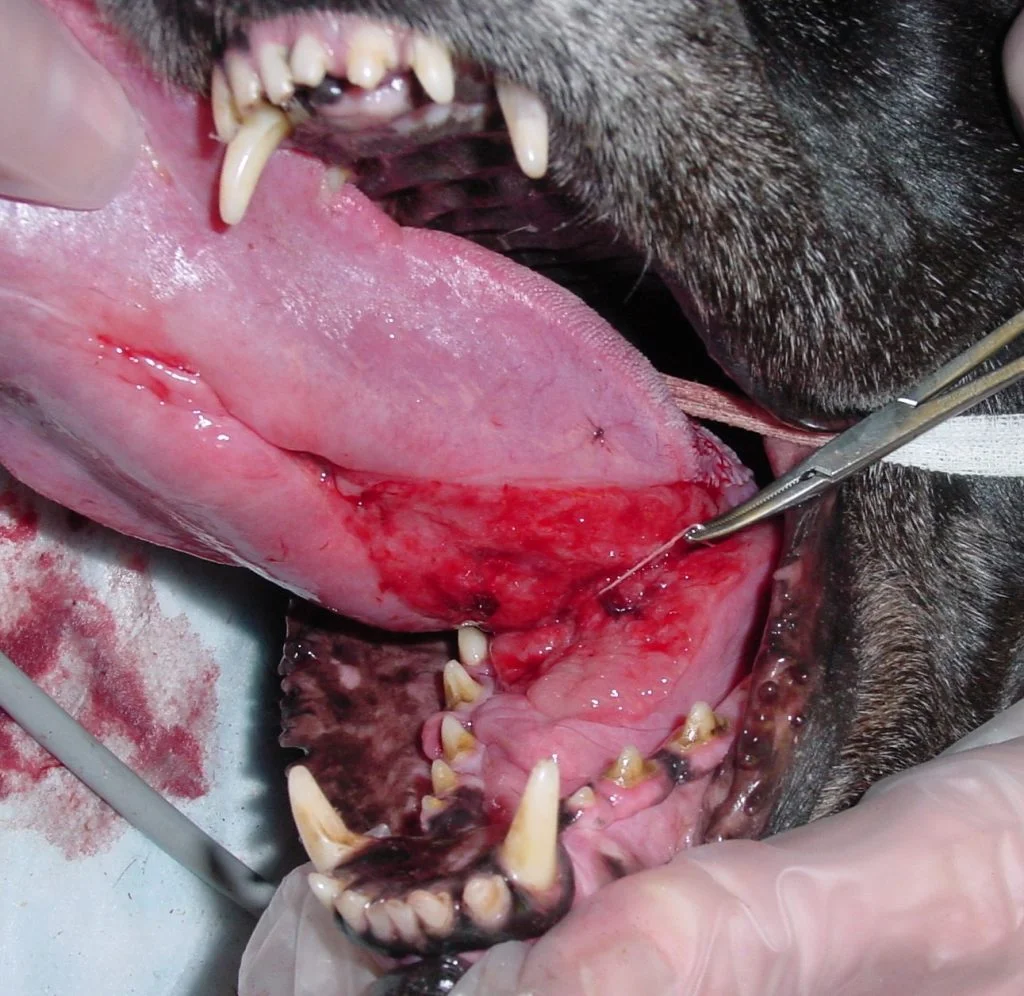
Swelling after oral surgery can resemble a ranula. When salivary ducts are cut and tied off during tumor surgery, temporary swelling may develop in the area. This postoperative swelling, sometimes called a pseudoranula, is expected to settle within a few days in the cases described here. A small 1978 experiment in dogs found that surgically damaging a gland or duct did not always produce a salivary cyst. Still, ranulas have also been observed after ducts were cut during surgery, so the possibility cannot be ruled out.
Eosinophilic disease may imitate a tumor or ranula
Eosinophilic granuloma is often associated with ulcers on a cat’s upper lip, sometimes called rodent ulcers. It can also cause swelling of the lips or the area beneath the tongue, and the swelling doesn’t always have an ulcerated surface. A firm lump, a smooth swelling, or an ulcerated growth may therefore have more than one possible explanation.
Other signs can help the veterinarian assess the possibilities. A cat with a sublingual eosinophilic lesion may also have a swollen lower lip. In one reported case, a one-year-old Ragdoll had a very firm, rough-looking, ulcerated swelling beneath the tongue, along with a history of lower-lip swelling. Tissue examination identified eosinophilic granulomatous glossitis, an inflammatory condition affecting the tongue. The swelling improved over the following two weeks of veterinary treatment.
That case shows why appearance alone can mislead. A sublingual eosinophilic lesion may resemble squamous cell carcinoma or a ranula, and a veterinarian may recommend a biopsy to establish what it is. If the swelling is severe or rubbing against the teeth, the cat may also be at risk of further injury. Owners should contact their veterinarian about a new mouth lesion, especially if their cat is drooling, eating less, having difficulty swallowing, or showing discomfort.
Check for material beneath or around the tongue
A linear foreign body can become wrapped around the lingual frenulum, the tissue band beneath the tongue. This can cause swelling and redness under the tongue, as well as swelling of the tongue itself. Young cats are a common group affected, though dogs can also develop this problem. The age of the animal doesn’t exclude it: a ten-year-old dog once developed the issue after chewing the inner twine of a golf ball, which became caught around the base of the tongue.
Persistent irritation can produce another kind of lesion. For example, a rough tooth surface caused by tooth resorption may repeatedly rub the tissues beneath the tongue, sometimes leading to a large area of granulation tissue. A veterinarian can examine the mouth for a foreign body, a source of friction, or another cause that needs attention.
Let the examination guide the next step
For owners, the practical takeaway is to treat a new swelling under the tongue as a reason to arrange a veterinary examination rather than trying to identify it by sight. The same location can be affected by a tumor, saliva leakage, eosinophilic disease, a foreign body, or chronic irritation. Note when the change appeared and whether eating, swallowing, or drooling has changed; those details can help the veterinary team assess the problem.
Some causes settle, while others require further investigation or treatment. A careful mouth examination and, when needed, tissue testing can help distinguish conditions that look similar. Prompt attention is especially helpful when a lesion is growing, ulcerated, bleeding, interfering with eating, or being injured by the teeth.


