Sample No. 0234
Dog Food Allergies: Elimination Trials, Label Checks and Fresh Food
A vet-guided elimination trial can identify food triggers. Learn how to read labels and choose an everyday recipe that avoids them.
For a dog with itchy paws, recurring ear trouble or unsettled digestion, changing food may help only if food is actually the trigger. Those signs can also come from fleas, environmental allergies or infection, so a fresh recipe alone can’t identify the cause. A veterinarian-guided elimination trial is the clearest way to test for a food reaction; after that, a short ingredient list can make day-to-day feeding easier to check.
The distinction matters because “fresh,” “limited ingredient” and “hypoallergenic” don’t guarantee that a food avoids a particular dog’s trigger. The useful question is whether every ingredient, including oils and treats, fits the dog’s confirmed diet plan. Fresh food may be a practical long-term option for some dogs, but it isn’t a diagnostic diet or a treatment for an active skin or ear infection.
Start by sorting out the signs
Food allergy signs often overlap with signs of environmental allergy. Dogs with either may lick or chew their paws, scratch their ears, rub their faces or scratch at the belly, armpits and rear end. Repeated skin infections, including yeast and bacterial infections, can occur alongside the itching. Some dogs also have soft stools, more frequent bowel movements or occasional vomiting.

Timing can offer a clue, but it can’t confirm the cause. Environmental allergies, also called atopic dermatitis, may flare with seasonal pollen. Food-related signs often persist through the year when a dog eats the suspected ingredient every day. Paw licking happens in both cases, and can also be linked to grass, plants, dust mites or fleas. VetStreet’s guide to spring allergies in dogs covers seasonal patterns.
A veterinarian may also look for a dull, greasy or thinning coat, redness on the belly, and dark or thickened skin after long-term scratching. These changes don’t point to food on their own. See VetStreet’s guide to what your dog’s skin and fur can indicate for more on coat and skin changes.
Before starting a food trial, your veterinarian will usually check for fleas, mites and active infections. Treating an infection or helping an uncomfortable dog may be part of the plan while the food question is being evaluated. A dog with open sores, a painful or smelly ear infection, repeated vomiting or diarrhea needs veterinary advice promptly. A fresh recipe won’t treat an infection. For other ways veterinarians may help a scratching dog, see these ways to soothe itchy skin.
What an elimination trial can tell you
Beef, dairy, chicken and wheat are the food allergens reported most often in dogs. A 2016 review in BMC Veterinary Research combined published cases from 297 dogs. Beef appeared most often, at about 34 percent, followed by dairy at 17 percent, chicken at 15 percent and wheat at 13 percent. Lamb, soy, egg, corn and pork appeared less often.
Those figures don’t mean these foods are inherently risky. Dogs can develop reactions to proteins they’ve eaten, and beef and chicken have long been common ingredients in dog food. A dog’s diet history is therefore central to choosing a trial food. Some dogs that react to chicken may also react to turkey; some dogs that react to beef may also react to dairy. Your veterinarian can help decide what counts as a suitable option for your dog.
Saliva, hair and blood tests aren’t reliable ways to diagnose food allergy. A review by veterinary dermatologists Ralf Mueller and Thierry Olivry, published in BMC Veterinary Research, found these tests unreliable for identifying food allergy in dogs. Serum and skin testing can be useful for environmental allergies when a veterinarian is considering allergy immunotherapy. For food, the dependable approach is a controlled diet trial followed by a food challenge.
The veterinarian will usually choose a diet built around either a protein the dog hasn’t eaten before, called a novel protein, or a hydrolyzed protein. In a hydrolyzed diet, proteins are broken into smaller pieces that are less likely to be recognized by the immune system. Prescription diets are a separate category from over-the-counter fresh or limited ingredient foods, and the veterinarian can help select the right trial diet.
Most veterinary dermatologists recommend feeding the trial diet for at least eight weeks. Many dogs need eight to twelve weeks before skin has had enough time to settle for the result to be judged. Stopping at three or four weeks may leave too little time to tell. The Merck Veterinary Manual describes a diet trial as the standard way to diagnose food allergy in dogs and other pets.
- Work with your veterinarian to list the proteins your dog has eaten. Include treats, chews, supplements and flavored medications.
- Choose the trial diet with your veterinarian. It should use a novel protein or a hydrolyzed protein selected for your dog.
- Move to the trial diet gradually over 10 to 14 days, unless your veterinarian gives different instructions.
- Feed only the trial diet for eight to twelve weeks. Treats, table scraps, chews and flavored supplements can interfere with the result.
- Keep a daily record of itching, paw licking, ear problems and stool quality.
- If signs improve, your veterinarian may guide a challenge with the previous food. A return of signs within days to two weeks can confirm a food trigger.
- Once the trigger is known, plan an everyday diet that avoids it.
Every person in the household needs to follow the plan. A flavored flea or heartworm chew, dental chew, rawhide, pill pocket or dropped snack can add an ingredient the trial is meant to exclude. Ask the veterinarian whether necessary medications are available in an unflavored form. A home-cooked trial diet may be an option, but a veterinary nutritionist should help balance it if it will be fed for weeks.

Write down any unplanned food exposure, even a single treat. If the dog lives with other pets, feed separately, pick up bowls after meals and keep the other animals’ food out of reach. A few mouthfuls of another pet’s food can make the trial difficult to interpret.
Choosing a long-term food after the trial
Once the trial and challenge identify a trigger, the everyday diet should leave it out. A short ingredient list can make that task more manageable: there are fewer items to compare with the dog’s diet history, and fewer possibilities to investigate if signs return. But a limited ingredient label doesn’t make a food suitable by itself. The actual ingredients still need to avoid the confirmed trigger.
Over-the-counter foods can also contain animal proteins that aren’t listed on the label. A 2018 review in BMC Veterinary Research found that this could happen with pet foods, including limited ingredient diets. That’s one reason veterinarians often choose a prescription hydrolyzed or novel protein diet for diagnosis. An over-the-counter food may be considered afterward, when its ingredients fit the dog’s confirmed needs and the veterinarian agrees.
Get Real, Chewy’s gently cooked fresh food line, uses ten ingredients or fewer plus vitamins and minerals. The recipes are made with human-grade ingredients, gently cooked and frozen. Each one names chicken, beef or turkey as its main meat, and all three contain fish oil. That fish oil means none of the recipes has only one animal-derived ingredient. None is a suitable elimination trial diet, and dogs with a fish sensitivity should avoid all three.
For a dog whose veterinarian has confirmed that chicken and fish oil are acceptable, the Get Real Chicken & Brussels Sprouts Recipe is one possible everyday food to discuss with the veterinarian.
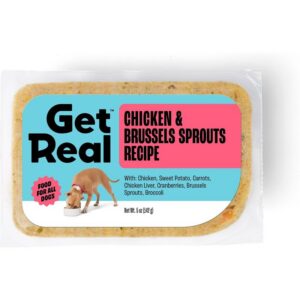
Get Real Chicken & Brussels Sprouts Recipe. A chicken recipe to consider only after a veterinarian has confirmed that the dog tolerates chicken and fish oil.
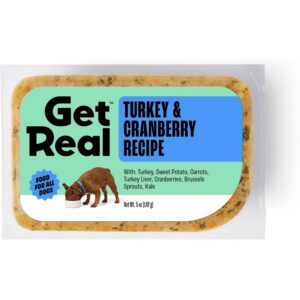
For a dog whose confirmed trigger is chicken, the Get Real Turkey & Cranberry Recipe may be worth discussing. Some chicken-allergic dogs also react to turkey, so the veterinarian’s specific advice matters. The recipe also contains fish oil.
Get Real Turkey & Cranberry Recipe. A turkey option to review with your veterinarian once the dog’s triggers and tolerances are clear; it contains fish oil.
The Get Real Beef & Sweet Potato Recipe has a published ingredient list that can be checked item by item. It may be considered for a dog whose veterinarian has ruled beef out as a trigger and confirmed the other ingredients are acceptable.
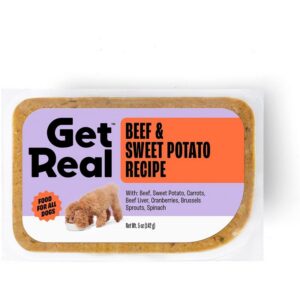
Get Real Beef & Sweet Potato Recipe. Its published ingredient list makes it possible to review each item with your veterinarian; the recipe contains fish oil.
For a dog whose confirmed trigger is chicken, beef or turkey may be possible choices depending on the rest of the ingredient list and the dog’s history. For a dog sensitive to fish, none of these recipes is a match because all contain fish oil. A protein allergy applies to the protein itself: cooking chicken doesn’t reliably remove the allergen.
The published minimum crude fat varies by recipe: 8.5 percent for Chicken & Brussels Sprouts, 7 percent for Beef & Sweet Potato, and 10 percent for Turkey & Cranberry. Fat level is one part of choosing a food, especially for dogs with other dietary needs. Your veterinarian can assess the full nutrient profile. For a comparison of the three meats, see chicken, beef and turkey for dogs.
| Recipe | Main meat | Fish oil | Minimum crude fat | Published ingredient list |
|---|---|---|---|---|
| Chicken & Brussels Sprouts | Chicken | Yes | 8.5% | Partial |
| Beef & Sweet Potato | Beef | Yes | 7% | Yes |
| Turkey & Cranberry | Turkey | Yes | 10% | Not yet |
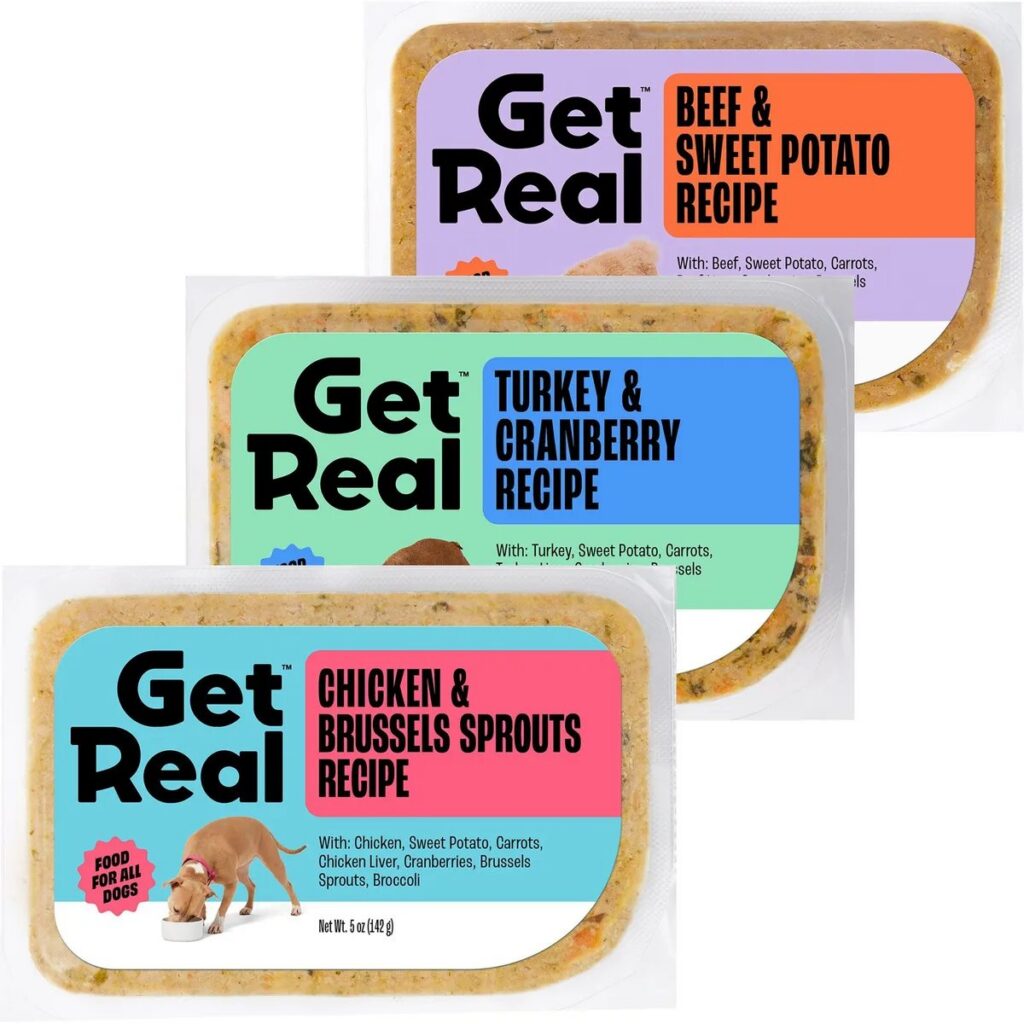
Once a recipe is chosen, record its name and the date it becomes the dog’s food. Keep it steady for several weeks before making another change, so you and the veterinarian can connect any improvement or flare to a clear baseline. A Get Real Sampler Pack contains two packs each of the beef, chicken and turkey recipes. It’s only appropriate for a dog cleared for all three meats and fish oil, and it shouldn’t be used during a trial.
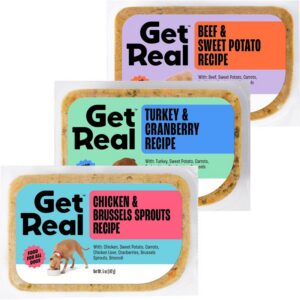
Get Real Sampler Pack, Beef, Chicken & Turkey Gently Cooked Fresh Dog Food, six-pack bundle. It contains two of each recipe, for dogs whose veterinarian has cleared chicken, beef, turkey and fish oil.
Check the full ingredient list
The front of a package may name one meat while the ingredient list includes other animal-derived ingredients. Check for every source of protein, including organ meats, broths, meals and eggs. Liver from the same species as the main meat doesn’t add a new species, but liver from another species does. Animal fats and oils may also carry traces of protein.
The published Beef & Sweet Potato list includes beef, sweet potato, carrots, beef liver, cranberries, Brussels sprouts, spinach, dicalcium phosphate, canola oil, potassium chloride, calcium carbonate, salt, fish oil, choline chloride, magnesium sulfate, minerals, mixed tocopherols and vitamins. Beef liver comes from the same species as the named meat. Fish oil is another animal-derived ingredient, so this recipe doesn’t qualify as a one-animal-source food and isn’t appropriate for a dog with a fish sensitivity.
The Chicken and Turkey recipes also contain fish oil, but their full ingredient lists aren’t published online. Read the package or ask Chewy for the current list before offering either recipe to a dog with food allergies. Each recipe is described as meeting AAFCO nutrient profiles for all life stages, which includes adult dogs and puppies. AAFCO explains how nutrient adequacy statements work.
Check the rest of the dog’s routine, too. Possible sources of unwanted ingredients include:
- Treats and training rewards, including single-ingredient jerky made from a protein the dog has eaten before.
- Flavored parasite preventives and chewable pain or joint products.
- Joint supplements, some of which contain shellfish-derived glucosamine.
- Broth toppers, pill pockets, peanut butter and cheese used to hide pills.
- Dental chews, rawhide and bully sticks.
- Food shared by family members or taken from another pet’s bowl.
Write these items into the dog’s diet history before the trial begins. Ask the veterinarian which can be replaced and whether necessary medications have unflavored options. The goal is to keep the diet record accurate enough to interpret the result.
Making the change and tracking progress
After the trial and food challenge, change to an approved everyday recipe gradually. For dogs with sensitive digestion, plan for 10 to 14 days. One example schedule is to feed about one quarter new food for days one to four, half new food for days five to eight, and three quarters new food for days nine to twelve. From day thirteen onward, feed the new recipe alone. Follow your veterinarian’s instructions if they differ.

During the transition, the old food is still in the bowl, so a change in symptoms may be difficult to attribute to one recipe. Keep notes, and avoid adding other new foods at the same time. Track the dog’s itch on a consistent zero-to-ten scale, along with paw licking, ear scratching, head shaking, stool quality, vomiting, appetite and any food eaten outside the plan. Check body weight every two weeks.
Keep frozen packs frozen until needed. Thaw 5-ounce and 12-ounce packs in the refrigerator for 12 to 24 hours; 24-ounce packs may need 35 to 48 hours. Use thawed food within three to five days. Discard food that smells off or has been left out for more than two hours.
The 12-ounce and 24-ounce packs are intended for full meals. The 5-ounce pack is a portioned mixer, not a full meal, and adding it to another food introduces more ingredients to review. Get Real is sold through Chewy by subscription, which can be changed, paused or canceled, and is available in select markets. For dogs whose main concern is digestion, this guide to fresh food for sensitive stomachs covers related considerations. WebVet also explains what can make a meal easier to digest.
Common questions
Can fresh food help a dog with allergies? It can be an everyday option if it avoids the dog’s confirmed trigger and suits the dog’s needs. Fresh food doesn’t prevent or cure allergies. The Get Real recipes contain fish oil, so they aren’t trial diets and aren’t suitable for a dog with a fish sensitivity.
What should a dog with allergies avoid? Avoid confirmed triggers and ingredients that contain them. During a trial, that may include treats, table scraps, chews and flavored medications. Check labels for proteins in broths, meals, organ meats and animal fats.
Can a food stop a dog from itching? No food can stop itching in every dog. Removing a food trigger may help when food is the cause. It won’t address itch caused by fleas or environmental allergens, and a veterinarian should evaluate ongoing or severe symptoms.
What might a veterinarian recommend? The plan depends on the dog’s signs. A veterinarian may check for fleas and infection, then use a novel protein or hydrolyzed diet trial if food allergy is suspected. Other approaches for environmental allergies can include anti-itch medication, medicated shampoo or allergy immunotherapy.
Why do many veterinarians advise against raw food? Raw meat can carry bacteria such as Salmonella and Listeria, which can affect pets and people handling the food. The FDA has information about pathogens in raw pet food. Gently cooked food avoids the raw-meat risk while allowing a short ingredient list.
A steady routine is what makes the results useful: follow the veterinarian’s trial plan, record every food exposure, and choose a long-term recipe only after the trigger is clear. That gives you a better chance of keeping meals practical while protecting your dog’s comfort.


