Sample No. 0225
Dog Feeding Schedules by Age, Size, and Health
Most adult dogs do well with two measured meals a day. Age, size, health, and body condition help determine when a different schedule fits better.
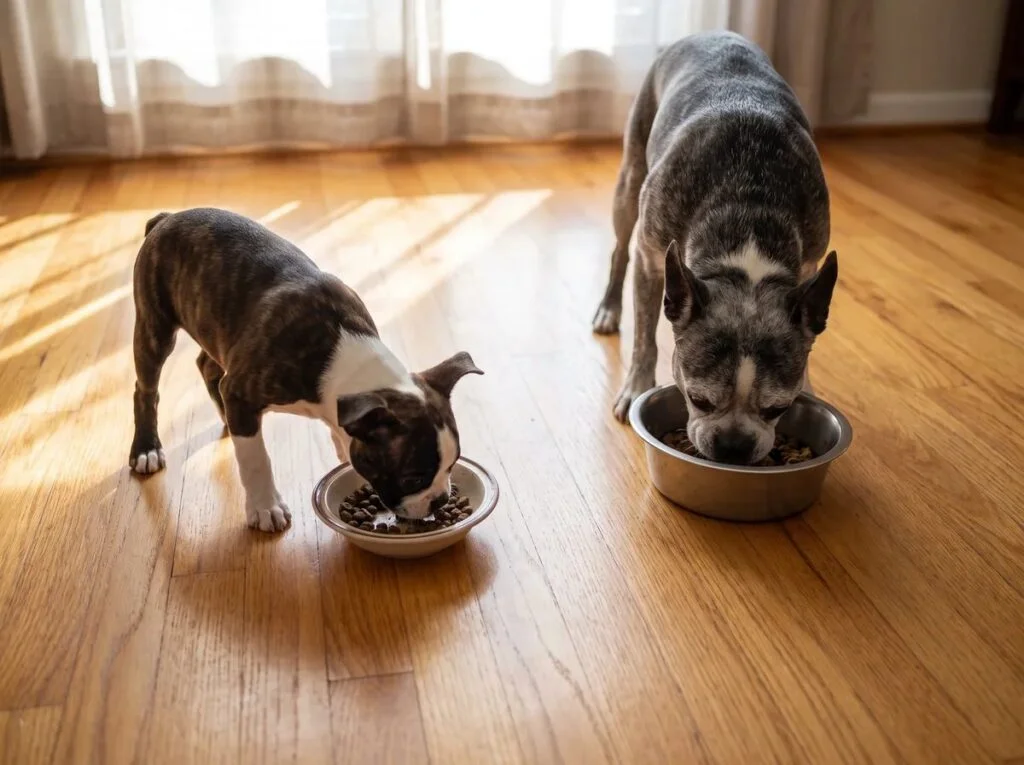
For most healthy adult dogs, two measured meals a day, about 8 to 12 hours apart, offer a practical starting point. Puppies generally need three or four meals, while toy breeds, older dogs, and dogs with certain health conditions may do better with smaller, more frequent portions. The right schedule depends on the dog’s age, size, health, appetite, and daily routine.
Meal frequency matters, but it doesn’t determine how much food a dog needs in a day. The daily amount and the dog’s body condition are better guides to whether a feeding plan is working. If you change the number of meals, divide the same daily amount into the new schedule rather than adding food.
A practical starting schedule
Two meals, one in the morning and one in the evening, suit many adult dogs and fit easily into household routines. Regular mealtimes can make appetite changes easier to spot. They can also help owners anticipate bathroom breaks, since dogs often eliminate on a fairly predictable schedule.
Think of two meals as a starting point, not a rule for every dog. A healthy adult who eats measured portions, maintains a lean body condition, and has steady energy may do well on two meals. Another dog may need smaller servings more often. For example, splitting the daily amount into three or four portions can help an older dog with a reduced appetite finish its food. A dog that vomits bile when its stomach is empty may also benefit from a different meal pattern. Ask a veterinarian about recurring vomiting or a sustained change in appetite.
Three meals a day can also suit a healthy adult. The important part is dividing the dog’s daily food among those meals. Adding a third full meal on top of the usual two can raise total calorie intake and lead to weight gain.
Consistency is more useful than an exact clock time. Choose mealtimes that the household can maintain, and keep portions measured. If several people feed the dog, agree on who serves each meal and how much is offered. That reduces the chance of skipped or duplicated portions.
Meal frequency by age
Puppies grow quickly and have small stomachs, so they generally need more frequent meals than adults. As they mature, their stomach capacity increases and their growth rate changes. Senior dogs may need schedule adjustments because appetite, teeth, digestion, and chronic health conditions can change with age.
| Life stage and size | Typical meals per day | Why the schedule may fit |
|---|---|---|
| Toy and small breed puppies under about 6 months | 3 to 4, sometimes more | Small energy reserves make long gaps between meals a concern. |
| Medium breed puppies under about 6 months | 3 to 4 | Small stomachs and rapid growth call for regular portions. |
| Large and giant breed puppies under about 6 months | 3 | Smaller meals can help avoid overloading the stomach. |
| Puppies from about 6 to 12 months | 2 to 3 | Growth slows and stomach capacity increases. |
| Healthy adult dogs | 2 | Regular meals make portions and appetite easier to monitor. |
| Toy breed adults | 2 to 3 | Some have small energy reserves and may need shorter gaps. |
| Large and deep-chested adult dogs | 2 or more | Smaller meals are associated with lower bloat risk. |
| Senior dogs | 2 or more smaller meals | Smaller portions may be easier to finish as appetite or health changes. |
Until about 4 to 6 months of age, most puppies need three or four meals a day. Toy puppies may need even more frequent feeding, depending on their size and health. Around 4 to 6 months, many puppies can move to two or three meals. By about a year, most eat on an adult schedule, though their individual needs still matter.
Large and giant breed dogs often continue growing beyond their first birthday, sometimes until 12 to 18 months. Their diet should be formulated for growth in large-size dogs. Owners can ask a veterinarian to help match food, portions, and meal frequency to the puppy’s age and expected adult size. A guide to feeding a growing puppy discusses growth and portions by size.
Pregnant and nursing dogs are exceptions to a typical adult schedule. Their nutritional needs rise, especially late in pregnancy and during nursing, and they may need more frequent meals or ongoing access to food. A veterinarian should guide the food and feeding routine during this period.
Senior dogs usually need at least two meals a day, and some eat more reliably when their daily amount is split into three smaller portions. Dental discomfort can make eating difficult; reduced appetite or slower digestion can make a large meal less appealing. Health conditions may also affect which food and schedule work best. Watch for changes in appetite, thirst, or weight, and discuss them with a veterinarian. More detail is available in this guide to senior dog nutrition.
How size affects the schedule
Small and large dogs can need different schedules for different reasons. Toy breeds have limited energy reserves, while large, deep-chested dogs face a higher risk of gastric dilatation-volvulus, commonly called bloat. These differences mean size can affect meal frequency as well as portion size.
Toy breeds such as Chihuahuas, Yorkshire Terriers, and Pomeranians have small bodies and fast metabolisms. Some are prone to hypoglycemia, or low blood sugar, if they go too long without food. Toy puppies are especially vulnerable. A missed meal, vomiting, or becoming chilled can contribute to low blood sugar. Regular, small meals can help reduce long gaps without food, but weakness, trembling, or wobbliness calls for prompt veterinary care.
If you adopt a small dog, ask the rescue or veterinarian how often the dog has been eating. A sudden change from frequent meals to one or two may create too long a gap for some toy dogs. Guidance on food and calorie needs for smaller dogs is available in this article about food for small dogs.
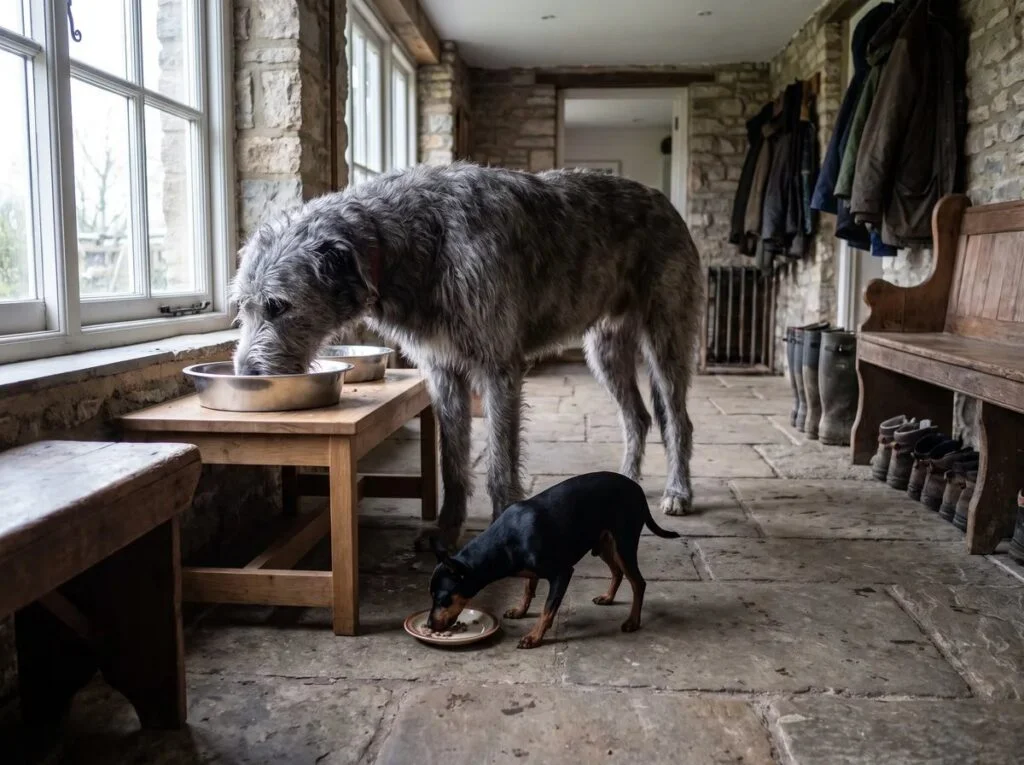
Large and giant dogs should generally eat at least twice a day. Deep-chested breeds—including Great Danes, Weimaraners, Standard Poodles, and German Shepherds—are at increased risk of bloat. Bloat occurs when the stomach fills with gas and may twist; it is a life-threatening emergency. Eating one large meal a day and eating quickly are among the factors associated with increased risk in large dogs, according to the Merck Veterinary Manual.

A swollen or tight abdomen, repeated unproductive retching, restlessness, drooling, or weakness may be signs of bloat. Contact a veterinarian or emergency clinic right away if these signs appear. For a large dog that eats quickly, a puzzle feeder or slow-feed bowl may help slow the meal. Calm mealtimes can also help in homes where dogs compete for food. Avoid vigorous exercise for about an hour before and after meals, and ask a veterinarian whether preventive gastropexy is appropriate for a high-risk dog.
For car trips, offering the last meal a couple of hours before travel may reduce motion sickness. Avoid a large meal immediately before vigorous play or a long drive, particularly for large, deep-chested dogs.
Once a day or twice a day?
Research has raised questions about whether once-daily feeding affects health, but it doesn’t establish a schedule that suits every dog. A 2022 analysis from the Dog Aging Project examined survey data from more than 24,000 dogs. Dogs reported to eat once a day had lower odds of several age-related conditions, including gastrointestinal, dental, and orthopedic problems, than dogs fed more often.
The study was observational, so it found an association rather than showing that one meal a day caused better health. Dogs fed once daily may differ in breed, body weight, or other aspects of care. The data also came from owner surveys rather than controlled feeding trials. The researchers called for more study before drawing conclusions about changing feeding routines. These findings describe patterns in a group of companion dogs; they don’t determine what is right for an individual pet.
For a healthy, lean adult dog that is already thriving on one meal, the schedule may be appropriate. Most veterinarians still recommend two meals as a default. Long gaps between meals can leave some dogs hungry or lead to bile vomiting; toy dogs may be vulnerable to low blood sugar, and a single large meal may increase bloat risk for large breeds.
Puppies, toy breeds, diabetic dogs, dogs prone to bile vomiting, and large, deep-chested dogs generally need two or more meals. For diabetes, meal timing must fit the dog’s care plan. Talk with a veterinarian before switching an adult dog to one meal a day, make changes gradually, and monitor appetite, energy, and vomiting.
Scheduled meals and free feeding
Free feeding means leaving food available so a dog can eat whenever it wants. Some dogs self-regulate and maintain a healthy weight with access to dry food; grazing may also reduce mealtime stress for anxious eaters. Ongoing access can help some underweight dogs or nursing mothers take in enough food, but a veterinarian should advise on those situations.
For many dogs, though, scheduled, measured meals offer better control. With food left out all day, it is harder to tell how much a dog has eaten or notice a drop in appetite, which can be an early sign of illness. In a multi-dog home, one dog may eat too much while another gets too little. It can also be harder to time medication that needs to be given with food. Many dogs will overeat when appealing food is always available, increasing the chance of weight gain. The Association for Pet Obesity Prevention has estimated that more than half of dogs in the United States are overweight or obese.
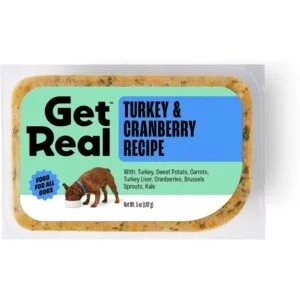
Fresh and wet food also spoils if left at room temperature. Get Real advises discarding food that has been out for more than two hours. Follow the storage directions for the food you use, and remove uneaten portions after the meal.
To move a dog from grazing to set mealtimes, offer the measured meal for 15 to 20 minutes, then pick up the bowl. Most dogs adapt within a few days. If the dog refuses food, loses weight, or seems unwell, consult a veterinarian rather than pressing ahead with the change.
Many owners offer breakfast and an early evening meal, roughly 8 to 12 hours apart. A dog that eats once daily can have its meal in the morning or evening, provided the timing is consistent. Leave enough time after an evening meal for a bathroom break before bed.
Health conditions can set the schedule
For some dogs, feeding frequency is part of a veterinary care plan. Follow the schedule provided by the dog’s veterinarian, and write it down if several people share feeding duties.
Diabetes is a clear example. Many diabetic dogs receive insulin twice a day, timed with meals. Consistent food amounts and timing help keep blood sugar stable during insulin therapy. The American Animal Hospital Association guidelines emphasize consistent feeding as part of diabetes care. Don’t change a diabetic dog’s meal schedule without veterinary guidance. For complex needs or a home-prepared diet, a board-certified veterinary nutritionist can help plan both the food and schedule.
Other health conditions may call for smaller or more frequent meals. Dogs with pancreatitis or other digestive problems may tolerate small, low-fat meals more easily. Dogs with megaesophagus may need small, frequent meals while positioned upright. Kidney or liver disease can reduce appetite, making smaller servings easier to finish. For dogs with bilious vomiting syndrome, an empty stomach overnight may trigger vomiting, and a late meal may help. Dental pain can make a large portion uncomfortable to eat.
Medication timing can matter, too. Some medications, including many anti-inflammatory pain relievers and some antibiotics, are best given with food to reduce stomach upset. Follow the veterinarian’s instructions and build mealtimes around the prescribed dosing schedule.
A sudden change in appetite, thirst, or eating speed, or vomiting after meals, deserves veterinary attention. These changes can be early signs of disease, so changing the meal schedule alone may miss the cause.
Check body condition, not just the clock
The daily amount of food and the dog’s response to it matter more than the number of meals. Veterinarians commonly use a nine-point body condition score, with 4 or 5 considered ideal. The World Small Animal Veterinary Association body condition chart can help owners make a basic home check.
- Ribs: You should be able to feel them with light pressure, with a thin layer of fat over them.
- Waist: Viewed from above, the dog should have a visible waist behind the ribs.
- Abdominal tuck: Viewed from the side, the belly should rise toward the hind legs.

Check body condition every two to four weeks and weigh the dog when possible. If the ribs become harder to feel, reduce the daily amount by about 10 percent while keeping the meal schedule the same, then check again in a few weeks. If the ribs and hip bones become prominent, increase the amount and ask a veterinarian whether a health problem could be affecting weight. A step-by-step guide to keeping a dog at a healthy weight can support regular checks.
Treats and extras count toward the daily total. Keep them to about 10 percent of daily calories and reduce meal portions accordingly. When changing the number of meals, keep the total daily amount the same and divide it among the new portions.
For senior dogs, look at muscle as well as body fat. An older dog can lose muscle around the spine, hips, and shoulders even if its weight stays steady. A veterinarian can assess muscle condition and body condition during checkups.
Making portions easier to manage
Splitting a daily ration evenly can be difficult when people use different scoops or estimate portions by eye. Pre-portioned packs with stated calorie amounts can make it easier to divide a day’s food into consistent meals. The same principle applies to any measured food: know the dog’s daily amount, then portion it before serving.
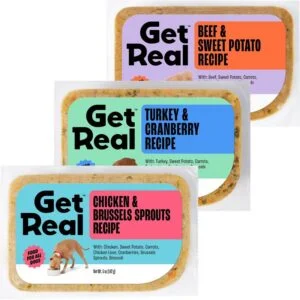
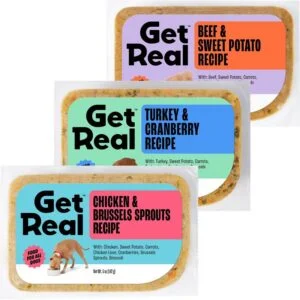
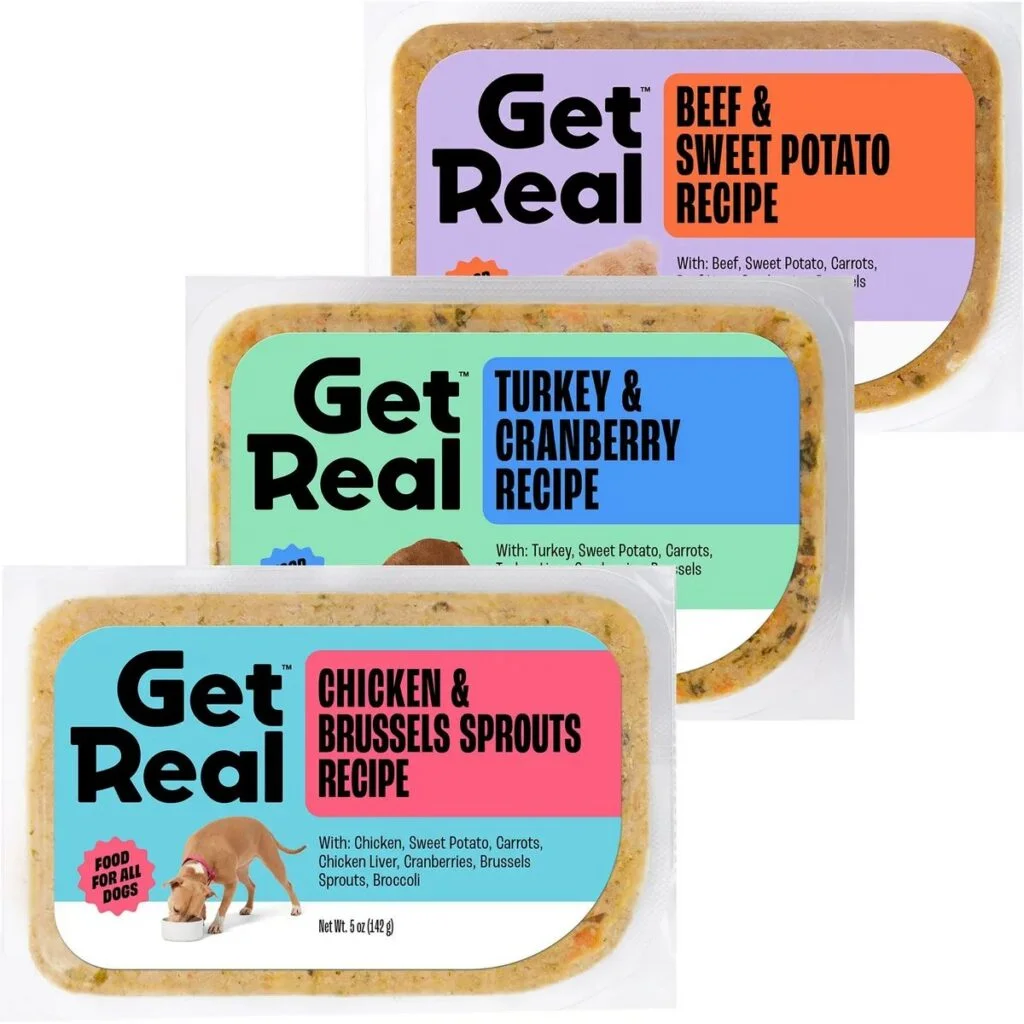
As one example of how the arithmetic works, a 24-ounce pack of Get Real Beef & Sweet Potato contains 902 calories, while a 12-ounce pack contains 451 calories. If a veterinarian or feeding plan calls for one 24-ounce pack per day, dividing it into two equal portions gives about 451 calories per meal. Dividing it into three gives about 300 calories per meal. Those figures show how to split a daily amount; they are not a recommendation for how many calories an individual dog should eat.
To keep portions clear in a busy household, divide the day’s food into covered containers when opening a pack and label them by mealtime. Store them together in the refrigerator so every caregiver can see which meals remain. If using a mixer or topper with kibble, count it as part of the daily food and reduce the kibble amount accordingly.
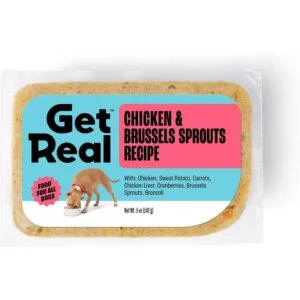
Follow the product’s thawing and storage directions. For Get Real, the stated thawing times are 12 to 24 hours for 5-ounce and 12-ounce packs, and 35 to 48 hours for 24-ounce packs. Thawed food should be used within 3 to 5 days. Serve portions soon after taking them out of the refrigerator and discard leftovers from the bowl. If adding fresh food to kibble, introduce it gradually over 7 to 10 days, or 10 to 14 days for a sensitive dog, while keeping the total daily amount steady.
Food formulated for all life stages can simplify feeding in a home with dogs of different ages, since the same recipe may suit a puppy and an adult when each receives an appropriate portion. Check that the food’s nutritional statement fits the dog’s life stage, including large-size growth where relevant. A product’s suitability doesn’t replace choosing the right daily amount or getting veterinary advice when a dog has special needs.
Common questions
Can dogs regulate how much they eat? Some dogs stop when they have had enough, but many keep eating when food is available. Measured meals and regular body condition checks are a safer approach for most dogs.
What is the 7-7-7 rule for dogs? It’s a puppy socialization guideline, not a feeding schedule. It suggests introducing a young puppy to different surfaces, toys, places, people, challenges, and feeding containers or locations. It doesn’t say how many meals a puppy needs.
Is feeding a dog once a day cruel? Once-daily feeding isn’t inherently cruel for a healthy adult dog, and some adults do well with it. It’s a poor fit for puppies, toy breeds, diabetic dogs, and dogs prone to bloat or bile vomiting. Ask a veterinarian before making the change.
Can a dog eat at night? Yes. Keep mealtimes consistent and allow time for a bathroom break before bed. Avoid a large meal right before vigorous activity or a long car ride, especially for a large, deep-chested dog.
How often should a senior dog eat? Most senior dogs do well with two or more meals, and some eat better with three smaller servings. Changes in appetite, weight, or thirst deserve attention because dental or medical issues may be involved. A veterinarian can help adjust the food and routine.
A schedule works when it matches the dog’s needs and the household can maintain it. Start with measured portions, keep the daily amount consistent, and check appetite, body condition, and energy over time. If those change, review the plan with a veterinarian.


