Sample No. 0224
Turkey Cat Treats: Choosing Safe Snacks for Your Cat
Compare nine turkey treats by texture and use, and learn how to share turkey safely while keeping treats within your cat’s dietary needs.


Turkey treats can add variety to a cat’s routine, but the useful choice depends on more than flavor. Texture, ingredients, calories and whether a product is a treat, topper or complete food all affect how it fits into daily care. Here are nine turkey-inspired options, plus practical guidance for sharing turkey safely.
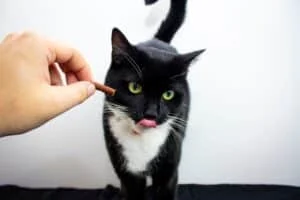
Nine turkey treats, with different ways to serve them
These products span freeze-dried bites, soft snacks, lickable options and meal complements. Check each current label for its ingredients, serving directions and calorie information; recipes and packaging can change. Treats should suit the individual cat and remain a small part of a balanced diet.
Stella & Chewy’s Meowfulls Freeze-Dried Cat Treats, Turkey & Duck Recipe
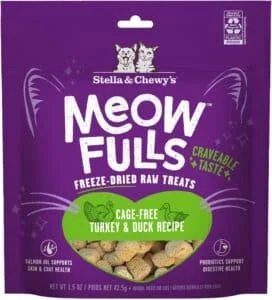
This freeze-dried option combines turkey and duck for cats who enjoy poultry flavors beyond the familiar chicken. Its format makes it easy to offer a small reward or add variety to a treat routine. It may suit cats who prefer meat-forward bites to conventional crunchy snacks.
Read the package carefully, including the full ingredient list and feeding instructions. Freeze-dried products may contain raw ingredients, so check the label for processing details and follow the maker’s storage and handling directions.

Dr. Elsey’s cleanprotein Protein Bites Turkey
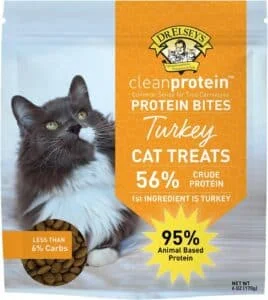
These turkey bites offer a protein-focused snack in a portionable format. They may be useful as small rewards during brief, positive training sessions, or as a change from a cat’s usual chicken or fish treats. The product name alone doesn’t establish whether it fits a particular cat’s diet, so compare the ingredients and calories with your cat’s needs.
If your cat follows a veterinarian-recommended diet, ask whether this treat is appropriate before adding it regularly. Even a small snack can matter when a cat has specific dietary limits.
Whole Life Cat Just One Turkey Freeze-Dried Cat Treats
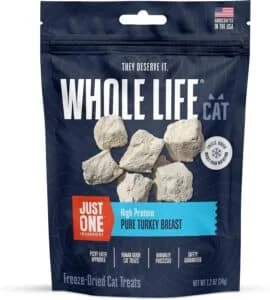
This turkey-focused freeze-dried snack is a straightforward option for people looking to track which proteins their cat eats. Offer an appropriate piece as a reward, or crumble a measured amount over regular food if the package allows. Its texture differs from soft morsels and crunchy biscuits, so it could provide a change for cats who are curious about new formats.
Check the current label for ingredients, processing and portion advice. A short ingredient list doesn’t guarantee that a food is right for every cat, especially one with a known sensitivity or a prescribed diet.
Blue Buffalo Wilderness Chicken & Turkey Soft Cat Treats
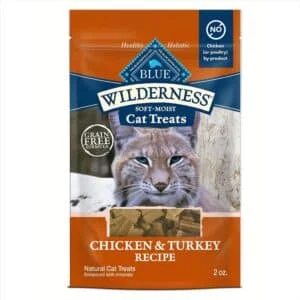
These soft treats pair chicken and turkey for cats who enjoy poultry and prefer a tender bite. They can be offered during play, a calm grooming session or another positive interaction. The mixed-protein recipe may not be suitable when a cat needs to avoid a particular ingredient, so review the whole label when dietary sensitivities are a concern.
Choose a piece your cat can manage comfortably. If chewing becomes difficult or your cat shows signs of mouth discomfort, contact a veterinarian to find out what’s going on instead of relying on a softer snack as a solution.
BONKERS Purrpops Freeze-Dried Catnip & Turkey Flavored Lollipop Cat Treats

This lollipop-style treat combines turkey flavor with catnip in a presentation intended for interactive snack time. Some cats respond strongly to catnip; others show little interest. Let your cat’s response guide the experience, and supervise while the treat is in use. Follow the package directions and prevent chewing or swallowing any nonedible holder parts.
The unusual format can make the treat an activity to share, rather than a snack simply placed in a bowl. Keep the interaction relaxed and stop if your cat loses interest or becomes unsettled.
Purrly Interactive Lickable Cat Treats, Chicken Breast & Turkey
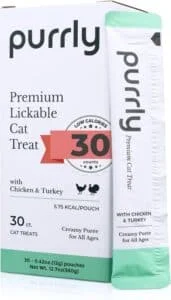
For cats drawn to soft, moist snacks, this lickable chicken and turkey combination offers a different experience from dry bites. The format can work for hand-feeding and gentle interaction, particularly when a cat enjoys licking a treat at its own pace.
Use it according to the serving directions and treat it as a snack unless the package says it is a complete food. Lickable treats don’t replace access to fresh water. If your cat has trouble eating or suddenly changes how it approaches food, seek veterinary advice rather than relying on a particular texture.
Temptations Turkey Flavor Cat Treats
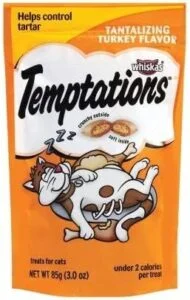
These treats have a crunchy outside and softer center, offering two textures in one bite. They can be portioned as small rewards during play or after a cooperative grooming session. The turkey flavor adds variety to the routine, though the label is the best guide to what the recipe contains and how many pieces to serve.
Count treats as part of the day’s food. Repeated small rewards can add up, so measure out a daily portion rather than reaching into the package each time.
Stella & Chewy’s Freeze-Dried Raw Cat Dinner Morsels, Premium Turkey Recipe
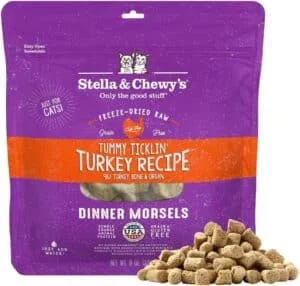
These turkey, organ and bone morsels are described as a dinner product that can be served as a meal or topper according to package directions. That distinction matters: use the product’s nutritional statement and serving instructions to determine whether it can make up a meal or should accompany the cat’s regular food.
The product is freeze-dried and raw. Follow its handling and preparation instructions closely, wash hands after serving, and clean food-contact surfaces. Households with people at higher risk from foodborne illness can ask a veterinarian about alternatives to raw pet foods.
Purina Friskies Lil’ Gravies Cat Food Complement, Roasted Turkey Flavor
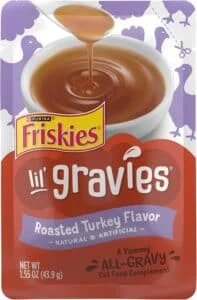
This gravy-style complement can be poured over a cat’s usual food or served separately as directed. Its smooth texture may appeal to cats who like licking sauce from a dish. The product is a food complement, not a complete meal, so pair it with a balanced diet and follow the label’s serving guidance.
Sharing plain turkey safely
Many healthy cats can have a small amount of plain, fully cooked turkey. As carnivores, cats need animal-derived nutrients, and turkey is one source of protein. A bite of meat, however, isn’t a substitute for a complete and balanced cat food, which should remain the foundation of the diet unless a veterinarian advises otherwise.
Set aside any turkey for your cat before adding seasonings, sauces or rich cooking ingredients. Remove skin and bones, let the meat cool, and cut it into small pieces. Offer it occasionally and keep the portion modest.
Holiday dishes often contain ingredients that make them poor choices for cats. Skip seasoned leftovers, and don’t offer food directly from a plate that has been prepared with butter, salt, gravy or stuffing. When you can’t confirm what a dish contains, leave it off the cat’s menu.
Foods to leave off your cat’s plate
- Bones: Raw and cooked bones can cause choking, injury or digestive obstruction.
- Skin and fatty pieces: High-fat foods may upset a cat’s digestion, and skin may carry seasoning.
- Garlic and onions: These are toxic to cats, including when mixed into seasoning or other dishes.
- Gravy and stuffing: Recipes may contain salt, fat, garlic, onions and other unsuitable ingredients.
- Deli turkey: Processed slices may include added sodium, preservatives or seasonings.
- Raw turkey: Raw poultry can carry harmful bacteria that pose risks to pets and people.
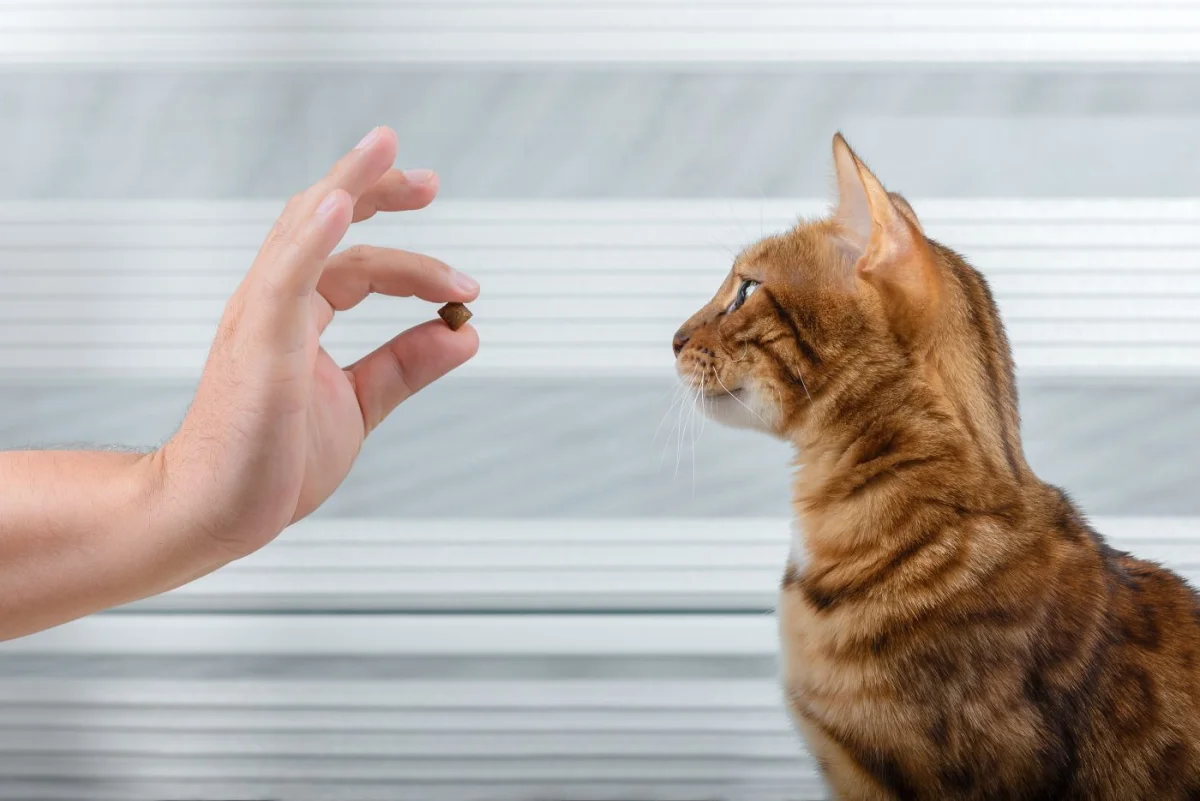
Choosing a treat that fits your cat
Read the full ingredient list
A product labeled turkey may contain turkey as a main ingredient, a blend with other meats, or turkey flavoring. If you’re tracking proteins or managing a known dietary sensitivity, look beyond the front of the package and check every ingredient. Ask your veterinarian about treats if your cat has an ongoing food reaction or a restricted diet.
Match the texture to the cat
Crunchy, soft, freeze-dried and lickable treats offer different eating experiences. A cat who rejects one format may accept another, but a new food should be introduced gradually, especially for cats with sensitive digestion. Observe how your cat handles the treat and stop offering it if it causes a problem.
Keep portions in view
Treat calories count toward daily intake. A commonly used guideline is to keep treats and other extras to about 10% or less of a cat’s daily calories, but individual needs vary. Check calories per piece or serving and adjust the amount to your cat’s size, health and normal diet. Cats on a weight plan may need a smaller treat allowance; ask the veterinary team for advice.
Distinguish snacks from food and toppers
Some products are intended as occasional treats, some are meal complements, and others may be formulated as complete meals. Check the product’s nutritional statement and directions before deciding how to serve it. Don’t assume that every turkey-flavored item can replace regular food.
Handle raw and freeze-dried products with care
Freeze-drying doesn’t necessarily mean a product has been cooked. When a label identifies a raw recipe, follow storage, preparation and cleaning directions carefully. Wash hands and food-contact surfaces after handling. If anyone in the household has a higher risk from foodborne illness, discuss suitable choices with a veterinarian.
How much turkey is appropriate?
The right amount depends on a cat’s age, size, health, regular food and calorie needs. For an occasional taste, a few small pieces of plain cooked turkey may be enough. For packaged products, follow the serving guidance and include the calories in the day’s total.
Keep extras small so they don’t displace the nutrients in complete food or contribute to unwanted weight gain. Before regularly adding turkey treats, check with a veterinarian if your cat has a medical condition, eats a prescription diet or needs to lose weight.

Common questions about turkey treats
Can cats eat turkey every day?
Turkey can appear in a complete, balanced cat food, but plain meat and treats shouldn’t replace that diet. Small daily rewards may fit some cats’ calorie needs, provided they don’t interfere with balanced meals. Ask your veterinarian if your cat has dietary restrictions.
Is turkey better than chicken?
Neither is automatically the better choice for every cat. Both can provide animal protein; the right option depends on the food’s full nutritional formulation, your cat’s preferences and any sensitivities.
Can kittens have turkey treats?
Some kittens can have small portions of age-appropriate treats once they eat solid food. Growth brings specific nutritional needs, so keep snacks limited and check age guidance on the package. Complete kitten food should supply their main nutrition.
Can cats eat turkey breast or dark meat?
Small amounts of fully cooked, boneless and unseasoned breast or dark meat can be offered occasionally. Remove skin and visible excess fat, and serve small pieces. Dark meat may be fattier than breast meat.
Can cats eat turkey skin, bones or gravy?
Skip all three. Skin can be fatty or seasoned, bones can cause choking or internal injury, and gravy made for people may contain salt, fat, garlic or onions. A cat-specific complement may be an option when used according to its label.
Is deli turkey a suitable snack?
It’s not an ideal choice because processed turkey may contain added sodium, preservatives or seasonings. Plain home-cooked meat without additions is a more appropriate occasional bite.
Are freeze-dried turkey treats safe?
Suitability depends on ingredients, processing and the cat’s health. Some freeze-dried products are raw and may carry pathogen risks. Read the label, follow handling instructions and ask a veterinarian about raw products if you’re unsure.
Can cats react badly to turkey?
Some cats can have an adverse food reaction to turkey, but symptoms need veterinary assessment; don’t assume the cause based on timing alone. Contact a veterinarian if persistent itching, digestive trouble or other concerning signs appear after a diet change.
Are these treats suitable for senior cats?
That depends on the cat’s chewing ability, calorie needs and health. Older cats may have conditions or prescribed diets that affect which snacks are appropriate. Ask a veterinarian before introducing new treats when health needs are involved.
Can turkey treats support training?
A treat can reward a behavior when the cat finds it motivating and it’s easy to portion. Give a small piece promptly after the behavior you want to encourage, and keep sessions short, calm and positive.
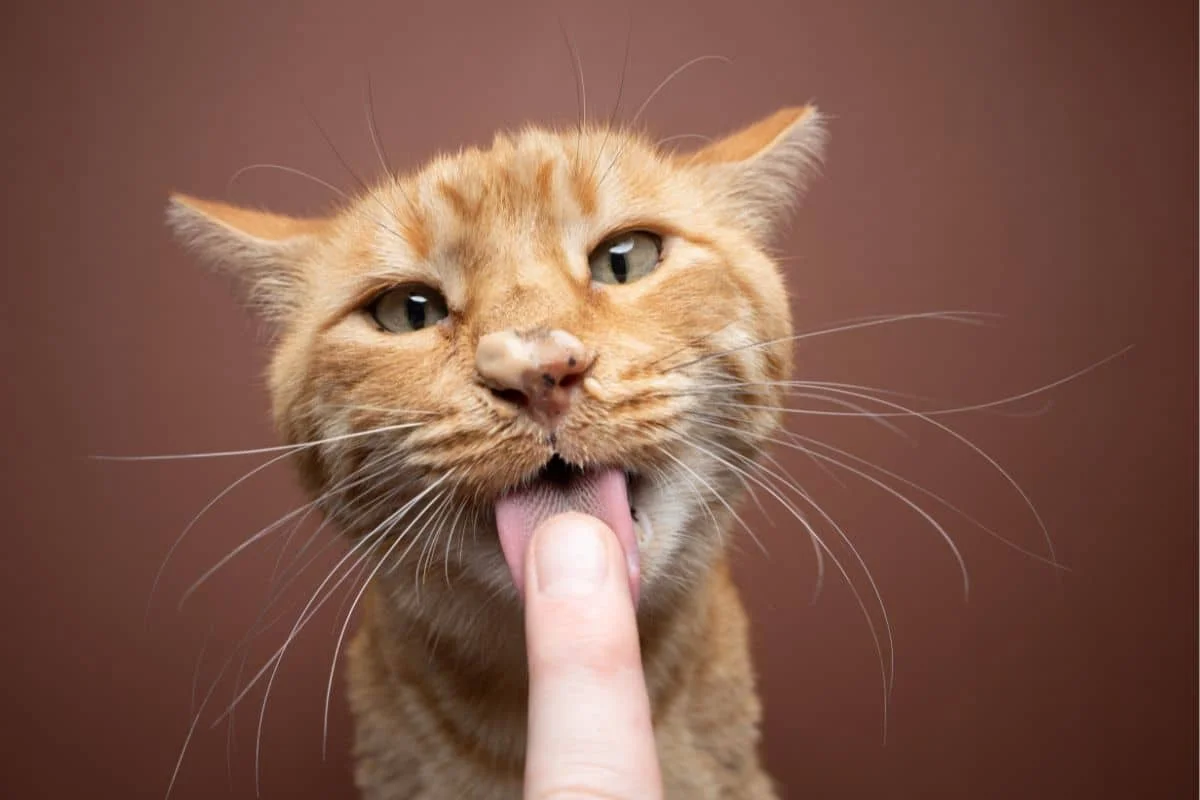
Make the snack fit the cat
Turkey treats come in formats for different preferences, from crunchy bites to soft morsels and lickable complements. Compare ingredients, calories and serving directions, then choose a product that suits your cat’s needs. For a shared taste of holiday turkey, plain, fully cooked meat without skin, bones or seasoning is the safer choice. Keep portions modest, and contact a veterinarian if a new food is followed by persistent symptoms or difficulty eating.
9 Turkey Cat Treats Your Feline Will Gobble Up appeared first on iHeartCats.com.


