Sample No. 0218
In-Room Veterinary Checkout Can Ease Visits and Improve Billing
Moving checkout into exam rooms can reduce lobby waits, support clearer care discussions and help teams catch missed charges.
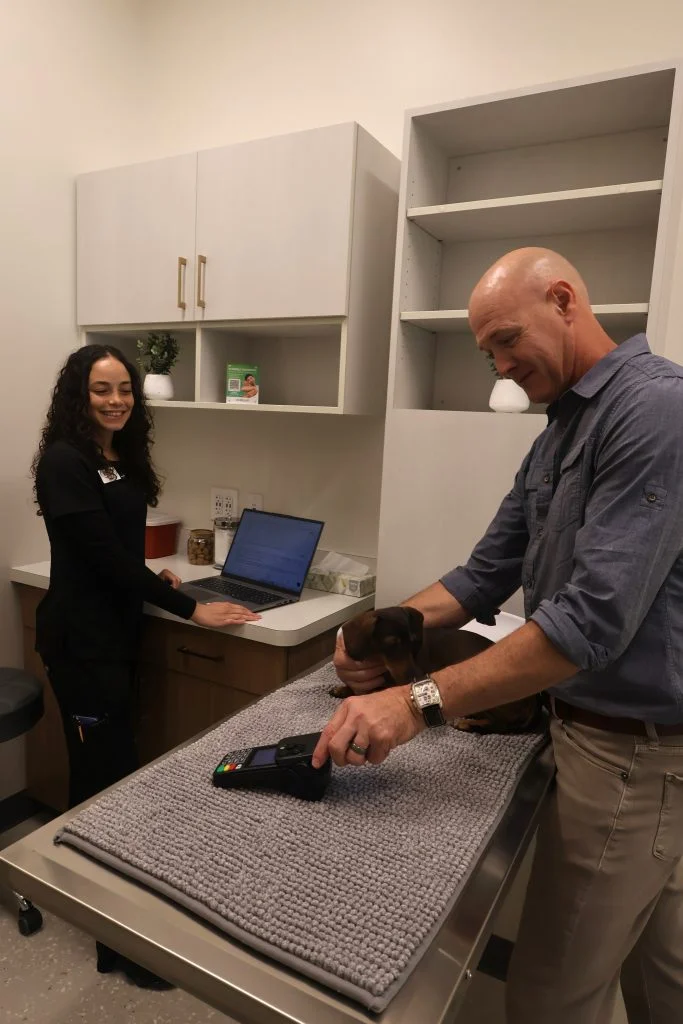
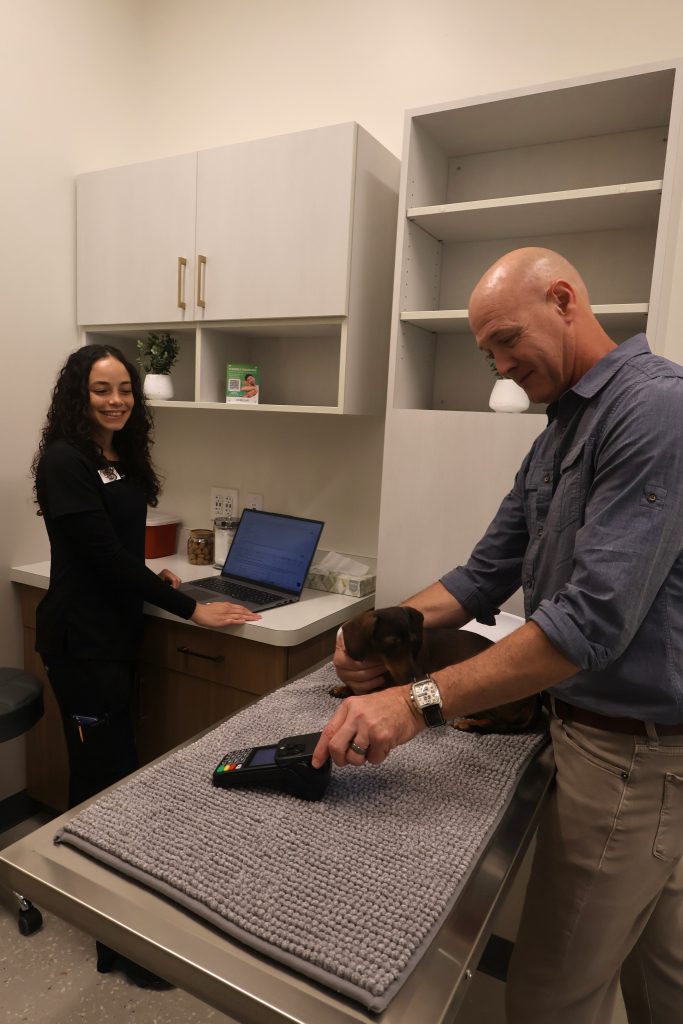
Taking payment in the exam room can improve the end of a veterinary visit while easing pressure on the front desk. At Partners Animal Hospital in Lakewood Ranch, Florida, front-desk checkout takes an average of seven to 10 minutes; in-room checkout takes two to five. The difference can mean fewer lobby bottlenecks and more time for client service representatives (CSRs) to greet arriving clients and answer calls.
When veterinarian Reagan McDonald and practice manager Jennifer Atchley opened the hospital in June 2026, they designed the workflow around efficiency. They first visited the group’s hospitals in Wesley Chapel and Sarasota to observe how the process worked. Staff use portable laptops and mobile card readers, with payments recorded in the practice information management software (PIMS).
More room for clear care conversations
Discussing an invoice in the exam room gives the care team a chance to explain the services and costs while the visit is still fresh. Technicians can walk through a treatment plan, describe what each service is for and make space for questions. If the recommended plan is beyond a client’s budget, the team can discuss financing options or other appropriate care paths.
That conversation can also make follow-up easier. Atchley says clients build rapport with technicians and know whom to contact with additional questions. A calm, private discussion may feel more supportive than encountering unexpected costs at a busy counter.
In-room payment can also suit clients managing mobility challenges, children, anxious pets or a tight schedule. Pets can avoid a noisy lobby and close contact with unfamiliar animals. After finishing the visit, clients can head to their cars without making another stop.
Reducing bottlenecks while supporting follow-up
The front-desk benefit grows as appointment volume rises. The source cites an average of 15 patients per veterinarian per day. In a three-doctor practice, that could mean 45 checkouts moving through the exam rooms instead of the counter. When several appointments end at once, the team can handle multiple transactions in parallel while CSRs remain available for incoming calls and clients arriving at the hospital.
Technicians can also address last-minute questions during checkout. Because they know the patient’s care plan, they may be well placed to discuss when the next visit is due and schedule it before the client leaves. The source compares this approach with dental practices, where hygienists have had more success pre-appointing patients than scheduling coordinators at checkout. A recommendation from the medical team connects the next appointment to ongoing care, rather than leaving it as one more task at the counter.
A second check on charges
In-room checkout may help reduce missed items on invoices. The source reports that veterinary practices lose five to 10 percent of annual revenue through missed charges and incomplete invoices; for a practice with $2 million in revenue, that would amount to $200,000. Examples include fecal tests, diagnostic services, injection fees and progress exams. An omitted service can also mean the client misses a reminder when that care is due again.
Technicians who were present for the appointment can enter the care delivered and collect payment. A record-to-invoice check offers another safeguard and can take about a minute:
- Open the visit’s medical record, including the SOAP notes.
- Open the invoice beside it.
- Review the Assessment and Plan.
- Check that each treatment, service and product appears on the invoice.
This brief comparison ties billing to the medical record. The source also notes that AI scribe technology used during exams may help teams catch missing charges.
Setting up a workable process
Start by checking whether the PIMS provider offers mobile payment terminals that record transactions directly in the system. Equip exam-room teams with enough laptops to handle appointments and invoicing; the source suggests that three doctors seeing outpatient appointments will need three laptops. Test wireless service in every exam room, since weak coverage can slow payment and frustrate both clients and staff. Network extenders may help address dead spots.
Digital receipts, discharge instructions and treatment plans can cut printing delays. Teams can also combine the trip to the pharmacy with the move into the exam room: a technician can bring the patient’s medications, laptop and payment terminal together.
Explain the new routine before clients reach the end of the visit. A simple script can tell them checkout will happen in the exam room, making it easier to go straight to the car afterward. Staff may need training to present invoices clearly and explain third-party payment options. Some technicians may initially find checkout adds administrative work, so Atchley recommends starting with euthanasia and discharge visits, then adding other appointment types as the team grows comfortable.
Cash payments are one practical exception at Partners Animal Hospital: clients using cash go to the front desk because the hospital has one cash drawer. The larger lesson is to build the workflow around the tools, rooms and staffing a practice actually has. When the team can explain charges, complete payment and confirm follow-up in one place, checkout becomes part of the care conversation.
Wendy S. Myers, CVJ, trains veterinary teams in client communication through online courses, conferences and consulting. She founded Communication Solutions for Veterinarians and has experience as a partner in a specialty and emergency hospital. CsvetsCourses.com.


