Sample No. 0193
Choosing Liquid Joint Supplements for Dogs: Ingredients, Serving Size and Cost
Compare a liquid supplement’s ingredients, evidence, serving directions and daily cost, then build a routine your dog can follow with veterinary guidance.
Start with the formula and the routine
A liquid joint supplement can make daily use easier for a dog that refuses tablets or chews. But the format alone says little about whether a product suits your dog. The more useful questions are whether its ingredients and amounts are clear, whether you can measure the labeled serving accurately, and whether your dog will reliably consume it.
That decision is best made with your veterinarian, especially if stiffness, limping or trouble chewing prompted the search. Joint supplements vary in their ingredients and supporting evidence. A liquid may be convenient, but convenience doesn’t establish effectiveness or faster results.
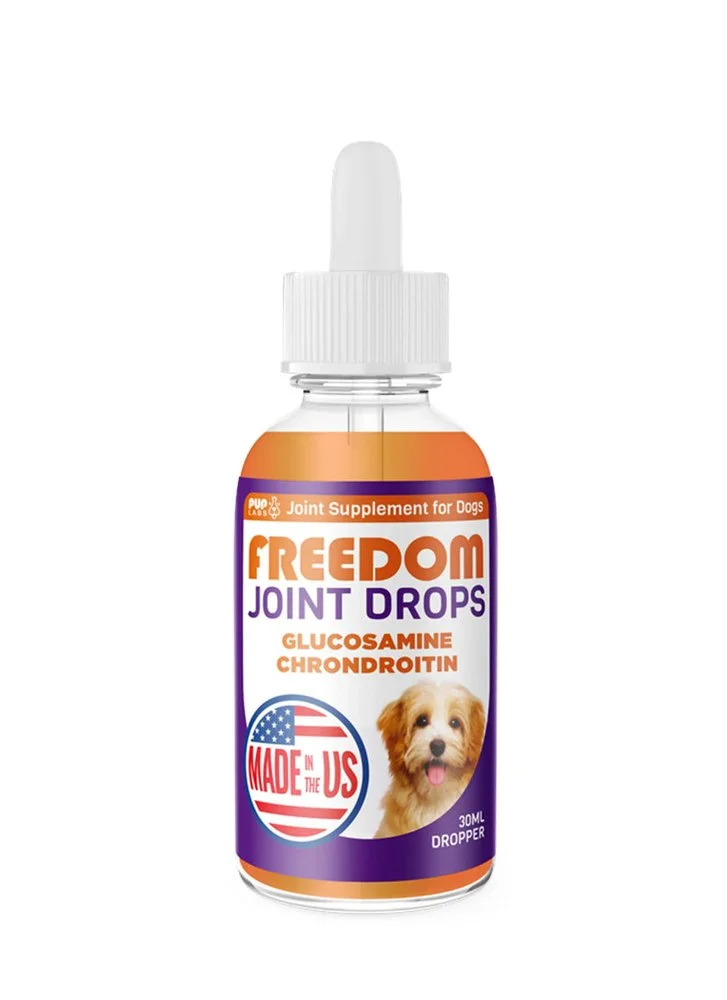
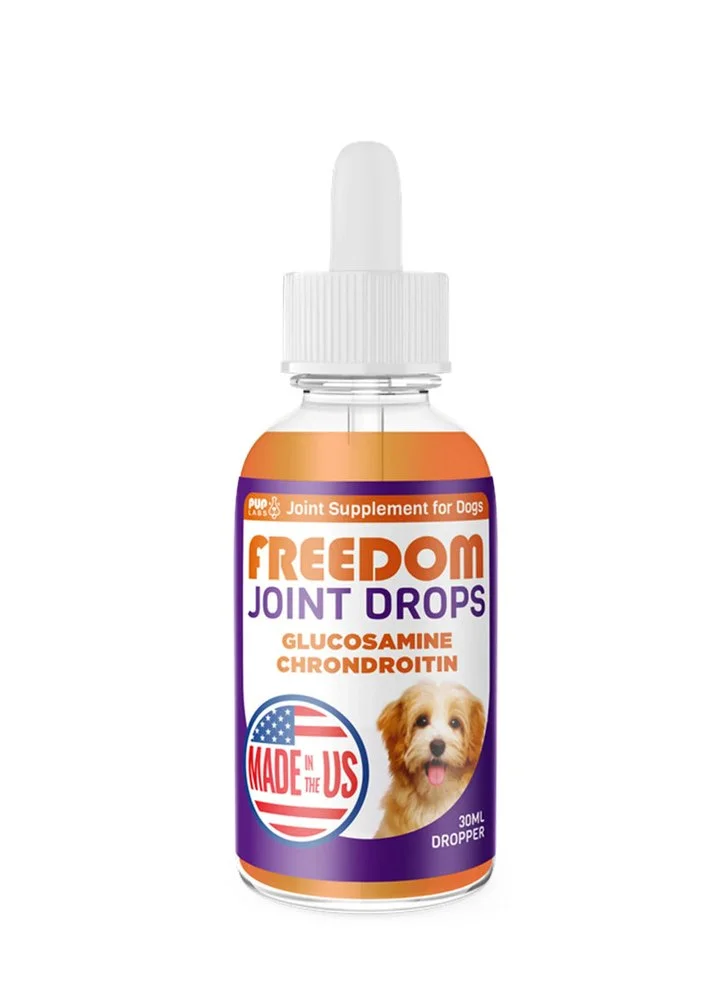
For a liquid-format example, Pup Labs Freedom Joint Drops comes in a 30 mL dropper bottle. The product information describes adding it to food or water. Those details can help you assess practical fit, but review the current label and serving directions before deciding whether it suits your dog.
See Pup Labs Freedom Joint Drops
Compare ingredient amounts and evidence
Front-of-bottle claims and long ingredient lists don’t tell you how much of each ingredient your dog receives. Compare quantities in the labeled daily serving. For a powder, multiply the milligrams per scoop by the number of scoops given each day. For a liquid, multiply the milligrams per milliliter by the daily milliliters. Do the calculation separately for each ingredient you want to compare.
A scoop’s total powder weight and a bottle’s total liquid volume can’t be compared directly with ingredient amounts. What matters is how much of each relevant ingredient is in the serving your dog would receive.
Cornell’s overview of joint supplements describes varying levels of evidence across ingredients and identifies fish-derived omega-3 fatty acids as having particularly strong support. That finding doesn’t mean every fish oil or combination formula has the same composition or effect.
- Glucosamine and chondroitin: Their presence on a label doesn’t establish that a specific product works. Check the stated amounts and ask what evidence applies to the finished formula.
- MSM and hyaluronic acid: Look for clear information about each ingredient. Including an ingredient doesn’t make a product equivalent to one used in a study.
- Omega-3 fatty acids: Check the amounts of EPA and DHA. A total fish-oil quantity doesn’t show how much of either fatty acid the serving contains.
- Blends: A combined blend weight doesn’t reveal the amount of each component unless the label lists those amounts separately.
When a manufacturer cites research, check whether the study tested the same finished formula in dogs, at the same serving level, and for the outcome being described. Research on one ingredient can inform a discussion, but it can’t establish that all products containing that ingredient perform alike.
Review the full ingredient list if your dog has dietary restrictions. Flavorings and other added ingredients may matter, too. Don’t assume a product is shellfish-free, vegetarian or hypoallergenic because it’s a liquid or has a particular name. If ingredient source matters, ask the manufacturer and share the complete label with your veterinarian, especially if your dog follows an elimination diet.
Make sure the serving is measurable
A drop, a dropper and a milliliter describe different things. Milliliters measure liquid volume; milligrams describe ingredient quantity. Bottle capacity and dropper appearance don’t tell you the ingredient concentration.
- Check the intended user: Confirm the product is for dogs and read any age or other restrictions.
- Find the serving for your dog: Use a current weight and determine whether the directions give a total daily amount or an amount for each administration.
- Identify the measuring mark: Follow the manufacturer’s definition of the intended measure. Don’t assume a squeeze fills the dropper to a standard volume.
- Match the volume to the ingredient panel: Check whether ingredient amounts refer to one milliliter, one serving or another stated quantity.
- Read the handling instructions: Follow directions for shaking, storage and use after opening.
Small servings can be difficult to measure if the tool has unclear markings. Don’t estimate a fraction of an unmarked dropper. Ask the manufacturer or veterinary team to explain the intended measurement if the label leaves room for guesswork.
Keep the directions with the bottle so everyone who feeds your dog uses the same tool and daily amount. Check the label again when you open a replacement bottle, particularly if its packaging or formula has changed.
View product details for Pup Labs Freedom Joint Drops
Work out the cost for your dog’s serving
Bottle price and volume don’t show what a supplement costs per day. First use the labeled serving for your dog, then calculate how many days the bottle will last:
- Days per bottle: bottle volume in milliliters ÷ daily serving in milliliters.
- Cost per day: bottle price ÷ days per bottle.
Here’s a hypothetical comparison to show the arithmetic. The products and serving amounts are made up; they aren’t product prices or directions, and they aren’t dosing advice.
| Example | A | B |
|---|---|---|
| Bottle price | $36 | $48 |
| Bottle volume | 60 mL | 120 mL |
| Assumed daily serving | 1 mL | 3 mL |
| Days per bottle | 60 | 40 |
| Cost per day | $0.60 | $1.20 |
In this example, the larger bottle lasts fewer days at its assumed serving, and its daily cost is higher. That arithmetic doesn’t show that the products provide equivalent ingredients or that either is the better choice. A smaller serving isn’t automatically more effective; compare ingredient quantities and discuss the formula with your veterinarian.
Use the price you expect to pay. If you’re considering a subscription, check the recurring cost and delivery interval as well as any introductory offer. Include shipping and other charges consistently when comparing what your household will spend.
For a 30 mL bottle such as Freedom Joint Drops, divide 30 mL by the daily volume on the current label to estimate how long it will last. Confirm that volume and the ingredient amounts with your veterinarian before using the estimate to compare costs.
Read more about Pup Labs Freedom Joint Drops
Build a routine you can check
If the label permits mixing a liquid into food, try it with a small portion your dog is likely to finish. You can then check whether that serving was eaten before offering the rest of the meal. Keep other pets away from the treated portion, measure rather than pouring by eye, and store the bottle as directed and out of your dog’s reach.
A shared water bowl makes it hard to know how much an individual dog consumed. Even when a dog is the only pet in the household, leftover water means you can’t assume the full amount was taken. Ask your veterinary team which permitted way of giving the supplement makes intake easiest to track.
If your dog leaves part of a treated meal, don’t guess how much to add. Follow the product’s instructions for an uncertain or missed serving, and ask your veterinary team if those directions aren’t clear. A simple household record can help when several people share feeding duties.
Acceptance matters, too. Some dogs reject flavored liquids, and mixing a serving into an entire meal can leave you unsure how much was eaten. Choose a format your dog accepts and that you can give as directed. If your dog has started dropping chews or struggling to eat them, tell your veterinarian; a format change won’t explain the new difficulty.
Involve your veterinarian when mobility changes
Stiffness and limping can have different causes. If either prompted your search, arrange an assessment rather than relying on a supplement trial to explain the change. A dog that seems painful or is having trouble moving needs veterinary guidance. Don’t increase the serving yourself if symptoms worsen.
Cornell advises consulting a veterinarian before starting joint supplements and describes them as one possible part of a wider care plan that may include weight management and suitable activity.
Bring the bottle or clear photographs of the label, along with a list of your dog’s other supplements and medications. Your veterinarian can look for overlapping ingredients and discuss whether the formula fits your dog’s needs. Agree on when to review the plan and keep notes on everyday movement, comfort and unwanted changes.
Possible side effects
VCA’s guidance on glucosamine and chondroitin lists mild digestive upset, including gas and soft stools, as possible side effects. A liquid format doesn’t remove that possibility, and combination formulas may include other ingredients to consider.
Contact your veterinarian if new symptoms appear after starting a supplement. Seek prompt advice if mobility worsens or your dog seems painful. Keep the packaging available so the veterinary team can identify the product and the amount given.
Choose the format that fits the whole plan
If your dog can take more than one format, Vetstreet’s overview of joint supplements for dogs offers a wider point of comparison. For liquid options, add serving clarity, measuring practicality and daily cost to your assessment.
To learn more about Pup Labs, see Petful’s review. Other format and supplement guides include Petful’s comparison of dog dental powder and dental chews and WebVet’s guide to prebiotics for dogs.
There isn’t one best format for every dog. Confirm the formula and directions, calculate the cost using your dog’s actual serving, and choose a routine you can maintain. Revisit the plan with your veterinarian if your dog’s comfort or mobility changes.
Are liquid joint supplements better than chews?
Some dogs take liquids more readily, but format alone doesn’t demonstrate better absorption or effectiveness. Compare ingredient amounts and formula-specific evidence, then consider which option supports consistent use.
Can a liquid supplement go in dog food?
Follow the product label. If it allows mixing with food, use a small portion your dog is likely to finish and keep other pets away while the dog eats.
How long should a dog take a joint supplement before it’s reviewed?
Set a review date with your veterinarian based on the product and your dog’s needs. Track changes in movement and comfort, along with any unwanted effects. Contact the veterinary team sooner if symptoms worsen or new pain appears.
Read more at Vetstreet. The original article appeared on Vetstreet.


