Sample No. 0174
Reef Sounds Attracted More Coral and Fish Larvae to Artificial Structures
Field studies found that reef recordings drew more larvae to artificial structures, offering a promising tool for coral restoration research.
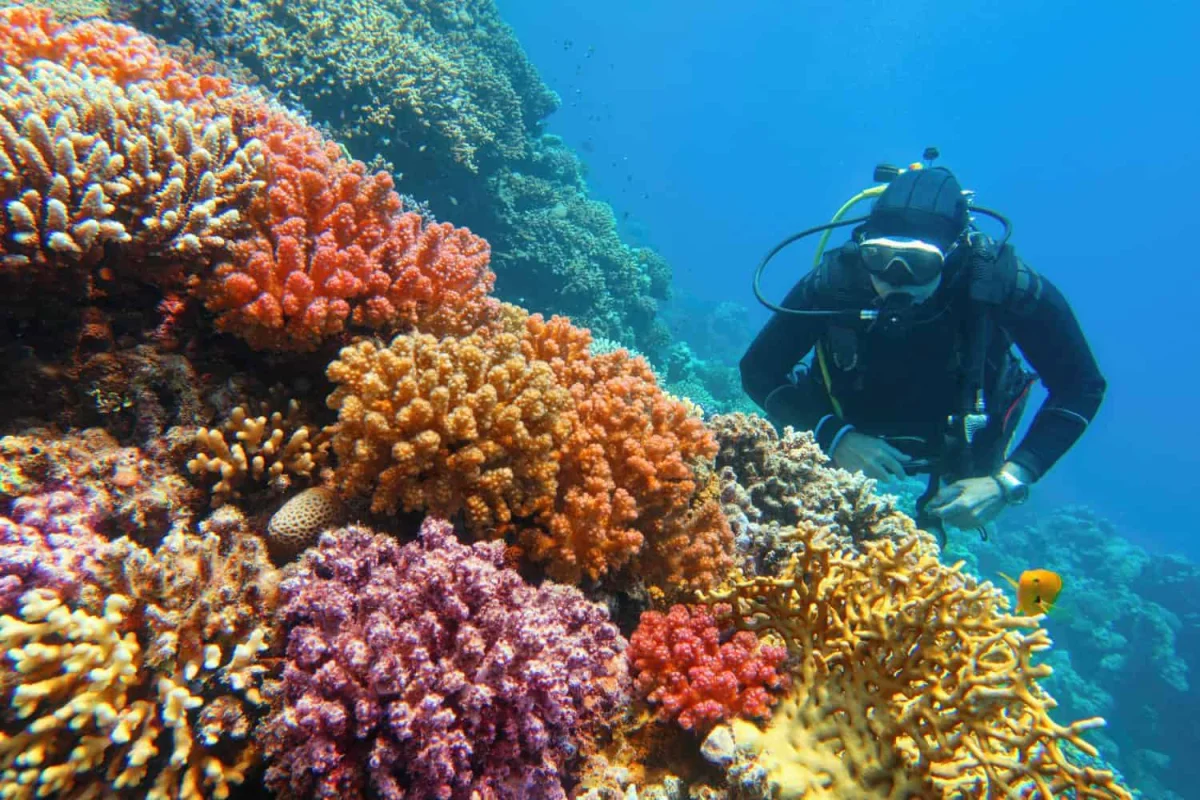
Sound may help young corals and fish find places to settle. In field studies near Oʻahu, researchers found that recordings of a healthy reef attracted more coral larvae to artificial structures and brought four to fourteen times more fish larvae to a sound-enriched site than to a quiet comparison site. The findings suggest that the underwater soundscape could become one useful part of reef restoration work.
Coral reefs are noisy habitats. Fish, shrimp and other animals produce a mix of sounds that carries through the water. For drifting larvae, that acoustic mix may offer clues about nearby habitat. The studies examined whether playing recordings from a healthy reef could influence where coral larvae settled and where young fish gathered.
Testing reef sounds with coral larvae
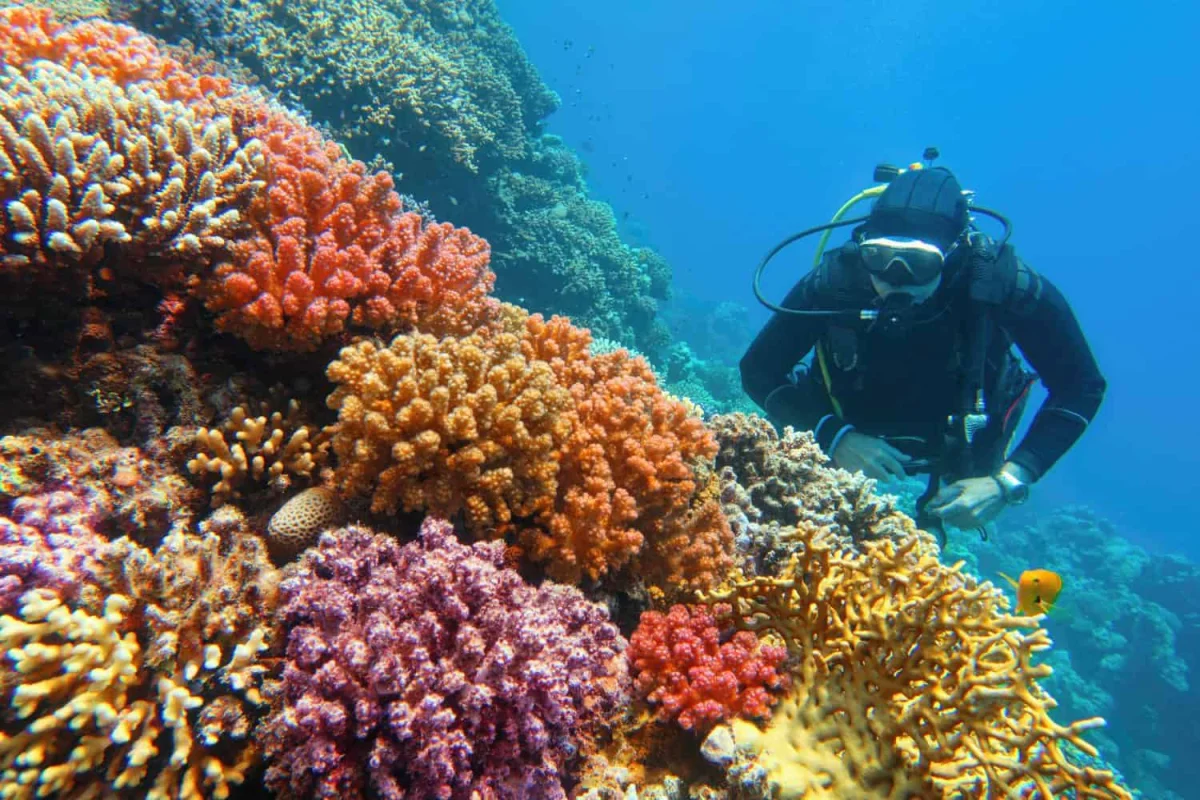
Researchers recorded sounds from healthy reefs and played them near artificial structures to study whether coral larvae would settle there.
©Tunatura/Shutterstock.com
For the coral study, researchers recorded a reef near Oʻahu across an entire lunar cycle, capturing sounds made by animals including fish, shrimp and crustaceans. They then played the recordings nightly, from sunset to sunrise, for two weeks at a sandy site off Moku o Loʻe. The setup let the team examine how larvae responded to reef sounds in a place without an established reef.
The researchers placed 37 artificial structures on the seafloor, about 15 feet deep and between three and 138 feet from the speaker. Some had protected spaces where larvae could settle. Others included BRINK, a substrate containing living bacteria, developed by Natalie Levy and colleagues at Scripps’ Coral Reef Ecophysiology and Engineering Lab. The designs gave the team a way to compare the effect of sound with the effect of a settlement surface that also offered biological cues.
Across three experiments over two years, the team counted newly settled coral larvae about one or two weeks after each new moon. Structures nearest the speaker had the most settlement. BRINK-treated structures performed especially well, while some specialized printed structures were exposed to sound without BRINK. Taken together, the results point to both acoustic and chemical cues as possible influences on where coral larvae settle.
Lead author Aaron Thode described the sound as a signal that a site could be suitable habitat. His interpretation, as reported by Eureka Alert, was that drifting larvae may respond to a strong reef soundscape, while the study also found evidence that synthetic chemical cues attract them.
Listening for young fish
Fish help maintain reef conditions by feeding on algae that can limit coral growth. To study how sound might affect fish presence, Scripps PhD candidate Océane Boulais used autonomous cameras. Fish can quickly scatter when a person enters the water, so cameras allowed the researchers to observe movement without a diver nearby.
The cameras watched the entrances to the artificial structures near the speaker and at a comparison site without sound. Fish larval numbers peaked around the new moon, and the sound-enriched site drew four to fourteen times more fish larvae than the quiet site. The researchers also switched the locations of the working speaker and the control speaker; the pattern remained.
That location swap strengthens the case that sound mattered, since the higher counts followed the sound treatment rather than simply staying with one particular spot. Still, these field results describe attraction and presence around the structures. They do not by themselves establish how many larvae will survive, grow into adults or support a reef over time. Those are important questions for future restoration work.
What the findings could mean for restoration
The two studies, published in Communications Biology and Scientific Reports, offer early field evidence that acoustic enrichment can increase the presence of coral and fish larvae around artificial reef structures. The researchers describe the work as a first demonstration of both effects within a single set of field studies.
For restoration teams, the practical implication is that structure design and sound may work alongside each other. A suitable surface gives larvae somewhere to attach, while reef recordings may help draw them toward the area. The coral results also suggest that settlement surfaces and chemical cues deserve attention alongside sound. The best combination may depend on the species, site conditions and stage of restoration.
A hybrid reef structure is planned off Oʻahu, with coral planting scheduled for early 2027. It is expected to include microstructures and an acoustic enrichment system developed by Scripps researchers. That project provides a next opportunity to see whether the field findings can inform reef restoration at a larger scale. The clearest measure of success will be whether more larvae settling near the structures leads to lasting growth and a healthier reef community.

Oʻahu’s coast is the setting for planned reef work that will incorporate microstructures and acoustic enrichment.
©fansntt/Shutterstock.com


