Sample No. 0146
Snake Coloration May Signal Venom, but Habitat Shapes the Warning
A snake study links conspicuous color patterns with venom and habitat, while highlighting how activity, prey and predators may shape appearance.
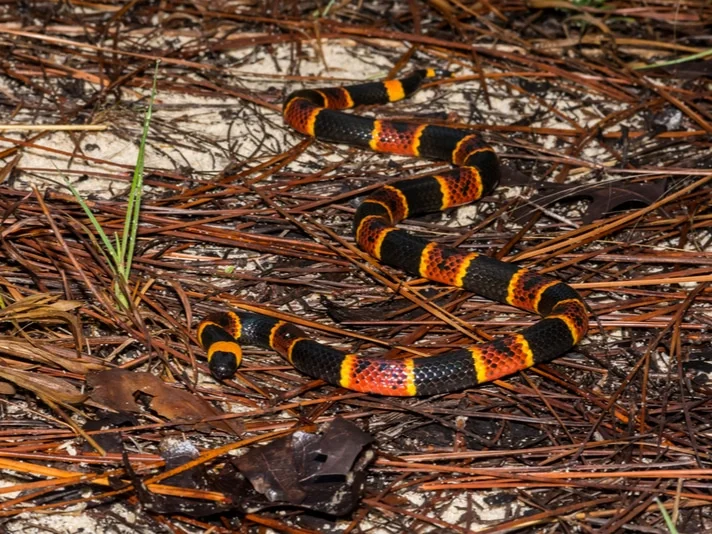
Bright snake patterns can carry information about both a species’ defenses and the surroundings where it lives. A study in the Journal of Animal Ecology examines how coloration relates to venom, habitat and other aspects of snake ecology. Its central idea is that conspicuous colors may serve as a warning to predators, but their meaning depends on more than appearance alone.
Researchers Amy Duclaux, Michel Dugon and Kevin Healy, from the Zoology Department at the University of Galway’s School of Natural Sciences in Ireland, compared visible traits across snake species. Coral snakes offer familiar examples of vivid coloration, while many pit vipers have patterns that blend into their surroundings. Both kinds of appearance can be understood in relation to how snakes defend themselves and interact with other animals.
Color is one part of a defense strategy
In some animals, bright colors can help predators learn to keep their distance. The researchers considered whether snakes with more conspicuous colors are more likely to be venomous, and whether their venom may be especially relevant to defense. This is a proposed relationship to investigate, not a rule that lets someone identify a snake’s risk from a glance.
The study also considers a possible trade-off: when a snake’s coloring makes it easy to recognize, predators may learn to avoid it after an encounter. Under that scenario, a highly visible snake might not need venom as powerful as a less conspicuous species. The researchers therefore examined venom strength and whether venom contains components that cause pain, alongside color and pattern.
Those measures help frame a more detailed question than whether a snake is simply “bright” or “dull.” A banded pattern, for example, may stand out against one background and be harder to notice against another. The same coloration can have different effects depending on where the snake is seen and which animals encounter it.
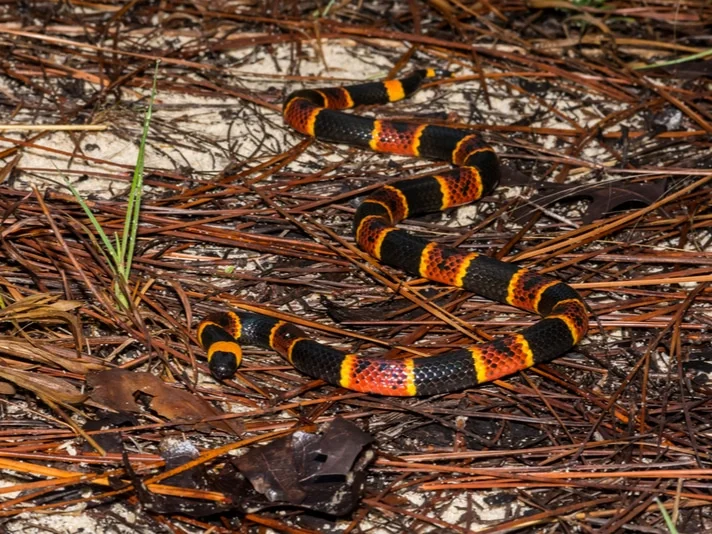
The venomous Eastern coral snake. Photo by Jay Ondreicka/Shuttertstock
Habitat and daily activity change what predators see
To compare species at scale, the researchers used photographs taken in natural settings. Online databases, including iNaturalist, supplied thousands of images of identified snakes. That approach let the team assess coloration in context and compare it with habitat across many species, rather than relying only on images against plain backgrounds.
Where a snake lives may affect which predators can see it and from what direction. A species in trees, on the ground or in water occupies a different visual setting, and may meet different predators. Color that blends into one environment could be conspicuous in another. Habitat can therefore shape how useful a warning pattern is, as well as how often the animal is exposed to potential threats.
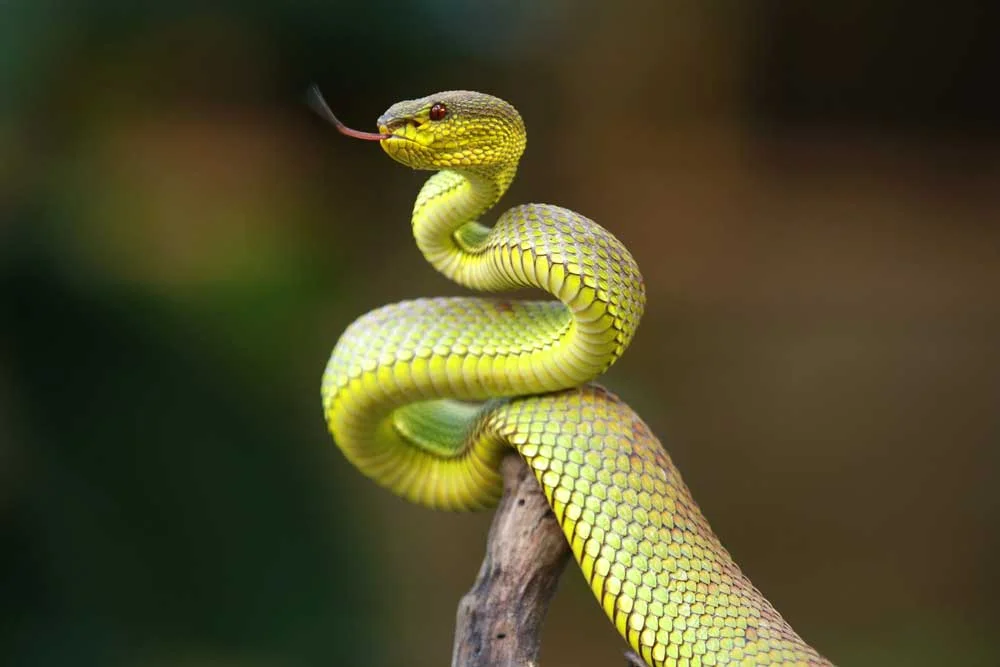
Green mangrove pit viper. Photo by Mufti Adi Utomo/Shutterstock
Activity patterns add another layer. Snakes that hunt during the day may encounter predators that rely heavily on vision, while primarily nocturnal snakes experience different conditions. A color signal can only work when an animal that might pose a threat can detect and interpret it. The study asks whether those differences in daily activity help explain variation in snake appearance.
Prey creates a second visual trade-off
Snakes aren’t only trying to avoid predators; they also hunt. A conspicuous pattern might help deter an animal considering an attack, yet make the snake easier for its own prey to notice. How much that matters could depend on the species’ diet and on how well its prey sees color. The study treats prey, habitat and activity as factors that may affect the balance between visibility and concealment.
This broader view is useful because it avoids treating bright coloration as a simple label. A pattern may be linked to defense, but the surrounding habitat, the time of day and the snake’s place in the food web can all change the costs and benefits of being seen. Venom also varies in strength and composition, so a visible warning and a species’ defensive capacity may not align in the same way across snakes.
For pet owners and people who encounter reptiles outdoors, the practical takeaway is straightforward: color alone is not a dependable way to judge whether an unfamiliar snake is venomous. The study explores patterns across species, not a field identification shortcut. Give an unknown snake space, avoid handling or trying to move it, and seek guidance from a qualified local reptile professional when identification matters.
The paper, “Contextually conspicuous species are more likely to be venomous: Habitat-dependent aposematic colouration found throughout snakes,” is available on the Journal of Animal Ecology website. The source also links to background on Batesian mimicry and the evolution of snakes. Taken together, these questions point to a useful next step in understanding snake coloration: compare the signal with the habitat and the animals that actually encounter it.
The post More Colorful Snakes Are Likely Venomous, Study Says appeared first on Reptiles Magazine.


