Sample No. 0103
Greenland’s 16,000 Baleen Whales Find a New Feeding Ground—But for How Long?
Warming seas have opened East Greenland to thousands of feeding whales. Their new food supply may be temporary as Arctic ice and plankton change.
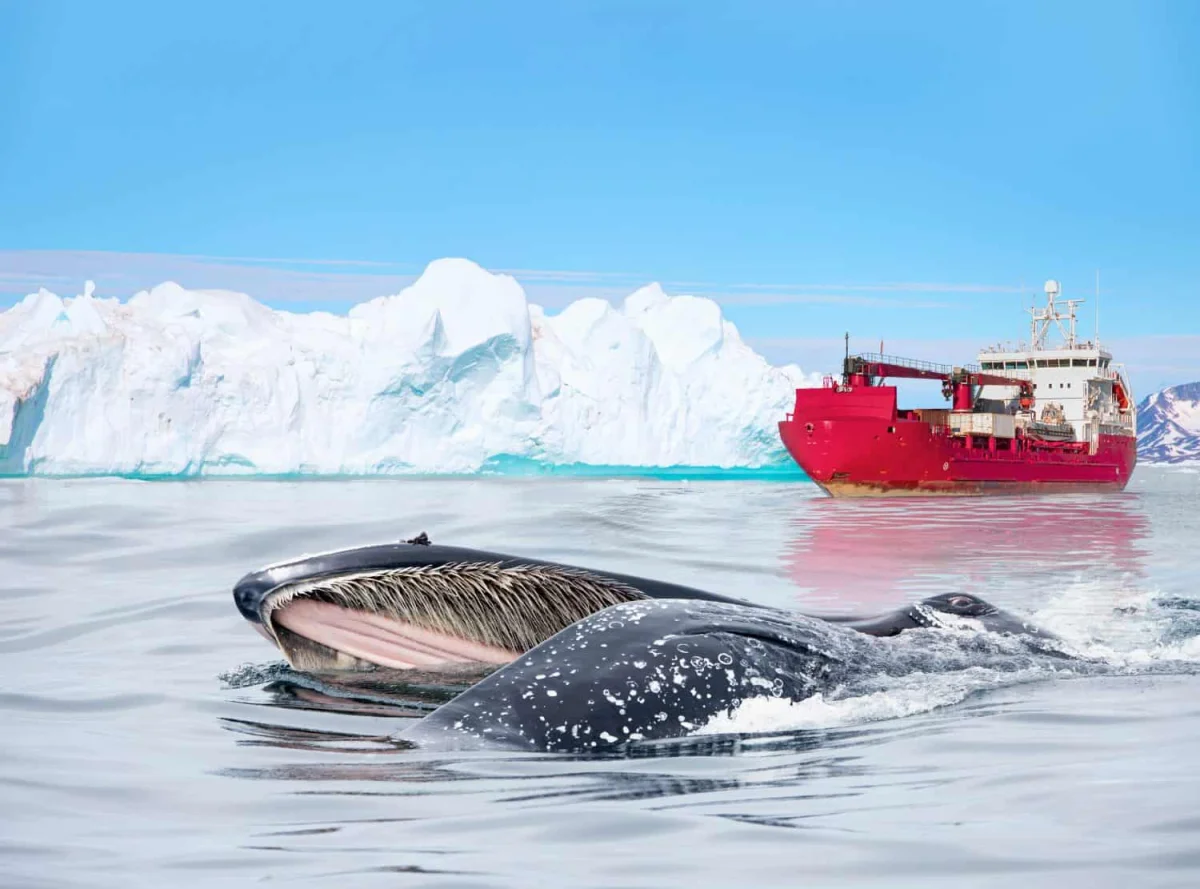
East Greenland has become a remarkable summer feeding area for baleen whales: in 2024, researchers observed about 16,000 humpback, fin and common minke whales in the region. The shift reflects a direct link between retreating sea ice, expanding capelin populations and whale movement. But the abundance that’s drawing whales north may not last if Arctic warming continues to alter the food web beneath them.
Whales are reaching waters once covered by ice
Fin whales, humpbacks and common minke whales were historically seen only rarely along East Greenland’s coast. As sea ice has declined and ocean temperatures have risen, the species have increasingly appeared there, including as far north as 70°N. The whales are now gathering in mixed feeding groups in a coastal area that was previously difficult for them to access.
A study in Frontiers in Marine Science, led by Professor Mads Peter Heide-Jørgensen of the Greenland Institute of Natural Resources, examined the change. The researchers combined several kinds of evidence: aircraft surveys off East Greenland in August 2015 and 2024, accounts from Inuit hunters covering 2023 to 2025, tracking data from tagged whales between 2019 and 2025, and North Atlantic sighting surveys dating back to 1987.
They also compared whale observations with sea-surface temperature, salinity and sea-ice concentration. Taken together, the findings point to a clear association: as the ice pack retreats, baleen whales are more likely to occur in the area. The 2024 estimates were around 4,000 humpbacks, 6,000 fin whales and 6,000 common minke whales.
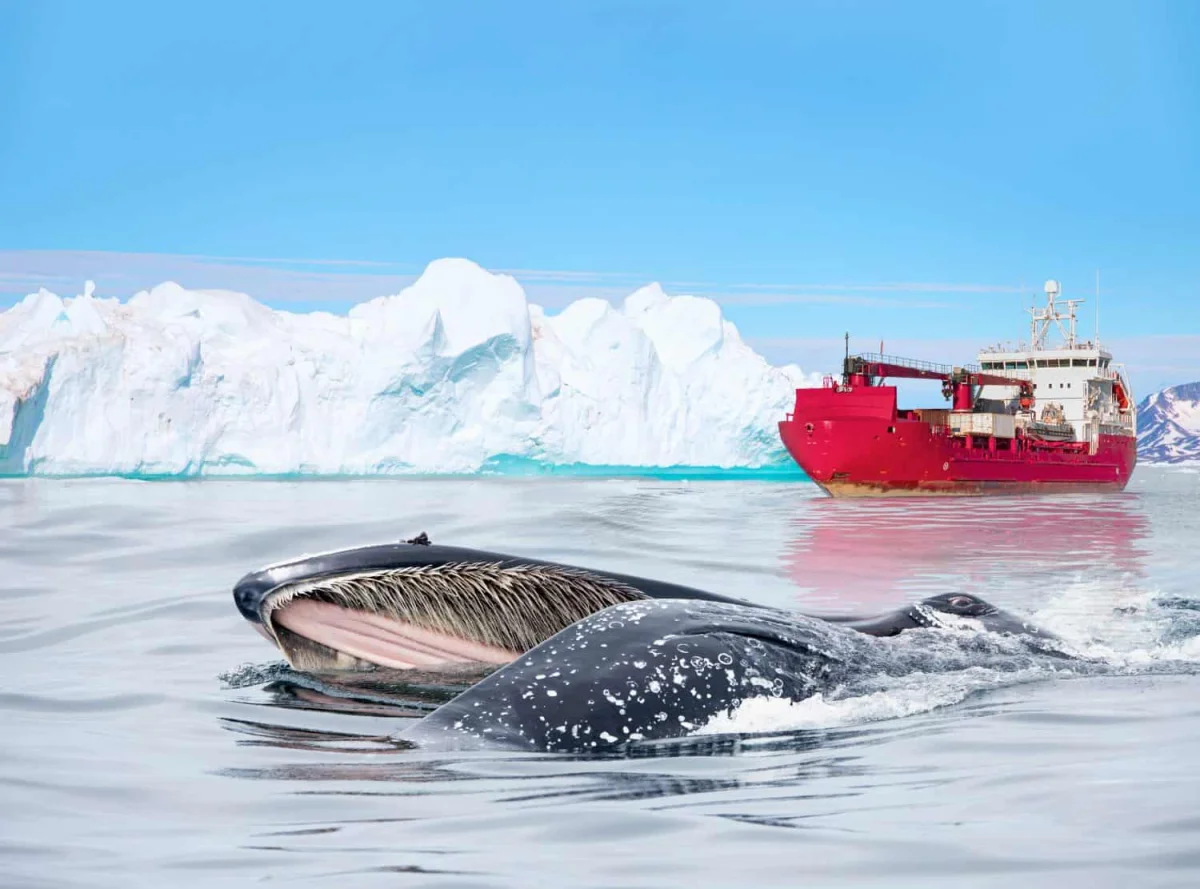
Retreating sea ice has opened parts of the Greenland Sea to baleen whales.
©muratart/Shutterstock.com
Heide-Jørgensen described the pattern as regular mixed feeding activity among species that were once uncommon along this coast. The study links the whales’ arrival to changing ocean conditions, though observations alone don’t mean that every longer-term effect of warming will benefit them.
Capelin draws the whales north
The main attraction is food. As the Greenland Sea has warmed since the 1990s, capelin have expanded their range into the region. The fish have been arriving consistently since the 2000s, following the retreat of the ice edge farther north. Whales could take advantage only once ice conditions allowed them to reach the feeding grounds.
That sequence matters. Changing sea ice can shift where prey is available, but whales also need access to the areas where that prey gathers. In East Greenland, the combination of capelin and reduced ice cover has created an opportunity for three baleen whale species to feed in the same waters.
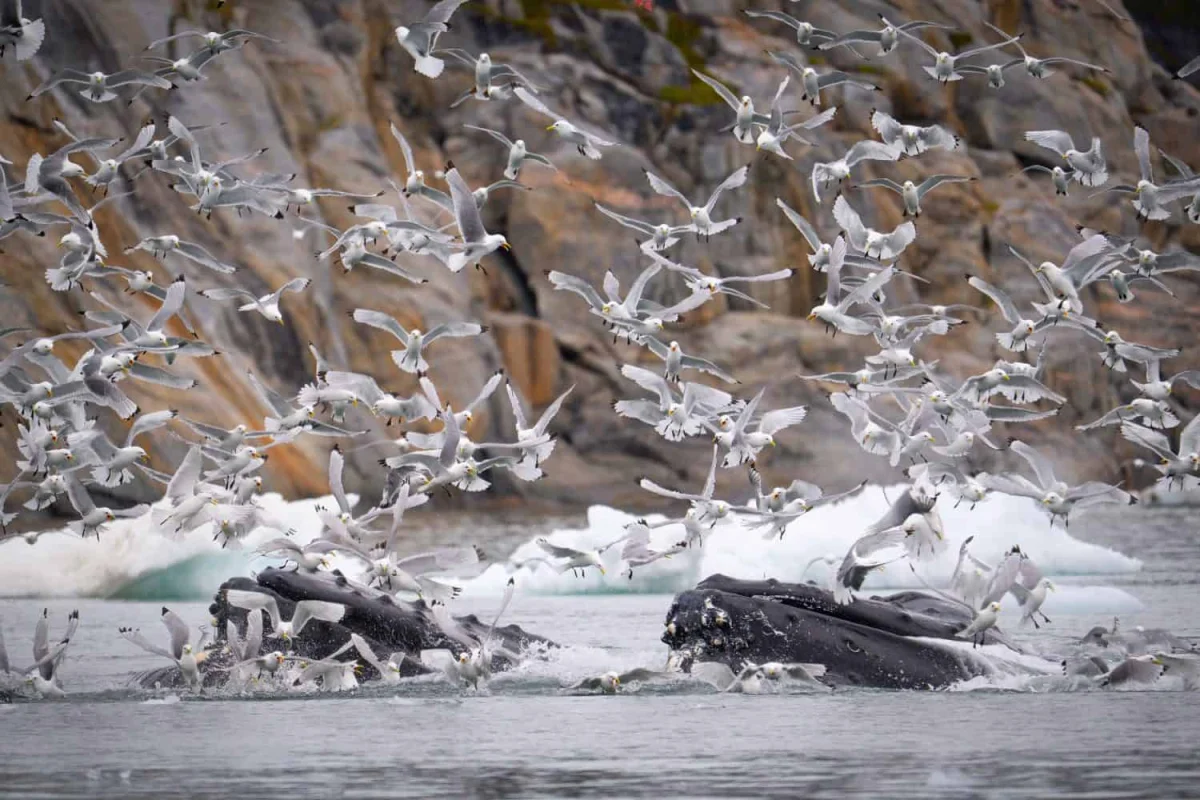
Capelin are a key food source attracting baleen whales to the region.
©Fabien Chesneau/Shutterstock.com
The study notes that capelin in East Greenland aren’t subject to competition from commercial fisheries in the area. That leaves the fish available to the whales, at least under current conditions. The source also says the whales can feed there without the risks of boat strikes or retaliatory killing by the fishing industry. These are present circumstances, not a guarantee about how the area will be used or how safe it will remain.
A temporary food surplus may carry a cost
The Arctic is warming much faster than the planet as a whole. The source reports that global temperatures have risen by 2.6°F since the Industrial Revolution, while the Arctic—including the Greenland Sea—has warmed by 5.4°F. Such rapid change can create short-term openings for wildlife while putting the systems that sustain them under strain.
One possible benefit of reduced ice is that more light reaches the ocean surface, helping trigger phytoplankton blooms. These blooms can add food for plankton and, in turn, contribute to prey availability for baleen whales. But phytoplankton is less nutritious than ice algae. When both are available, they can support a larger food supply; if extensive ice loss leaves little ice algae, the food web may become less nourishing.
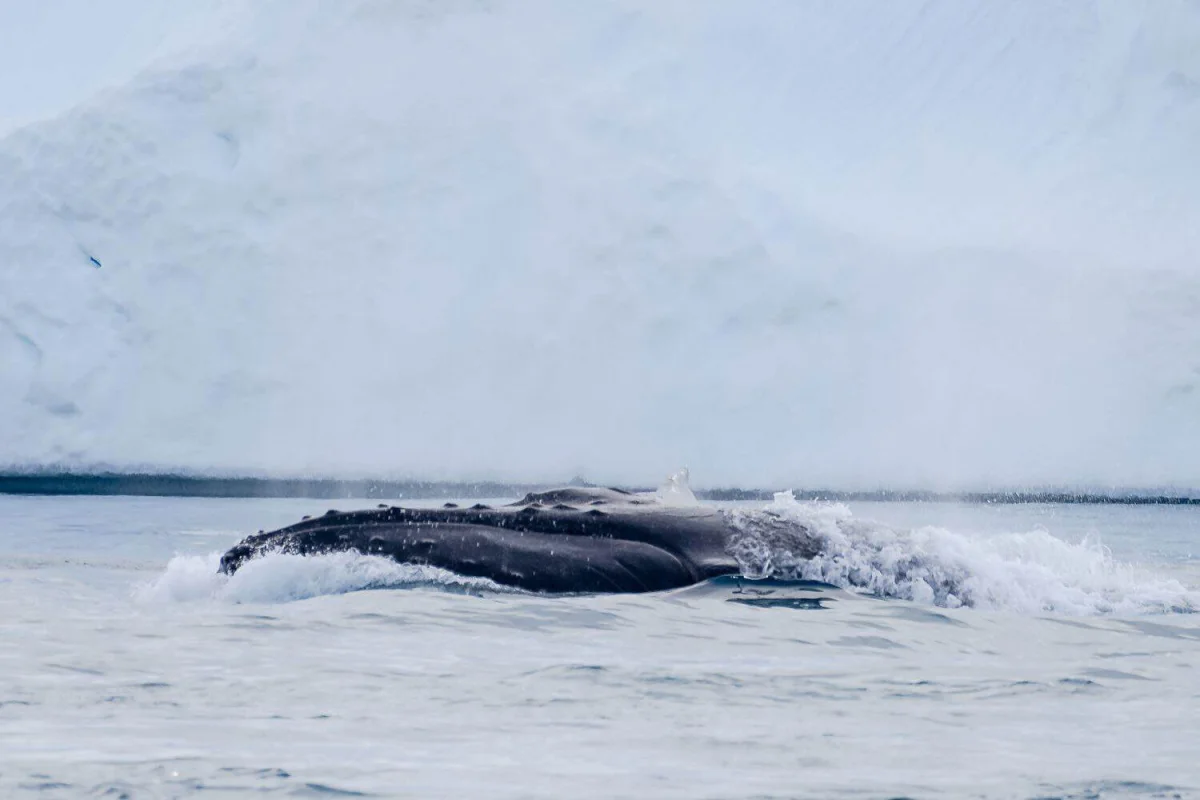
The duration of Greenland’s new feeding opportunity is uncertain as Arctic conditions change.
©Tetris Awakening/Shutterstock.com
The concern is not simply whether plankton blooms occur, but whether they can provide enough nutritious food consistently. The source describes phytoplankton blooms as intense but brief. If plankton rely more heavily on this food and less on ice algae, they may offer less nourishment to the animals that eat them, including whales.
Past warming offers a caution, not a forecast
The current shift has a distant parallel in the Pleistocene–Holocene transition, roughly 7,000 to 12,000 years ago. As global temperatures rose rapidly then, baleen whales moved into ocean areas that had previously been covered by ice. A 2022 study cited in the source found that prey availability increased for whales, mainly in the Southern Ocean, during part of that transition. In later millennia, prey abundance declined, affecting marine animals broadly.
That history suggests that an initial food boom doesn’t establish a lasting pattern. Today’s warming is expected to exceed the pace and scale of that earlier transition, and ice-free Arctic summers are likely to become common. Researchers cannot yet say how long capelin and other prey will remain abundant enough to sustain the whales now visiting East Greenland.
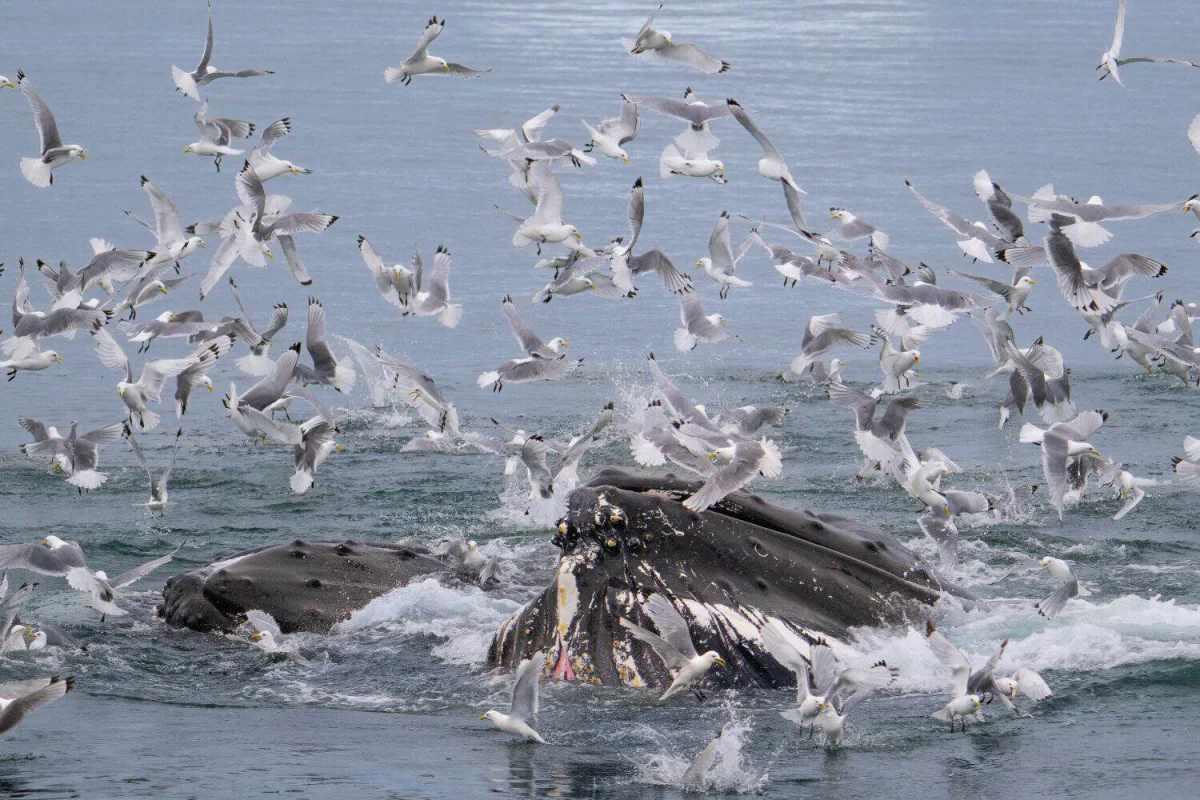
The whales’ new feeding ground depends on a food web shaped by changing ice and ocean conditions.
©Fabien Chesneau/Shutterstock.com
For now, the whale numbers show how quickly animals can respond when prey becomes accessible. The more important measure will be whether the Arctic food web can keep supplying that prey as sea ice and plankton communities change. Tracking whale presence alongside prey and ice conditions will help clarify whether this feeding ground becomes a dependable seasonal resource or a short-lived benefit of a warming sea.


