Sample No. 0081
How Long Should Dogs Take Probiotics? A Practical Guide to Daily Use
There’s no universal probiotic schedule for dogs. Match use to its purpose, follow the product label and reassess when your dog’s health or routine changes.
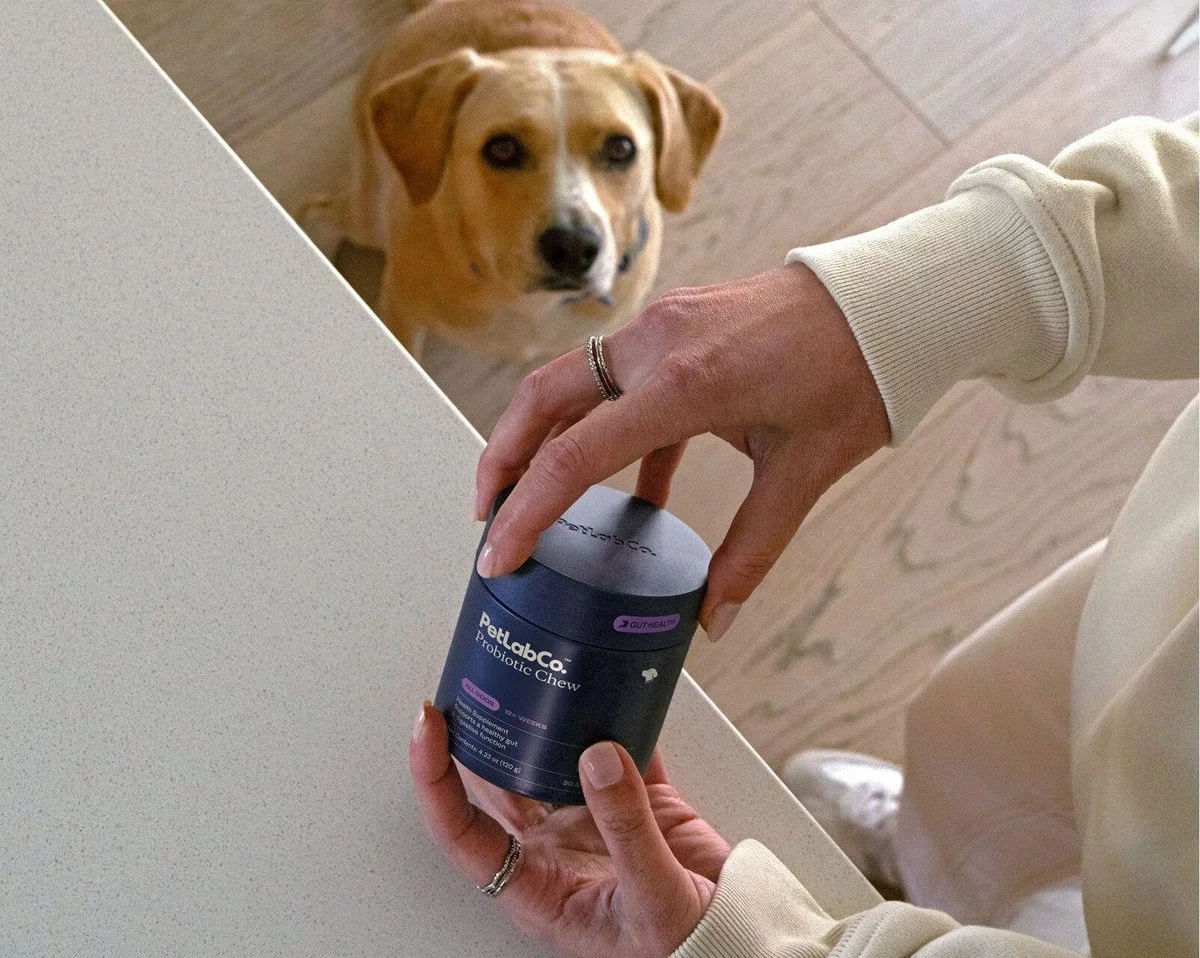
There isn’t one probiotic schedule that fits every dog. A supplement used around a particular event calls for a different plan from one given daily for general support. The right duration depends on why it was started, the exact product and the dog’s current health—not simply how long a container lasts.
That distinction matters because a dog accepting a chew doesn’t show that it still needs the supplement, and a study lasting a month doesn’t establish a one-month course. Set a clear purpose, give only the labeled serving and agree on when to review the plan. If a dog is unwell, a supplement should not take the place of veterinary assessment.
Start with the reason for giving a probiotic
Some dogs may use a suitable daily product as part of an ongoing routine. Other dogs may be considered for digestive support around a particular change, such as travel, a food transition or a course of medication. Neither situation provides a standard duration for all products. Formulas differ, and research on one probiotic cannot automatically establish how another should be used.
Before starting, ask your veterinarian what the supplement is intended to do, how to give it and what should prompt a review. If the plan relates to a specific event, identify a practical point to check whether it remains relevant. If the goal is ongoing support, revisit the choice when your dog’s diet, health, medication or circumstances change.
Support around a specific event
A planned trip gives you time to discuss your dog’s previous travel experiences before departure. Ask whether a particular product is appropriate, when it should be given and what else may help keep the dog’s routine steady. Feeding changes and travel stress may be part of the conversation; a supplement alone may not address every factor.
If your dog is already experiencing repeated diarrhea, vomiting or another concerning change, focus first on finding out what may be wrong. A veterinarian can advise whether supportive care has a place in the plan and when to follow up. Extending a supplement trial on your own isn’t a substitute for that assessment.
Ongoing daily support
A daily supplement may be a reasonable maintenance choice for a dog when the formula fits the animal and the intended purpose. There may be no automatic finish date, but ongoing use still deserves periodic review. Check whether the ingredients remain appropriate, whether the serving matches the dog’s current weight and whether the reason for giving it still applies.
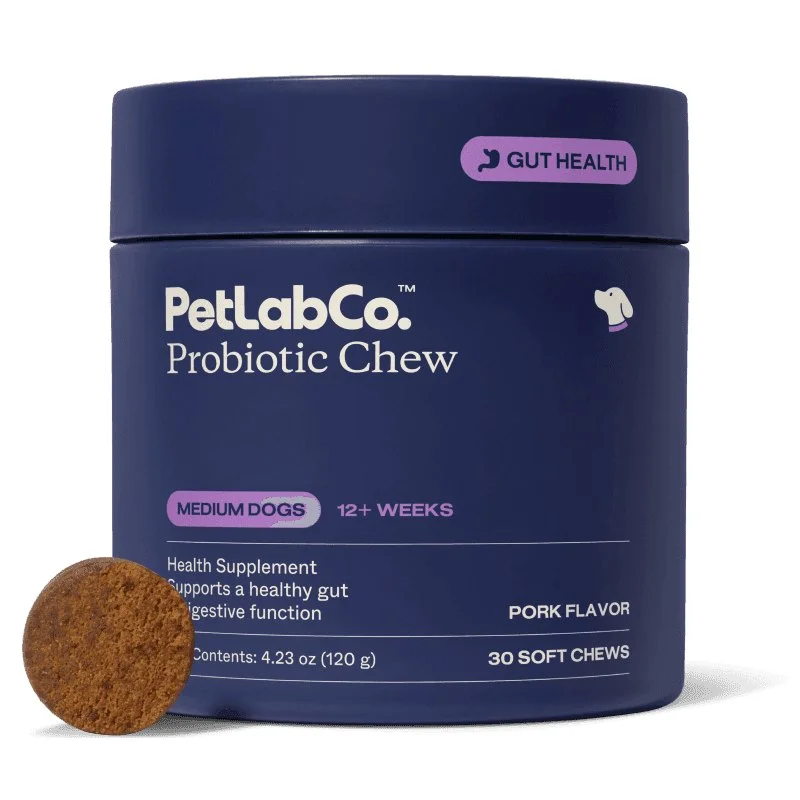
Some products are designed for daily administration. For example, PetLabCo.® Probiotic Chews are soft chews intended for daily use. A daily direction describes how the product is meant to be given; it doesn’t mean every dog needs it or that the routine never needs review.
Keep the purpose in view:
- For an event-related plan, agree on when to reassess it.
- For ongoing use, review the routine when your dog’s circumstances change.
- For new or persistent signs, ask your veterinarian rather than simply giving the supplement for longer.
Follow the exact product’s directions
Daily use is appropriate only when the product suits the dog and its directions are followed. “Daily” describes how often to give a product, not a reason to increase the serving or combine multiple supplements. Different formulations may contain different microorganisms and additional ingredients, so don’t treat them as interchangeable.
The standard directions for PetLabCo.® Probiotic Chews are one soft chew daily for dogs under 25 lb, two for dogs weighing 25–75 lb and three for dogs over 75 lb. Each chew weighs 4 g and provides 3 billion CFU, or colony-forming units. These instructions are for the standard formula, not the separate Tailored range. Always check the current label on the product you have.

Make the routine easy to track
Choose a regular time and make it clear who is responsible for giving the serving. This can prevent two people in the same household from accidentally giving it twice—or both assuming the other person has done it. Keep the product in its labeled container so its serving and storage instructions remain available.
Check the dog’s current weight band and update the serving if a meaningful weight change affects the label directions. With a powder mixed into food, check that the dog eats the portion containing the supplement. The amount put in the bowl isn’t necessarily the amount consumed.
- Record when the serving has been given if several people care for the dog.
- Follow the product’s storage directions and reseal the container.
- Keep supplements where pets cannot get into them unsupervised.
- For powders, confirm that the dog eats the supplemented food.
If you miss a serving, don’t double the next one to catch up. Follow the manufacturer’s missed-serving instructions or ask your veterinarian how to resume. A missed day doesn’t necessarily mean a dog must restart a fixed course: many maintenance routines aren’t fixed courses in the first place.
If servings are often missed, consider whether the format or household routine is practical. A plan that everyone can follow consistently is more useful than one that repeatedly causes confusion.
There’s no universal timeline for results
Probiotics don’t have a dependable countdown that applies to every dog, formula and intended outcome. Studies may assess stool characteristics, microorganisms in fecal samples or laboratory markers. Those measures aren’t interchangeable, and a change seen in a study may not be obvious to an owner at home.
First clarify what outcome the supplement is meant to support. A dog taking a product for general maintenance may have no symptom to resolve. A dog with digestive discomfort needs attention to the cause of that discomfort. Any change may also reflect diet, other care or the natural course of the problem, rather than the supplement alone.
What a product study can—and can’t—tell you
PetLabCo.® describes a 31-day randomized, placebo-controlled study involving 24 healthy adult Beagles. Its published summary reports changes in microbiome measures and fecal calprotectin. The brand funded the study, and the summary doesn’t link to a peer-reviewed publication of that exact product trial.
Those details offer context for the product, but they don’t mean every dog will improve in 31 days or that a dog should stop after that period. The study involved healthy adult Beagles and didn’t establish a recovery schedule for dogs who are ill. It also doesn’t show whether any changes continue after supplementation ends or establish safety over a dog’s entire lifetime.
Research on a specific microorganism or blend doesn’t set an onset time for every other product. A 2025 controlled study of Bacillus coagulans GBI-30, 6086 examined healthy adult dogs and reported changes in some stool and microbiota measures. That result doesn’t set a timeline for a different formula that doesn’t identify the same strain.
Reviews also describe variation in the quality and results of canine probiotic research. A 2019 systematic review noted limited, heterogeneous evidence. A later review of studies on acute diarrhea didn’t find clinically significant shortening with the nutraceuticals assessed. These findings don’t support a blanket promise that probiotics will stop diarrhea within a set number of days.
Keep observations useful
Brief notes can help your veterinarian see what changed and when. They’re not a way to measure the entire microbiome or a reason to wait through worsening symptoms. Record:
- The start date, product name and amount actually given.
- Whether your dog ate normally and consumed the supplement.
- Changes in stool or other signs, described consistently.
- New foods, treats, medicines, stressful events or missed servings.
If you don’t know what progress should look like, ask your veterinarian before extending the trial just because a certain number of days has passed. A clear review point is more useful than assuming improvement must happen by a particular date.
Medication, side effects and signs that need attention
Tell your veterinarian about all supplements your dog receives, including products the household thinks of as treats. The full label matters: the specific microorganisms and other ingredients can affect whether a product fits the dog’s care plan.
PetLabCo.® labels caution that absorption of medicines given at the same time may be delayed. Ask your veterinarian about timing with your dog’s actual prescriptions. The label’s caution doesn’t establish that every medicine interacts in the same way or that one standard spacing rule fits all combinations.
Probiotics and antibiotic courses
An antibiotic and a probiotic have separate purposes. Follow the prescribing veterinarian’s instructions for the antibiotic, and ask whether a probiotic is suitable, which product to use and whether its timing should be separated from the medicine. Don’t shorten an antibiotic course because your dog seems better or because you’ve added a supplement.
Finishing an antibiotic course doesn’t automatically determine when a probiotic should stop. That decision may depend on the dog’s condition, response and wider care plan. If your dog takes several medicines, write down the schedule and who is responsible for each product. Review the supplement list when a new prescription is added.
Possible side effects
Some dogs may develop gas or a change in stool after a supplement is introduced. The product may not be the only possible explanation: food, other ingredients and an underlying health concern can also matter. Don’t assume a new or worsening sign is a harmless adjustment. Describe it to your veterinarian and follow the product’s cautions.
The company’s summary of its study reports mild, temporary digestive upset in both the supplement and placebo groups, with no serious adverse events reported during the short study. That finding applies within the study’s limits; it can’t rule out problems in another dog or during longer use. The product labels advise stopping and consulting a veterinarian if the condition worsens or doesn’t improve.
When to contact a veterinarian promptly
Repeated vomiting, blood in the stool, pronounced lethargy, abdominal pain or poor intake call for veterinary advice rather than a longer supplement trial. Puppies and dogs with existing illness may need particularly prompt assessment. If your dog eats more than the intended amount, contact your veterinarian with the product name, estimated amount and time of ingestion.
- Don’t add a second probiotic to counter a suspected problem with the first.
- Don’t increase the serving because improvement seems slow.
- Don’t change prescription treatment without the prescribing veterinarian.
- Keep the packaging available so the clinic can review the ingredients.
Symptoms don’t prove a dog needs a probiotic
No visible sign reliably shows that a dog needs probiotics. Gas, loose stool, reduced appetite or a change in bowel habits can have many causes. Those signs may justify a conversation about digestive health, but they aren’t proof that the dog needs more “good bacteria.”
Describe what changed and when. Your veterinarian may ask about food, recent diet transitions, medicines, scavenging, contact with other animals and general behavior. That history helps determine whether the next step is observation, a diet adjustment, testing or another part of a care plan.
Distinguish maintenance from a new health concern
A dog who is otherwise well may use a suitable daily product as part of a considered maintenance routine. The relevant question is whether it fits the dog and still serves the purpose agreed on. If new symptoms appear, the priority changes: find out what’s happening instead of assuming the familiar supplement is the answer.
For example, a dog who has followed the same routine for months but suddenly begins vomiting needs attention for that new problem. A history of probiotic use doesn’t rule out illness, a dietary issue or another cause of digestive upset.
Bring a concise record to the appointment: current food, treats and supplement names; amounts given; recent changes; and when signs began. Photos of product labels can help your veterinarian review ingredients and spot overlap with other products.
Ask what should prompt a call before the next review. That makes the conversation more useful than trying to decide on your own whether a supplement is needed for an unexplained change.
Compare products by purpose and format
A focused gut-support chew and a multifunctional powder aren’t necessarily substitutes. One may suit a straightforward daily routine; the other may include ingredients intended for broader nutritional support. Neither format establishes how long every dog should use it, and combining products isn’t automatically better.
Forms such as powders, capsules and chews can make a difference to whether a household can give the intended amount consistently. The product’s full formulation and fit for the dog matter just as much as its format.
A gut-focused chew
PetLabCo.® Probiotic Chews contain a three-species Bacillus blend, FOS and GOS prebiotics, and a postbiotic yeast blend. They’re pork flavored, contain pork liver and are labeled for dogs 12 weeks and older. Check the age guidance and ingredients before choosing the product, particularly if your dog has dietary restrictions.
A chew can be simple to count and record if the dog eats it reliably. Check the current weight-based directions, supervise administration and make sure caregivers follow the same schedule. A dog readily eating a chew shows that it accepts the format; it doesn’t establish that a particular health outcome has occurred.
A broader daily powder
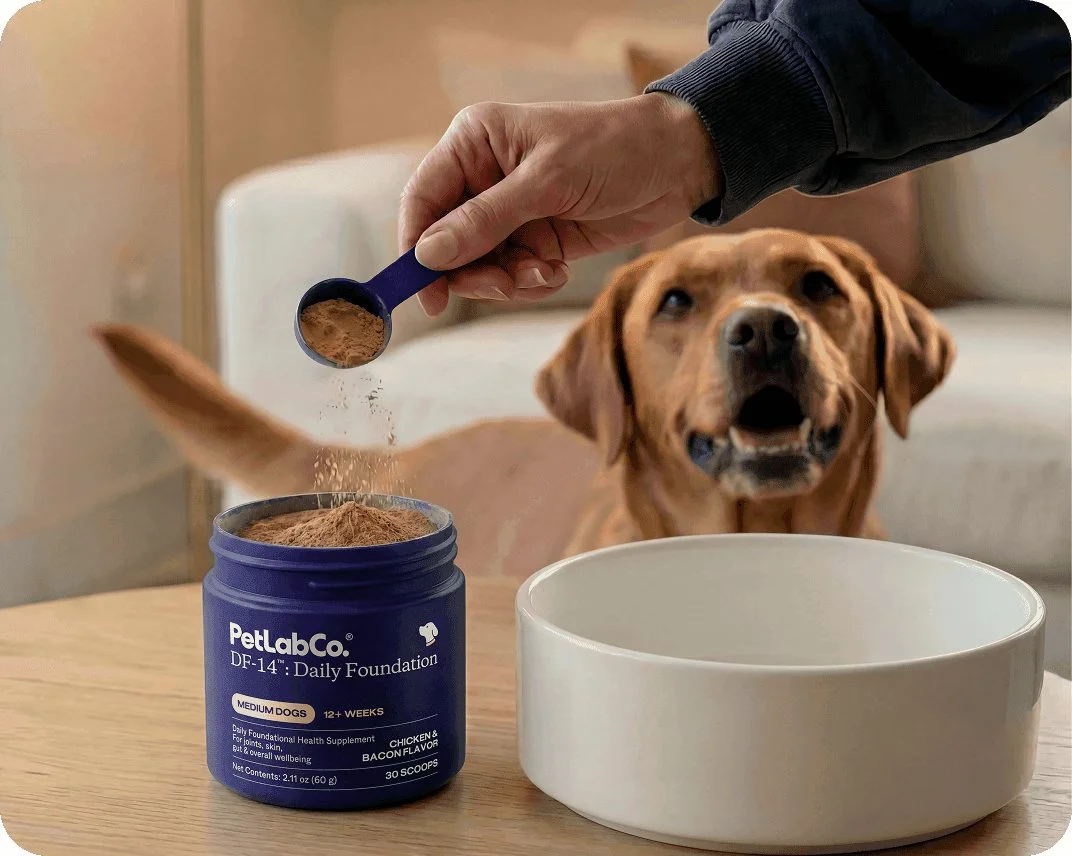
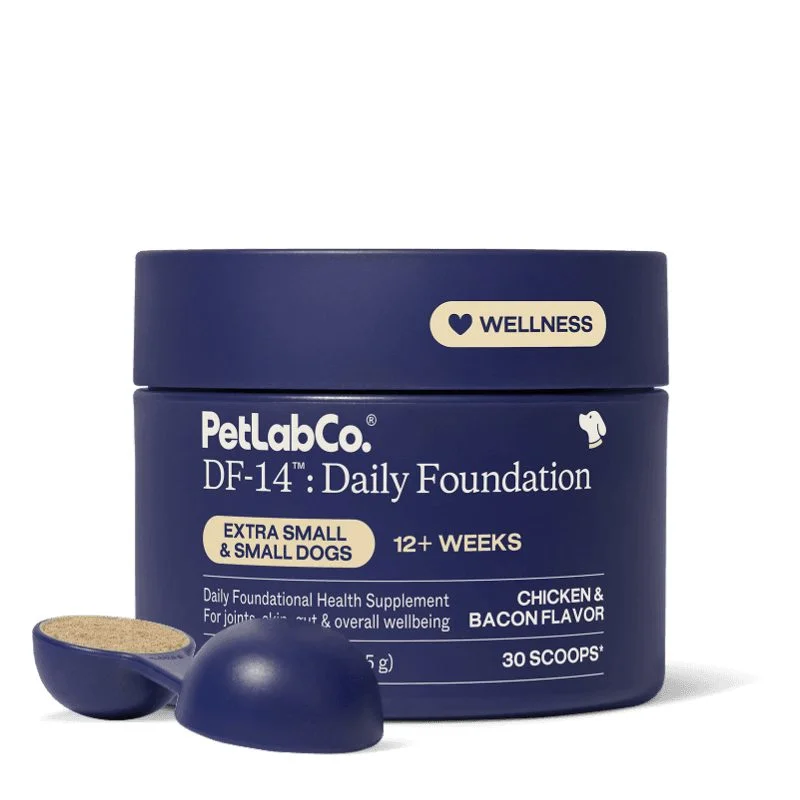
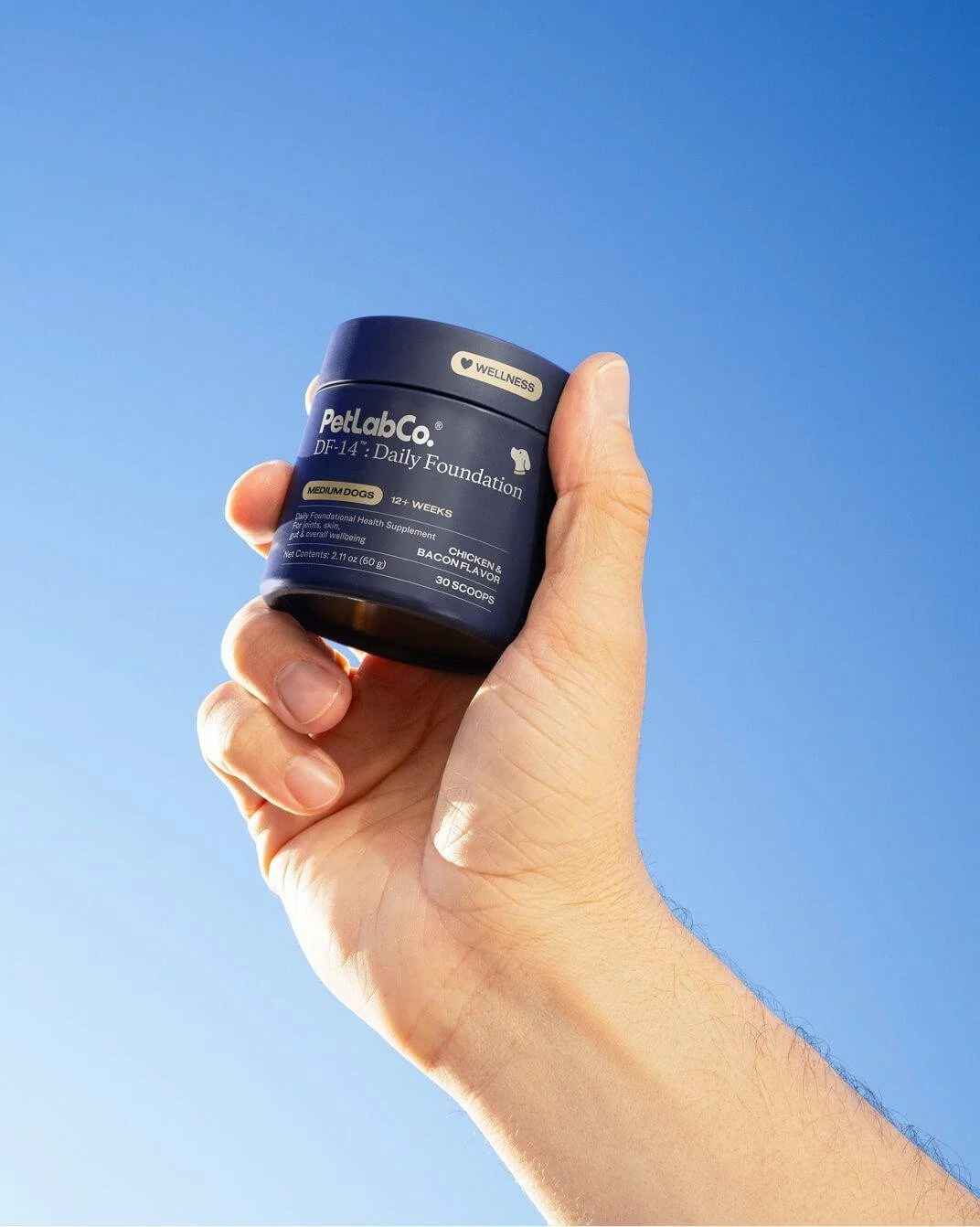
DF-14 Daily Foundation is a multifunctional powder that includes probiotics alongside ingredients with other nutritional roles. It should be considered as a complete supplement formula, not as an isolated probiotic or a direct, scoop-for-scoop equivalent to a chew.
The product directions call for once-daily use at mealtime, mixed into wet food or slightly moistened kibble. The labeled tub and scoop determine the serving for each weight range. For dogs under 4 lb, the directions specify the little scoop from the Small tub; other weight bands use their labeled scoop and tub combination. A household teaspoon isn’t a substitute for the specified scoop.
Because the formula contains multiple types of ingredients, review it with your veterinarian if your dog takes other supplements or follows a restricted diet. Ingredients include krill, crawfish-derived glucosamine and hydrolyzed chicken liver flavor. A formula that suits one dog may not suit another with different dietary needs.
When choosing between formats, consider:
- Purpose: a focused gut-support routine or broader support with probiotics among the ingredients.
- Administration: count the correct number of chews or measure the labeled scoop.
- Intake: confirm the chew was eaten or the supplemented food was finished.
- Review: check the formula, serving, ongoing purpose and overlap with other products.
If you want to switch products, ask your veterinarian whether the new formula fits your dog and how to make the change. Bring both labels. Two products that list probiotics may still differ in microorganisms, ingredients and serving directions.
Make a straightforward reassessment plan
A useful plan has a stated reason for starting and a clear trigger for review. A few consistent notes can show what was actually given and what else changed. That’s more informative than automatically opening another tub because the last one ran out.
Ask your veterinarian to review the plan if your dog has new signs, an existing health condition or prescription medicines. For routine maintenance, you might discuss the supplement at a regular health visit or when a meaningful change occurs. For an active digestive concern, your veterinarian may recommend an earlier follow-up.
Before buying more, consider whether your dog still fits the label directions, whether the routine is manageable and whether the original purpose remains relevant. If the supplement was considered for a temporary event, ask whether it still has a role after the event has passed. If it was chosen for maintenance, check whether your dog’s health or overall care has changed.
Practical snags can also become clear during a review. If a powder is often left in the bowl, the dog may not be receiving the intended amount. If caregivers aren’t sure who gave the chew, the household needs a clearer handoff. Neither problem is a reason to increase the serving.
Don’t extend a trial automatically
If the original concern hasn’t improved, don’t treat a replacement container as the automatic next step. Share your observations with your veterinarian and ask whether the cause, diet or care plan needs another look. A supplement shouldn’t distract from an unresolved problem.
Improvement also doesn’t show which part of a combined plan made the difference. If food, medicines and supplementation changed at the same time, ask how your veterinarian wants to assess their ongoing roles. Don’t stop prescribed care or assume the supplement alone resolved the problem.
There’s no universal rule to cycle or continue forever
There isn’t one evidence-based rule that every dog must cycle, taper or take probiotics forever. Follow the directions for the specific product and ask your veterinarian how to change the agreed plan. Daily maintenance and a product used alongside care for a medical concern may call for different decisions.
Don’t assume a supplement permanently resets or colonizes the gut. A study that measures changes during use doesn’t establish that they last indefinitely after the product is stopped. If you and your veterinarian decide to discontinue it, keep observing your dog and seek advice if signs return rather than restarting automatically.
Everyday examples of duration decisions
These examples show how the reason for using a product shapes the next question. They aren’t treatment schedules; the exact formula and the dog’s circumstances still matter.
A well dog on a stable routine
Suppose a veterinarian has agreed that a particular daily supplement fits a dog’s needs. The owner gives the labeled serving, the dog accepts it and no new concerns have appeared. Finishing a tub is a convenient point to review the routine, not a medical requirement to stop or restart a course.
Before reordering, the owner can check the current formula, serving directions, the dog’s weight and any new medicines or supplements. At the next routine health review, they can discuss whether the original purpose still makes sense. An uneventful month doesn’t prove lifelong safety.
A supplement considered around travel
An owner whose dog has had digestive changes during previous trips can ask about support before the next journey. Information about what happened, whether meals or feeding times changed and whether the dog was examined can help the veterinarian decide whether a supplement belongs in the plan.
Travel dates don’t automatically establish how many days before or after a trip to give a probiotic. Ask what to do once the usual routine resumes. If the dog develops concerning signs on the trip, follow the agreed instructions rather than assuming a longer supplement trial is enough.
A new prescription during an established routine
A dog already receiving a daily chew may be prescribed a new medicine. That doesn’t automatically make the supplement unsuitable, but it does mean the overall plan has changed. Show the veterinarian the label and ask whether the product should continue, whether timing needs to change and what to watch for.
Keep the instructions clear for everyone caring for the dog. The end date of a prescription may be relevant to a follow-up discussion, but it doesn’t determine the supplement’s duration by itself.
Frequently asked questions
Can you give a dog too much probiotic?
Giving more than the labeled serving or combining several products can result in an unintended amount of probiotic organisms and other ingredients. More isn’t automatically more effective. If your dog gets into a container or receives an extra serving, contact your veterinarian with the product, estimated amount and time. Keep the package available so the clinic can review the formula.
What time of day should a dog take a probiotic?
Follow the specific product’s directions and choose a time that fits your routine. DF-14 is directed for mealtime, while other products may have different instructions. There’s no universal morning-or-evening rule. If your dog takes medicine, ask your veterinarian about timing instead of applying a general spacing rule.
When should a dog not take probiotics?
Don’t start a product that doesn’t suit the dog’s age, ingredients or health circumstances without veterinary guidance. Check first if your dog follows a restricted-food trial or a clinician has advised avoiding the formula. PetLabCo.® labels state that safe use during pregnancy or breeding hasn’t been proven. An unwell dog may need an examination before any supplement is considered.
What can I give instead of probiotics?
The right alternative depends on the goal. A well dog eating a suitable complete diet may not need an added supplement. Digestive discomfort may call for a diet review, testing or a care plan. Ask your veterinarian before substituting a food, fiber product or another supplement; they don’t all serve the same purpose.
Are fermented foods natural probiotics for dogs?
Fermented foods can contain microorganisms, but their types, amounts and other ingredients vary. A household food isn’t automatically equivalent to a canine supplement selected for a particular purpose. Ask your veterinarian before adding one, especially if your dog has dietary restrictions. “Natural” doesn’t establish a suitable serving, effectiveness or freedom from ingredients your dog should avoid.
The most dependable answer to “How long?” is a plan that names the product, serving, purpose and review point. When the formula remains suitable and the goal still applies, daily use may continue as agreed. When your dog’s health, routine or needs change, reassess rather than relying on a fixed number of days.
PetLabCo.® products are not intended to diagnose, treat, cure or prevent disease. Consult your veterinarian before starting a new supplement routine.


