Sample No. 0055
Tuxedo Cats: Coat Patterns, Personality, Health, and Care
Tuxedo cats are bicolored cats, not a breed. Learn what their markings mean and how breed, individual temperament, and coat type shape their care.



A tuxedo cat’s striking coat can make it seem like a distinct kind of cat. The name, though, describes a pattern: dark fur with white markings, often on the chest, belly, paws, and chin. That distinction matters for anyone considering adoption. A tuxedo’s coat doesn’t tell you its breed, health needs, or personality. Those depend on the individual cat and its background.
The pattern is common, and it appears in many breeds and mixed-breed cats. Some are short-haired and compact; others are large and fluffy. Their markings vary just as much, from neat white “shirtfronts” to uneven patches and distinctive facial spots. The useful way to think about a tuxedo cat is as a cat with a recognizable coat pattern and the full range of feline needs and personalities.
What the tuxedo pattern looks like
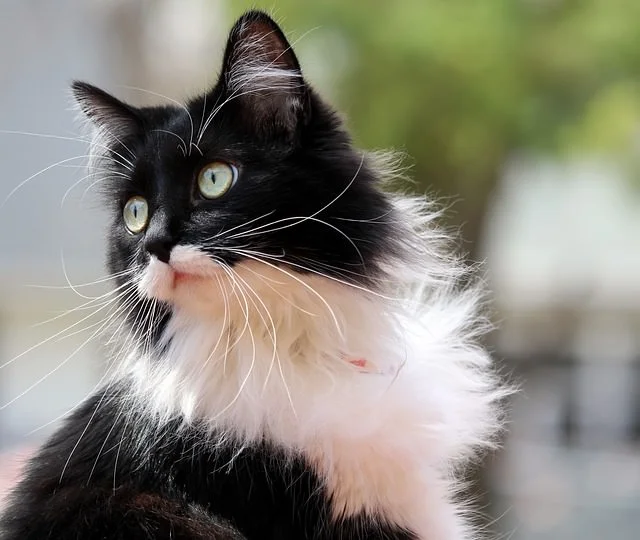
The classic tuxedo has a mostly black coat, with white areas on the chest and paws. White may also extend to the belly, chin, or face. Gray and white, brown and white, and orange and white cats can show a similar distribution, though some people reserve “tuxedo” for black-and-white cats. The defining feature is the contrast between a darker body and lighter markings.
There’s no single template. One cat may have a symmetrical white chest and matching socks; another may have scattered patches, a lopsided blaze, or a white mustache. White fur can appear on the back or legs, too. This variation reflects how the coat pattern develops, and it means even kittens from the same litter can look quite different. Other striking coat arrangements are described among cats with bold spotted and striped patterns, while white socks are another familiar result of white markings.
A pattern, not a breed
“Tuxedo” refers to a bi-colored coat pattern, not a breed. The white areas are linked to the white spotting gene, often called the S gene. It affects where pigment appears in the coat as a kitten develops. The placement can vary, which helps explain why no two tuxedo cats have precisely the same markings. The UC Davis Veterinary Genetics Laboratory provides information on feline coat-color genetics.
The amount of white varies, too. The classic tuxedo look is one form of bi-color patterning, with white often concentrated on the chest and paws. Cats with more extensive white may be described as mask-and-mantle, harlequin, or van patterns, depending on how the colored areas are arranged. These labels describe different distributions of color; they don’t tell you what a cat’s temperament will be.
| Pattern | Approximate white area | Typical markings |
|---|---|---|
| Classic tuxedo | About 10% to 50% | White on the chest, belly, paws, and sometimes the chin |
| Mask-and-mantle | About 80% to 90% | Color on the head and ears, with a colored area along the back and tail |
| Harlequin | About 90% to 95% | Scattered colored patches and often a colored tail |
| Van | 95% or more | Color mainly on the head and tail, with a mostly white body |
| Bi-color, general | Variable | White spotting paired with another solid color |
Tuxedo markings aren’t sex-linked in the way the familiar three-color pattern of most calico cats is. Male and female cats can both have tuxedo coats in roughly similar numbers. The genetics of coat color can differ by pattern; PetMD explains why most calico cats are female.
Many breeds can wear the pattern
Because tuxedo describes color distribution rather than ancestry, it appears across many kinds of cats. American Shorthairs, British Shorthairs, Maine Coons, Persians, Cornish Rexes, Norwegian Forest Cats, and Scottish Folds can all have tuxedo markings. Mixed-breed cats are common examples, too.
Breed background can help set expectations about coat length, body shape, and some care needs, but an individual cat may not fit a neat description. A long-haired tuxedo may need more brushing than a short-haired one. A cat’s behavior and comfort around people or other pets are best assessed by getting to know that cat, rather than guessing from its coat.
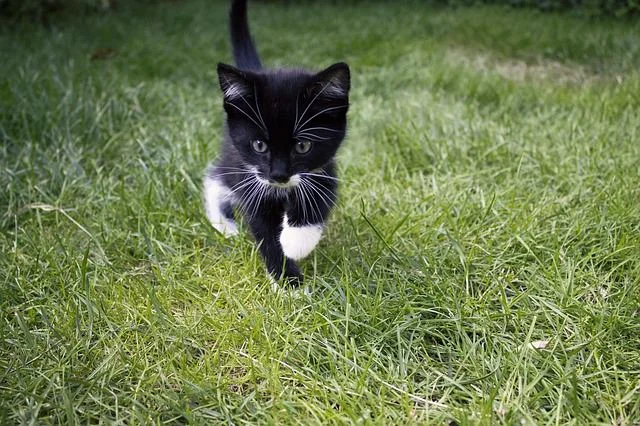
Tuxedo cats are not rare. They are a familiar pattern in domestic cats, especially among mixed breeds, and they’re often found in shelters. Adoption listings can give you a first impression, but a visit or conversation with shelter staff can reveal more about a cat’s habits, energy, and response to handling. Look for a match with your household and daily routine, not a particular coat pattern.
What research says about personality
A tuxedo coat doesn’t create a predictable temperament. Breed background, early social experiences, past events, and the cat’s current environment all help shape behavior. Two cats with similar markings may have very different preferences: one may seek company, while the other may want more space.
People often attach personality labels to coat colors, including the idea that tuxedo cats are especially bold, affectionate, or vocal. Those descriptions may reflect real experiences with particular cats, but they aren’t a dependable guide to any individual. The same caution applies to claims about gray tuxedos or other color combinations.
A study by Stelow, Bain, and Kass, published in the Journal of Applied Animal Welfare Science in 2016, examined owner reports of coat color and aggressive behavior. Owners reported more aggression in calico and tortoiseshell cats than in some other color groups, while solid-colored and tuxedo cats received lower aggression ratings. The researchers noted that people’s expectations of cats could affect their reports. The findings don’t establish that a tuxedo pattern causes a particular behavior, and they can’t predict how a specific cat will act. The study is available here.
If you’re choosing a cat, pay attention to what the cat does in front of you and ask about its history when that information is available. Consider how it responds to people, new surroundings, and handling. A careful introduction is also important when bringing any cat into a home with other animals. Coat color alone can’t predict whether two pets will get along; socialization history and individual temperament matter far more.

Adoption and shelter stays
Some shelter research has found that black cats, and cats with substantial black markings, may wait longer for adoption than cats with less common-looking coats. This issue is often discussed in relation to solid black cats, but some bi-colored cats may be affected as well. A study on shelter outcomes by Svoboda and Hoffman appeared in Animal Welfare in 2015: read the study.
Clear, appealing photographs can help prospective adopters see a cat’s features, including its distinctive white markings. But a photo can’t show whether a cat enjoys being picked up, how it plays, or what kind of home will suit it. If you’re thinking of adopting, ask the shelter about the cat’s observed behavior and care needs, then give yourself time to meet. You can also browse tuxedo cats with unusual markings for examples of how varied their coats can be.
Health and routine care
Tuxedo coloring itself isn’t linked to a known set of health problems. A cat’s health needs are more closely tied to its breed background, inherited traits, diet, and daily life. White spotting in a tuxedo coat is different from the features associated with some all-white cats, particularly those with blue eyes; information about feline hearing is available from LSU’s deafness research program.
Preventive care follows the same general principles as it does for other cats: regular veterinary visits, recommended vaccinations, dental care, suitable nutrition, and a safe living environment. A tuxedo Persian, for example, may have different breed-related considerations from a tuxedo American Shorthair. If you know a cat’s breed or mix, ask a veterinarian what health concerns and routine monitoring fit that background. General resources on cat breeds and health and cat nutrition can offer starting points, but a veterinarian can help tailor care to an individual cat.
Grooming and keeping an eye on the coat
Grooming needs depend mainly on coat length and texture, not tuxedo markings. Many short-haired cats do well with weekly brushing to remove loose fur. Long-haired cats, including some Maine Coon and Norwegian Forest Cat mixes, usually need more frequent grooming to reduce tangles and matting. Make brushing gentle and brief at first if a cat is unsure, and build a calm routine around what it tolerates.
White fur can make discoloration around the paws or eyes easier to see. A little surface dirt may come away with a damp cloth, but don’t scrub sensitive skin or use products not intended for cats. If staining keeps returning, the skin looks irritated, or there’s discharge around the eyes, contact a veterinarian for guidance. Those signs need more attention than a coat-color explanation.
Parasites can affect cats of any color. A flea-prevention routine suited to your cat and household can help, and dark specks may be easier to spot against white fur. Ask a veterinarian which prevention approach is appropriate; more guidance is available on protecting cats from fleas and ticks.
Common questions about tuxedo cats
Are tuxedo cats rare?
No. Tuxedo is a common coat pattern, particularly among mixed-breed domestic cats. You can often find black-and-white cats in shelters. The Cat Fanciers’ Association glossary describes coat colors and patterns.
Do tuxedo cats get along with other pets?
Some do, and some prefer more space. The coat pattern doesn’t predict how a cat will respond to another animal. Consider the cat’s history and temperament, and introduce pets gradually. The Cornell Feline Health Center offers feline care information.
How long do tuxedo cats live?
Coat pattern doesn’t determine lifespan. The source gives a typical range of 12 to 18 years for indoor cats, while noting that breed and individual health affect longevity. A veterinarian can advise on care as your cat ages. The Cornell Feline Health Center has further general information.
Are tuxedo cats always black and white?
Black and white is the classic look, but similar patterns can appear with gray, brown, or orange fur. People may differ on whether they use “tuxedo” for those combinations.
Why does my tuxedo cat have a white spot on its back?
The white spotting gene can produce markings in different places. A white patch on the back, side, or leg is part of that variation and doesn’t have to match the classic pattern.
Can two tuxedo cats have kittens with different markings?
Yes. Kittens can inherit different coat patterns, including solid or other bi-colored coats. The appearance of each kitten depends on how coat-color traits are inherited.
Choosing the cat in front of you
The tuxedo pattern is appealing, but it’s only one part of a cat. It won’t tell you how much grooming the cat needs, whether it likes other pets, or how it will settle into your home. Those questions are answered through the cat’s history, its individual behavior, and the care it receives.
If you’re considering adoption, start with the cat’s needs and personality, then think about how they fit your household. With patient introductions, routine veterinary care, and grooming suited to its coat, a tuxedo cat can make a companion much like any other: distinctive in its own way, and best understood as an individual.


