Sample No. 0179
Setting Clear Expectations for Pet Surgery and Recovery
Discuss surgical options, anesthesia, recovery, and incision care with your veterinary team so you can make informed choices and support healing at home.
Good surgical care depends on more than the procedure itself. Pet owners need a clear picture of the diagnosis, available options, anesthesia considerations, recovery demands, and possible complications. A focused conversation with the veterinary team can help replace uncertain online claims with expectations shaped by the individual animal’s health and needs.
Start with the whole patient
Search engines, social media groups, and artificial intelligence tools give owners easy access to veterinary information. Research can help people arrive prepared with questions, but sources vary in reliability. Inaccurate or incomplete material may create expectations that don’t fit a pet’s diagnosis or likely outcome. A consultation is an opportunity to review what is known, correct misunderstandings, and discuss what still needs careful assessment.
Some surgical diagnoses are relatively clear, such as a single large bladder stone. Others require more interpretation. A complete cranial cruciate ligament (CCL) rupture may be easier to identify than a partial tear, and other health conditions can change the recommended approach.
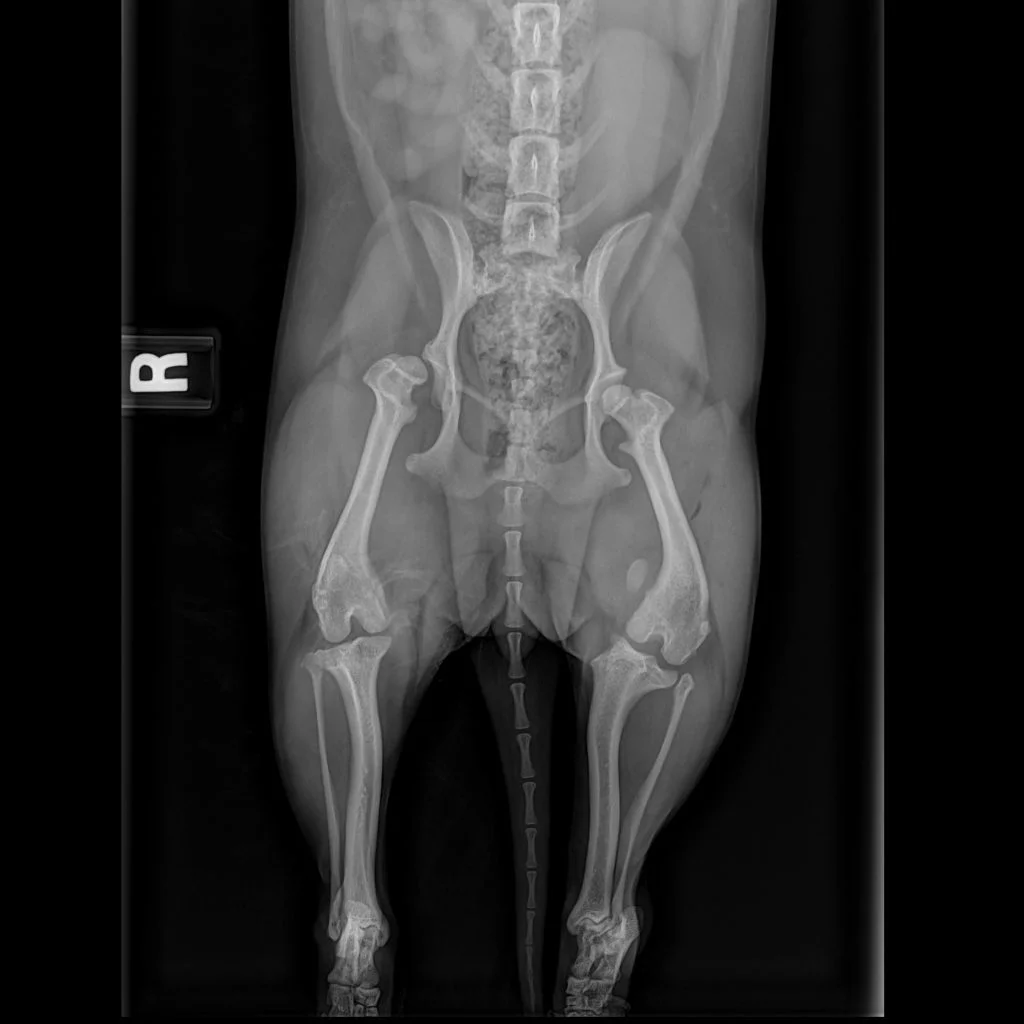
For example, a five-year-old Labrador retriever with a recent partial CCL injury has a different clinical picture from a 10-year-old Labrador with long-standing injuries in both knees and X-ray evidence of osteoarthritis. Those differences can affect surgical recommendations, expected results, and recovery. A thorough history, physical examination, and review of diagnostic findings help the veterinary team avoid narrowing its attention to one problem. The radiograph shown in Figure 1 illustrates why multiple orthopedic findings may need to be considered together during planning.
Explain the choices and tradeoffs
A diagnosis may have one suitable surgical route or several. Owners need to hear the reasonable options for their pet, including each approach’s potential benefits, drawbacks, and limits. The discussion should help them weigh what matters for their animal and household, rather than focusing only on price or travel distance.
In general practice, choices may include ovariohysterectomy, ovariectomy, or an ovarian-sparing spay. For a CCL injury, a clinic may offer extracapsular stabilization, while a traveling specialist or referral hospital may offer tibial plateau leveling osteotomy (TPLO) or tibial tuberosity advancement. The procedures differ, and owners should understand those differences before deciding.
For advanced operations, the specialist performing the procedure may lead the detailed comparison. The owner’s role is still central: once the options are explained in terms they can use, they can choose the plan that best fits their pet and family. A veterinarian shouldn’t assume in advance which procedure an owner will prefer. For hip dysplasia, for instance, some owners may pursue total hip arthroplasty, while others may choose femoral head and neck excision.
Discuss anesthesia in the context of the individual pet
General anesthesia is a common concern, especially if an animal has a complicated diagnosis or a history that worries the owner. Published figures cited in the source report anesthesia-related complication rates of 10 to 12 percent in dogs and cats, with anesthetic deaths reported below 1 percent. For brachycephalic breeds, perianesthetic complications have been recorded in up to 49 percent of patients. These figures provide context, but an individual pet’s risk depends on its health and care plan.
Assessment tailored to the patient, an individualized anesthetic plan, and close monitoring before, during, and after the procedure are key parts of managing that risk. The consultation should also cover what recovery may look like: when the pet might walk, how appetite may change, and when a bowel movement may be expected. Addressing these practical questions before surgery can make early recovery less uncertain for owners.
Age is another frequent question. Chronological age alone may tell less about a patient’s ability to tolerate stress than frailty: the body’s reduced reserve and greater vulnerability to physical challenges. Activity tolerance, body condition, mobility, and muscle mass can all help inform the conversation.
An older pet that maintains a healthy weight, moves reasonably well, and has few other health concerns may be a suitable candidate for anesthesia and surgery. An older animal with recent unintended weight loss, reduced muscle mass, or low energy may need a different plan and more detailed discussion. That picture doesn’t automatically rule out surgery; it may call for additional evaluation, treatment, careful medication choices, or closer perioperative care.
Make the recovery plan concrete
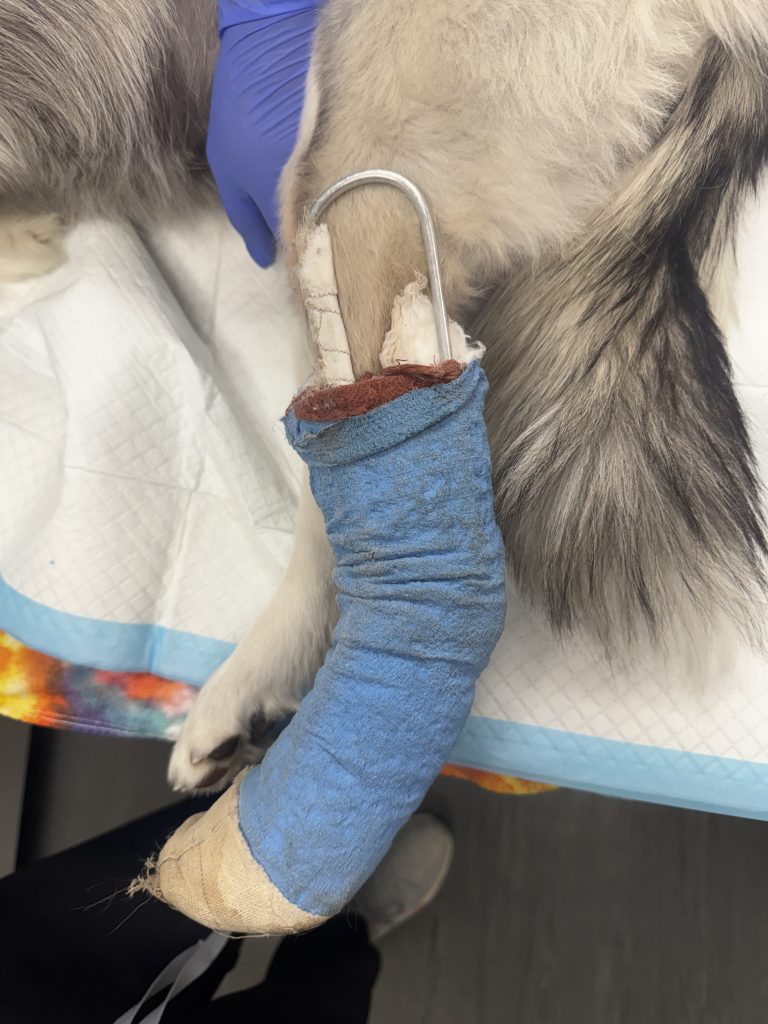
Recovery time depends on the operation. An uncomplicated cystotomy generally involves a shorter recovery than TPLO surgery. Before the procedure, owners should know how long activity needs to be restricted, whether a bandage will be used, and how to protect the incision. Figure 2 shows a postoperative bandage in a situation where following the care plan proved difficult for both the owner and dog.
Activity restriction and use of an Elizabethan collar can be especially challenging. Following TPLO, the described plan calls for eight weeks of strict restriction, with leash walks beginning two weeks after surgery. Talking through the details in advance gives owners and the veterinary team a chance to anticipate obstacles and plan around them. Written expectations and discharge instructions reinforce the discussion, but questions may still arise once a pet seems more comfortable. In one case, an owner called two days after surgery to ask whether a dog that seemed well could have free access to the home and yard.
Protect the incision and watch for changes
Incision healing can be complicated by inflammation, infection, fluid buildup under the skin (seroma), or wound separation. The surgical team can reduce some risks through appropriate incision placement, careful tissue handling, and suitable suture selection. Owners also have a practical role in protecting the site during healing.
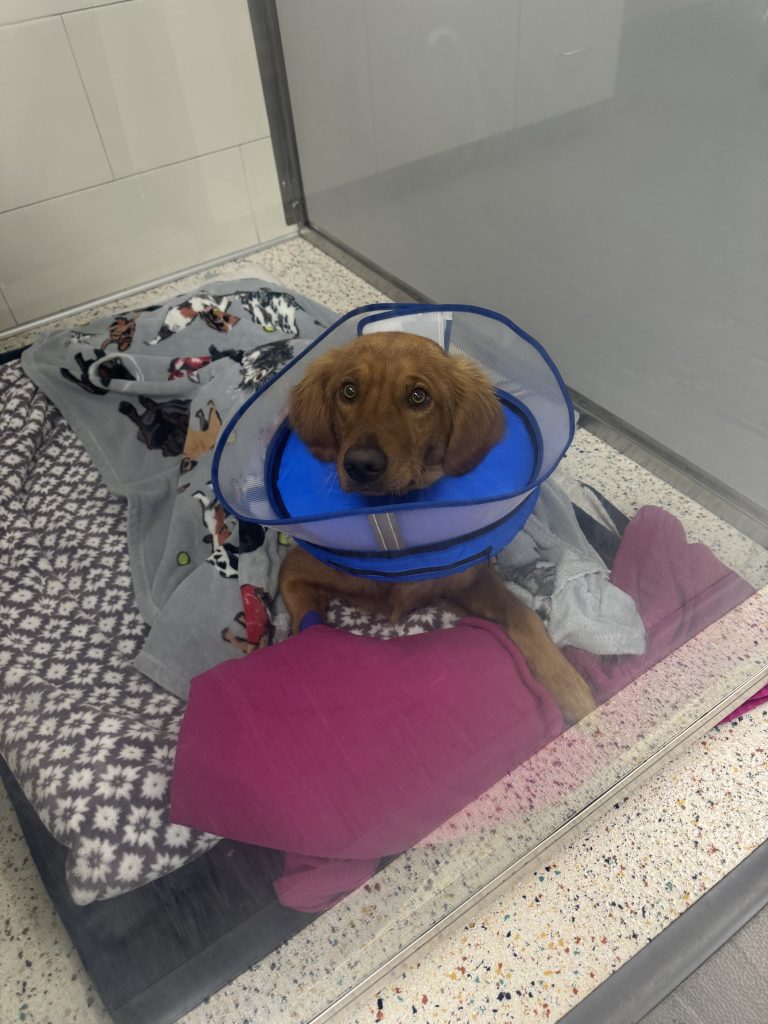
Depending on the procedure and the veterinary team’s instructions, protection may involve a bandage or preventing the pet from licking the incision. A rigid plastic Elizabethan collar is often reliable, but alternatives can make the plan easier to follow for some pets and owners. Surgical suits and inflatable collars are options that may improve compliance; Figure 3 shows an inflatable collar.
Owners should contact their veterinary team when they’re unsure whether an incision change is expected or whether a pet’s recovery matches the plan. Clear instructions about activity, bandage care, and incision protection make it easier to spot concerns and get guidance early.
Time set aside for questions, examination, and review of diagnostic findings builds a shared understanding between the owner and veterinary team. When everyone understands the diagnosis, chosen treatment, likely recovery, and possible complications, owners are better prepared to follow discharge instructions and take part in their pet’s care.
References
- Gaynor, J. S., Dunlop, C. I., Wagner, A. E., Wertz, E. M., Golden, A. E., & Demme, W. C. (1999). Complications and mortality associated with anesthesia in dogs and cats. Journal of the American Animal Hospital Association, 35(1), 13-17.
- Gruenheid, M., Aarnes, T. K., McLoughlin, M. A., Simpson, E. M., Mathys, D. A., Mollenkopf, D. F., & Wittum, T. E. (2018). Risk of anesthesia-related complications in brachycephalic dogs. Journal of the American Veterinary Medical Association, 253(3), 301-306.
- Peron, Frank and Hoummady, Sara. (2020, November 25) Canine Aging and Frailty. Royal Canine Academy. https://academy.royalcanin.com/en/veterinary/canine-aging-and-frailty


