Sample No. 0144
Shazza’s 110-Centimeter Death Adder Sets a Living Size Record
At 110 centimeters, Shazza is the largest living common death adder recorded. Her growth and venom yields keep her remarkable for researchers and park staff.
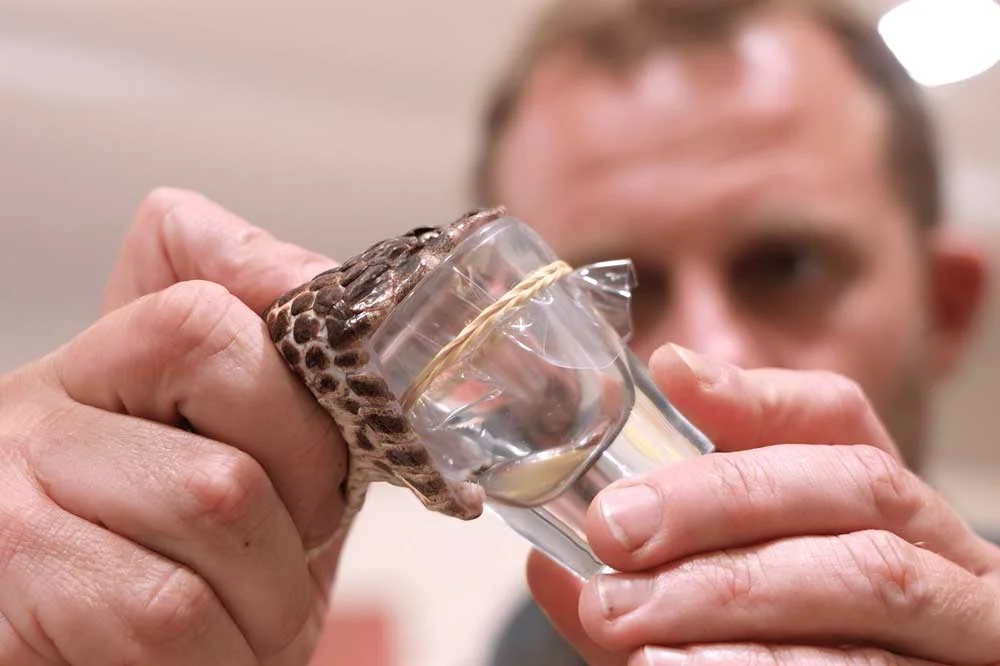
At 110 centimeters long, Shazza is the largest living common death adder recorded, according to the Australian Reptile Park and the Australian Museum Herpetology Department. Her size stands out against the species’ typical lengths, and her continued growth means she may yet approach the record held by a preserved specimen.
A living snake beyond the usual range
Male common death adders typically measure about 42 centimeters, while females average roughly 55 centimeters. Shazza, a female at the Australian Reptile Park, is far larger. Her total length is now 110 centimeters, with a snout-to-vent measurement of 95 centimeters, and she weighs 1.55 kilograms. In 2023, she measured 102 centimeters and weighed 1.41 kilograms.
Those measurements make the change easy to see: over the recorded interval, Shazza added eight centimeters and 140 grams. Her size is exceptional, though the available figures don’t explain why she grew beyond the usual range. A striking measurement on its own can establish that an animal is unusual; it doesn’t identify the cause.
Park Manager Billy Collett recalled recognizing Shazza’s potential early. “The moment I first laid eyes on her… I knew she was just a monster and her potential to get over a metre was definitely there,” he said in a statement released to the media. He described her as a snake he couldn’t be bitten by because of her size, and said her venom yield was concerningly large.
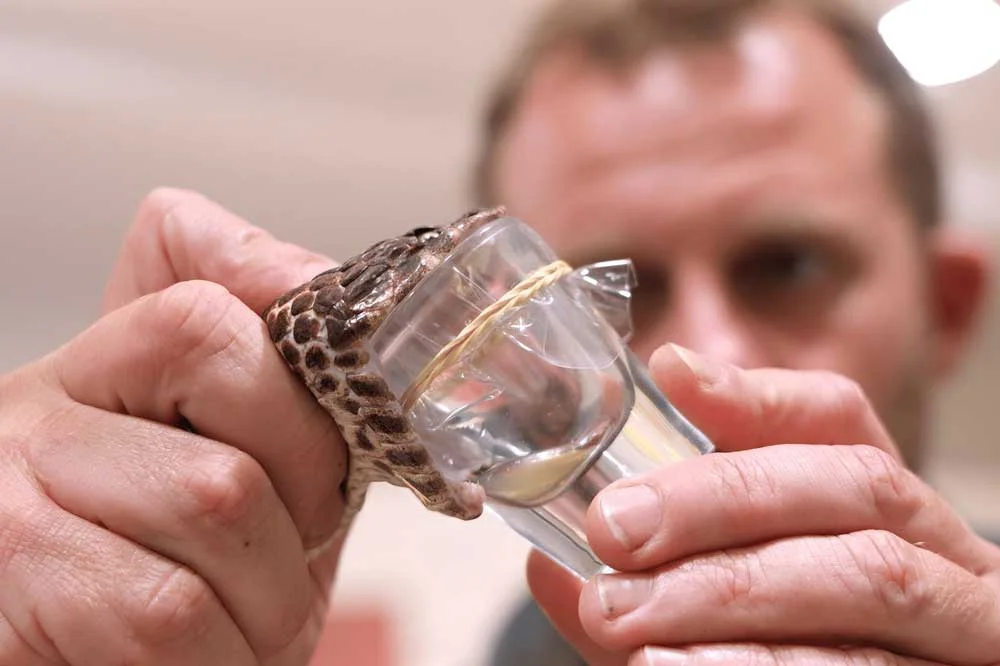
Shazza being milked for venom. Credit: Australian Reptile Park
Growth and venom production
At about 15 years old, Shazza may continue to grow. Dane Trembath, Collection Manager of Herpetology at the Australian Museum Research Institute, said many snakes have a fast growth phase early in life, followed by slower growth. In his view, Shazza is already well beyond that initial phase. Her future growth could eventually take her past the largest death adder on record, though the time that might take is unknown.
That comparison is with a specimen held in the Australian Museum Collection. It measured 117 centimeters in total, including a snout-to-vent length of 101 centimeters, when it died. Shazza is currently seven centimeters shorter overall. The figures also show why researchers distinguish total length from snout-to-vent length: the two measurements describe different spans of the same snake.
Shazza also contributes to the park’s venom program. One milking can produce 270 milligrams of venom, and the park reports that she continues to yield large amounts regularly. Collett said her yields are about twice the average for a common death adder and suggested the venom she produces can help save more human lives. The report provides no further details about how the program uses or processes the venom.
Her contribution and record size are related features of the same animal, but one shouldn’t assume that exceptional body size alone explains venom yield. The figures presented describe Shazza’s measurements and production; they don’t establish why either is unusual compared with other individuals.
Where death adders fit
Death adders belong to the genus Acanthophis, which has eight recognized species: common, Kimberley, Barkly Tableland, Papuan smooth-scaled, northern, desert, rough-scaled, and Pilbara death adders. Despite the word “adder” in their common name and their viper-like appearance, they are elapids. The source describes them as more closely related to cobras, taipans, and coral snakes than to true vipers.
Their venom interferes with nerve signaling and may cause paralysis and respiratory failure if a bite is left untreated. Death adders eat small mammals, birds, frogs, and other reptiles. Some species use their tails as lures to attract lizards. These details offer a broader picture of the group, while Shazza’s measurements and venom production remain individual observations.
For now, the key marker to watch is Shazza’s growth compared with the 117-centimeter museum specimen. Her next measurements will show whether she continues toward that record; until then, she remains the largest living common death adder recorded.
The post Largest Living Death Adder Recorded Lives At Australian Reptile Park appeared first on Reptiles Magazine.
===END===

